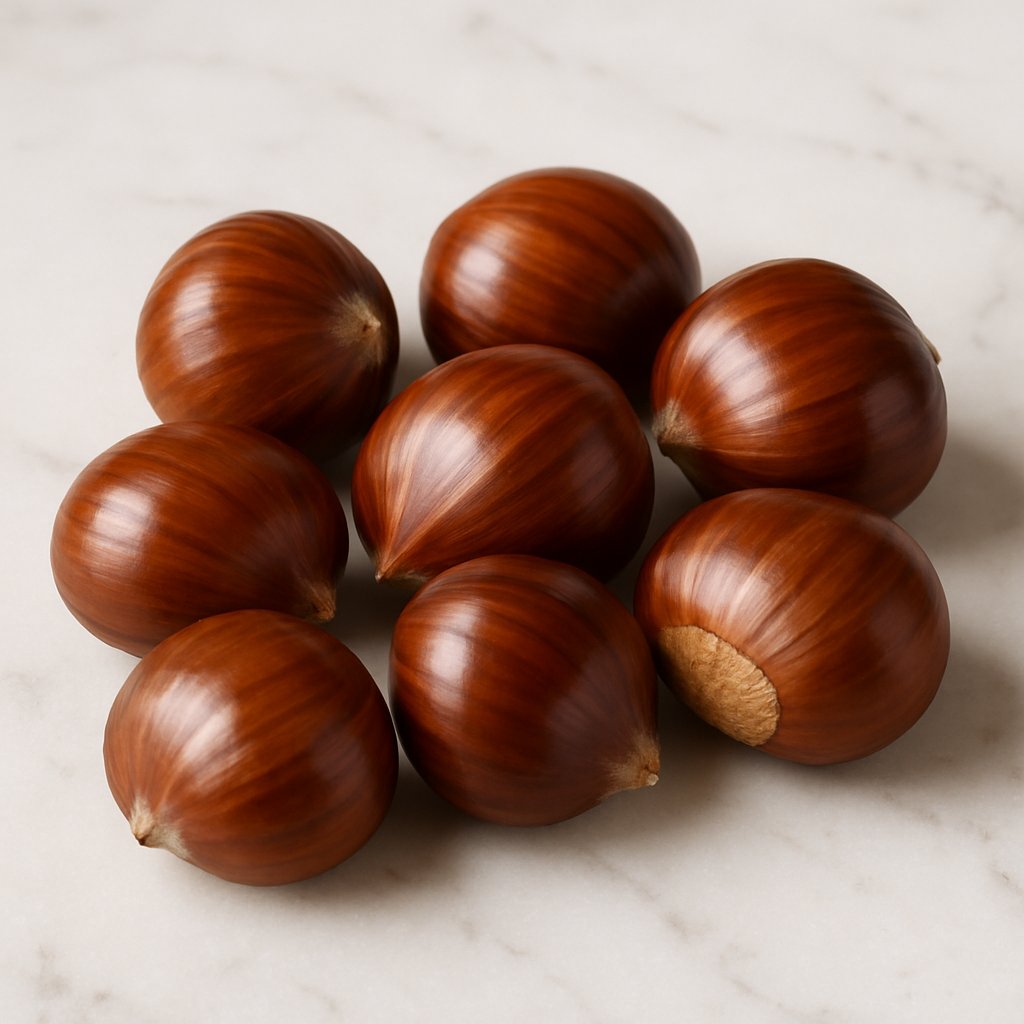
Availability and types of chestnuts
Chestnuts are the edible nuts of the chestnut tree, most enjoyed hot from the market or Christmas stall in autumn and winter. They originate from Europe and the Mediterranean but have also been cultivated in Asia and North America. They are often called sweet chestnuts to distinguish them from horse chestnuts (also called buckeyes), which are not edible and can be toxic. A simple way to tell them apart: chestnuts feel heavy and moist when tapped, horse chestnuts are dry and somewhat lighter.
Growing regions
Chestnuts grow on chestnut trees. In Europe well-known producing areas include:
Chestnuts grow on chestnut trees. In Europe well-known producing areas include:
- Italy – especially regions like Tuscany and islands with mild climates.
- France – famous for, for example, chestnuts from the Ardèche.
- Spain and Portugal – also important producers.
- Turkey – supplies many chestnuts to Europe.
- China – is one of the world's largest producers, especially for processed products.
Fresh chestnuts are usually available only in autumn and early winter (about September to December). After that they are rare in fresh form but are often available processed year-round.
Available varieties and formats
There are different varieties and processing methods so everyone can enjoy them in their own way. Here are some easy-to-understand examples:
There are different varieties and processing methods so everyone can enjoy them in their own way. Here are some easy-to-understand examples:
- Fresh chestnuts – still in the shiny shell or in the spiny husk. They must be scored before cooking so they don't burst when heated.
- Regular vs. Marrons – in trade you sometimes hear "Marron" (a single nut in the husk), which usually denotes larger, particularly nice and easy-to-peel specimens. They are like the VIP version of the chestnut.
- Cooked and peeled chestnuts – ready-prepared, often vacuum-packed or frozen. Very practical when you want to prepare something quickly.
- Marrons glacés – these are candied chestnuts, very sweet and especially popular as a Christmas specialty. They are like a sugar-glazed gift.
- Chestnut purée and flour – processed into purée or flour used for baking or soups. The purée is like the chestnut interior, made very fine.
- Roasted chestnuts – roasted at market stalls or in the oven, slightly crisp outside and soft inside. A bit like popcorn, only much more substantial.
When shopping look for firm, shiny shells and avoid holes or soft spots. Fresh chestnuts smell slightly nutty and not musty. If you crave chestnuts out of season, vacuum-packed or frozen variants are a good choice because they are almost always available.
Chestnuts therefore come in many forms: fresh, prepared, sweet or ground — and they combine origin and tradition with practical kitchen variants. That way everyone can find the right way to enjoy them.