Menu & categories

Chervil

Delicate culinary herb with a mild, anise-like aroma

Wiki about chervil Nutri-Score A Vegan Yes Gluten-free Yes Lactose-free Yes Nut-free Yes
NUTRITION / 100 g
50 kcal 3.0 g Protein 6.0 g Kohlenhydrate 1.3 g Fett

Introduction

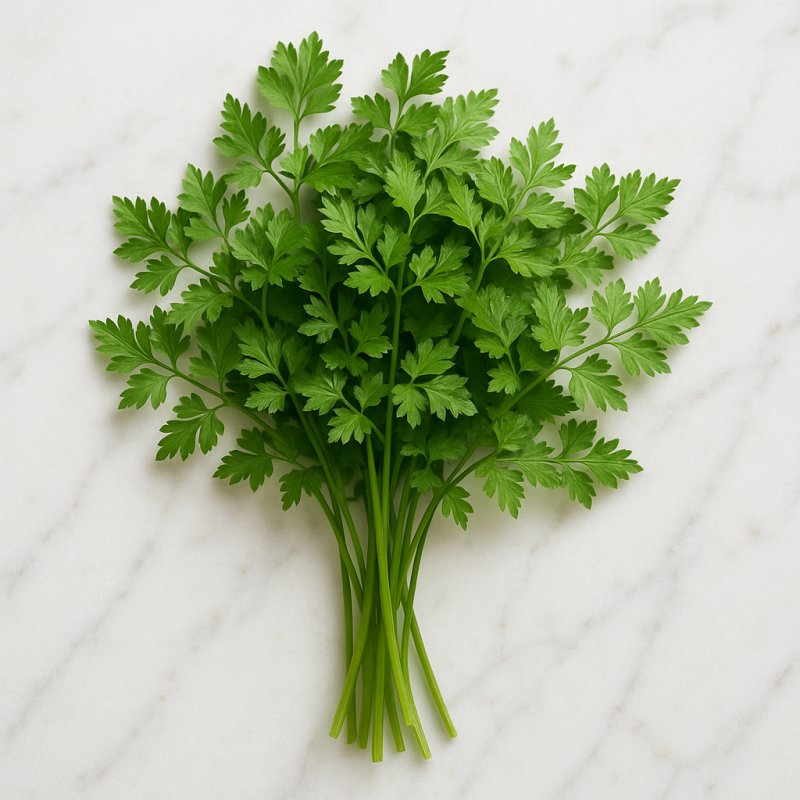
Fresh bunch of chervil with delicate green leaves
I have a weakness for herbs, and chervil holds a very special place in my little green heart. When I stroll through the weekly market and the delicate, anise‑like aroma of chervil rises, I am immediately reminded of warm spring suns and a kitchen that hums with light, fine flavors. Chervil is for me like a secret accomplice of fine cooking: unobtrusive, elegant and always there when dishes need a subtle freshness.

I still remember an afternoon when a friend and I put on an improvised dinner. Instead of elaborate decoration, a bunch of chervil was enough, which we scattered generously over a creamy potato and leek soup. The difference was astonishing: chervil brings warmth without heaviness and lifts flavors without covering them. A colleague of mine swears by using chervil instead of parsley on fish — since then I prefer to serve my salmon that way.

What I particularly love about chervil is its versatility. It pairs excellently with soups, egg dishes, fish and light sauces. In light dressings it provides a fine herbal note, and in herb butter it turns simple fried potatoes into something sublime. Its leaves are tender, almost whispering, and should therefore be chopped only shortly before serving so their aroma remains fresh.

Some practical things I always emphasize when handling chervil:

  • Freshness is crucial: Chervil loses its aroma quickly. I prefer to buy it fresh from the market.
  • Delicate preparation: It does not like long cooking times. Add shortly before the end of cooking.
  • Less is often more: Its flavor is subtle; too much chervil can introduce dominant notes to a dish.
For me chervil remains a little insider tip in the kitchen — an herb that gives dishes a fine, almost poetic note. When I entertain guests, chervil is often my wildcard: it appears inconspicuous, but provides that pleasant surprise that makes an evening memorable. Sometimes it is the quiet ingredients that say the most.

Availability & types

Availability and types of chervil

Chervil is a delicate culinary herb often mistaken for parsley or dill because it has finer, feathery leaves. It originally comes from Europe and Western Asia. Long ago the first wild plants grew in damp meadows and at woodland edges. Today chervil is cultivated in many countries, especially where the climate is mild and not too hot.

Where to find chervil
Chervil grows best in cooler regions. Many people grow it in home gardens, on balconies or in herb beds because the plant does not need much space. In supermarkets and at weekly markets you can get fresh chervil mainly in spring and early summer, when the plant is at its best. There are also seeds available so you can grow chervil yourself. Some countries supply chervil year‑round from greenhouses or from fields in different climatic zones.

Types and varieties of chervil
Chervil always looks similar, but there are a few variants that differ in size, taste and growth habit. Here are the main types in simple words:

  • Common chervil (Anthriscus cerefolium): This is the variety most often found in kitchens. It has fine, light‑green leaflets and a mild, slightly anise‑like taste, a little bit like liquorice or star anise, but much milder.
  • Winter chervil: Some varieties are more robust and cope better with cooler temperatures. They grow in late autumn or early spring, when it is colder elsewhere. They are often cultivated in areas with mild winters.
  • Pot or balcony chervil: This is not a separate species, but chervil specifically bred for pot cultivation. It stays somewhat more compact and is ideal if you have limited space.
  • Wild forms: In some places chervil also grows wild. These plants can be a bit more intense or less uniform in flavor than cultivated varieties. They are sometimes stronger in taste and therefore more suitable for outdoor uses than for delicate kitchen work.
Fresh vs dried
Chervil tastes best fresh because the essential oils that make up its flavor evaporate quickly. When chervil is dried, it loses much of its delicate aroma. That is why it is used less often in dried form. Fresh chervil is like an inflated balloon full of scent — as soon as you dry it, much of that scent escapes.

Tips for recognising and buying chervil
When you want to buy chervil, pay attention to the colour: bright, lively green is good. The leaves should not be wilted or brown at the edges. Fresh chervil smells pleasantly aromatic, slightly sweet. In supermarkets it is often sold in small bunches; at the market you sometimes get it directly from the producer. If you buy it in a pot, make sure the soil is not completely dry — that shows the plant has been cared for.

In summary
Chervil is a delicate but popular culinary plant originating from Europe and today grown in gardens and fields in many countries. There are only a few different varieties, usually distinguishable by winter hardiness or suitability for pots. Chervil tastes best fresh, and it is easiest to find in spring and summer. For children chervil is a nice herb: mild in flavour, easy to plant and ideal for refining dishes — almost as if painting a dish with a fine brush.
Details & nutrition

Property Value
Unit g
Calories per 100 50
Protein per 100 3.0
Carbohydrates per 100 6.0
Sugar per 100 0.8
Fat per 100 1.3
Saturated fat per 100 0.3
Monounsaturated fat 0.2
Polyunsaturated fat 0.6
Fiber per 100 4.0
Vitamin C (mg) per 100 50
Vitamin D (IU) per 100 0
Calcium (mg) per 100 130
Iron (mg) per 100 3.0
Nutri-Score A
CO₂ footprint 0.2
Origin Europe, especially Central and Southern Europe; cultivated in gardens and greenhouses
Gluten-free Yes
Lactose-free Yes
Nut-free Yes
Vegan Yes
Note Nutritional values refer to fresh, raw chervil. Values may vary slightly depending on variety, origin and freshness.

Technical & scientific information

Chervil (Anthriscus cerefolium) is an annual culinary herb from the family Apiaceae, valued for its fine, anise‑like aroma. Botanically chervil resembles parsley but differs by its more delicate, pinnate leaves and a milder, licorice‑ or anise‑like smell. The plant typically reaches a height of 30 to 50 centimetres and produces small white umbel flowers in summer, followed by delicate dark‑brown seeds.

Chemical composition and constituents
Chervil contains a mixture of volatile aroma compounds, secondary plant metabolites and nutrients that define its characteristic aroma and nutritional properties. Major volatile compounds include apiol, myristicin, β‑pinene and various monoterpenes as well as smaller amounts of aldehydes and ester compounds. In addition chervil contains flavonoids, phenolic compounds and detectable amounts of potassium, calcium and iron. The essential oil content is comparatively low but sufficient for aromatic use.

Nutritional values
Fresh chervil provides few calories and a low amount of macronutrients. It is mainly water but contains small amounts of carbohydrates, fibre and protein. More significant are its micronutrient levels, particularly vitamin C, provitamin A (as carotenoids) and small amounts of B‑vitamins. Antioxidant activity is mainly carried by phenolic components and flavonoids.

Processing and culinary application
Chervil is mostly used fresh because its aroma is greatly reduced by drying. It is suitable for addition at the end of cooking to preserve volatile aroma compounds. Typical applications include:

  • Use as a finishing herb in soups, sauces and fish dishes
  • Blends with other herbs such as chives, parsley and tarragon (e.g. fines herbes)
  • Use in cold preparations such as herb quark, salads and dressings
Technological aspects
In commercial processing cooling of fresh leaves is crucial to minimize quality losses from wilting and enzymatic reactions. For longer shelf life freezing in finely chopped form with minimal air exposure is the best method; industrial drying processes lead to a strong loss of aroma and are therefore less suitable. Extractions of the essential oils are usually performed by steam distillation or solvent‑based methods for analytical purposes.

Health aspects and safety
As a spice in common food amounts chervil is generally regarded as safe and well tolerated. Traditionally chervil has also been used medicinally, among other things to support digestion and as a mild antispasmodic. Because of the presence of substances such as apiol and myristicin caution is advised with excessive consumption, as these compounds can show toxic effects at high doses. Pregnant and breastfeeding women as well as people with specific medication interactions should consult medical professionals before excessive use. Allergic reactions are possible, particularly in individuals sensitive to other Apiaceae.

Analytics and research
Analytical investigations on chervil focus on determining volatile components by gas chromatography‑mass spectrometry (GC‑MS), quantitative determination of vitamins and minerals and antioxidant capacity using established assays (e.g. DPPH, FRAP). Research questions include variation of essential oils depending on growing location and harvest time, stability of bioactive components during processing and possible pharmacological effects of individual constituents.

Overall chervil is an aromatic herb with a complex chemical composition, appreciated in the kitchen for its delicate aroma. From a scientific perspective the plant provides interesting starting points for the study of secondary plant compounds and their technological and health significance, while common culinary use is considered safe when moderate.

Wiki entry for: chervil
Active now: 14 visitors of which 2 logged-in members in the last 5 minutes