Menu & categories

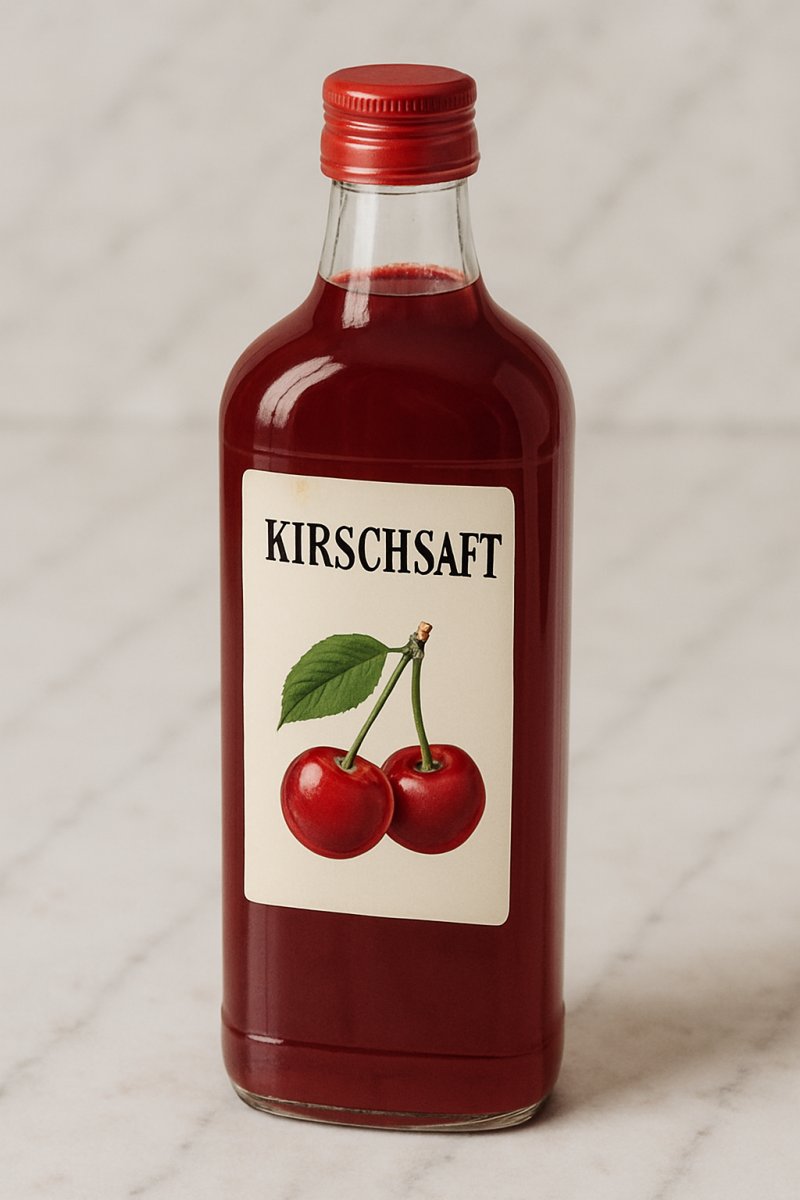
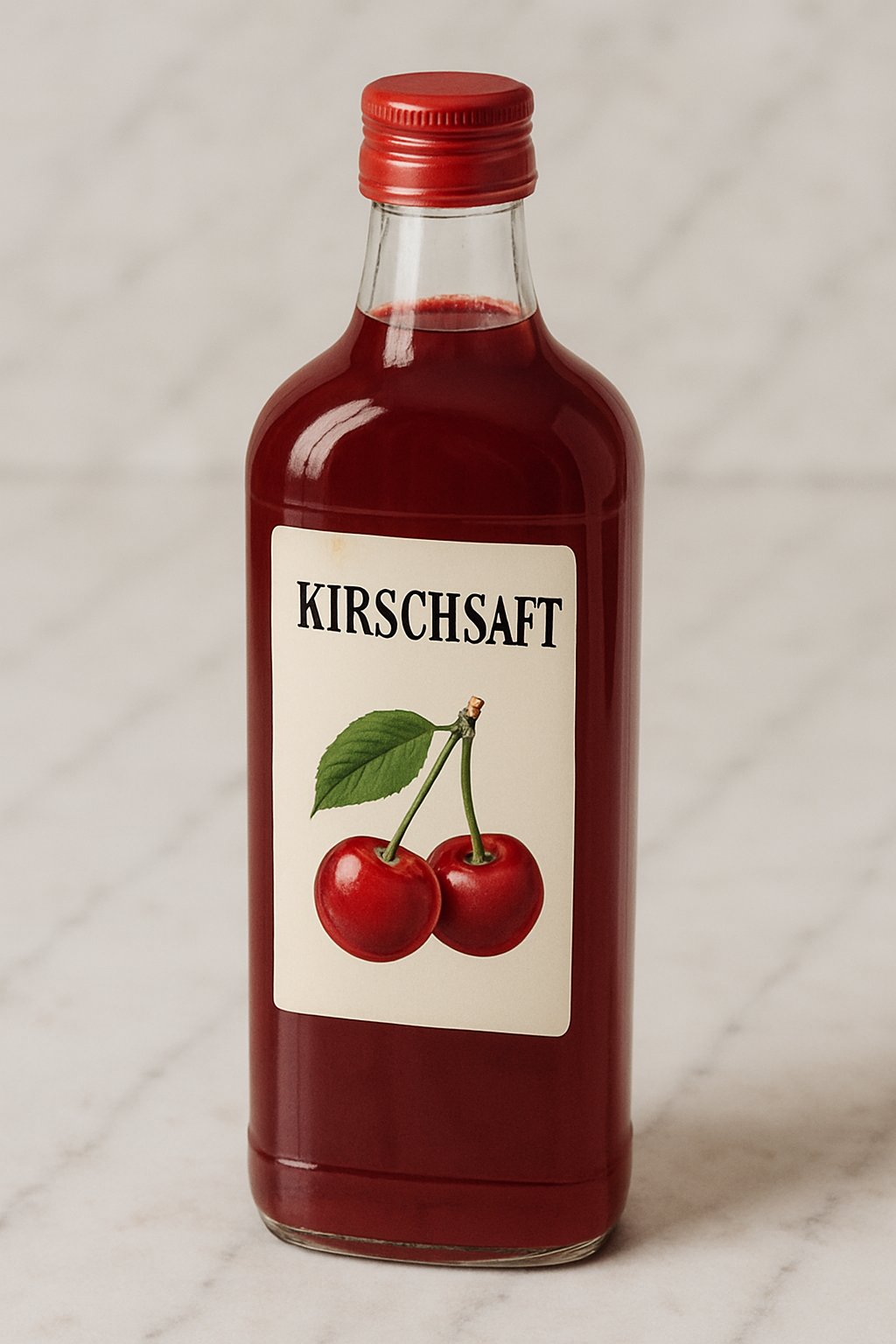
Cherry juice

Fruity juice from cherries with natural sweetness

Wiki about cherry juice Nutri-Score B Vegan Yes Gluten-free Yes Lactose-free Yes Nut-free Yes
NUTRITION / 100 ml
60 kcal 0.5 g Protein 14 g Kohlenhydrate 0.2 g Fett

Introduction

Glass of red cherry juice next to fresh cherries
I still remember well the first sip of cherry juice that really surprised me: not an overpowering cotton-candy alarm, but an intense, fruity tingle on the tongue. Since then cherry juice has become for me one of those ingredients that evokes memories and is surprisingly versatile. A colleague once brought a bottle of homemade juice to the office, and suddenly the room smelled like summer — and it was mid-November.

Cherry juice is more than just a drink. It can be sweet or tart depending on whether sweet cherries or sour cherries were used. The dark, tart varieties give depth and structure; the sweet ones are perfect for desserts and cocktails. In my kitchen I often work with both: a splash of sour cherry juice lifts dressings and marinades, while a mild sweet cherry juice refines cakes and puddings.

When I talk about cherry juice, I like to mention a few practical aspects that help with use and storage:

  • Fresh vs. concentrate: fresh juice usually has more aroma; concentrates are convenient and longer lasting.
  • Sugar and additives: check the ingredients list — some juices contain sugar, others additives.
  • Culinary uses: everything is possible from sauces and drinks to baking recipes.
  • Health aspects: cherry juice provides vitamins and antioxidants, especially from dark varieties.
I love how cherry juice transforms simple dishes. A spoonful in a pot roast brings a subtle fruity note; a dash in morning muesli makes the start of the day fresher. Once I tried reducing cherry juice with rosemary — the result was so successful I could impress friends without bragging.

So cherry juice combines flavor with versatility and small personal stories. It is robust enough to stand up in savory dishes and delicate enough to refine desserts. For me it remains an indispensable companion in the kitchen and a reminder of how a simple ingredient can turn whole moments into warm anecdotes.

Availability & types

Availability and types of cherry juice

Cherry juice is a popular beverage made from the red, juicy fruits of cherry trees. It is available in many supermarkets, health food stores or farmers' markets. You will usually find it in glass or PET bottles and sometimes in cartons (tetrapaks). Particularly convenient are small single-serving bottles or concentrates that can be mixed with water. In summer, when cherries are ripe, there are often fresh juices or those produced in small artisanal businesses directly from freshly pressed fruit.

Origin and growing regions

Cherries grow on trees in regions with a temperate climate. That means: not too hot and not too cold. Large growing areas are found in Europe, for example in Germany (especially regions like the Rhineland, Baden-Württemberg and the Lake Constance area), in France, Italy and Spain. There are also many cherry orchards in North America, particularly in the USA (e.g. Michigan and Washington) and in Canada. Many cherries are also grown in Turkey and Chile — Chile supplies many fruits during the European winter because it is summer there then. You can imagine it like a relay: when it is winter here, cherries ripen elsewhere, so juice or fruit is available year-round.

Available varieties and flavors

  • Sweet cherry (Bing, Van): These cherries are larger and very juicy. Their juice usually tastes sweeter and is reminiscent of what many children know from fresh cherries.
  • Sour cherry (Morello, Schattenmorelle): These cherries are smaller and tarter. Their juice is more intense in flavor and is well suited for cakes, sauces or drinks that can take some acidity. Sour cherry juice is often darker and stronger.
  • Blended juices: Cherry juice is often mixed with other juices like apple or grape to achieve a milder taste or to make the product cheaper. Imagine stirring two colors together, and a new shade appears — the taste works similarly.
  • Clear vs. cloudy juice: Some juices are clearly filtered, meaning they appear transparent; others are naturally cloudy and still contain small fruit particles. Cloudy juice often tastes fuller and more natural.
Processing forms and variants

  • Direct juice: Made directly from pressed cherries and usually only briefly heated so that it lasts longer. It typically has a full, fresh flavor.
  • Concentrates: In concentrates water is removed so the juice takes up less space. Before use, the concentrate is mixed with water. This is practical for storage and transport.
  • Organic cherry juice: From fruit grown without chemical pesticides. This can be important for the environment and for flavor.
  • With or without additives: Some juices contain sugar or other additives, others are pure without added sugar. This is usually clearly stated on the label.
In summary: cherry juice is available year-round in many variants — sweet or sour, clear or cloudy, as direct juice or concentrate. Depending on whether you are looking for a mild flavor or something strong, you will find the right variety. It's best to try different ones, just like with ice cream — everyone has a favorite flavor!
Details & nutrition

Property Value
Unit ml
Calories per 100 60
Protein per 100 0.5
Carbohydrates per 100 14
Sugar per 100 13
Fat per 100 0.2
Saturated fat per 100 0.03
Monounsaturated fat 0.05
Polyunsaturated fat 0.1
Fiber per 100 0.2
Vitamin C (mg) per 100 7
Vitamin D (IU) per 100 0
Calcium (mg) per 100 15
Iron (mg) per 100 0.3
Nutri-Score B
CO₂ footprint 0.25
Origin Depending on the manufacturer, typically from European growing regions
Gluten-free Yes
Lactose-free Yes
Nut-free Yes
Vegan Yes
Note Values refer to 100 ml of direct juice without added sugar; actual nutritional values may vary slightly depending on variety and processing.

Technical & scientific information

Cherry juice refers to the liquid extract from fresh or processed cherries (genus Prunus) used as a beverage, an ingredient in foods or as a raw material for further processed products. It differs in taste, hue and chemical composition depending on variety (sweet cherry Prunus avium versus sour cherry Prunus cerasus), ripeness and manufacturing process. While sweet cherry juice is milder and higher in sugars, sour cherry juice is characterized by higher levels of organic acids and more intense pigments.

Chemical composition and constituents
Cherry juice consists mainly of water (typically 85–90 %), dissolved carbohydrates (mainly glucose and fructose), organic acids, secondary plant metabolites and minerals. Important constituents include:

  • Carbohydrates: Total sugar values range depending on concentration between 8 and 16 g/100 ml in non-concentrated juices; the proportion of fructose is usually somewhat higher than that of glucose.
  • Organic acids: Mainly citric, malic and tartaric acids; in sour cherries the acidity is markedly higher, which makes the taste tarter and affects shelf life.
  • Polyphenols and anthocyanins: Anthocyanins cause the red to purple color; they are among the main antioxidant compounds in cherry juice. Other polyphenols include flavonoids and phenolic acids.
  • Vitamins and minerals: Especially vitamin C (variable, heat-sensitive), smaller amounts of B vitamins as well as potassium, magnesium and trace elements.
  • Dietary fiber: In clear juices fiber is low, in drinking pulps or nectars higher, depending on the pulp content.
Nutritional values
The caloric density of cherry juice derives mainly from sugars. A 100-ml portion of unsweetened direct juice provides about 40–60 kcal. The energy content, sugar content and electrolyte composition are relevant for sports nutrition or rehydration solutions, provided no additional sugar has been added.

Processing methods
The production of cherry juice involves several technical steps: washing, crushing/de-pitting, pressing or centrifuging, filtration and, if applicable, pasteurization. Additionally, concentration by vacuum evaporation or reverse osmosis and subsequent reconstitution occur. For clear juices, fine filtration, enzymatic treatment (pectinases) and clarification processes are common. Pasteurization (e.g. short-time heating) serves microbiological stabilization, while gentle methods like high-pressure processing (HPP) can better preserve nutrients and aroma compounds.

Sensorics and quality parameters
Quality is assessed by several parameters: color intensity (anthocyanin content), acid–base ratio (°Brix/acid ratio), content of secondary compounds and sensory properties such as aroma, sweetness and freshness. Spoilage can occur through Maillard reactions, enzymatic browning or microbial contamination, which is why appropriate storage conditions (cool, protected from light) and packaging are important.

Health aspects
Cherry juice supplies antioxidants, particularly anthocyanins, which in studies have been attributed antioxidant, inflammation-modulating and muscle-regenerating effects. There is evidence that sour cherry juice may affect nocturnal melatonin levels and improve sleep quality. At the same time, sugar content and calories must be considered; for people with fructose malabsorption or diabetes, amounts and concentration are relevant. Allergic reactions to cherry components are rare but possible. For therapeutic applications, such as supporting recovery after intense exertion, standardized concentrations and clinical evidence should be considered.

Applications
Cherry juice is consumed pure, used as a component of juices, mixed drinks or smoothies, serves as an ingredient in sauces, baked goods and jams and is a raw material for industrial concentrates, fermentations and alcoholic products such as cherry wine or liqueurs.

Overall, cherry juice is a nutritionally valuable food with a characteristic nutrient and secondary compound profile; its technological properties and health effects depend strongly on variety, harvest time and processing method.

Wiki entry for: cherry juice
Active now: 12 visitors of which 2 logged-in members in the last 5 minutes