Menu & categories

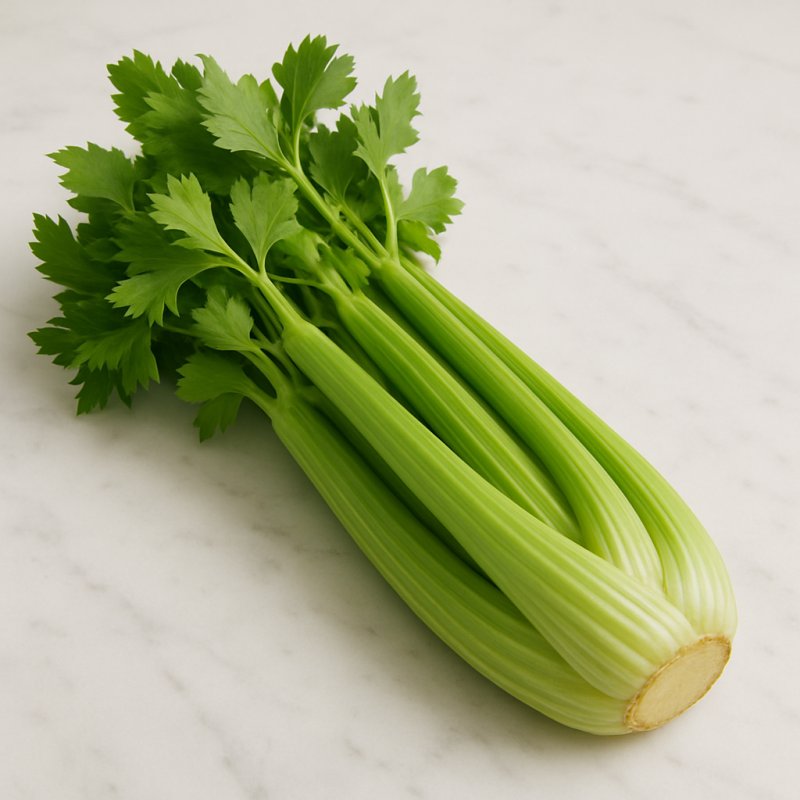
Celery (stalk)

Fresh and crunchy vegetable classic

Wiki about celery stalk Nutri-Score A Vegan Yes Gluten-free Yes Lactose-free Yes Nut-free Yes
NUTRITION / 100 g
16 kcal 0.7 g Protein 3 g Kohlenhydrate 0.2 g Fett

Introduction

Celery stalks on a table
When I think of stalk celery, memories of my childhood immediately come to mind. I remember standing in my grandmother's kitchen while she prepared a large pot of vegetable soup. She cut the green stalks with skilled hands and explained that they not only taste good but are also full of healthy nutrients. Stalk celery is for me more than just a vegetable; it is a symbol of warmth and comfort.

Stalk celery, or as we often lovingly call it, 'the crunchy friend', holds a special place in European cuisine. Its crunchy texture and slightly sweet, earthy flavor make it a versatile ingredient. I still remember a colleague of mine, who was always looking for healthy snacks, telling me he spread peanut butter on stalk celery to curb his afternoon hunger. A simple but enjoyable snack that got him through long workdays.

But stalk celery is not only suitable for snacks. I love using it in salads. When I invite guests, I like to create a colorful salad with fresh vegetables, and stalk celery gives it the necessary crunch. Here are some of my favorite uses:

  • In soups and stews for added flavor.
  • As a component of salads to add a refreshing note.
  • In smoothies to bring a healthy green component.
  • As a side to dips, especially hummus or guacamole.
Another reason I value stalk celery is its versatility in the kitchen. It can be enjoyed raw, cooked or fried. I even once tried a recipe for stuffed stalk celery that impressed my friends. Simply take some cream cheese, add herbs and spices and fill the stalks. The result? A true party hit!

Apart from its taste, stalk celery is also rich in vitamins and minerals. It contains a lot of water, which makes it a great choice for a healthy diet. So the next time I buy stalk celery, I will not only think of the delicious dishes I can prepare but also of the memories associated with it.

Availability & types

Stalk celery is a popular vegetable that many of us use in the kitchen, whether in salads, soups or as a snack. But where does this crunchy celery actually come from, and what varieties are there? Let's find out more!

Origin

Stalk celery originally comes from the Mediterranean region. The first people to use it were the ancient Egyptians, who valued the plant not only as food but also for medicinal purposes. The plant was then spread by the Romans and Greeks and eventually made its way into many kitchens around the world.

Growing regions

Today stalk celery is grown in many countries. The largest producers are:

  • USA: Especially California is known for its large celery fields.
  • China: A lot of stalk celery is also grown and exported here.
  • Europe: Countries like Spain and Italy are also important growing regions.
Stalk celery grows best in warm climates where it gets plenty of sunlight and water. The plants need about 4 to 5 months to grow and develop the typical crunchy form we love.

Available varieties and types

There are several varieties of stalk celery that differ in taste, color and size. Here are some of the best known:

  • Green stalk celery: This is the most common variety we find in supermarkets. It has a bright green color and a fresh, crunchy taste.
  • Red stalk celery: This variety has a reddish hue and is somewhat sweeter in taste. It is often used in special dishes or for plate decoration.
  • White stalk celery: This variety has a lighter color and is often considered a delicacy. It has a mild flavor and is well suited for salads.
There are also self-seeding varieties that can be grown in gardens. These varieties are often more resistant to pests and diseases and can be harvested fresh when needed.

When you buy stalk celery, make sure the stalks are firm and crunchy. Soft or yellowing stalks are no longer fresh. You can eat stalk celery raw, dip it in a sauce or use it as an ingredient in various dishes. It is not only tasty but also healthy, as it contains many vitamins and minerals.

To store stalk celery, you should keep it in the refrigerator. Best wrap it in a damp cloth or put it in a plastic bag to keep it fresh. This way you can enjoy it for many days without losing its crunch.

In summary, stalk celery is a versatile and healthy ingredient that originates from the Mediterranean region and is grown in many countries.
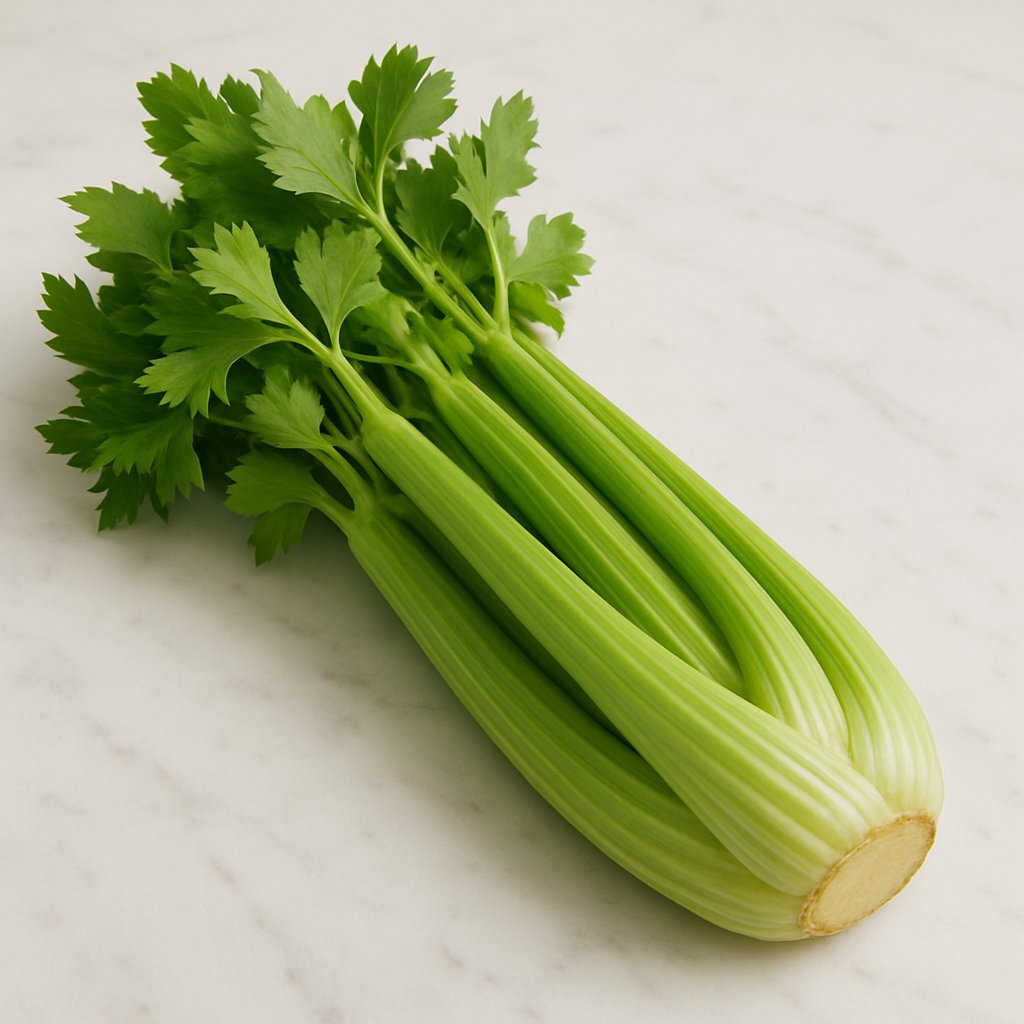
Details & nutrition

Property Value
Unit g
Average weight per piece 100
Calories per 100 16
Protein per 100 0.7
Carbohydrates per 100 3
Sugar per 100 1.4
Fat per 100 0.2
Saturated fat per 100 0.1
Monounsaturated fat 0
Polyunsaturated fat 0
Fiber per 100 1.6
Vitamin C (mg) per 100 8.1
Vitamin D (IU) per 100 0
Calcium (mg) per 100 40
Iron (mg) per 100 0.2
Nutri-Score A
CO₂ footprint 0.3
Origin Europe
Gluten-free Yes
Lactose-free Yes
Nut-free Yes
Vegan Yes
Note Celery is a refreshing vegetable, ideal for salads and snacks.

Technical & scientific information

Stalk celery (Apium graveolens var. dulce) is a popular vegetable variety that belongs to the Apiaceae family. Originally native to the Mediterranean region, stalk celery is now cultivated and appreciated worldwide. With its crunchy bite and fresh flavor, it is not only a popular snack but also a versatile ingredient in many dishes.

Chemical composition and constituents
Stalk celery is made up of about 95% water, which makes it a low-calorie food. The remaining 5% consists of various nutrients. The main constituents include:

  • Dietary fiber: Stalk celery contains about 1.6 g of fiber per 100 g. These promote digestion and help regulate blood sugar levels.
  • Vitamins: It is rich in vitamin K, which is important for blood clotting and bone metabolism. It also contains vitamin C, which acts as an antioxidant and supports the immune system.
  • Minerals: Stalk celery provides important minerals such as potassium, calcium and magnesium. Potassium is crucial for maintaining healthy blood pressure and muscle function.
  • Phytochemicals: These secondary plant compounds, such as flavonoids and phenolic acids, have antioxidant properties and may have anti-inflammatory effects.
Nutritional values
In terms of nutritional values per 100 g of stalk celery, the values are as follows:

  • Calories: 16 kcal
  • Protein: 0.7 g
  • Fat: 0.2 g
  • Carbohydrates: 3.0 g
  • Fiber: 1.6 g
Processing methods
Stalk celery can be prepared in various ways. It is often eaten raw in salads, as a snack or in smoothies. Cooked stalk celery is found in soups, stews or as a side to meat dishes. Steaming or blanching are preferred methods to preserve nutrients. Additionally, stalk celery can be made into juice, which provides a refreshing and healthy drink option.

Health aspects
The consumption of stalk celery can bring a number of health benefits. Some of the most notable benefits are:

  • Hydration: Due to its high water content, stalk celery contributes to fluid intake.
  • Weight management: Its low-calorie nature and high fiber content promote a feeling of fullness, which can help with weight loss.
  • Heart health: Potassium and antioxidants can lower the risk of heart disease by regulating blood pressure and reducing inflammation.
Wiki entry for: celery stalk
Active now: 12 visitors of which 2 logged-in members in the last 5 minutes