Menu & categories

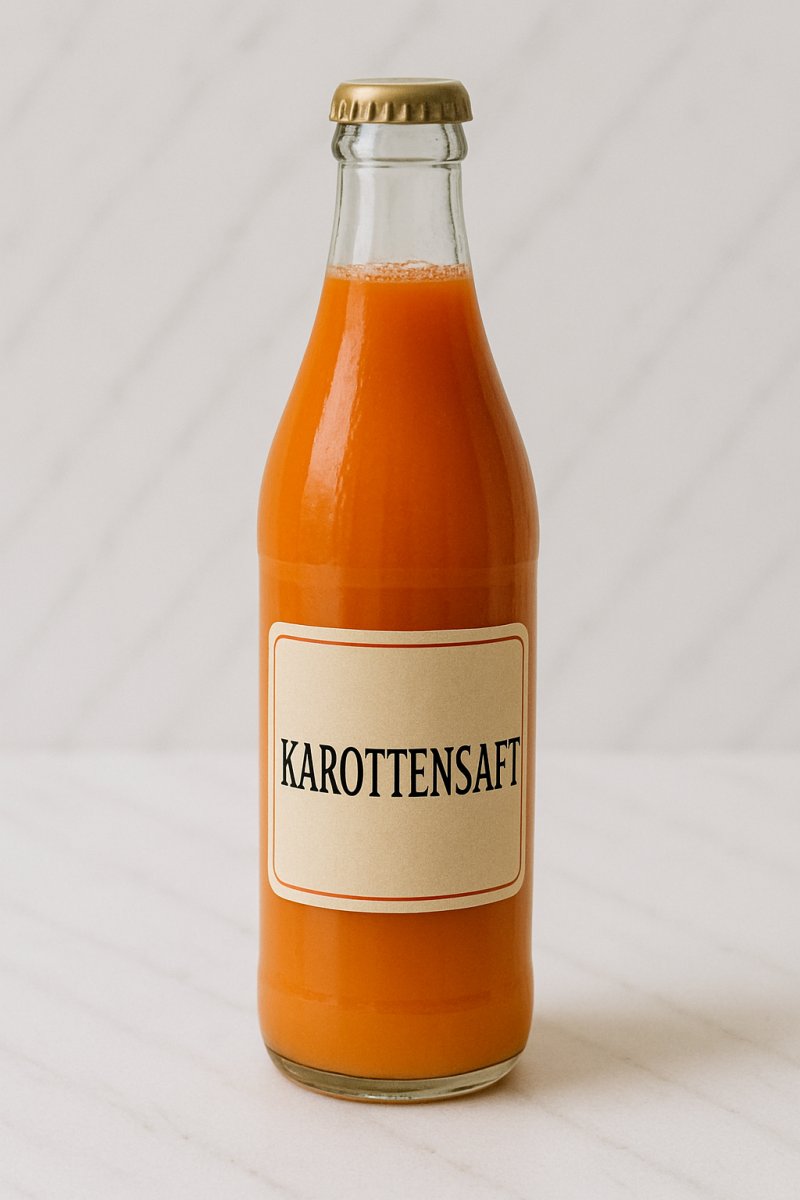
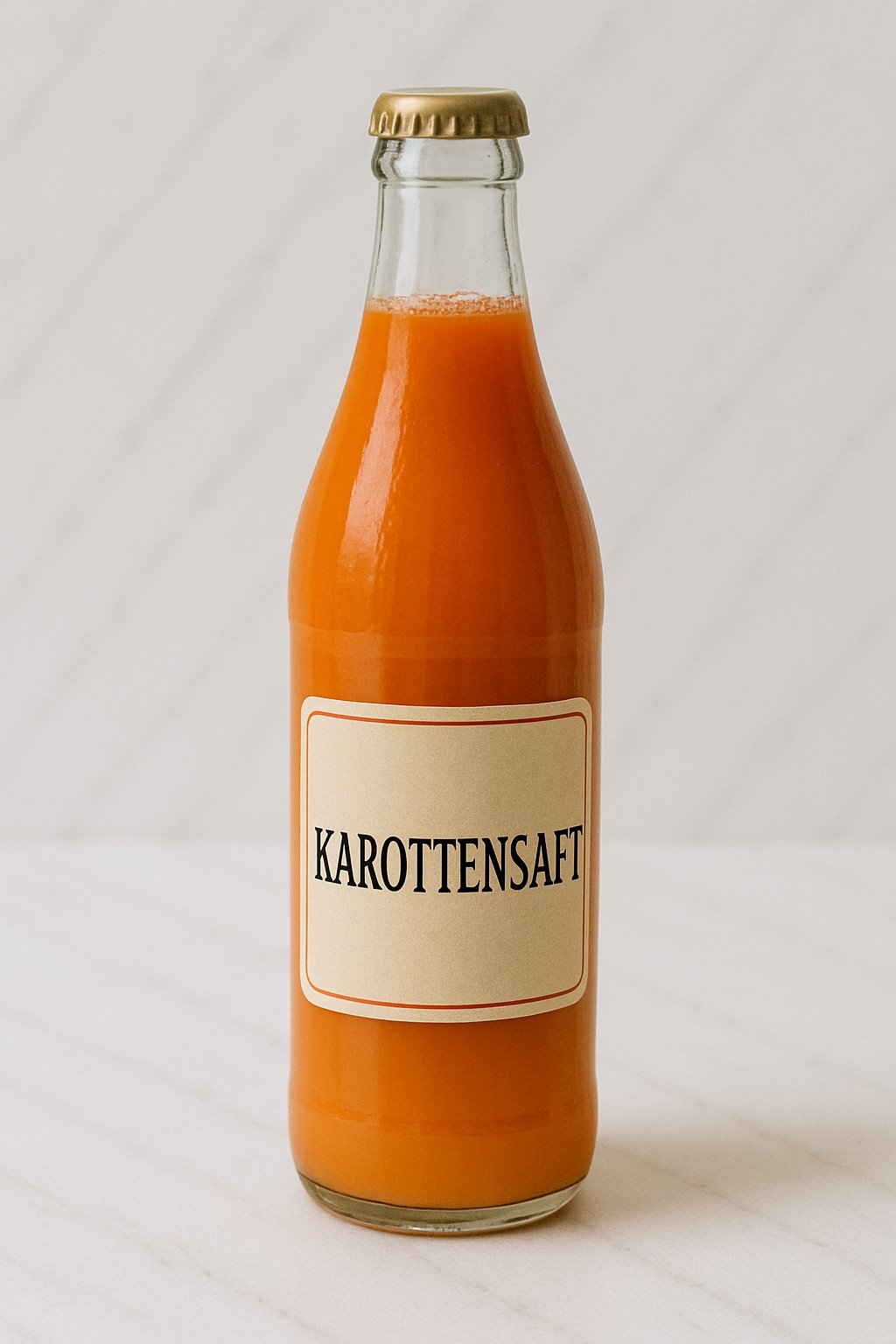
Carrot juice

Mildly sweet vegetable juice made from carrots, ideal neat or for mixing.

Wiki about carrot juice Nutri-Score B Vegan Yes Gluten-free Yes Lactose-free Yes Nut-free Yes
NUTRITION / 100 ml
40 kcal 0.8 g Protein 9.3 g Kohlenhydrate 0.2 g Fett

Introduction

Glass of carrot juice with carrots
I still clearly remember the first sip of freshly pressed carrot juice I tried at a small weekly market: bright like an autumn sun, surprisingly sweet and at the same time earthy. Since then that glass has accompanied me often – as a quick morning pick-me-up, as a secret weapon in a summer cocktail and as a base for a creamy soup on a rainy evening. Carrot juice is for me more than just a drink; it is a versatile kitchen companion that with its color alone already lifts the mood.

A colleague of mine swears by drinking a small glass before presentations because he believes the color gives him an energy boost. I tried it and I admit: it works in a surprisingly charming way. In taste carrot juice lies between sweet and slightly earthy, which makes it wonderfully combinable. I like it with a squeeze of lemon and ginger when I want freshness and spice, or together with apple juice when a milder flavor is preferred.

I have developed and gladly shared practical tips over the years:

  • Fresh is better: Pressing yourself preserves aroma and nutrients.
  • Less is more: A splash of lemon enhances the sweetness without dominating.
  • Very versatile: From smoothies to dressings to baked recipes, carrot juice works excellently.
I have also learned to pay attention to quality: juicy, firm carrots bring the best flavor, and those who want to soften the pronounced character mix it with neutral juices or herbs. Sometimes I cook it down to a light glaze for roasted vegetables or reduce it to a glossy sauce.

In the end carrot juice remains for me a small culinary chameleon: healthy, pleasant to look at and surprisingly adaptable. Next time you are at the market, take a bottle or press your own – it could be the start of a new, delicious habit.

Availability & types


Availability and types of carrot juice

Carrot juice is very widespread and easy to find. It is made from carrots grown in many parts of the world. Sometimes carrot juice is offered freshly pressed, but it is often also sold bottled in supermarkets. Think of carrot juice like orange juice: you can get it fresh at the fruit stall or prepackaged from the shelf.

Origin
Carrots originally come from Central Asia and were spread to different countries hundreds of years ago. Today carrots grow almost everywhere there is enough sun and suitable soil. Carrots are harvested and then processed into juice nearby or transported to other countries to be made into juice there. If a country is listed on the bottle, you know where the carrots were at least processed.

Growing regions

  • Europe: Many carrots for juice come from countries like Germany, France, the Netherlands and Spain.
  • North America: In the USA and Canada there are large vegetable fields that supply much carrot juice production.
  • Asia and Africa: Juice is also produced there, especially in countries with warm climates.
The exact origin on the packaging helps you know how far the juice has traveled. Fresh regional juice is usually more environmentally friendly because it does not have to be transported as far.

Available carrot varieties
Carrots come in different colors, shapes and sizes. For juice these varieties are particularly important:

  • Orange carrots: The most well-known variety, sweet and full-flavored.
  • Purple or red carrots: These give a slightly different taste and a special color.
  • Yellow and white carrots: A bit milder in taste, sometimes used for specialty juices.
  • Baby or mini carrots: Small, sweet carrots that are often juiced as well.
Variants of carrot juice
Carrot juice is available in different forms you can find in stores:

  • Freshly pressed: Usually in juice bars or markets. It tastes very fresh but is only short-lived.
  • Pasteurized: This juice has been briefly heated so there are fewer bacteria. This makes it last longer on the shelf.
  • Concentrate: Water is often removed so the juice is smaller and lighter. Water is added back in for consumption.
  • Organic: From carrots grown without chemical fertilizers or pesticides.
  • Mixed juices: Carrot juice with apple, orange, ginger or other fruits/vegetables for different flavors.
When choosing a juice, check the label: does it say “100% carrot juice” or were additives like sugar or concentrate used? Fresh juice often has more flavor, while pasteurized juice keeps longer – like milk that is briefly heated to stay fresh longer.

In summary: carrot juice is available everywhere, comes from many countries and is offered in many varieties and processing forms. Whether freshly pressed at the market or as an organic bottle from the supermarket – there is a suitable variant for every taste and need.
Details & nutrition

Property Value
Unit ml
Calories per 100 40
Protein per 100 0.8
Carbohydrates per 100 9.3
Sugar per 100 6.0
Fat per 100 0.2
Saturated fat per 100 0.0
Monounsaturated fat 0.0
Polyunsaturated fat 0.1
Fiber per 100 0.8
Vitamin C (mg) per 100 3
Vitamin D (IU) per 100 0
Calcium (mg) per 100 20
Iron (mg) per 100 0.3
Nutri-Score B
CO₂ footprint ca. 0.07 kg CO2e/100 ml
Origin Germany/EU (depending on cultivation and bottling)
Gluten-free Yes
Lactose-free Yes
Nut-free Yes
Vegan Yes
Note Nutritional values may vary depending on the manufacturing process (direct juice, from concentrate).

Technical & scientific information

Carrot juice is a beverage obtained from the root of the carrot (Daucus carota) that is characterized by a high concentration of carotenoids and a characteristic sweet aroma. Chemically and biologically, carrot juice consists mainly of water, dissolved carbohydrates, soluble fiber, organic acids, secondary plant compounds and low-molecular minerals and vitamins.

Composition and nutritional values

  • Water: typically 85–90%.
  • Carbohydrates: about 8–10 g per 100 ml, of which sugars (glucose, fructose, sucrose) are the main components.
  • Protein and fat: low, each under 1 g per 100 ml.
  • Fiber: in direct juice significantly reduced compared to the whole carrot; fiber-rich fractions remain mostly in the pomace.
  • Vitamins: notable is provitamin A in the form of β‑carotene, alongside B vitamins, vitamin C in moderate amounts and vitamin K in small amounts.
  • Minerals: mainly potassium, with traces of calcium, magnesium and phosphorus.
  • Calories: approximately 35–45 kcal per 100 ml, depending on sugar content and concentration.
Important bioactive compounds

  • Carotenoids: β‑carotene is the dominant pigment, accompanied by lutein and zeaxanthin. These molecules are responsible for the orange color and provitamin A activity.
  • Polyacetylenic compounds such as falcarinol and falcarindiol, present in carrots, show documented biological activities and are pharmacologically studied.
  • Phenols and flavonoids contribute to antioxidant capacity, though at concentrations lower than in many berries.
Analytical identification

Quantitative determination of carotenoids is usually performed by HPLC with a photodiode array detector or coupled mass spectrometer. Vitamin C is often determined by HPLC or titration. Physicochemical parameters such as °Brix, pH and titratable acidity provide information on ripeness and quality.

Processing techniques

  • Pressing: centrifugal or cold-press methods; the latter preserve more flavor and nutrients.
  • Clarification: enzymatic treatment (pectinases), centrifugation and filtration to clarify the juice.
  • Preservation: pasteurization, aseptic filling or modern methods like High Pressure Processing (HPP) to extend shelf life with reduced thermal load.
  • Concentration and reconstitution are used industrially for storage and transport.
Stability and storage

Carotenoids are sensitive to light, heat and oxygen; prolonged heat exposure promotes isomerization of all‑trans‑β‑carotene to cis forms and can reduce biological activity. Vitamin C also oxidizes rapidly. Juices stored cool, dark and with low oxygen retain quality longer.

Health aspects

Carrot juice provides provitamin A and antioxidants that can contribute to vision, skin health and immune function. Absorption of carotenoids is greatly enhanced when consumed with fat. Excessive intake can cause carotenemia (yellowish skin discoloration) in sensitive individuals; true toxic vitamin A hypervitaminosis is rare due to the provitamin form. People with diabetes should consider the sugar content.

In food technology and nutrition science, carrot juice remains a model product for studying carotenoid stability, enzymatic processes and gentle preservation methods, while new technologies continue to optimize the balance between shelf life, nutrient retention and sensory quality.

Wiki entry for: carrot juice
Active now: 18 visitors of which 2 logged-in members in the last 5 minutes