Menu & categories

Caramel syrup

Sweet syrup made from caramelized sugar, ideal for enhancing desserts and beverages

Wiki about caramel syrup Nutri-Score E Vegan Yes Gluten-free Yes Lactose-free Yes Nut-free Yes
NUTRITION / 100 ml
320 kcal 0.1 g Protein 80 g Kohlenhydrate 0 g Fett

Introduction

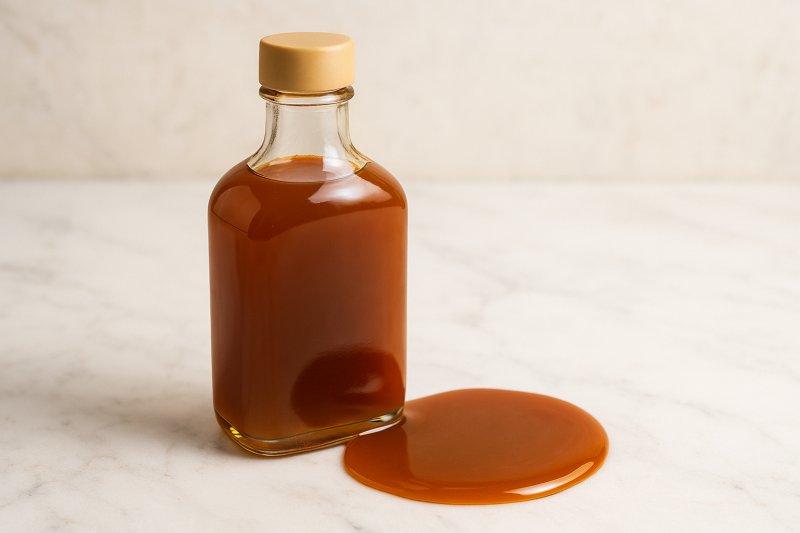
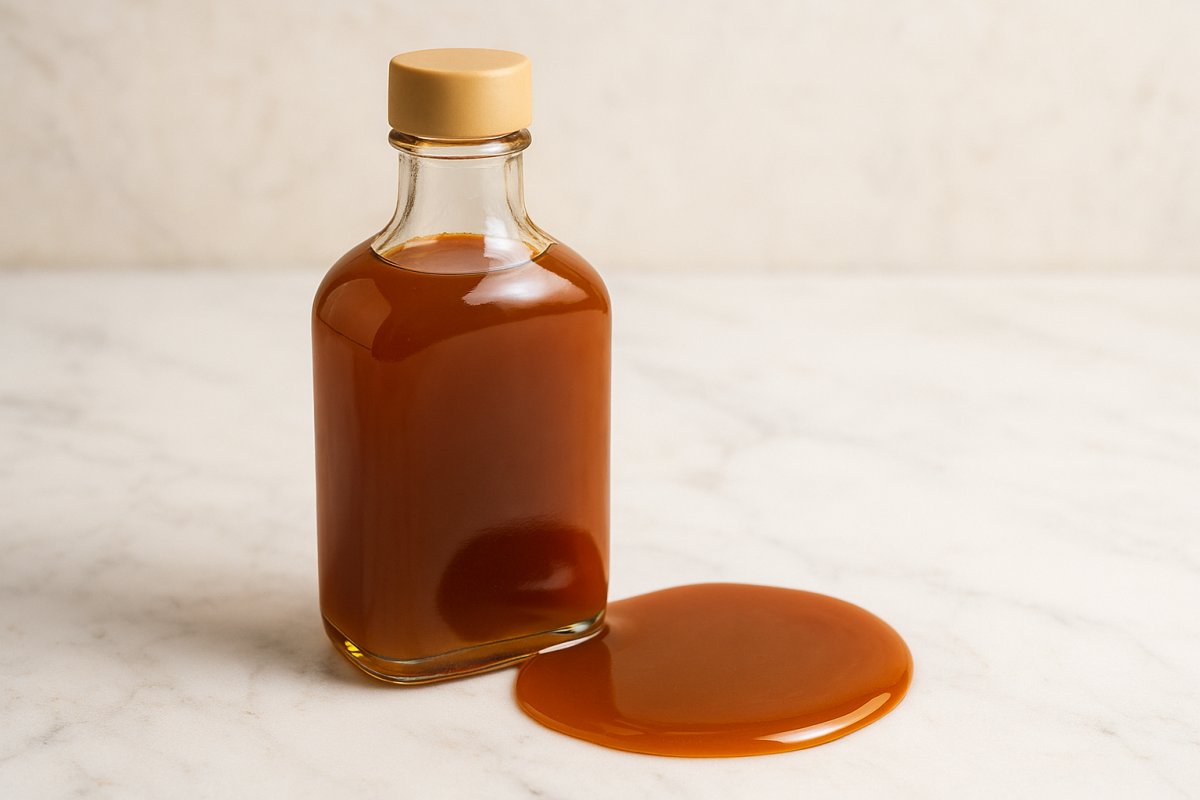
A jar of thick caramel syrup
I still clearly remember the first spoonful of caramel syrup that really opened my eyes: not in a trendy café, but on a rainy train platform, where out of pure curiosity I had ordered a coffee with a generous dash. The syrup practically melted on my tongue, bringing together butter, roasted notes and a distinct, velvety sweetness. Since then caramel syrup has had a permanent place in my kitchen, because it can do much more than just sweeten.

Caramel syrup is essentially a mixture of caramelized sugar and water, often enriched with vanilla, cream or a hint of salt. Its texture ranges from slightly fluid to syrupy-dense, depending on whether it's industrially produced or homemade. I once tried to make it myself, and it was a lesson in patience and attention: sugar can in seconds change from an enticing amber to bitterly burnt. This little chemistry is exactly what I love about the ingredient.

The uses are surprisingly varied:

  • Beverages: Latte, iced coffee, cocktails or hot chocolate immediately gain depth.
  • Baking: As a glaze, in fillings or in the batter it yields moist cakes and caramel notes.
  • Savory dishes: A splash on roasted vegetables or as part of a marinade creates surprising contrasts.
  • Desserts: Ice cream, panna cotta or cheesecake are made more luxurious by caramel syrup.
I have a fond memory of a spontaneous dessert I conjured up for guests: simple scoops of vanilla ice cream, topped with a warm bath of caramel syrup and a pinch of sea salt. A colleague of mine, rather skeptical, leaned back, closed his eyes and said only: "That changes everything." Moments like that explain why I like to experiment with different varieties — sometimes with smoky notes, sometimes with a creamy-milky finish.

When shopping I look for clear ingredient lists and avoid syrups with unnecessary additives. Those who make it themselves should be patient and caramelize small amounts at first. A tip: a few drops of lemon juice stabilize the sugar during caramelization and prevent it from crystallizing. That way the syrup turns out nicely velvety.

In the end caramel syrup is about balance: not too dominant, but present enough to evoke memories. For me it is a small luxury that turns everyday moments into pleasurable pauses and plays a big role in the simplest recipes.

Availability & types

Availability and types

Caramel syrup is a sweet liquid that can be found in many supermarkets, specialty stores and also online. It usually consists of sugar, water and sometimes a little butter or cream if it is a creamy caramel syrup. You can think of caramel syrup similarly to honey: both are viscous and sweet, but caramel syrup tastes of burnt or roasted sugar, a bit like toffee or caramel candies.

Origin
Caramel syrup doesn't really have a "growing region", because it doesn't grow directly in a field like fruit or vegetables. Instead it is made by heating sugar until it melts and takes on a golden-brown color. That sugar can come from different plants that supply sugar, for example:

  • Sugar beets – are often grown in cooler areas like Europe.
  • Sugarcane – grows in warm, tropical regions such as South America, Africa or Southeast Asia.
The manufacturer therefore buys sugar, processes it and mixes it with other ingredients. That's why caramel syrup has no own "origin" like an apple tree, but depends on where the used raw materials and the factory are located.

Available varieties and variants
There are many different types of caramel syrup – some are very simple, others have additional flavors. Here are the main types, explained in simple words:

  • Simple caramel syrup – usually consists only of sugar and water. It is thin and very sweet. It is often used to sweeten drinks like milkshakes or coffee.
  • Creamy caramel syrup (butterscotch or cream caramel) – contains butter or cream in addition. As a result it is thicker and tastes richer, almost like liquid toffee. It is well suited for desserts or as a topping on ice cream.
  • Salted caramel – has a pinch of salt in the taste. The salt makes the sweet caramel flavor more interesting because it balances the sweetness somewhat. Many people really like this combination.
  • Vegan or plant-based variants – are made without dairy products, for example with plant-based margarine or plant cream. They are suitable for people who do not want to consume dairy.
  • Blends with flavors – sometimes flavors such as vanilla, coffee-flavored caramel or even spices like cinnamon are added. This changes the taste and makes the syrup particularly interesting for special recipes.
  • Homemade vs. industrial syrup – at home you can make caramel yourself, then you know exactly which ingredients are in it. Industrially produced syrups are often longer lasting because they may contain preservatives or additional types of sugars.
How to find it
Caramel syrup is available in many sizes: small bottles for home, large containers for cafés or portion sachets in some shops. When shopping you can check the label to see if the syrup contains milk, if it is vegan or if salt has been added. If you are looking for something specific, for example salted caramel, a quick look at the ingredient list or asking in the store helps.

In summary: caramel syrup does not grow in fields, but is made from sugar that comes from sugar beets or sugarcane. There are simple, creamy, salty, vegan and flavored varieties as well as homemade or industrially processed versions – there is something for every taste and use.
Details & nutrition

Property Value
Unit ml
Calories per 100 320
Protein per 100 0.1
Carbohydrates per 100 80
Sugar per 100 80
Fat per 100 0
Saturated fat per 100 0
Monounsaturated fat 0
Polyunsaturated fat 0
Fiber per 100 0
Vitamin C (mg) per 100 0
Vitamin D (IU) per 100 0
Calcium (mg) per 100 10
Iron (mg) per 100 0.1
Nutri-Score E
CO₂ footprint 1.0
Origin Varies depending on manufacturer, often EU
Gluten-free Yes
Lactose-free Yes
Nut-free Yes
Vegan Yes
Note Values refer to classic sugar-based caramel syrup without milk or flavorings; formulation may vary by manufacturer.

Technical & scientific information

Caramel syrup is a sweet liquid concentrate produced by heating sugar and adding water as well as often other ingredients such as glucose syrup, butter flavorings or milk components. Chemically, heating sugar leads to a series of complex transformations collectively called caramelization. In this process sucrose molecules break down, differently sized sugar fragments, enols and a variety of reactive intermediates form, which by rearrangements, condensations and polymerisations produce colored and aromatic compounds.

The exact composition of caramel syrup varies depending on the recipe, but typical components are:

  • Table sugar (sucrose) as a starting material or as a component alongside other sugars.
  • Glucose syrup, which inhibits crystallization, controls viscosity and improves freeze and cooking stability.
  • Water to set the consistency and to control the cooking process.
  • Milk components or cream in milk-flavored caramel syrups, which promote Maillard reactions (between amino acids and reducing sugars) and provide a rounded flavor.
  • Salt, acids or emulsifiers for fine-tuning flavor and texture.
From a nutritional point of view caramel syrup mainly supplies readily available carbon in the form of simple and double sugars. Energy density is high; per 100 grams calories typically range from 300 to 350 kcal, the exact value depends on water and sugar concentration. Vitamins and minerals are scarcely present in commercial clear syrups; caramel syrups with milk contain small amounts of calcium and proteins.

The physical properties of caramel syrup are determined by concentration, temperature management and additives. Refractive index and viscosity increase with higher solids content. Glucose syrup or invert sugar are often used to ensure a crystal-free, stable syrup structure. The density is usually higher than that of pure water, which is noticeable in application and dosing.

Manufacturing processes can be industrial or homemade. Industrially, controlled vacuum kettles are used to achieve higher solids at lower temperatures and to promote targeted flavor formation. Temperature profiles and cooling rates are controlled to achieve desired colors (light to dark) and flavor. Home recipes reduce reaction control to temperature and stirring technique; caution is needed because caramelized sugar reaches very high temperatures and combustion products can form.

From a health perspective caramel syrup – like other sugar products – is harmless in moderation, but excessive consumption can contribute to weight gain, dental problems and an increased risk of metabolic diseases. Industrial preparations with a high share of free sugars or added milk deserve special attention for people with lactose intolerance. In industrially produced caramel, in rare cases 4‑methylimidazole (4‑MI) or other thermal by-products can form in traces; these are regulated in many countries and minimized through process optimization.

In use caramel syrup is versatile: it serves as a sweetener, flavoring agent, glazing and decoration component as well as a moisture-binding ingredient in baked goods and sweets. Sensory-wise color, sweetness perception, slightly bitter caramel notes and a complex roasted flavor characterize the product. Technologically, caramel syrup is a functional ingredient whose stability, flow properties and anti-crystallization characteristics are decisive for recipe design.

In summary, caramel syrup is a technologically and chemically interesting sweetener whose properties are influenced by ingredient choice and process control. Its nutritional effects correspond to those of other sugar-based products, so moderate use is recommended. Industrial production aims to ensure consistent quality, desired aromas and low formation of unwanted by-products.

Wiki entry for: caramel syrup
Active now: 24 visitors of which 2 logged-in members in the last 5 minutes