Menu & categories

Cappuccino

Coffee beverage made from espresso and milk with creamy milk foam

Wiki about cappuccino Nutri-Score C Vegan No Gluten-free Yes Lactose-free No Nut-free Yes
NUTRITION / 100 ml
55 kcal 3.4 g Protein 5.0 g Kohlenhydrate 2.0 g Fett

Introduction

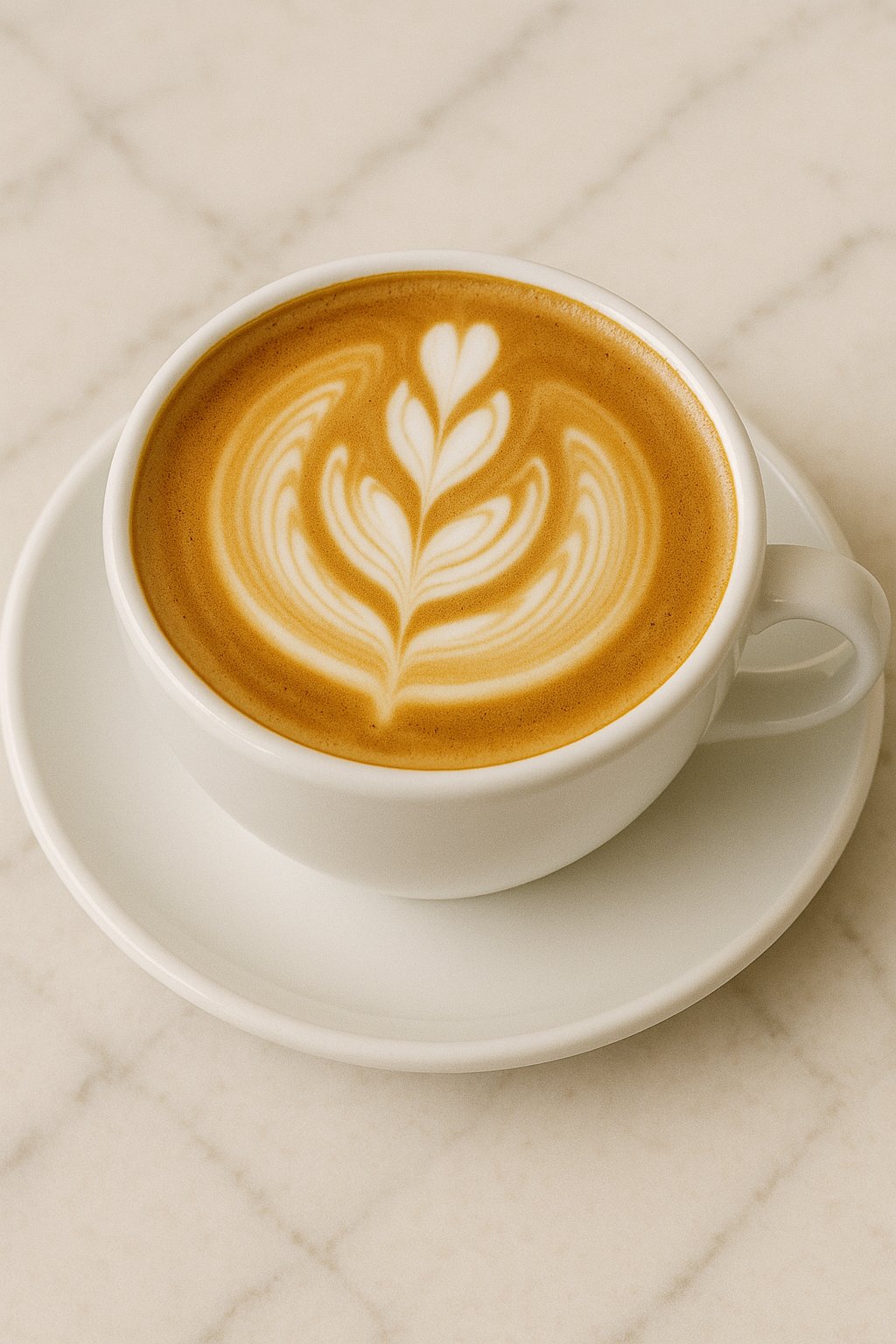
Cup of cappuccino with milk foam
I still vividly remember the first morning I truly thought I understood cappuccino: it was in a small street café, the scent of freshly ground beans hung heavy in the air, and the barista served me a cup with an artful heart of milk foam. Since then cappuccino has been for me far more than a drink; it is a small daily ceremony, a moment when caffeine, texture and ritual come together.

Considered as an ingredient, cappuccino at its core consists of three simple elements:

  • Espresso: The concentrated base with a strong, complex aroma.
  • Steamed milk: Warmth and sweetness that caress the espresso.
  • Foam: Airy lightness that rounds it all off.
The art is in the ratio and the technique. A good cappuccino requires precise espresso, fine-pored milk foam and a feel for temperature. I have tried countless times to reproduce the perfect crema and velvety foam — some attempts ended in delicious persistence, others in sticky aprons and a kitchen that looked more like a bar than a living room. A colleague once taught me that milk should never be hotter than about 65 °C; if it burns, the foam loses its sweetness and everything tastes flat.

In terms of flavor, cappuccino offers a wonderful balance: the bitter depth of the espresso, the natural sweetness of the milk and the airy texture of the foam. I like it classic; sometimes I lightly dust the surface with cocoa powder when I want to give guests a nostalgic moment. At other times I mix in bolder spices — a hint of cinnamon or nutmeg can surprisingly refine the experience.

For me cappuccino is also a social drink. It invites conversation, accompanies a good book or marks the start of a productive morning. I have developed many small rituals around this cup: the right grind setting, listening for the hiss while frothing and the satisfied sip when everything is right. In this way cappuccino remains for me a simple luxury that comfortingly combines everyday life and pleasure.

Availability & types

Availability and types

Cappuccino is a popular coffee beverage enjoyed by many people around the world. When we talk about availability and types, we mean where you can get it, what ingredients or variants exist and how differently it can be prepared.

Where does cappuccino come from?
Cappuccino has its roots in Italy. Its name recalls the hooded monks (the Capuchins), because the color of the coffee with a little milk foam resembles the brown robes of these monks. Nowadays cappuccino is offered everywhere – in cafés, large coffee chains, restaurants and even at many service stations.

Growing regions (for the coffee it contains)
The main ingredient of cappuccino is coffee, made from coffee beans. These beans grow on plants that thrive in warm regions near the equator. Well-known growing regions include:

  • South America – countries like Brazil and Colombia supply a large amount of coffee. You can imagine large plantations with many coffee bushes.
  • Africa – Ethiopia and Kenya are famous for their distinctive flavors, which some people find fruity or floral.
  • Asia – countries like Vietnam or Indonesia also produce a lot of coffee, often with a bolder aroma.
The milk components in cappuccino usually come from cow's milk, which is widely available in many countries. There are also plant-based drinks (such as oat, soy or almond milk) that can be used instead of cow's milk. These alternatives are especially common where many people seek lactose-free or vegan options.

Available varieties and variants
There is not just one type of cappuccino. You can think of it like a sandwich that you can fill with different ingredients. Here are the most common variants:

  • Classic cappuccino – made of three parts: espresso (strong coffee), warm milk and creamy milk foam. It is usually relatively small and strong in flavor.
  • Large cappuccino / "Grande" – the same mixture but in a larger cup for more thirst.
  • Latte macchiato or caffè latte – similar to cappuccino but contains more milk and less foam. For people who prefer a milder taste.
  • Latte art – when baristas (i.e., the people who prepare coffee) create decorative patterns with milk foam on the cappuccino. It doesn't change the flavor much but makes the drink pretty.
  • Flavored varieties – many cafés offer syrups or spices, for example vanilla, caramel, hazelnut or cinnamon. It's like adding sugar or chocolate sprinkles to ice cream: the base stays the same, only the flavor changes.
  • Plant-based variants – instead of cow's milk, oat, soy or almond milk are used. Some froth better than others; oat milk is very popular currently because it foams well and tastes mild.
  • Decaffeinated cappuccino – here coffee without caffeine is used. It tastes similar but does not stimulate. Good for people sensitive to caffeine.
Where can you buy cappuccino?
Cappuccino can be found almost everywhere: at cafés, in supermarkets as ready-to-drink products or instant powders, in coffee vending machines and at many fast-food chains. Ready-made supermarket varieties are convenient for home use, while the café experience is often fresher and more attractively served.

Overall cappuccino is widely available and comes in many variants, so almost everyone can find a version they like – whether strong, mild, with chocolate or completely without cow's milk. It is therefore a flexible beverage to enjoy anywhere.
Details & nutrition

Property Value
Unit ml
Calories per 100 55
Protein per 100 3.4
Carbohydrates per 100 5.0
Sugar per 100 5.0
Fat per 100 2.0
Saturated fat per 100 1.3
Monounsaturated fat 0.5
Polyunsaturated fat 0.1
Fiber per 100 0.0
Vitamin C (mg) per 100 1.0
Vitamin D (IU) per 100 8
Calcium (mg) per 100 120
Iron (mg) per 100 0.0
Nutri-Score C
CO₂ footprint 0.25
Origin Varies depending on the origin of the coffee and milk
Gluten-free Yes
Lactose-free No
Nut-free Yes
Vegan No
Note Nutritional values refer to a classic cappuccino with regular cow's milk (3.5% fat), unsweetened.

Technical & scientific information

Cappuccino refers both to a classic coffee beverage and to the corresponding instant or blended ingredient used to prepare a similar drink. Originally arising from the espresso tradition in Italy, a typical cappuccino consists of espresso, frothed milk and a thin crown of milk foam. In industrial formulations there are powdered cappuccino mixes that combine soluble coffee, milk components, sugar and flavorings to allow quick preparation by adding hot water or milk.

Chemical composition and ingredients
The main components of a commercial cappuccino product are:

  • Soluble coffee (instant coffee): decaffeinated or caffeinated extracts obtained by spray- or freeze-drying; contains caffeine, chlorogenic acids, melanoidins and volatile aroma compounds.
  • Milk powder or milk components: contain proteins (primarily casein and whey proteins), milk fat, lactose and mineral components such as calcium and phosphate.
  • Sugar: sucrose or other sweeteners that control taste and influence hygroscopic properties.
  • Flavors and emulsifiers: natural or nature-identical flavorings (e.g., roast or vanilla flavors) and emulsifiers like soy lecithin to stabilize the powder matrix and improve solubility.
  • Stabilizers and anti-caking agents: substances such as silicon dioxide, dextrin or carrageenan to prevent lumping and to control texture when dissolving.
Nutritional values
Nutritional values vary considerably by formulation. Typical values per serving (approx. 12–15 g powder with hot water) fall within the following ranges:

  • Calories: about 50–120 kcal, depending on sugar and milk content.
  • Fat: 1–4 g, with saturated fatty acids forming the larger share when whole milk components are used.
  • Protein: 1–3 g, mainly from milk proteins.
  • Carbohydrates: 8–20 g, mostly as sugars (lactose and sucrose).
  • Caffeine content: 30–90 mg per serving in caffeinated variants, highly dependent on the amount and concentration of soluble coffee.
Processing methods
Industrial production combines several techniques. Soluble coffee is produced by extracting roasted coffee with hot water, followed by concentration and drying (spray- or freeze-drying). Milk components are processed into milk powder by milk evaporation and spray drying. The final blend is produced by precise dosing and mixing operations in fluid bed dryers or mixers, followed by packaging under controlled humidity to ensure stability and flowability. Emulsifiers and stabilizers are added in small amounts to achieve a homogeneous phase on rehydration and to improve foam and texture properties.

Sensory and physical properties
The sensory properties of a cappuccino depend on roast degree and coffee origin, milk proportion and sweetening. Melanoidins and Maillard reaction products from roasting contribute to body and bitterness, while volatile compounds (acids, ketones, aldehydes) determine aroma. Physically, solubility, heat of solution, particle size distribution and hygroscopicity are critical for handling and dissolution in hot liquid.

Health aspects
Cappuccino contains both beneficial and noteworthy components. Caffeine acts as a stimulant on the central nervous system and can increase alertness; however, excessive consumption can cause side effects such as sleep disturbances, increased heart rate or gastrointestinal discomfort. Milk components provide high-quality proteins, calcium and B vitamins, but can be problematic in cases of lactose intolerance or milk protein allergy. Sugar-rich mixes increase energy intake and, with regular consumption, can contribute to higher risk of dental caries and obesity. In addition, commercial instant mixes may contain additives whose long-term effects should be considered in the context of high intake levels.

Sustainability and quality
Ecological and social aspects vary depending on coffee origin, cultivation method and processing. Certifications such as Fair Trade, Rainforest Alliance or organic provide indications of more sustainable practices. Quality assurance includes green coffee inspection, roast profile control, microbiological testing of milk components and sensory evaluation of finished products.

In summary, cappuccino as an ingredient is a complex blend of coffee extracts, milk components, sweeteners and additives whose chemical and physical properties determine sensory attributes, nutritional values and health effects. Manufacturing and formulation are technically demanding to ensure stability, solubility and a desired taste experience, while nutritional and sustainability-related aspects should be considered when choosing a product.

Wiki entry for: cappuccino
Active now: 18 visitors of which 2 logged-in members in the last 5 minutes