Availability and types
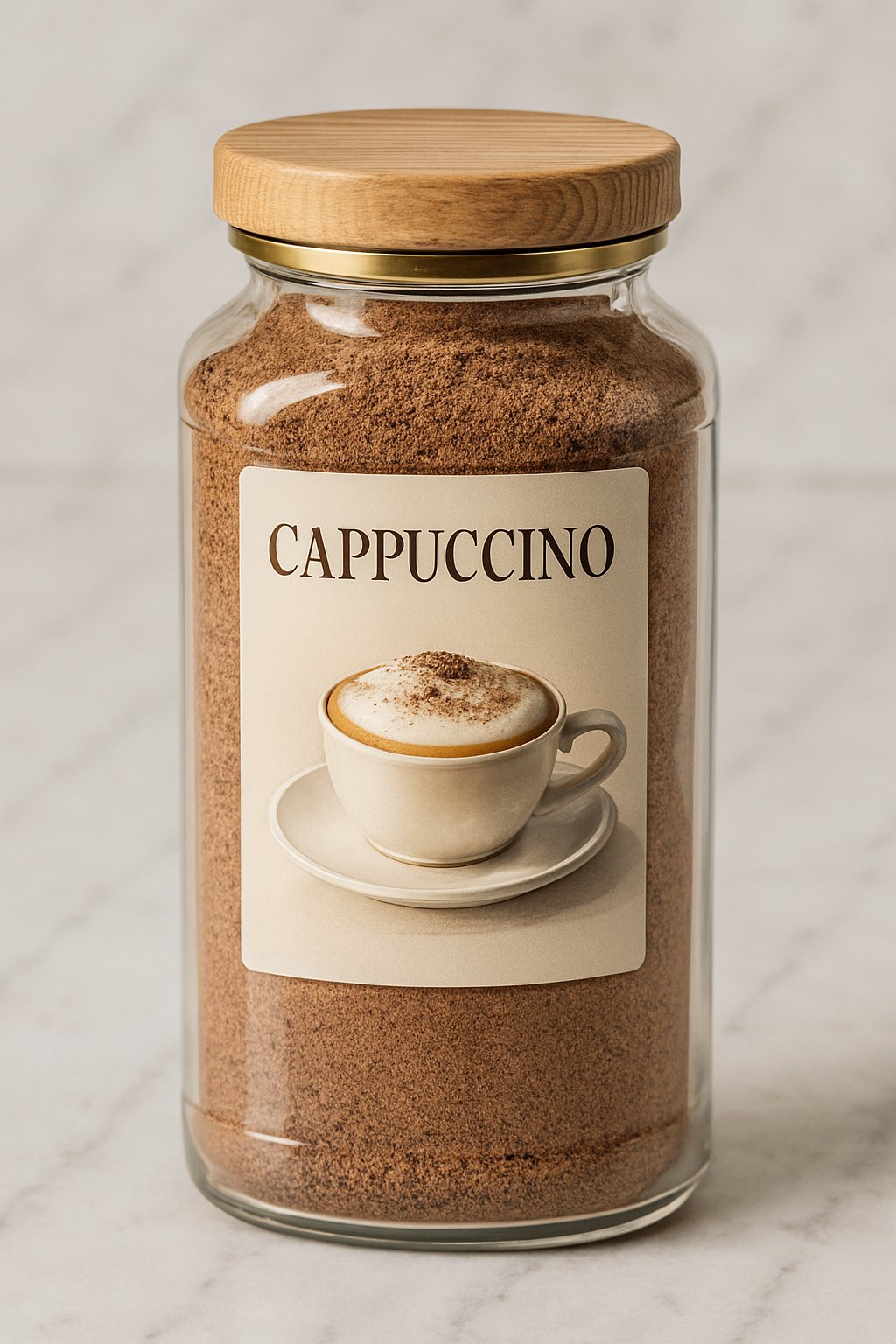
Cappuccino powder is a ready-mixed powder that lets you quickly prepare a creamy cappuccino. It is easy to find in many supermarkets, drugstores and online. You often find it in small tins, large bags or as single‑serve sachets that you can pour directly into a cup. Imagine it being available like cocoa or instant coffee — on shelves next to other hot beverages.
Origin
Cappuccino powder is made from several ingredients that can come from different parts of the world. The most important ingredient is usually instant coffee, meaning coffee that is first brewed and then dried into a powder. Coffee is mainly grown in countries around the equator, such as Brazil, Vietnam, Colombia and parts of Africa. Another important component is milk powder or a milk substitute, derived from dairy or plant-based ingredients. Sugar, cocoa powder or flavorings (e.g. vanilla) are often added from various regions. The factory where cappuccino powder is blended and packaged, however, can be located anywhere in the world.
Cappuccino powder is made from several ingredients that can come from different parts of the world. The most important ingredient is usually instant coffee, meaning coffee that is first brewed and then dried into a powder. Coffee is mainly grown in countries around the equator, such as Brazil, Vietnam, Colombia and parts of Africa. Another important component is milk powder or a milk substitute, derived from dairy or plant-based ingredients. Sugar, cocoa powder or flavorings (e.g. vanilla) are often added from various regions. The factory where cappuccino powder is blended and packaged, however, can be located anywhere in the world.
Growing regions
The plants that end up in cappuccino powder grow in very different places:
The plants that end up in cappuccino powder grow in very different places:
- Coffee: Grown in warm countries with highlands, mostly in South America, Africa and Asia. Altitude, climate and soil influence the flavor — like apples, which taste different depending on where they grow.
- Cocoa: If the powder has chocolate or cocoa notes, the cocoa powder typically comes from West Africa, South America or Southeast Asia.
- Milk: Milk powder often comes from countries with many dairy farmers, e.g. EU countries, the USA or New Zealand. Plant-based milk powders (e.g. from soy or oats) are produced where those crops are grown.
Available types and variants
Cappuccino powder comes in many different variants to suit different tastes. Here are the most common types, explained simply:
Cappuccino powder comes in many different variants to suit different tastes. Here are the most common types, explained simply:
- Classic cappuccino: This is the standard powder with coffee, milk flavor and sugar. Add hot water or milk and you get a frothy, sweet coffee.
- Extra-creamy: These powders contain more milk components or additives that make the foam particularly fluffy — almost like clouds in the cup.
- Decaffeinated: For people who do not want the stimulating effect of caffeine. The coffee portion has been treated to remove caffeine while preserving the flavor.
- Flavored: Vanilla, hazelnut, chocolate or caramel are often added. It’s like ice cream: you choose a flavor you especially like.
- Sugar-free or low-calorie: For people who want less sugar, there are variants with sweeteners or reduced sugar.
- Plant-based / Vegan: Instead of milk powder, oat, soy or almond powders are used. This is for people who cannot tolerate milk or do not consume animal products.
- Single‑serve sachets: Small packets with the right amount for one cup — convenient for travel or when you only want one serving.
Although the composition varies by brand, the principle is the same: mix the powder with hot water or milk and you quickly get a creamy hot beverage. Labels help when shopping: they indicate whether the product is, for example, vegan, low in sugar or decaffeinated. That way everyone can find the cappuccino powder that suits their preferences.