Menu & categories

Candied citron peel

Candied peel of the citron, sweet and aromatic

Wiki about candied lemon peel Nutri-Score E Vegan Yes Gluten-free Yes Lactose-free Yes Nut-free Yes
NUTRITION / 100 g
320 kcal 0.2 g Protein 80 g Kohlenhydrate 0.1 g Fett

Introduction

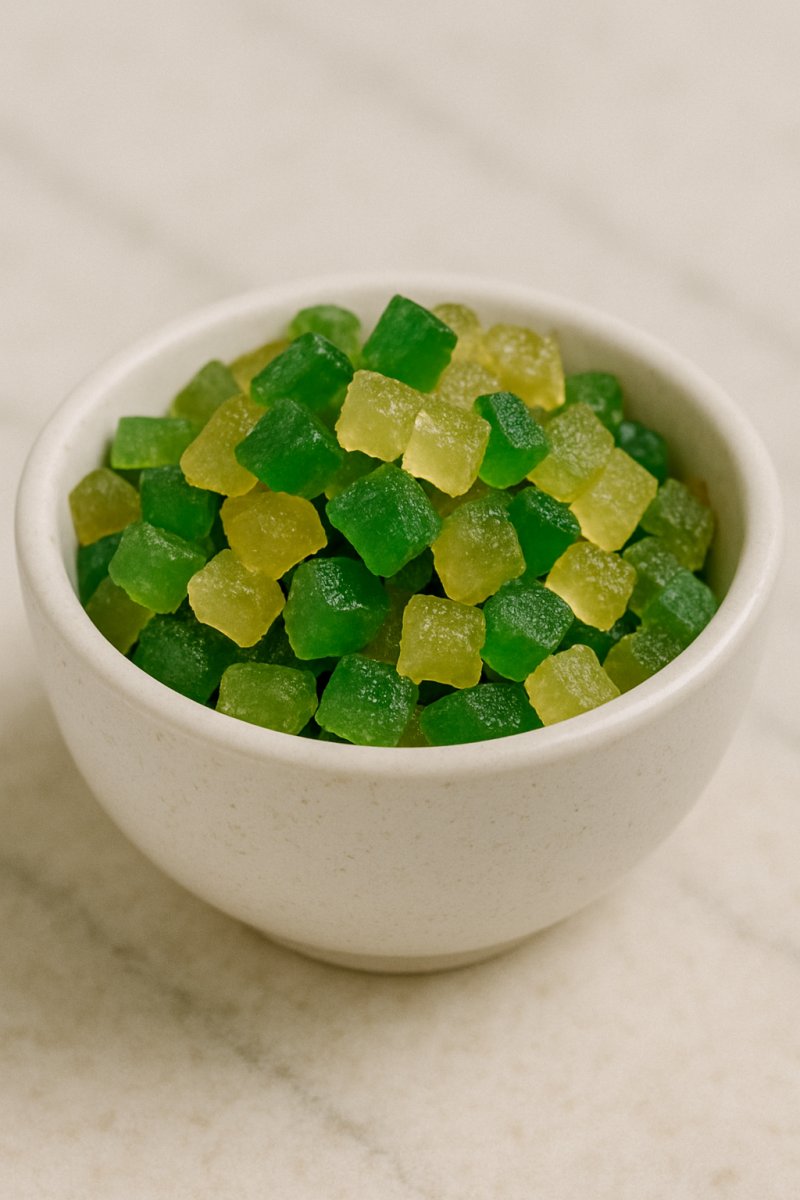
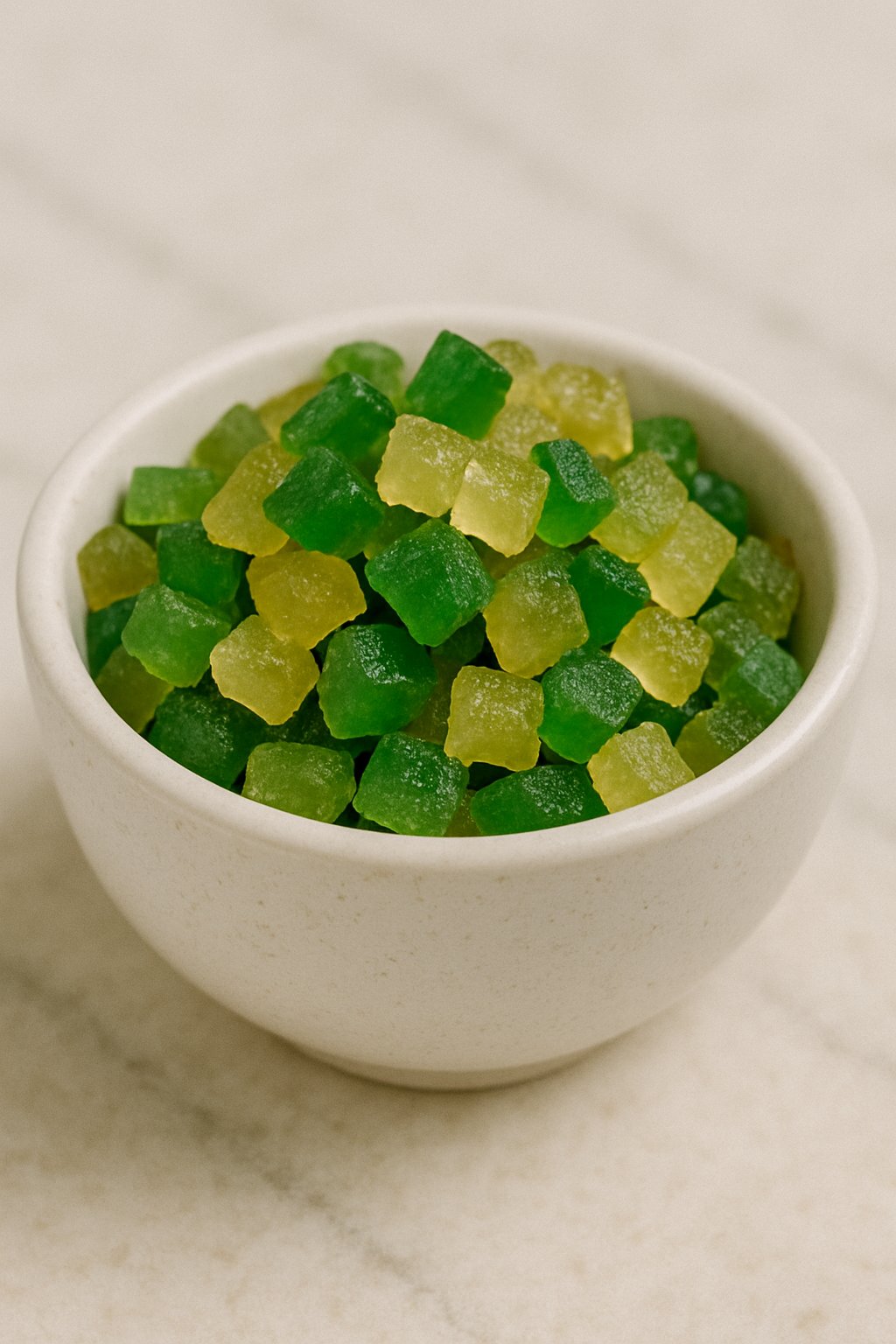
Greenish candied citron cubes on a wooden board
When I first held real candied lemon peel in my hand, I thought: it's just candied peel, nothing more. How wrong I was. I still remember a rainy afternoon in a bakery, where the scent of butter and spices wafted through the window and an old baker handed me a piece of her stollen. In that bite the candied lemon peel was hidden: not just sweet, but a surprisingly delicate heart note that can completely transform cakes, pastries and even some savory sauces.

Candied lemon peel is essentially the candied rind of the lemon, but the art lies in the preparation. The bitter white pith is removed, the peel is blanched and then slowly steeped in sugar. The result is a clear, firm, aromatic inclusion that works both visually and in flavor. I've learned that good quality seems less artificial and more reminiscent of the fresh lemon than of candy. A colleague of mine swears by making candied lemon peel himself; his kitchen then resembles a small laboratory, where the lemon scent acts like medicine against any winter tiredness.

I use candied lemon peel in different ways and have a few favorite scenarios I no longer want to do without:

  • Classic pastries: In stollen, Christstollen or fruit bread candied lemon peel brings a bright note that balances the heavy pastry.
  • Cookies and toppings: Finely diced on shortbread or crumbly cookies it provides surprising little bites.
  • Savoury combinations: In a lemon butter for fish or in an orientally inspired sauce it rounds off dishes.
Some may find the taste experience too sweet or artificial. Therefore I advise using candied lemon peel sparingly and purposefully. A few grams may be enough to lift a whole recipe. I remember a dinner when I was too generous: the dessert then tasted like a citrus perfumery. Since then I measure and am glad for the small, deliberately placed aromas.

For me candied lemon peel remains a small kitchen miracle: practical, durable and versatile. It connects tradition with modern cuisine and tells stories of winter markets, family recipes and experimental cooking evenings. When I invite someone today, I often put out a bowl with various candied peels – and enjoy watching the surprised face when someone discovers for the first time the delicate, almost floral side of candied lemon peel.

Availability & types

Availability and types of candied lemon peel

Candied lemon peel is candied lemon rind, often used in cakes, stollen or sweet pastries. It is found in many supermarkets, bakeries and online shops, especially in the pre-Christmas season. Because it keeps well, it is on shelves throughout the year – similar to dried fruit that can be stored for a long time.

Origin
Candied lemon peel comes from the rind of lemons. The lemons themselves grow on trees in warm regions. Often the fruits for candied peel come from Mediterranean countries like Italy, Spain or Greece, but also from warmer regions further away, for example Brazil or South Africa. You can think of it like this: the sun there helps the lemons store lots of flavour and aroma in their peel – exactly what is later processed into candied peel.

Growing areas
The main growing areas are:

  • Mediterranean region (Italy, Spain, Greece): There are many lemon plantations here because the climate is warm and sunny.
  • South America (for example Brazil): Large harvests and favourable prices mean lemons often come from there.
  • South Africa and other regions with warm climates: Lemons also grow here that later become candied peel.
These areas are like "kitchens for lemons" – lots of sun, little frost and plenty of space for fruit trees.
Available varieties and types
Candied lemon peel does not come in only one shape. Here are the main types, simply explained:
  • Coarse candied peel: These are thick pieces of candied rind. They are often found in stollen or fresh pastries. They are like little soft candies made of peel.
  • Finely diced candied peel: Very small cubes that distribute well in the dough. This variant is practical when you don't want large pieces in the cake.
  • Organic candied peel: From lemons grown without chemical pesticides. Some people prefer this because they consider it more natural.
  • Candied peel with sugar coating: Some producers roll the peels in sugar, so they shine and taste sweeter – almost like icing on small pieces.
  • Candied peel alternatives: There are also products that only taste of lemon but are made from other ingredients (for example fruit purée or flavourings). These are often cheaper but can taste different from real candied peel.
What to look for when buying
If you want to buy candied lemon peel, there are a few useful things to know: check the ingredient list – the real variant usually contains only lemon peel, sugar and sometimes a preservative. Organic or origin labels can show where the lemons came from. And if you particularly like the aroma, choose coarser or fresher-looking pieces, because they often have more flavour.

In summary: candied lemon peel is easy to obtain, mainly comes from sunny regions such as the Mediterranean or South America and is available in various forms – from coarse pieces to fine cubes or organic variants. That way you can choose the appropriate variant depending on the recipe and taste.
Details & nutrition

Property Value
Unit g
Calories per 100 320
Protein per 100 0.2
Carbohydrates per 100 80
Sugar per 100 75
Fat per 100 0.1
Saturated fat per 100 0.0
Monounsaturated fat 0.0
Polyunsaturated fat 0.0
Fiber per 100 1.5
Vitamin C (mg) per 100 3
Vitamin D (IU) per 100 0
Calcium (mg) per 100 40
Iron (mg) per 100 0.3
Nutri-Score E
CO₂ footprint 1.8
Origin Mediterranean region, produced by candying the peel of the citron
Gluten-free Yes
Lactose-free Yes
Nut-free Yes
Vegan Yes
Note Nutritional values for commercially available, heavily sugared candied citron; actual values may vary slightly depending on manufacturer and sugar content.

Technical & scientific information

Candied lemon peel refers to candied peels of citrus fruits, usually lemon or citron, which are preserved by removing the flesh, soaking in syrup and subsequent drying. As a traditional ingredient in baked goods and sweets, candied peel is characterized by its firm, slightly gummy texture, intense citrus note and high sugar concentration. In industrial and artisanal production both whole strips and finely diced pieces are produced.

Chemical composition and components
The main constituents of candied peel are water, sucrose (table sugar), in smaller amounts glucose and fructose as well as plant cellulose, pectins and essential oils from the citrus peel. The essential oils contain predominantly limonene, β‑pinene and citral compounds, which are responsible for the characteristic aroma. The peel also contains secondary plant compounds such as flavonoids (e.g. hesperidin), bitter compounds (naringin, limonin in traces) and small amounts of vitamin C, which can be partly lost during processing.

Nutritional profile
Candied peel is nutritionally predominantly a sugar source. Typical nutritional values per 100 g are about 300–350 kcal, of which around 60–80 g carbohydrates (mainly sucrose), 0–2 g fat and 1–3 g protein, depending on residual moisture and ingredients. The fiber content (mainly pectin and cellulose) is usually 1–5 g/100 g. Micronutrients such as vitamins and minerals are present in small amounts and play only a minor nutritional role.

Processing methods
The traditional production includes several stages:

  • Selection and cleaning of the peels: organic or untreated citrus fruits are preferred, since pesticide residues can remain on the peel.
  • Removal of the flesh and peeling of the outer rind, whereby the white mesocarp layer is partially removed depending on the desired bitterness.
  • Dehydration and blanching: short cooking or blanching reduces bitterness and softens the peel.
  • Crystallization with sugar: repeated transfers into increasingly concentrated sugar solutions (osmosis method) lead to thickening and sugar penetration of the peel.
  • Drying and, if necessary, coating with crystalline sugar or glazing agents to stabilise storage.
Industrial processes often use vacuum or drum drying, standardised syrup concentrations and quality controls to ensure water activity and microbial stability.
Safety and health aspects
Candied peel is calorie-dense due to its high sugar content and should be consumed in moderation, especially by people with diabetes or diet-related conditions. The reduction of water activity by sugar makes candied peel microbiologically stable; nevertheless improper storage or too high residual moisture can lead to mold growth. Allergic reactions to citrus oils are rare but possible; in addition sensitive individuals may react to added sulfites or preservatives if these have been used. In industrial use, control of pesticide residues in the peel is important, therefore careful washing and, where possible, the use of untreated fruits is recommended.
Application and sensory properties
Candied peel delivers a concentrated, slightly bitter citrus note and is used mainly in Christmas pastries, fruit bread, cakes and as decoration. Texture and flavor can be varied by pretreatment (e.g. de-bittering, longer soaking in syrup or subsequent drying). Combinations with candied orange, nuts or spices are common and complement the flavor profile.
Food information and storage
Candied peel should be stored dry, protected from light and airtight to avoid aroma loss and moisture uptake. With proper storage the shelf life is often several months up to a year. Product labels include usual information such as ingredient list, nutritional information and, if applicable, notes on allergens or additives.
In summary, candied peel is a sugar-preserved citrus peel product with a dominant carbohydrate fraction, a distinctive aroma profile from essential oils and limited nutritional value, which is produced through specific processing stages and, for storage and use as an ingredient, requires simple hygienic and labelling requirements.
Wiki entry for: candied lemon peel
Active now: 15 visitors of which 2 logged-in members in the last 5 minutes