Menu & categories

Cake glaze

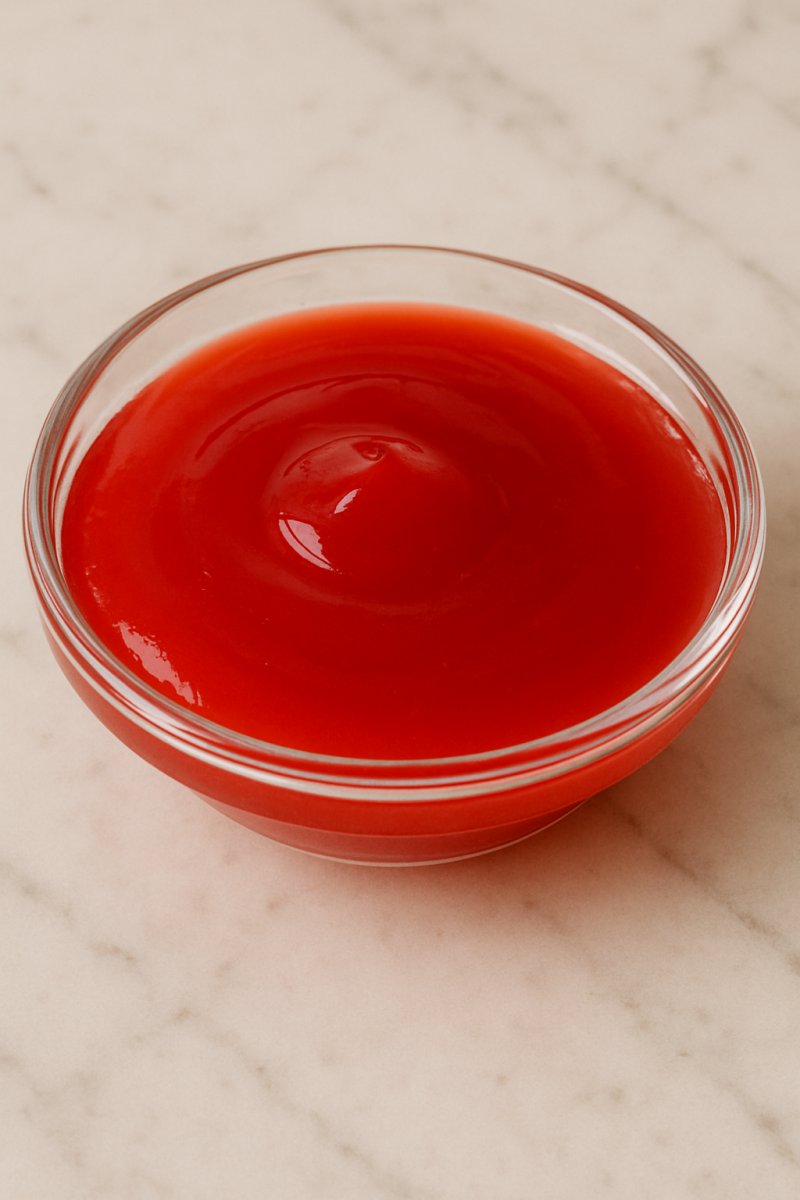
Clear or red glaze for fruit tarts and cakes

Wiki about cake glaze Nutri-Score D Vegan Yes Gluten-free Yes Lactose-free Yes Nut-free Yes
NUTRITION / 100 g
340 kcal 0 g Protein 85 g Kohlenhydrate 0 g Fett

Introduction

Powder for cake glaze in a bowl next to a glazed fruit tart
I still remember the first cake I deliberately finished with pastry glaze: a simple strawberry cake whose glossy surface suddenly looked so professional that I felt like a master baker. Pastry glaze is for me that small, magical ingredient that instantly elevates fruit cakes. It protects, coats and gives the cake what I love: shine, hold and a light, fruity taste without much fuss.

In my kitchen I have come across different types of pastry glaze. It is available as a powder to be mixed with water, as a clear ready-made glaze in a jar and as a pudding-based gel. Each variant has its advantages: powdered glaze is practical and economical, ready-made glaze saves time and is ideal when you need to be quick, and gel glaze is particularly suitable for delicate fruit because it is often more fluid and does not soak through as much.

When I prepare pastry glaze, I pay attention to temperature and consistency. Applied too hot, it runs; too cold, it becomes lumpy. A colleague of mine once tried to pour the glaze straight from the pot — the result was an artistic but inedible blob on the cake. Since then I stir gently, let it cool slightly and spread it with a brush or a spoon in thin layers.

  • Protective function: Pastry glaze prevents fruit from drying out and losing color prematurely.
  • Hold: It secures the fruit so that pieces do not shift when serving.
  • Appearance: Shine and depth of color make the cake more appetizing.
I like to play with flavors: a splash of lemon juice in the clear glaze or a hint of vanilla in the gel can subtly enhance the taste of the topping. For me baking is not just about the result, but about the small rituals. Pastry glaze is one of those rituals that turns simple cakes into special moments. When you make a fruit tart next time, try it — you might later remember one of those glossy moments, too.

Availability & types

Availability and types

What is pastry glaze and where does it come from?
Pastry glaze is a jelly-like layer often placed over fruit cakes or tarts so that the fruit shines and does not dry out. It usually consists of water, sugar and a binding agent such as starch or gelatin. These ingredients come from different regions: sugar often comes from sugar beets grown in many parts of Europe, starch is obtained from potatoes or corn which grow worldwide, and gelatin is made from animal bones or skins. Today there are also plant-based alternatives to gelatin made from algae or plant starches.

Where can you buy pastry glaze?
Pastry glaze is available in most supermarkets. You can find it in small sachets as a powder to be mixed with water or juice, or ready-made in a jar. Larger food stores often carry several brands and variants. You can also buy it at the baker's or in specialty baking supply shops. If you like to shop online, many shops offer different types, sometimes even special organic or vegan versions.

Which varieties of pastry glaze are there?
There are different types that vary in taste, color and ingredients. Here are some common variants:

  • clear pastry glaze: This is transparent or slightly yellowish and is often used when the appearance of the fruit should not be changed. It makes the fruit shine without greatly altering color or taste.
  • red or fruity pastry glaze: It is usually flavored with strawberry, raspberry or other fruit juice and slightly colors the surface. It goes well with red fruits and also tastes fruity.
  • neutral powdered glaze: These are sachets with powder that you can mix with water. It is practical because you can decide whether to use water, juice or wine to control the flavor.
  • ready-made pastry glaze in a jar: Already prepared and ready to buy. Very practical when you need to be quick.
  • vegan or plant-based variants: Instead of gelatin, these varieties use plant gelling agents like agar-agar (from algae) or modified starches. They are suitable for people who do not want to eat gelatin, such as vegetarians or vegans.
Why are there different types?
You choose the pastry glaze according to your mood: if you want the fruit to look completely natural, choose clear glaze. If you want more flavor, choose fruity glaze or add juice. Those who eat vegetarian or vegan look for special varieties without gelatin. Powder is inexpensive and long-lasting, jarred is practical and quick to use.

Tips for choosing
When shopping, check the labels: they will say whether gelatin is included or whether it is a plant-based variant. For children's parties or when several people are eating, a neutral or fruity glaze is often practical because most people like it. And if you want to preserve the color of the fruit, choose clear glaze.

In summary: pastry glaze is easy to find, available as a powder or ready-made in a jar, in clear and fruity variants and in animal-based or purely plant-based versions. That way you can choose exactly the right type according to taste, occasion and dietary preference.
Details & nutrition

Property Value
Unit g
Calories per 100 340
Protein per 100 0
Carbohydrates per 100 85
Sugar per 100 0
Fat per 100 0
Saturated fat per 100 0
Monounsaturated fat 0
Polyunsaturated fat 0
Fiber per 100 0.5
Vitamin C (mg) per 100 0
Vitamin D (IU) per 100 0
Calcium (mg) per 100 5
Iron (mg) per 100 0.1
Nutri-Score D
CO₂ footprint 1.0
Origin Industrial product, ingredients mainly from EU and non-EU countries
Gluten-free Yes
Lactose-free Yes
Nut-free Yes
Vegan Yes
Note Nutritional values refer to the dry cake-glaze powder based on starch and sugar without added flavourings. When prepared with water and, if applicable, fruit juice, the energy density is reduced significantly.

Technical & scientific information

Pastry glaze is a common baking ingredient used to coat fruit cakes, tarts and pastries with a glossy, stable surface and to secure the fruit. Industrially produced pastry glaze usually comes in powder form and consists of starch, sugar, acidulants, flavors and occasionally gelling agents. Its basic function is to form a viscous, partially gelling layer after being dissolved in hot liquid and subsequently cooled, providing both optical and preservative effects.

Chemical composition and functional components: Typical constituents are:

  • Starch (most common types: corn starch, wheat starch, potato starch): forms a pasty matrix upon heating through swelling and gelatinization. The starch granules absorb water, lose their crystalline order and bind the liquid into a viscous phase.
  • Sugar (sucrose, glucose or glucose-fructose syrup): contributes to sweetness, texture and glass formation; slightly reduces water activity and affects the freezing and melting points of the layer.
  • Acidulants (e.g. citric acid, tartaric acid): stabilize pH, improve taste and can support preservation. In combination with starch they also influence the gel structure.
  • Flavors and colorants: provide taste and visual properties, using either natural or synthetic additives.
  • Gelling agents/modified starches: in some formulations pectin, gelatin or chemically modified starches are used to gel at lower temperatures or to increase the shear strength of the layer.
  • Stabilizers/emulsifiers: lecithins or mono- and diglycerides can improve homogeneity and ease dissolution of the powder in water.
Manufacturing and processing methods: Pastry glaze powder is produced industrially by mixing the dry components and, if necessary, by drying liquid components. For use, the powder is mixed with water (in some variants with sugar) and briefly boiled or only heated until the starch swells and the solution thickens. Then the hot glaze is quickly poured over the cold cake surface or fruit. On cooling the layer solidifies by retrogradation of the starch and, where applicable, by gelation of other polymers.

Physical properties: The viscosity of the pastry glaze depends on the source of starch, concentration, temperature and the presence of other polymers. On heating the viscosity rises sharply, reaches a maximum and may decrease again with excessive thermal stress if molecular breakdown occurs. After cooling partial reassociation (retrogradation) occurs, which determines the firmness of the layer.

Nutritional and physiological aspects: Conventional pastry glaze provides mainly carbohydrates, primarily in the form of sugar and starch, and has relatively low fat and protein content. The energy density ranges from moderate to high depending on the sugar content. Since pastry glaze is usually applied thinly, its contribution to the total energy of a cake is comparatively small, but it can be noticeable with frequent use and large quantities.

Health and food technology considerations: From a health perspective most ingredients are harmless in usual amounts. Important aspects include:

  • People with gluten intolerance must pay attention to the starch used; corn or potato starch are gluten-free, wheat starch is not.
  • If gelatin is used the product is not vegan/vegetarian; plant alternatives are pectin or modified starches.
  • The sugar content is relevant for dietary considerations; sugar-free or reduced variants use sweeteners and specialized starches.
  • Processing-related quality losses can occur with prolonged heating or improper storage, such as yellowing, loss of volatile flavors or microbial spoilage if the layer remains moist after application.
Application variants and technological innovations: Besides traditional clear glaze mixes there are now variants with fruit content, colored gels or fast-setting jellies for industrial production. Research and development focus on improved texture stability, reduced sugar content, clean-label alternatives and high-performing gluten-free formulations.

In summary, pastry glaze is a functionally designed mixture of starches, sweeteners and additive components whose physics and chemistry are aimed at gel formation, viscosity control and sensory properties. Its easy application and the ability to achieve aesthetically pleasing and preservative effects make it a common ingredient in home kitchens and the confectionery industry.

Wiki entry for: cake glaze
Active now: 11 visitors of which 2 logged-in members in the last 5 minutes