Menu & categories

Brittle

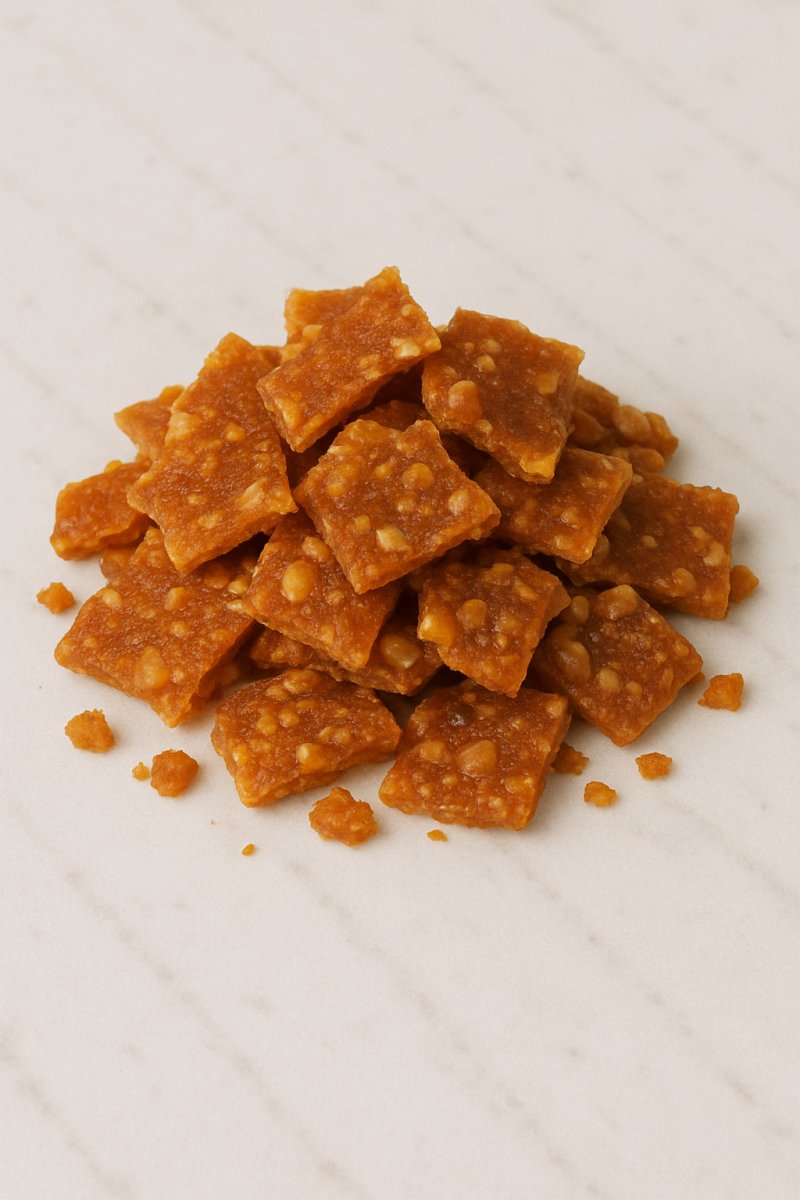
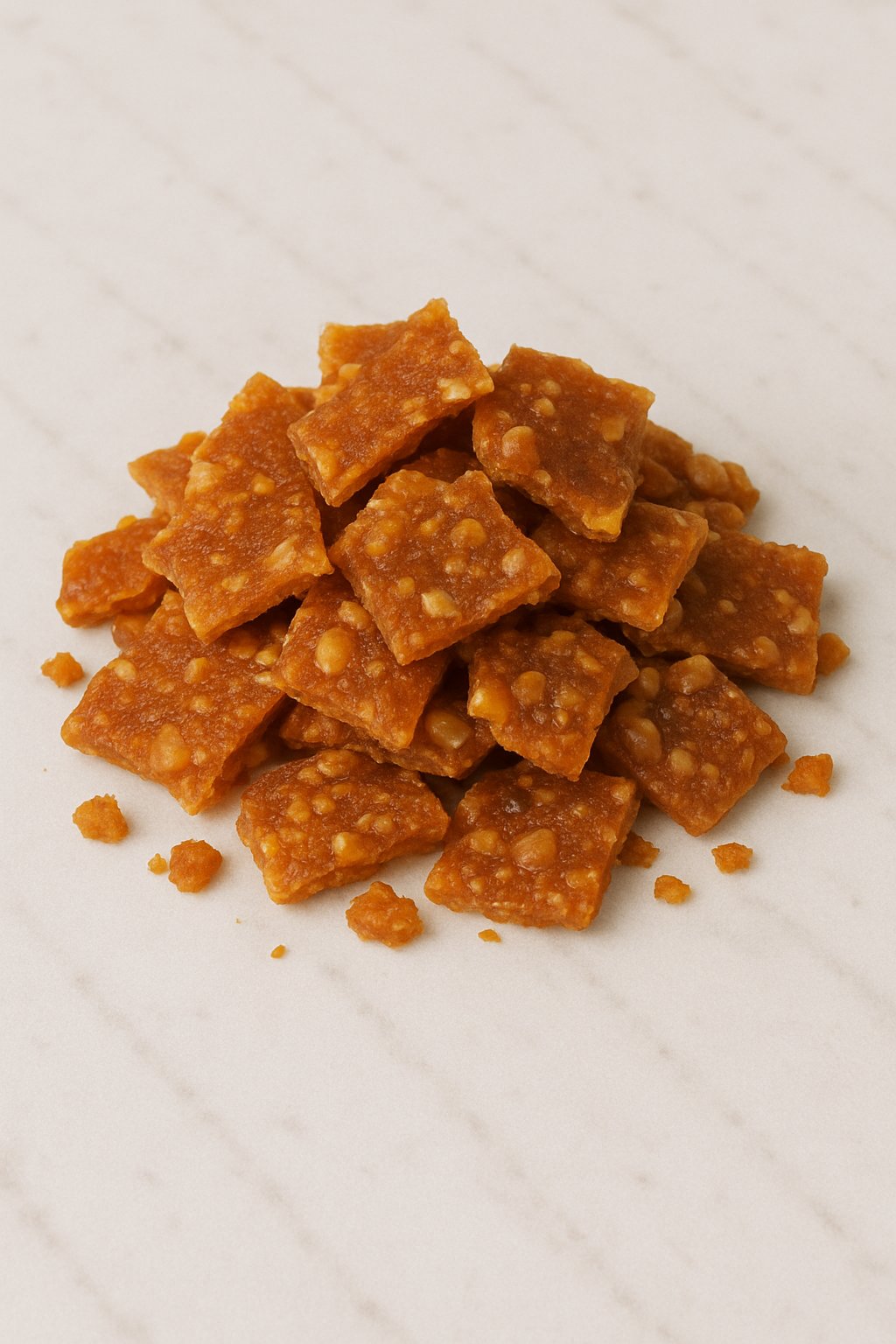
Crunchy sugar mixture with chopped nuts or almonds

Wiki about brittle Nutri-Score E Vegan Yes Gluten-free Yes Lactose-free Yes Nut-free No
NUTRITION / 100 g
520 kcal 7 g Protein 50 g Kohlenhydrate 32 g Fett

Introduction

Brittle made from chopped caramelized nuts
I still remember clearly the moment I first consciously noticed Krokant: at a small café on a cobbled street, where a slice of nut cake was covered with shiny krokant and at the first bite a little fireworks of textures began. Since then this crunchy ingredient has not let me go. For me, krokant is the surprising bridge between sober baking technique and pure pleasure.

What makes krokant so special is its simple, almost magical combination of few ingredients and great effect. It usually consists of sugar that is caramelized and nuts that bathe in it until they are golden brown and crunchy. Whether chopped almonds, hazelnuts or even sunflower seeds – each variant tells a slightly different story. A colleague of mine swears by the combination of fine sea salt and roasted hazelnuts, because the contrast lifts the flavors so wonderfully.

I have used krokant in countless desserts: as a crunchy layer on ice cream, as a surprising element in praline fillings or as a decorative topping on creams. It is an all-rounder that instantly elevates sweets and gives the dish a tangible texture. I particularly like the alternating tension between velvety mousse and the crisp bite – for me that is the small but indispensable luxury.

A few practical things I learned in preparation:

  • Temperature control: Sugar caramelizes quickly; patience and a good eye are more important than haste.
  • Prepare the nuts: A short roast intensifies the aroma before they go into the sugar.
  • Processing: When still warm, krokant is easier to chop; once cooled it is brittle and wonderfully storable.
I also love how flexible krokant is: you can use it coarsely for a rustic texture or finely ground as an aromatic dust. For me krokant remains a small kitchen secret that takes every dessert to the next level and always brings shining eyes to guests.

Availability & types

Availability and types of krokant

Krokant is a sweet, crunchy ingredient found in many countries. It is usually made of caramelized sugar and chopped nuts or almonds. Because krokant is so tasty and crunchy, it is often used as decoration for cakes, ice cream or pralines. You can buy krokant ready-made or make it at home.

Origin
Krokant originally comes from European baking tradition, but similar forms are known in many cultures. The word "Krokant" comes from the French ("croquant"), meaning "crunchy." In the past people made krokant from sugar and nuts to make cakes and sweets particularly festive. Today it is found in bakeries, patisseries and supermarkets worldwide.

Growing regions of the main ingredients
Krokant itself does not grow, as it is a processed product. However, the main ingredients are nuts and sugar, which come from certain growing regions:

  • Almonds: Many almonds come from countries like Spain, Italy or the United States (especially California). Almonds are small, hard fruits and give krokant its nutty aroma.
  • Hazelnuts: These are widely grown in Turkey, Italy and other Mediterranean countries. Hazelnuts are round and have a strong flavor that pairs well with caramel.
  • Walnuts and other nuts: Walnuts often come from China, the USA or Europe. Depending on which nut is used, the flavor of the krokant varies.
  • Sugar: Sugar is obtained from sugarcane (in tropical countries like Brazil or India) or from sugar beet (in temperate regions like Europe). The sugar is heated and becomes hard and crunchy when cooled.
Available varieties and versions
Krokant comes in many variants. Some are very simple, others are particularly finely made. Here are some common types you can buy or make yourself:

  • Almond krokant: Classic and mild in flavor. Often used as a crumble for pastries or as an ice cream topping.
  • Hazelnut krokant: Somewhat more intense in flavor, goes well with chocolate. Many chocolate bars use this combination.
  • Walnut or pecan krokant: Spicier and stronger in taste; good for autumnal desserts.
  • Finely chopped krokant: Very small pieces that distribute well, for example on creams or cakes.
  • Coarse pieces or shards: Larger, crunchy chunks that are placed visibly on cakes or mixed into ice cream.
  • Chocolate krokant: Nuts with an additional layer of chocolate or caramel for an extra sweet taste.
  • Sugar-free or reduced-sugar krokant: For people who want less sugar, there are also versions sweetened with alternatives.
Where to find it
Krokant is available in supermarkets, bakeries, delicatessens and online. It is often recognizable in small bags labeled "Krokant" or as part of ready baking mixes. If you prefer a particular nut, you can search specifically for "almond krokant" or "hazelnut krokant."

In summary: krokant is a simple but versatile ingredient made of sugar and nuts. The nuts come from different countries and there are many varieties – from finely chopped to coarse, from mild to strong and even chocolate-coated versions. This makes krokant easy to obtain and adaptable to different recipes and tastes.
Details & nutrition

Property Value
Unit g
Calories per 100 520
Protein per 100 7
Carbohydrates per 100 50
Sugar per 100 48
Fat per 100 32
Saturated fat per 100 4
Monounsaturated fat 20
Polyunsaturated fat 7
Fiber per 100 5
Vitamin C (mg) per 100 0
Vitamin D (IU) per 100 0
Calcium (mg) per 100 120
Iron (mg) per 100 2
Nutri-Score E
CO₂ footprint 3.0
Origin Varies by manufacturer; often produced in Europe
Gluten-free Yes
Lactose-free Yes
Nut-free No
Vegan Yes
Note Information for typical nut- or almond brittle (sugar and chopped nuts/almonds). Recipe may vary by manufacturer; may contain traces of other allergens.

Technical & scientific information

Krokant denotes a crunchy sugar–nut mixture used in pastry and confectionery as a decoration and flavor carrier. Typically krokant consists of roasted nuts or seeds (often hazelnuts, almonds, pistachios or sesame) coated with caramelized sugar and then chopped or coarsely broken. The final product is characterized by a glossy, hard sugar crust and a pronounced roasted flavor of the nuts.

Chemical composition and ingredients: Chemically, krokant is mainly composed of sucrose (table sugar) in the form of amorphous or partially crystallized caramel together with the lipid-rich components of the nuts. Nuts primarily supply triacylglycerides (vegetable fats), proteins, aliphatic and aromatic amino acids as well as secondary plant compounds such as polyphenols and vitamin E (tocopherols). During heating sucrose undergoes thermal hydrolysis to glucose and fructose and subsequent caramelization and Maillard reactions produce coloring and aroma compounds such as melanoidins and caramel polymers.

Nutritional values: Krokant is energy-dense; the caloric content typically ranges between 450 and 550 kcal per 100 g, depending on the nut proportion. The fat content results mainly from the nuts (30–50 g/100 g), mostly mono- and polyunsaturated fatty acids. Carbohydrates stem mainly from sugar (40–60 g/100 g) and fiber from the nut fibers (5–10 g/100 g). Proteins contribute 10–15 g/100 g. Micronutrients include magnesium, phosphorus, copper and vitamin E, with actual amounts varying by nut species.

Manufacturing process: Industrial and artisanal production comprises several typical steps:

  • Roasting: Nuts are roasted to develop flavor and reduce volatile moisture. Temperatures and duration influence the aroma profile and crunchiness.
  • Caramelizing: Sugar is heated to 150–170 °C until it melts and the desired color and flavors develop. Temperature control is important to avoid burning.
  • Coating and cooling: The hot nuts are coated with the liquid sugar. On cooling the caramel polymerizes and forms a hard, glossy layer.
  • Crushing and sieving: After solidification the krokant is mechanically broken and sieved to particle sizes suitable for different applications.
Process parameters influence crystallization, glass formation and the hygroscopicity of the product.
Safety and health aspects: Heating sugar produces by-products such as hydroxymethylfurfural (HMF) and other thermal degradation products. HMF can be relevant for health at high concentrations, but typical levels in krokant are generally moderate. Another issue is the formation of Maillard-derived aroma compounds as well as potential lipid-oxidation products, especially if nuts are over-roasted or stored improperly for extended periods. Allergens are relevant: hazelnuts and almonds are common food allergens, therefore labeling and avoidance of cross-contamination are essential.
Storage and shelf life: Krokant should be stored dry, cool and protected from light, because moisture softens the glassy structure and can cause sticking or microbial contamination. Packaging with low oxygen and moisture permeability prolongs shelf life and protects fats from oxidation.
Applications: Krokant is used as a coating, insert or decoration in pralines, cakes, ice cream and baked goods. Its crunchy texture and roasted aroma provide sensory complexity and a pleasant mouthfeel to manufactured products.
In summary, krokant is a sensory‑intense, technically relatively simple product whose properties are governed by nut species, roast degree, sugar management and storage conditions. When properly made and stored, krokant offers high indulgence value but requires appropriate quality controls for allergens, thermal reaction products and lipid stability.
Wiki entry for: brittle
Active now: 15 visitors of which 2 logged-in members in the last 5 minutes