Menu & categories

Blue Curacao

Blue orange liqueur for cocktails and long drinks

Wiki about Blue Curaçao Nutri-Score E Vegan Yes Gluten-free Yes Lactose-free Yes Nut-free Yes
NUTRITION / 100 ml
250 kcal 0 g Protein 25 g Kohlenhydrate 0 g Fett

Introduction

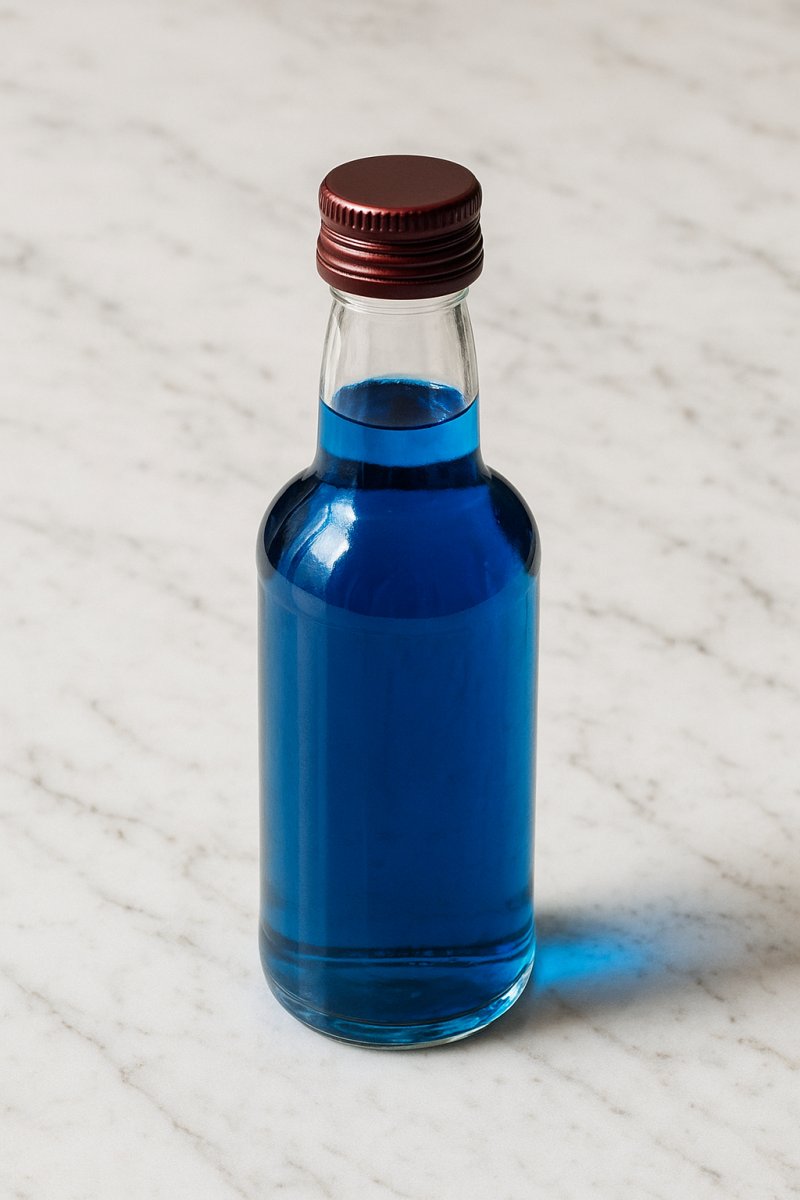
Bottle of Blue Curacao liqueur next to a cocktail glass
I still remember my first impression of Blue Curaçao: a glass as turquoise as the sea, perched on a sunny plaza table while tourists scooped ice cream and a street cat sniffed curiously. I was immediately fascinated — not only by the color, but by the story behind it, which shimmers between tropical orange groves, merchant ships and inventive bartenders.

Blue Curaçao is at its core an orange liqueur, made from the peel of the Laraha orange, which is originally native to the Caribbean island of Curaçao. Its flavor carries the bitter, aromatic note of this citrus fruit, combined with a sweet liqueur base that gives cocktails depth. The intense blue color is usually added artificially; I once argued with a bartender about whether the blue distracts too much from the taste — he insisted that the color sells feelings, while the liqueur does the flavoring. Both are true.

In my kitchen and at the bar I use Blue Curaçao in surprisingly varied ways. Some favorite moments:

  • As a light splash of color in the classic Blue Lagoon, which always elicits amazed looks from guests.
  • In desserts, used sparingly to give creams or glazes a subtle orange note.
  • As an ingredient in creative mocktails, where a dash of syrup and sparkling water balances the sweetness.
What I particularly love about Blue Curaçao is its ability to transform simple recipes without dominating them. A colleague once mixed a birthday drink that seemed almost magical by candlelight — guests talked more about the color than the alcohol content, and that was the point: Blue Curaçao creates atmosphere.

For beginners I recommend experimenting with small amounts and seeking the balance between sweetness and freshness. Awareness of sustainability and origin are also issues I care about; therefore I now more often ask for brands with transparent production. Blue Curaçao remains for me a small piece of the Caribbean in a glass — a playful, aromatic companion for warm evenings and imaginative recipes.

Availability & types

Availability and types

What is Blue Curaçao and where does it come from?
Blue Curaçao is a colorful liqueur often used in blue cocktails. The name originally comes from the island Curaçao in the Caribbean, which belonged to the Netherlands Antilles. On this island grows a special citrus fruit called the Laraha. Laraha looks like an orange but is very bitter and is not eaten fresh. Instead the peel is dried and used to produce flavoring. From this flavor the Curaçao liqueur is made — and the blue color is added later because it looks attractive in drinks.

Growing regions - where does the Laraha grow?
The Laraha grows mainly on the island of Curaçao itself. It can also be found in other warm, tropical regions where similar citrus trees thrive. These include other Caribbean islands or tropical plantations. Warmth, sun and little frost are important — as with many fruits: plants that like warm sunny locations grow best there.

Which varieties and versions of Blue Curaçao exist?
Blue Curaçao is not just a single bottle in the shop. There are different types that vary in taste, color and alcohol content. Here are the main variants, simply explained:

  • Blue Curaçao (classic) – This is the version you probably know from cocktails. It is bright blue, tastes lightly of orange and usually contains some alcohol. The color is produced by added food coloring. Imagine adding blue dye to lemonade so it looks like the sea.
  • White or clear Curaçao – This variety has no blue color, so it appears transparent. It tastes similar to blue Curaçao but is used when you want the flavor without changing the color. If you make a mixed drink that should keep its color, use the clear variant.
  • Orange or golden colored Curaçao – Sometimes Curaçao is yellowish or golden. That can look more natural and is often used in classic cocktails. In taste it is close to the original, but the color suits certain recipes better.
  • Alcohol-free Curaçao – For children or people who do not drink alcohol, there are alcohol-free versions. They taste of orange and often have the familiar blue color, but without alcohol. They can be used like syrup.
  • Handmade or small producers – Some producers make Curaçao in small batches and use real Laraha peels. These variants can have a more intense aroma because they use natural ingredients instead of just artificial flavoring.
  • Industrial mass-produced – Large brands produce Curaçao in large quantities. These bottles are often cheaper and widely available. They frequently use artificial flavors and colors to keep taste and appearance consistent.
How easy is it to find Blue Curaçao?
Blue Curaçao is available in many supermarkets, liquor stores and bars. In regular grocery stores you will usually find the well-known brands. Specialty shops or online stores also offer unusual types, for example alcohol-free or handmade variants. So if you are looking for a specific color or a special aroma, it is worth checking a specialty shop or the internet.

In summary: Blue Curaçao has its roots on the island of Curaçao, is made from the peel of a special citrus fruit and exists in many variants — blue, clear, gold, with or without alcohol, industrial or handmade. So almost everyone can find the right type for their drink or recipe.

Details & nutrition

Property Value
Unit ml
Calories per 100 250
Protein per 100 0
Carbohydrates per 100 25
Sugar per 100 25
Fat per 100 0
Saturated fat per 100 0
Monounsaturated fat 0
Polyunsaturated fat 0
Fiber per 100 0
Vitamin C (mg) per 100 0
Vitamin D (IU) per 100 0
Calcium (mg) per 100 0
Iron (mg) per 100 0
Nutri-Score E
CO₂ footprint 1.0
Origin International
Gluten-free Yes
Lactose-free Yes
Nut-free Yes
Vegan Yes
Note Alcoholic beverage (liqueur) with orange peel flavor and blue food coloring; details may vary slightly depending on the manufacturer.

Technical & scientific information

Blue Curaçao is a flavored liqueur known mainly for its intense blue color and its dominant orange aroma. The recipe originally goes back to the island of Curaçao, where dried peels of the bitter orange Citrus aurantium (bitter orange or Laraha) are used as the flavor carrier. Traditionally these peels are macerated in alcohol to extract essential oils, bitter compounds and aromatic components.

Composition and typical ingredients
Blue Curaçao consists essentially of alcohol, sugar or sugar syrups, flavoring substances from orange peels and colorants. The aromatic effect is based primarily on the essential oils contained in the peels, which are mainly made up of monoterpenes such as limonene, as well as secondary components like linalool and geraniol. Small amounts of flavonoids and bitter substances may also be present; these influence the taste profile but are usually detectable only in trace amounts in liqueur concentrations.

Production and processing methods
Production includes several steps: drying of the orange peels, maceration in ethanol or high-proof distillate, filtration and subsequent sweetening. Maceration can be thermally assisted or done at room temperature; extraction time varies depending on the desired intensity of flavor from a few days to several weeks. After flavor extraction, the liquid is usually brought to drinking strength with water and sugar or syrup and finally colored with food dyes. In industrial production, natural extracts are often supplemented by standardized flavor concentrates and synthetic additives to keep flavor and color stable.

Coloring
The characteristic blue color of Blue Curaçao is in most cases produced by synthetic food colorings, for example azo dyes or triarylmethane derivatives, which are food additives permitted in many countries. There are also variants with natural colorants, such as spirulina extracts, but these are rarer and more expensive. The color has no influence on the chemical composition of the aroma, but it strongly affects visual perception and use in cocktails.

Nutritional values and alcohol content
Blue Curaçao is a liqueur and therefore has a significant alcohol content, typically between 15 % and 40 % by volume, depending on the manufacturer and variety. Due to added sugar, the liqueur also contains calories from sucrose or glucose syrup. Nutritional values vary, but a standard liqueur provides on average about 200–300 kcal per 100 ml, with the largest share coming from alcohol and sugar. The exact energy content should be taken from the product label.

Health aspects
From a health perspective, general advice for alcoholic beverages applies to Blue Curaçao: moderate consumption is important for healthy people, and consumption is discouraged for pregnant women and people below the legal drinking age. Allergic reactions to citrus peels are possible, although rare; people with citrus allergies should therefore be cautious. In addition, some synthetic colorants used can cause intolerances or allergy-like reactions in sensitive individuals. Because liqueurs combine sugar and alcohol, regular consumption contributes to increased energy intake and a risk of dental caries.

Applications and sensory properties
Sensorially, Blue Curaçao shows an intense orange aroma with slightly bitter undertones, high sweetness and alcoholic warmth depending on alcohol content. It is used primarily as a component of cocktails and mixed drinks, where the color has a decorative effect and the aroma contributes citrus notes. In gastronomy, different variants are used: color-neutral curaçaos, blue liqueurs and lower-alcohol mixing products.

Summary
Blue Curaçao is a flavored, orange-peel–based liqueur whose character is determined by essential oils of the bitter orange extracted in alcohol. Manufacturing processes include drying, maceration, filtration, sweetening and coloring. Chemically, the group of monoterpenes dominates, while sugar and ethanol determine the nutritional value. Health-relevant aspects correspond generally to those of alcoholic, sugar-containing beverages, supplemented by possible intolerances to citrus aromas or colorants used. Due to its striking color and clear citrus aroma, Blue Curaçao remains a popular component of mixed-drink culture and is produced both artisanally and industrially in various quality levels.

Wiki entry for: Blue Curaçao
Active now: 15 visitors of which 2 logged-in members in the last 5 minutes