Menu & categories

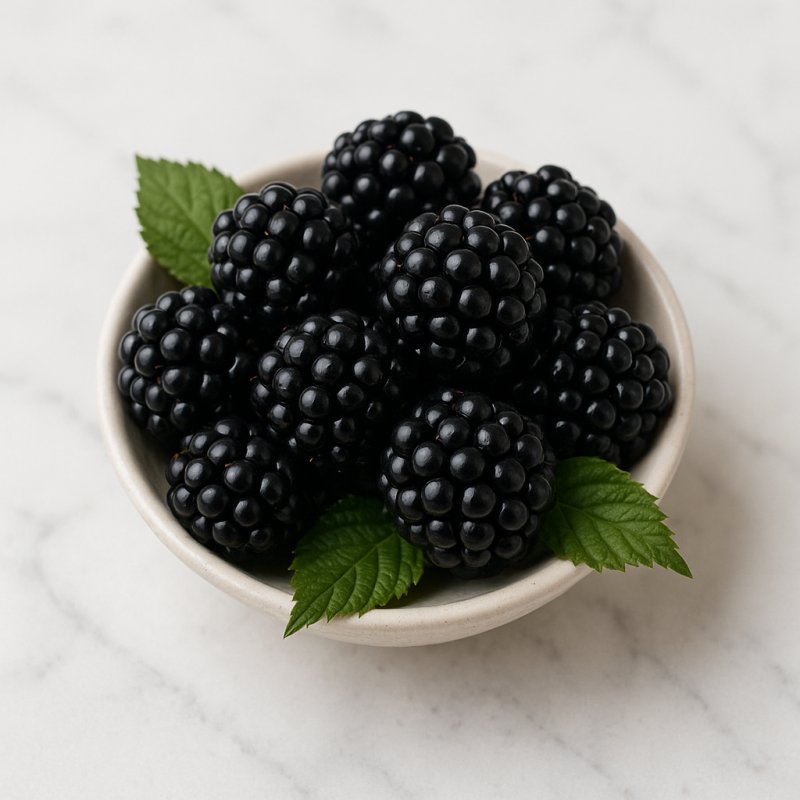
Blackberries

Aromatic berry fruit high in fiber and vitamin C.

Wiki about blackberry Nutri-Score A Vegan Yes Gluten-free Yes Lactose-free Yes Nut-free Yes
NUTRITION / 100 g
43 kcal 1.4 g Protein 9.6 g Kohlenhydrate 0.5 g Fett

Introduction

Blackberries
I love blackberries because they are at once cheeky and modest: small, dark spheres that explode sweet and slightly tart when you bite into them. When I think of late summer I don't only see sunsets but hedges full of shiny fruit. I still remember an afternoon when I picked more thorns than berries and yet went home with a big smile.

Blackberries are true all-rounders in the kitchen. They are suitable for classic desserts like crumble or panna cotta, but also work well in savory sauces for game or poultry dishes. Once I accidentally put a spoonful of blackberries into a spicy salsa, and a colleague swore afterwards he would never eat tomato salsa without them again. Their balance of sweetness, acidity and a slight earthy note complements both sweet and savory components.

From a nutritional perspective blackberries are convincing as well. They provide vitamin C, fiber and secondary plant compounds that act as antioxidants. For those who like to eat consciously they are a small, low-calorie vitamin bomb that can be easily mixed into yogurt, muesli or smoothies.

When picking and storing them I learned a few simple rules that I like to pass on:

  • Picking: Harvest only ripe, deep-black berries; they detach easily from the stem.
  • Washing: Clean them only shortly before eating under cold water, otherwise they lose moisture.
  • Storage: Keep short-term in the refrigerator; longer preservation is achieved by freezing.
  • Processing: For jam or compote cook the fruit with little sugar and lemon juice.
  • Pairings: Great with lemon, vanilla, rosemary or a splash of balsamic vinegar.
Whether wild-picked or from the garden, blackberries bring color, flavor and a bit of adventure to any kitchen. They are uncomplicated, versatile and always worth a little outing.

Availability & types

Availability and types

Blackberries are sweet, dark berries found in many countries. Originally they grew wild in forests and field edges. You can think of blackberries a bit like small, dark raspberries — they are made up of many tiny beads and have a slightly tart taste. Today blackberries are both gathered in the wild and deliberately cultivated in fields so they end up fresh in supermarkets or frozen in the freezer section.

Origin
Blackberries originate from Europe, Asia and North America. In the past people collected them in nature before there were areas dedicated to cultivation. Wild blackberry shrubs are hardy and like to grow by fences, hedges or woodland edges. It is similar to finding dandelions or daisies in a meadow — blackberries are comfortable in varying locations.

Growing regions
Today blackberries come from different regions depending on whether they are intended for fresh sale or processing. Important growing regions include:

  • Europe – countries like Spain, Poland and the United Kingdom grow many blackberries for the European market.
  • North America – the USA and Canada have large plantations, especially on the west coast.
  • Mediterranean regions – in Spain and Italy blackberries can ripen earlier because it is warmer there.
Harvest time depends on the climate: in warmer areas blackberries ripen earlier, in cooler regions later. Therefore you can find fresh blackberries almost year-round somewhere because different countries harvest at different times.

Available varieties
There are many different varieties, so different “families” of blackberries. Some are wild, others have been bred over years. Important varieties and characteristics are:

  • Wild blackberries – small, very aromatic, often with many small seeds; they grow without care in the wild.
  • Cultivated varieties – larger fruits bred for flavor, size and storability; commonly found in supermarkets.
  • Thorny varieties – have thorns on the canes, like rose thorns.
  • Thornless varieties – no thorns, easier to pick; popular for gardens.
Forms and processed products
Blackberries are available fresh, frozen or processed. It is similar to strawberries or apples: you can eat them directly or process them into jam, juice or cakes.

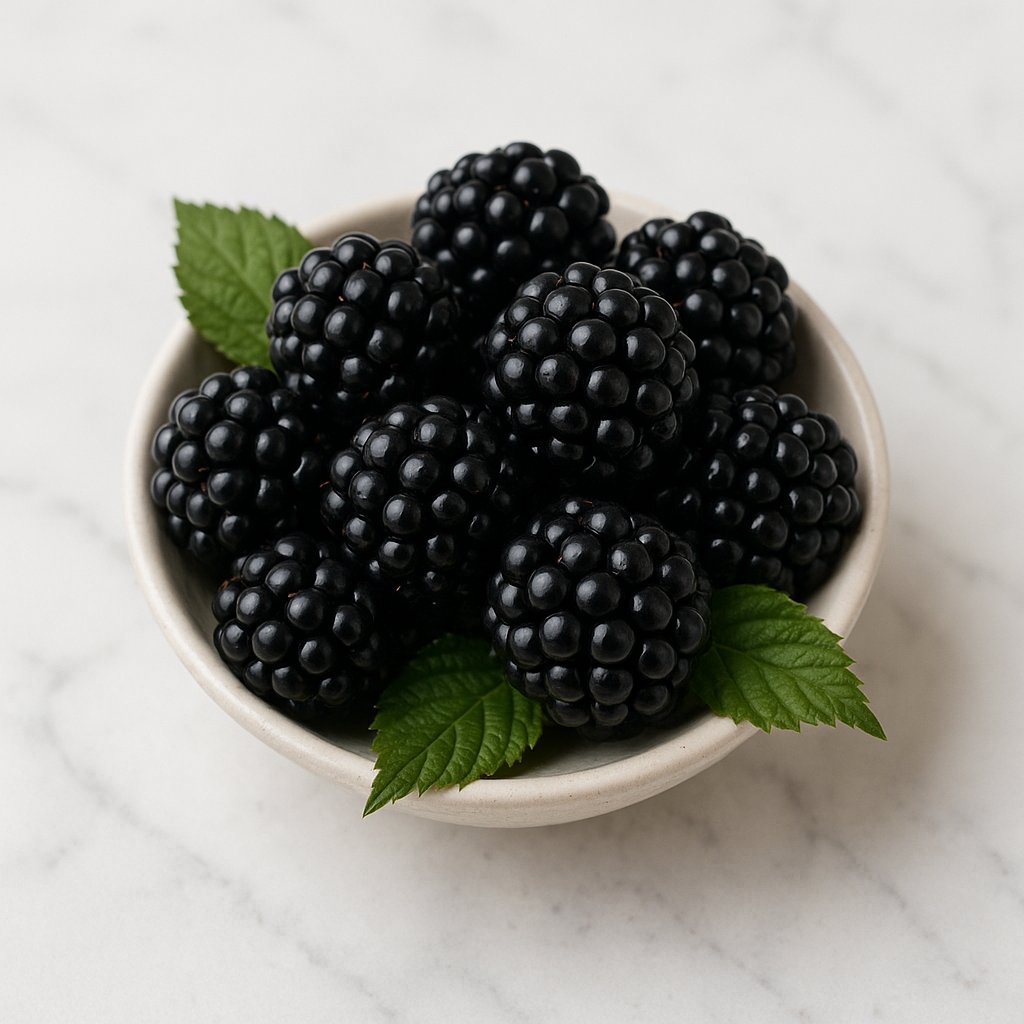
  • Fresh – straight from the cup or bowl, juicy and aromatic.
  • Frozen – often available year-round; after thawing they are good for baking or smoothies.
  • Processed – as jam, compote or juice; some products contain added sugar or other fruits.
In summary: blackberries are versatile, grow both wild and on plantations, and there are many varieties — from wild, small fruits to large, thornless cultivars. You can find them fresh in season, frozen or as processed products, so there is always a way to enjoy blackberries.
Details & nutrition

Property Value
Unit g
Average weight per piece 5
Calories per 100 43
Protein per 100 1.4
Carbohydrates per 100 9.6
Sugar per 100 4.9
Fat per 100 0.5
Saturated fat per 100 0
Monounsaturated fat 0
Polyunsaturated fat 0.3
Fiber per 100 5.3
Vitamin C (mg) per 100 21
Vitamin D (IU) per 100 0
Calcium (mg) per 100 29
Iron (mg) per 100 0.6
Nutri-Score A
CO₂ footprint 0.8 kg CO2e/kg
Origin Europe (seasonal), depending on season also imported
Gluten-free Yes
Lactose-free Yes
Nut-free Yes
Vegan Yes
Note Wash before eating; can be eaten raw, used in desserts or smoothies.

Technical & scientific information

Blackberries (genus Rubus, collective term often Rubus fruticosus agg.) are edible aggregate fruits composed of many small drupelets. Botanically they are not berries in the strict sense but aggregated stone fruits. The fruits ripen from late summer to autumn and are characterized by a dark, almost black color, which is due to a high content of anthocyanins.

Chemical composition and constituents. Blackberries consist mainly of water (about 85–88 %) as well as carbohydrates, fiber, small amounts of protein and fat. Typical nutritional values per 100 g are around 43 kcal energy, 9–10 g carbohydrates (of which around 4–5 g free sugars), 5–7 g fiber, 1–2 g protein and under 1 g fat. Important micronutrients include vitamin C (approx. 15–25 mg/100 g), vitamin K (up to about 20 μg/100 g) and minerals such as calcium, magnesium, potassium and manganese.

Polyphenols and secondary plant compounds. Blackberries are rich in phenolic compounds. Important groups include:

  • Anthocyanins (e.g. cyanidin-3-glucoside), which provide color and antioxidant activity.
  • Ellagitannins and ellagic acid, which can be converted to urolithins in the gut.
  • Flavonols (e.g. quercetin) and phenolic acids.
Physico-chemical properties. The pH of fresh blackberries typically ranges between 3.0 and 3.6, making them relatively acidic. This acidity comes from citrate and malic acid and small amounts of other organic acids. The polyphenols contained in the cells are sensitive to heat, light and pH changes, which can lead to loss of color and aroma during processing and storage.

Processing methods. Common processes for blackberries include fresh marketing, freezing, pasteurization for jams and juices, drying and production of concentrates or purees. Technical aspects are:

  • For jams the combination of natural pectin, sugar and acidity is crucial for gel formation.
  • Freezing preserves flavor and nutrients relatively well; pre-treatments such as brief blanching can reduce enzyme activity but are rarely used.
  • For clear juices enzymatic clarification processes and filtration are required to remove turbidity.
  • Modern alternatives like HPP (High Pressure Processing) can inactivate microorganisms and preserve nutrients better than thermal methods.
Health aspects. The high fiber content promotes bowel function and may reduce glycemic load. Polyphenols, particularly anthocyanins and ellagitannins, show antioxidant, anti-inflammatory and potentially vascular-protective effects in vitro and in animal studies. In humans bioavailability is complex and strongly dependent on the individual gut microbiota; ellagitannins for example are metabolized to urolithins which may have systemic effects. Overall blackberries are low in calories and can be part of a balanced diet.

Safety and quality. Fresh blackberries are sensitive to mechanical damage and mold growth. Cooling and gentle handling are important to prevent spoilage. Pesticide residues can occur; thorough washing reduces surface residues. People with bleeding disorders should monitor vitamin K intake, although blackberries contain only moderate amounts compared to green leafy vegetables. Allergic reactions are rare but can occur in cross-reactions with pollens.

Analytically phenolic compounds and anthocyanins are frequently determined by HPLC/UV–Vis, total phenols by the Folin‑Ciocalteu assay and antioxidant capacity by methods such as ORAC or DPPH. Variety- and ripeness-dependent differences influence nutrient content, acid–sugar ratio and phenolic profile and are relevant for cultivation, storage and food processing.

Wiki entry for: blackberry
Active now: 11 visitors of which 2 logged-in members in the last 5 minutes