Availability and types of berries
Berries are small, often colorful fruits that grow in many gardens, fields and forests. If you want to know where they come from and what types there are, here is a simple and friendly explanation. I explain origin, growing regions and the different varieties – so that even children can understand well.
Origin
Many berries originally come from different parts of the world. Some have always grown wild in forests, others were first cultivated by people in gardens. For example, the strawberry originally comes from Europe, North America and Asia – researchers have mixed different wild species so that larger and sweeter fruits emerged. Raspberries and blackberries often have their roots in Europe and North America, while more exotic species like the açaí berry come from the rainforest in South America. It is important: berries belong to many “families” and each family has its own native home.
Many berries originally come from different parts of the world. Some have always grown wild in forests, others were first cultivated by people in gardens. For example, the strawberry originally comes from Europe, North America and Asia – researchers have mixed different wild species so that larger and sweeter fruits emerged. Raspberries and blackberries often have their roots in Europe and North America, while more exotic species like the açaí berry come from the rainforest in South America. It is important: berries belong to many “families” and each family has its own native home.
Growing regions
Berries grow almost everywhere, as long as the climate is suitable. In Germany many berries grow outdoors or under cover, for example:
Berries grow almost everywhere, as long as the climate is suitable. In Germany many berries grow outdoors or under cover, for example:
- Central Europe (e.g. Germany, Poland): strawberries, raspberries, currants and gooseberries are very common here.
- Southern Europe (e.g. Spain, Italy): many strawberries and also blueberries ripen there earlier in the year because it is warmer.
- Southern Hemisphere (e.g. Chile, South Africa, Australia): fresh berries often come from there during the European winter because it is summer there.
- Forests and mountain regions: wild berries like bilberries or cranberries often grow in forests or on moors.
Available varieties and types
There are many different berries. Some are small and tart, others are large and sweet. Here are the best-known ones, explained like for a child:
There are many different berries. Some are small and tart, others are large and sweet. Here are the best-known ones, explained like for a child:
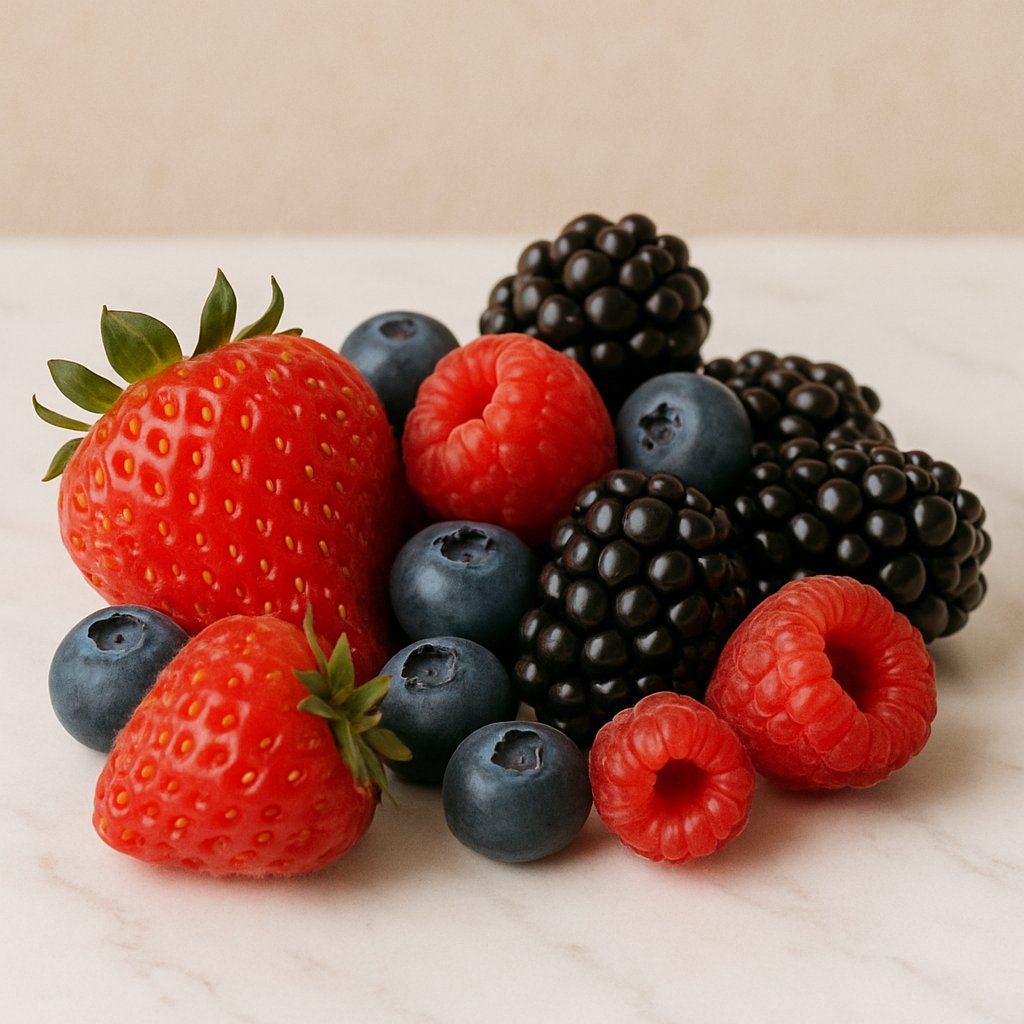
- Strawberries – red, juicy and very popular. There are small wild strawberries and large cultivated ones that are particularly sweet.
- Raspberries – soft and easily falling apart, often red or yellow. They taste sweet with a bit of tartness.
- Blackberries – larger than raspberries, deep purple to black. They are juicy and have small seeds.
- Blueberries – small and blue, often light blue inside. They are sweet and sometimes a little tart.
- Currants – small red or black berries, often somewhat tart and good for sauces or jelly.
- Gooseberries – round and often green or reddish, they can be tart or sweet.
- Special berries – these include e.g. boysenberries or tayberries, which arose from crosses of blackberries and raspberries. You can think of them as “family mixes” that bring new flavors.
Fresh, frozen or processed
Berries are often available fresh from the fields in summer. Because they spoil quickly, they are also sold frozen, dried or as juice and jam. Frozen berries taste almost like fresh ones because they are flash-frozen immediately after harvest – this means they are frozen very quickly so they stay fresh.
Berries are often available fresh from the fields in summer. Because they spoil quickly, they are also sold frozen, dried or as juice and jam. Frozen berries taste almost like fresh ones because they are flash-frozen immediately after harvest – this means they are frozen very quickly so they stay fresh.
In summary: berries come in many varieties and from different regions of the world. Some grow wild, others are cultivated. Thanks to cultivation in warm countries and freezing, you can buy most berries almost year-round. If you like, you can also go pick berries yourself – it's fun and you learn how the fruits look on the plants.