Menu & categories

Berries

Fruity mix with lots of flavor and fiber.

Wiki about berry Nutri-Score A Vegan Yes Gluten-free Yes Lactose-free Yes Nut-free Yes
NUTRITION / 100 g
50 kcal 1.0 g Protein 12.0 g Kohlenhydrate 0.5 g Fett

Introduction

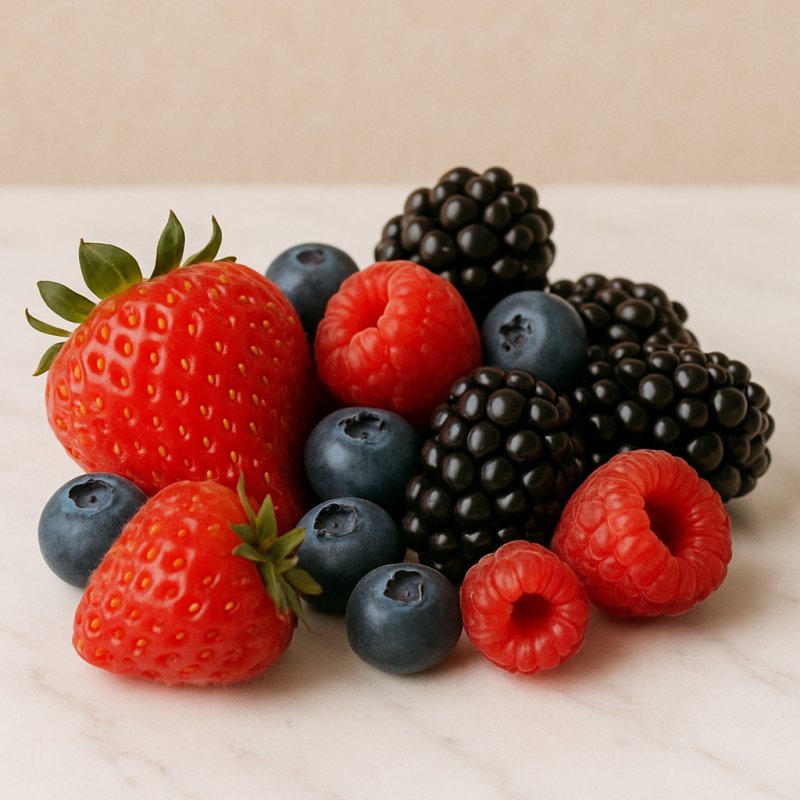
Fresh mixed berries (e.g., strawberries, raspberries, blueberries) in a bowl
Berries are, to me, small wonders of nature that taste different in every season and tell stories. I still remember a rainy summer morning at the market when an elderly woman offered her freshly picked raspberries and I understood for the first time why some scents can sweeten an entire day. Since then I pay attention to the season, the origin and how the texture unfolds in the mouth.

What fascinates me about berries is their versatility. They are not just sweet or sour, but also a play of color, juice and bite. Raspberries can elevate a dessert, Blueberries give morning yogurt depth, and Currants provide the necessary tart kick in a sauce. A colleague of mine swears by still picking blackberries in autumn to make jam that then feels like a little sunny day on the breakfast table all year round.

I've often wondered how to treat berries best, and here are a few simple rules I've adopted:


  • Wash only briefly, preferably just before eating.
  • Gently pat dry so the fruits don't fall apart.
  • In case of abundance: freeze and use later for smoothies or compote.
Outside the kitchen berries are carriers of memories for me. A spontaneous walk in the woods can in my memory immediately be connected with the taste of wild strawberries. Sometimes I also experiment: a pinch of sea salt over strawberries, fresh basil with raspberries or a dash of balsamic on blueberries — small combinations that harmonize surprisingly well.

In the end, the love of berries is an invitation to taste more closely and to create a lot of joy with simple means. Whether raw, in cake or as a surprising ingredient in a savory sauce, berries bring color, flavor and stories to the plate, and that is exactly what makes them indispensable to me.

Availability & types

Availability and types of berries

Berries are small, often colorful fruits that grow in many gardens, fields and forests. If you want to know where they come from and what types there are, here is a simple and friendly explanation. I explain origin, growing regions and the different varieties – so that even children can understand well.

Origin
Many berries originally come from different parts of the world. Some have always grown wild in forests, others were first cultivated by people in gardens. For example, the strawberry originally comes from Europe, North America and Asia – researchers have mixed different wild species so that larger and sweeter fruits emerged. Raspberries and blackberries often have their roots in Europe and North America, while more exotic species like the açaí berry come from the rainforest in South America. It is important: berries belong to many “families” and each family has its own native home.

Growing regions
Berries grow almost everywhere, as long as the climate is suitable. In Germany many berries grow outdoors or under cover, for example:

  • Central Europe (e.g. Germany, Poland): strawberries, raspberries, currants and gooseberries are very common here.
  • Southern Europe (e.g. Spain, Italy): many strawberries and also blueberries ripen there earlier in the year because it is warmer.
  • Southern Hemisphere (e.g. Chile, South Africa, Australia): fresh berries often come from there during the European winter because it is summer there.
  • Forests and mountain regions: wild berries like bilberries or cranberries often grow in forests or on moors.
Available varieties and types
There are many different berries. Some are small and tart, others are large and sweet. Here are the best-known ones, explained like for a child:

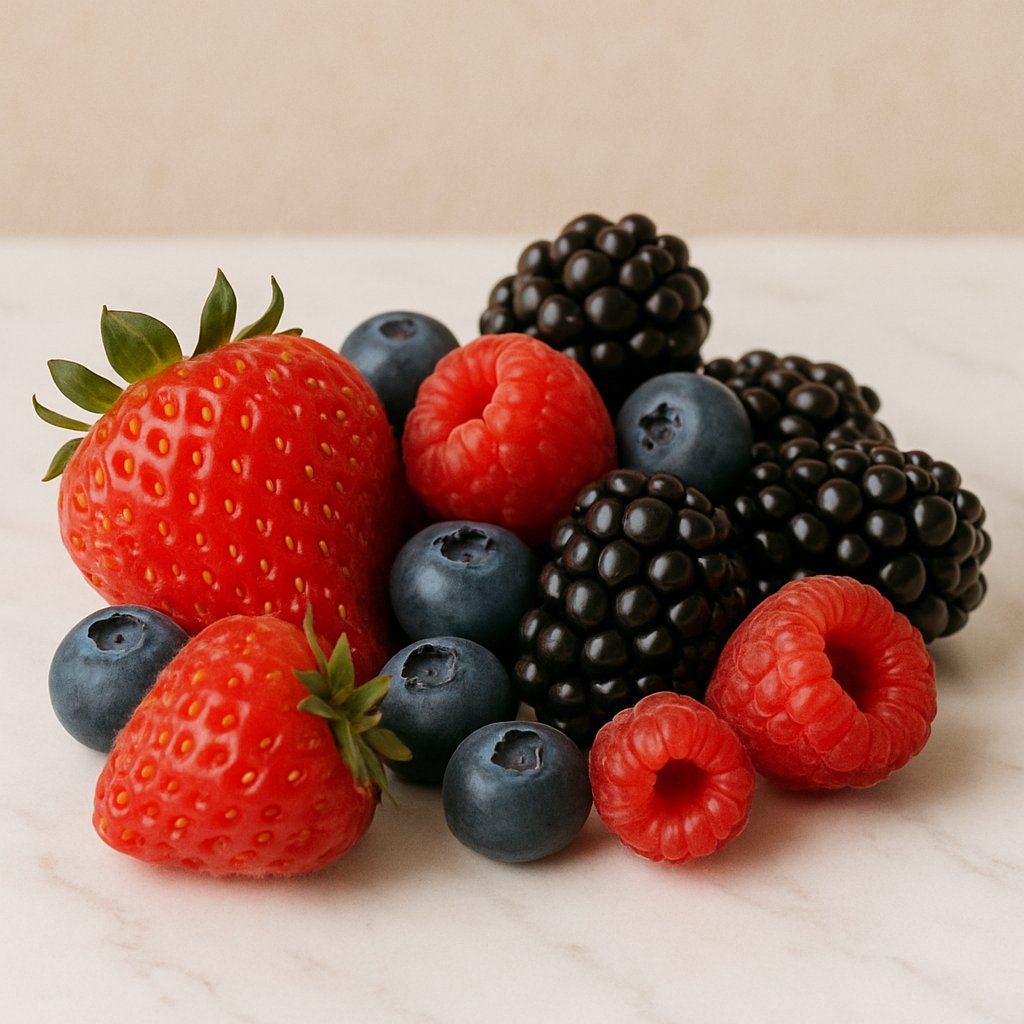
  • Strawberries – red, juicy and very popular. There are small wild strawberries and large cultivated ones that are particularly sweet.
  • Raspberries – soft and easily falling apart, often red or yellow. They taste sweet with a bit of tartness.
  • Blackberries – larger than raspberries, deep purple to black. They are juicy and have small seeds.
  • Blueberries – small and blue, often light blue inside. They are sweet and sometimes a little tart.
  • Currants – small red or black berries, often somewhat tart and good for sauces or jelly.
  • Gooseberries – round and often green or reddish, they can be tart or sweet.
  • Special berries – these include e.g. boysenberries or tayberries, which arose from crosses of blackberries and raspberries. You can think of them as “family mixes” that bring new flavors.
Fresh, frozen or processed
Berries are often available fresh from the fields in summer. Because they spoil quickly, they are also sold frozen, dried or as juice and jam. Frozen berries taste almost like fresh ones because they are flash-frozen immediately after harvest – this means they are frozen very quickly so they stay fresh.

In summary: berries come in many varieties and from different regions of the world. Some grow wild, others are cultivated. Thanks to cultivation in warm countries and freezing, you can buy most berries almost year-round. If you like, you can also go pick berries yourself – it's fun and you learn how the fruits look on the plants.
Details & nutrition

Property Value
Unit g
Calories per 100 50
Protein per 100 1.0
Carbohydrates per 100 12.0
Sugar per 100 7.0
Fat per 100 0.5
Saturated fat per 100 0.1
Monounsaturated fat 0.1
Polyunsaturated fat 0.3
Fiber per 100 5.0
Vitamin C (mg) per 100 30
Vitamin D (IU) per 100 0
Calcium (mg) per 100 25
Iron (mg) per 100 0.7
Nutri-Score A
CO₂ footprint 0.8 kg CO2e/kg
Origin Depending on the season: local or from Europe
Gluten-free Yes
Lactose-free Yes
Nut-free Yes
Vegan Yes
Note Nutritional values are average values for mixed berries; they may vary depending on the variety (e.g., strawberries, raspberries, blueberries).

Technical & scientific information

Berries in everyday language refer to a group of small, juicy fruits such as blueberries, strawberries, raspberries, blackberries and cranberries. Botanically, however, not all the exemplified fruits are true berries: a true berry is a fleshy fruit that develops from a single ovary, whereas strawberries, for example, are aggregate accessory fruits and raspberries are aggregate drupelets (from many ovaries). Despite this distinction, in the food context the term “berries” groups together various small fruits that exhibit similar nutritional and techno-functional properties.

Composition and nutritional values: Berries are 80–90% water and have a low energy density. The carbohydrate portion consists predominantly of simple sugars (fructose, glucose) and to a lesser extent sucrose. The content of dietary fiber (pectins, hemicelluloses, cellulose) is relatively high in many varieties and typically ranges between 2 and 8 g/100 g. Berries are good sources of vitamin C as well as micronutrients like potassium and manganese; trace amounts of folate and vitamin K are also present. Lipids and proteins are overall low.

Secondary plant compounds are characteristic of berries and determine many health-related and technologically relevant properties. These include:

  • Anthocyanins: water-soluble pigments from the flavonoid group, responsible for red to blue hues and relevant antioxidant activity.
  • Flavonols (e.g. quercetin), tannins and ellagitannins, which can cause astringent properties and an astringent taste.
  • Organic acids (mainly citric and malic acid), which influence pH and taste perception.
Metabolism and biosynthesis: The mentioned phenolics are synthesized via the phenylpropanoid metabolism, with enzymes such as phenylalanine ammonia-lyase (PAL) catalyzing the conversion of amino acids to phenyl compounds. The stability of anthocyanins depends on pH, temperature and the presence of metal ions or ascorbate.

Processing and techniques: Common preservation methods include freezing (also IQF, Individual Quick Freezing), preservation with sugar (jams, preserves), drying (sun-, hot-air or freeze-drying), pasteurization of juices and thermal concentration. Modern gentle methods like high-pressure processing (HPP) and vacuum drying reduce nutrient losses. Important measures in processing address enzymatic browning and microbial spoilage, for example through blanching, pH adjustment or the use of antioxidants.

Health aspects: Epidemiological and experimental data point to positive effects of berry polyphenols, including antioxidant, anti-inflammatory and vascular-protective effects. Specific mechanisms include reduction of oxidative stress, modulation of signaling pathways in endothelial cells and influence on the gut microbiota; ellagitannins are metabolized by microbes to produce biologically active urolithins. Berries can contribute to blood sugar regulation, with their high fiber and polyphenol content attenuating the glycemic effect of meals. Sensitivities are possible: people with salicylate sensitivity or certain allergies should monitor their intake.

Safety and storage: Because many berries are sensitive to pressure and moisture, gentle harvesting and cold chain management are crucial. Washing before consumption is recommended to reduce surface residues and microorganisms. In industrial production, residue monitoring, HACCP concepts and appropriate packaging with modified atmosphere are common measures for quality assurance.

Overall, berries are nutritionally valuable foods with low energy content and a high density of bioactive plant compounds. Their chemical complexity influences taste, color and health effects and at the same time poses technical challenges for preservation and processing.

Wiki entry for: berry
Active now: 20 visitors of which 2 logged-in members in the last 5 minutes