Menu & categories

Chicory (endive)

Crisp, bitter leafy vegetable with a subtle note

Wiki about Belgian endive Nutri-Score A Vegan Yes Gluten-free Yes Lactose-free Yes Nut-free Yes
NUTRITION / 100 g
23 kcal 1.7 g Protein 3.5 g Kohlenhydrate 0.3 g Fett

Introduction

Fresh chicory
Chicory (endive) for me, a 35-year-old editor from Europe, has for years been one of those ingredients that reliably bring elegance and freshness to the plate. I still remember the first market visit with my mother, when we discovered the pale, torpedo-shaped heads among carrots and celery. “Take them out of the box only in the dark,” the vendor said with a smile, “otherwise they get more bitter.” Back then it felt almost mystical. Today I know: chicory is grown in the dark so it stays tender and pale – a small miracle of European vegetable culture and a gift for creative kitchens.

In my editorial office chicory is often underestimated, yet it combines what modern cuisine values: versatility, lightness and a fine bitter note that makes dishes exciting. A colleague of mine – an enthusiastic hobby cook who loves roasts – swears by quickly searing the halves in butter and then deglazing with a little orange juice. The result? A velvety, aromatic companion that can even outshine meat. I, on the other hand, love chicory raw, cut into paper-thin strips, with apple, walnuts and a dressing of Dijon mustard, apple cider vinegar and honey. This combination balances bitterness, sweetness and acidity so harmoniously that it convinces even skeptical guests.

What many do not know: chicory is a true child of Europe. Its cultivation as we know it arose in the 19th century in Belgium. The thick root of the chicory plant is first grown in the field and later forced to sprout in dark, controlled rooms. This produces the pale, compact heads we find in vegetable crates. This method not only preserves the aromas but also ensures that chicory is available almost year-round in consistent quality. For me this is ideal when I want to cook seasonally without sacrificing variety.

From a nutritional science perspective chicory scores with fiber, in particular inulin, which maintains a friendly relationship with our gut flora. Added to that are folate, vitamin K and a portion of vitamin

Availability & types

Availability and types of chicory

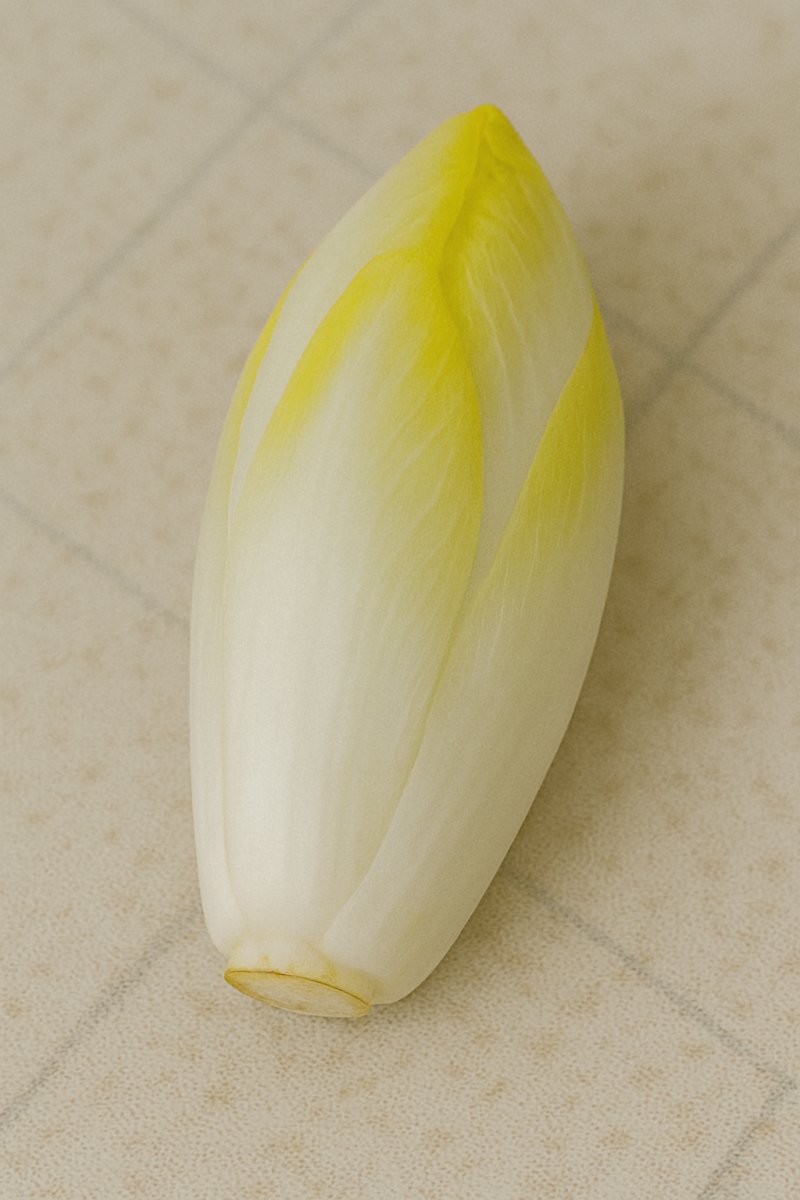
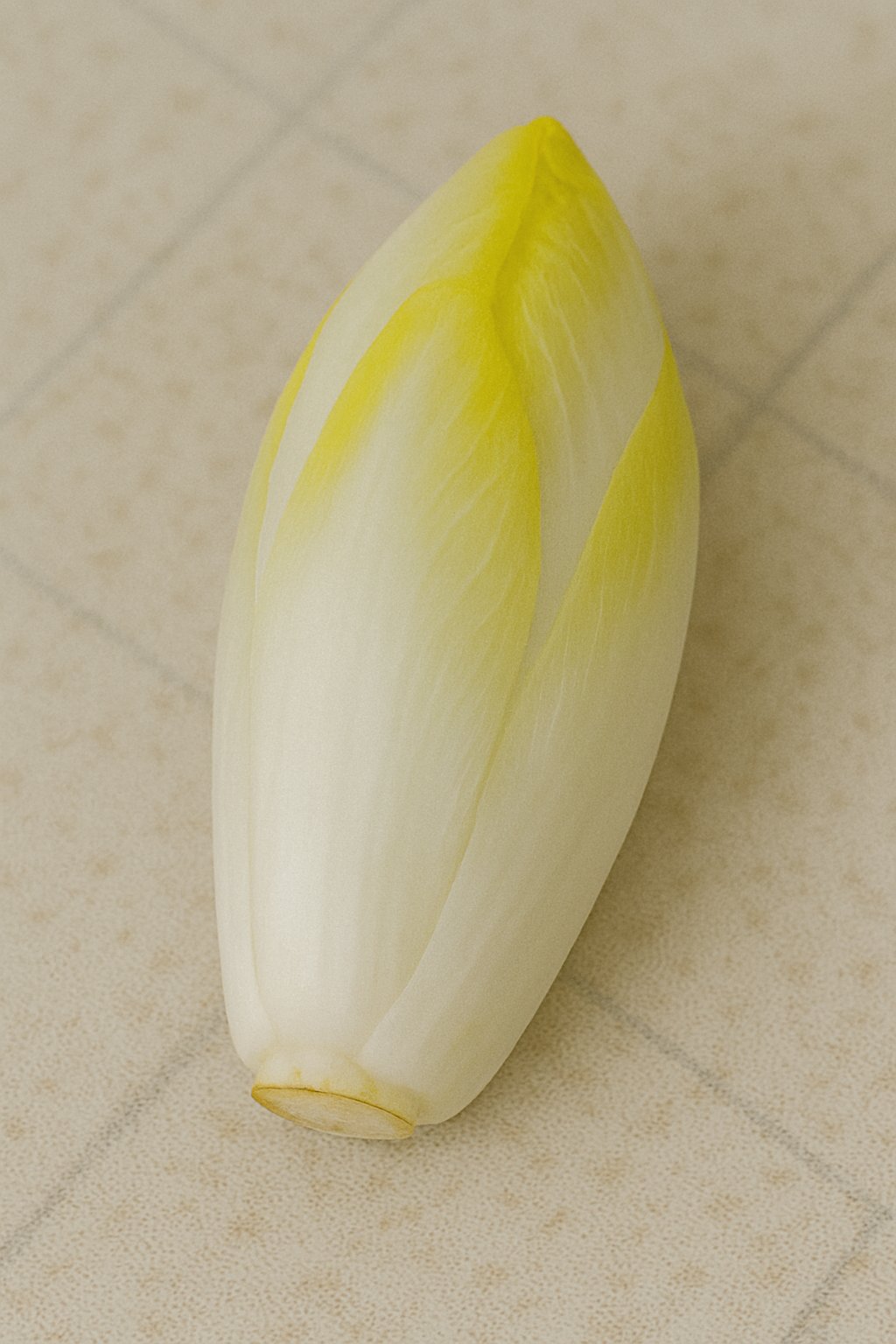
Chicory is a special vegetable that often appears on the market in winter. It looks like a small, firm, pale yellow to white bud with closely packed leaves. Many people know it for its slightly bitter taste. But where does it come from, what varieties exist, and when is it best to get it? Here you will find an easy-to-understand but very comprehensive explanation – also suitable for 12-year-olds.

Origin: where chicory comes from

Chicory originally comes from Europe. It was discovered in the 19th century in Belgium when people wanted to store the roots of chicory (also called wild chicory) in the dark and cool. The roots then suddenly produced pale shoots – that was the birth of chicory! Today chicory is mainly grown in countries such as Belgium, France, the Netherlands and Germany. Belgium is still considered one of the most important countries of origin and is famous for its quality.

How chicory grows: the special thing about the breeding

Chicory grows in two steps:
1) First the chicory root is grown in the field – similar to a large carrot. These roots are harvested in autumn.
2) After that the roots are placed in a dark room (forcing house). There they sprout pale shoots – this is the chicory we eat. Darkness is important so the leaves do not turn green and remain more tender.

Availability: when can you get chicory?

Because chicory is forced in dark rooms, it is available almost year-round. Its main season, however, is in autumn and winter, roughly from November to April. In this period it is usually especially fresh, affordable and tastes best. In summer it is also available, but often somewhat more expensive.
Details & nutrition

Property Value
Unit g
Average weight per piece 80
Calories per 100 23
Protein per 100 1.7
Carbohydrates per 100 3.5
Sugar per 100 2.0
Fat per 100 0.3
Saturated fat per 100 0.05
Monounsaturated fat 0.02
Polyunsaturated fat 0.15
Fiber per 100 1.6
Vitamin C (mg) per 100 8
Vitamin D (IU) per 100 0
Calcium (mg) per 100 19
Iron (mg) per 100 0.3
Nutri-Score A
CO₂ footprint 0.2 kg CO2e/kg
Origin Europe (commonly Belgium/France)
Gluten-free Yes
Lactose-free Yes
Nut-free Yes
Vegan Yes
Note Bitter compounds (intybin) give the characteristic flavor; can be used raw or cooked.

Technical & scientific information

Chicory (Cichorium intybus var. foliosum) is a biennial Asteraceae and is botanically the same species as common wild chicory. In nutrition it is used above all as a bleached, cylindrical sprout vegetable, whose leaves in forced dark cultivation are tender, juicy and characteristically mildly bitter. The vegetable combines botanical particularities, precisely controllable cultivation technologies and nutritional advantages into a versatile ingredient for cuisine, research and the food industry.

Botany and morphology: In the first year chicory forms a strong taproot with rosette-arranged basal leaves. The light shoots typical for trade – often called “shoot sprouts” or “buds” – arise in the second cultivation step by forcing the stored reserves in complete darkness. The shoot is 10–20 cm long, compact and densely leaved; the leaves are pale yellow to white, with a finely ribbed midrib and a delicate, slightly waxy surface. The bitterness results mainly from sesquiterpene lactones (e.g. lactucin, lactucopicrin), whose content varies by variety and cultivation practice.

Origin and breeding: The cultivated form arose in the 19th century in Belgium by accident, when bleached shoots emerged from roots of wild chicory under cover. Modern breeding lines aim for uniform heads, reduced bitter compounds, high yield stability and good post-harvest quality. Besides the classic yellowish-white type, red chicory forms with anthocyanin accumulation exist, which are color-intensified by controlled light management.

Cultivation and forcing technique: The production cycle is divided into two phases. First, taproots are produced in the field (sowing in spring, harvest in autumn). Then forcing takes place: roots are placed in dark rooms at 12–18 °C and high humidity in nutrient solution or substrate. The absence of light prevents chlorophyll formation (blanching)

Wiki entry for: Belgian endive
Active now: 14 visitors of which 2 logged-in members in the last 5 minutes