Menu & categories

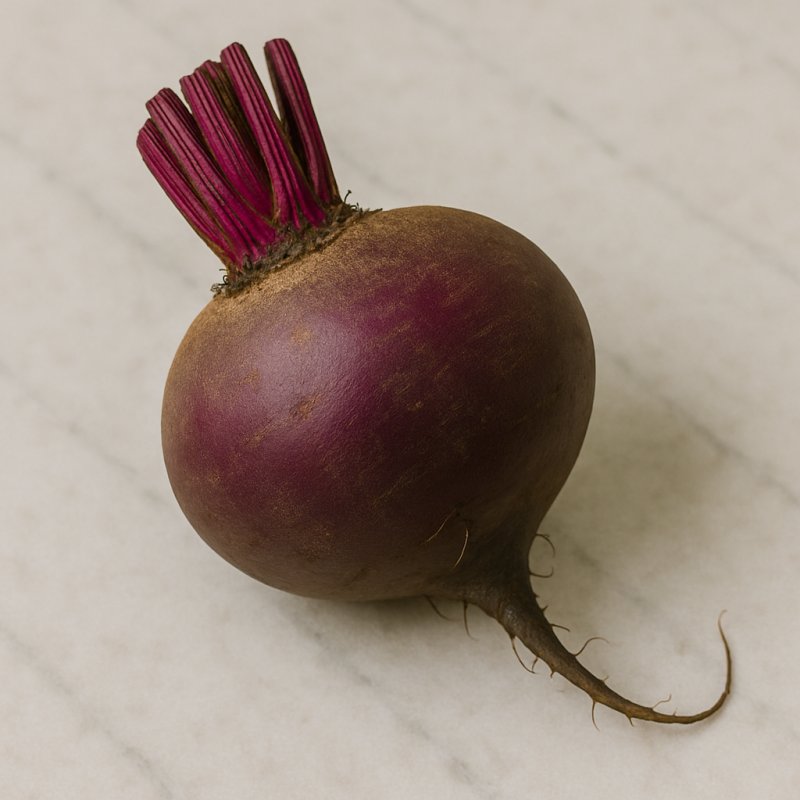
Beetroot

Iron-rich root vegetable with an earthy-sweet flavor

Wiki about beetroot Nutri-Score A Vegan Yes Gluten-free Yes Lactose-free Yes Nut-free Yes
NUTRITION / 100 g
43 kcal 1.6 g Protein 9.6 g Kohlenhydrate 0.2 g Fett

Introduction

Fresh beetroot bulbs
Beetroot is one of those ingredients that keeps delighting me, as a 35-year-old editor from Europe. When I'm at the weekly market I can spot it from afar: firm bulbs, deep ruby red, with greens that recall late summer days. This root feels down-to-earth, yet its potential is almost limitless. In my kitchen it has a fixed place, not only because it is versatile, but also because of its impressive colour, earthy aroma and nutrient-rich properties.

The origin of beetroot goes back to the Mediterranean region, and yet it feels at home in Europe's cooler latitudes. It is closely related to chard and sugar beet and thrives especially well in humus-rich soils. My grandmother told me how, in the 1970s, she stacked jars of cooked beetroot slices in the pantry. Today I prefer fresh bulbs, which I roast in the oven or grate finely and use raw in salads. A colleague of mine swears by “doping” his running shoes with beetroot juice — not because he believes in magic, but because the nitrates in the root support oxygen uptake.

The taste of beetroot is multi-layered: earthy, slightly sweet, with a hint of minerality. This balance makes it ideal for savoury dishes, but also for surprising combinations with citrus, apple, horseradish or dark chocolate. Anyone who has tried a silky beetroot carpaccio with lemon zest, olive oil and toasted hazelnuts understands why this ingredient is so popular in modern kitchens. My neighbour, a trained chef, recommends refining beetroot with a little cumin, coriander seed and a pinch of cinnamon — a spice profile that accentuates its sweetness.

What fascinates me personally are the variations that result from preparation. Roasted in the oven it develops caramelised notes, pan-cooked it stays juicy and firm, in steam it becomes particularly mild.

Availability & types

Availability and types of beetroot

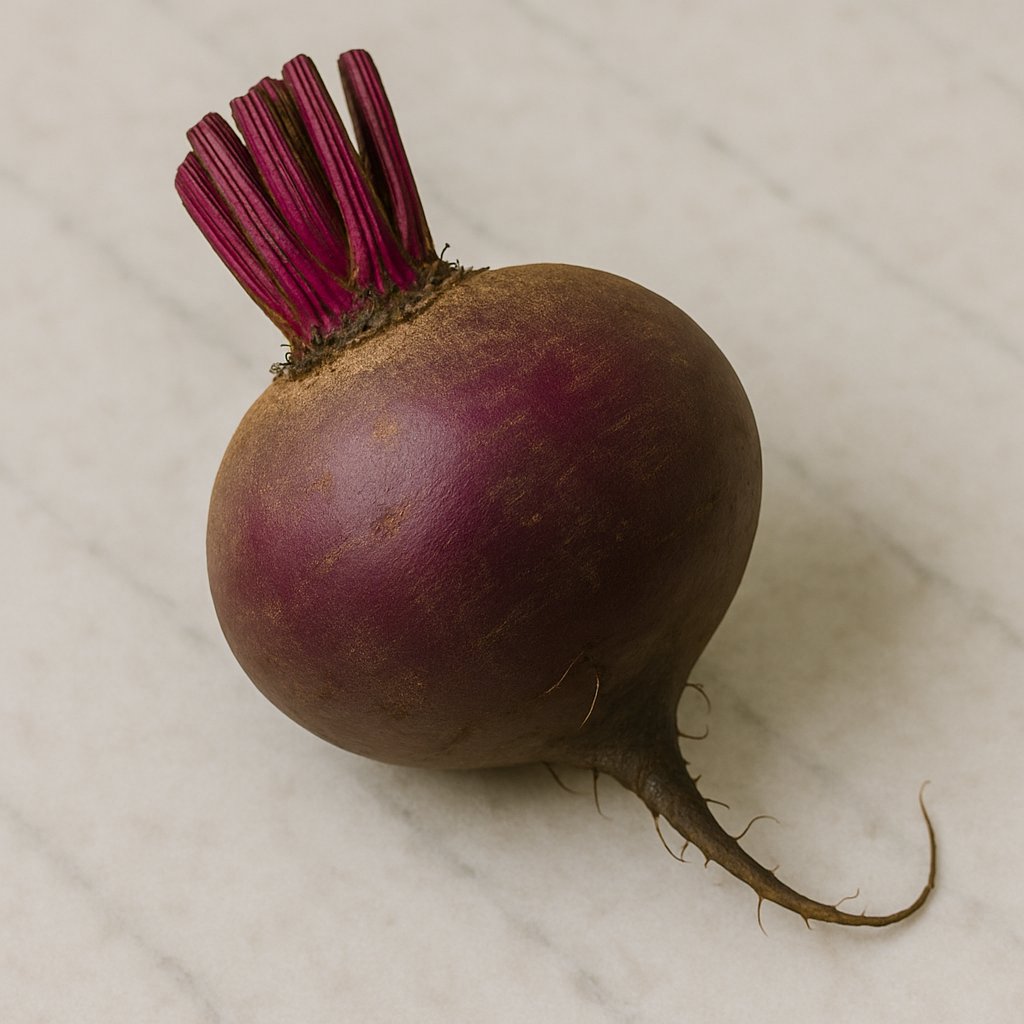
Beetroot, also called red beet or garden beet, is a root vegetable with a bright red colour. It belongs to the same plant family as chard and sugar beet. Its homeland is on the coasts of the Mediterranean and Western Asia. From there it spread to many countries because it is hardy, needs little care and stores well. Today beetroot is grown across Europe, in parts of North America and also in cooler regions of Asia. It prefers a temperate climate but also grows reliably in cooler summers.

Availability throughout the year
Beetroot has different harvest times depending on the region, but is available almost all year round:

  • Spring: first young bulbs and especially tender leaves (similar to spinach) can be harvested. The bulbs are small, mild and cook quickly.
  • Summer: from late summer larger, mature bulbs appear on the market. Fresh produce with leaves can be recognised by crisp stems and smooth, firm bulbs.
  • Autumn: main season. Most bulbs are harvested now. They are flavoursome, juicy and store well.
  • Winter: thanks to storage in cool, dark rooms beetroot remains available over winter. Pre-cooked, vacuum-packed beetroot is also available year-round.
Origin and cultivation
The plant originally derives from the wild beet that grew on seashores. People bred it over many centuries until the round, coloured bulbs we know today emerged. Beetroot is mostly grown outdoors. It needs loose soil so the bulbs become round and even. In organic and hobby gardens attention is often paid to diversity, so you more frequently find different colours and shapes there. Larger farms grow standardized varieties that deliver uniform sizes, which is practical for trade.

Types, cultivars and variants

Details & nutrition

Property Value
Unit g
Average weight per piece 200
Calories per 100 43
Protein per 100 1.6
Carbohydrates per 100 9.6
Sugar per 100 7.0
Fat per 100 0.2
Saturated fat per 100 0.0
Monounsaturated fat 0.0
Polyunsaturated fat 0.1
Fiber per 100 2.8
Vitamin C (mg) per 100 4.9
Vitamin D (IU) per 100 0
Calcium (mg) per 100 16
Iron (mg) per 100 0.8
Nutri-Score A
CO₂ footprint 0.3 kg CO2e/kg
Origin Europe
Gluten-free Yes
Lactose-free Yes
Nut-free Yes
Vegan Yes
Note May cause beetroot-related red discoloration of urine due to betanin (beeturia); rich in folate and nitrates.

Technical & scientific information

Beetroot (Beta vulgaris subsp. vulgaris var. conditiva) is a cultivated form of the common beet and belongs to the family Amaranthaceae. It is valued for its intensely red storage root, which is significant both culinarily and for health. Characteristic are the round to cylindrical roots, whose colour is due to the high content of betacyanins. Beetroot is cultivated in temperate climates worldwide and is considered a robust, relatively cold-tolerant crop with moderate water requirements and medium nutrient demands.

Botany and morphology: The plant forms a fleshy root of parenchyma tissue in which carbohydrates (mainly sucrose) and secondary plant compounds are stored. The leaves are long-petioled, slightly wavy and, depending on the cultivar, show distinctly reddened vascular bundles. The flowering stalk is biennial, with inconspicuous wind-pollinated inflorescences. The root system is fibrous and relatively shallow, but responds sensitively to waterlogging. Cultivar variants include classic dark-red forms, ring-striped types (e.g. Chioggia) and yellow selections, which differ in pigment profile, taste and texture.

Constituents and nutritional profile: Beetroot is characterised by a dense matrix of vitamins, minerals and bioactive compounds. Per 100 g typical contents are: carbohydrates 8–10 g (of which sugars 6–7 g), fibre 2–3 g, protein 1–2 g, fat <0.2 g. Noteworthy are folate (vitamin B9), vitamin C (heat-sensitive, therefore higher in the raw state), potassium, manganese and iron. The root contains notable amounts of nitrates, betalains (betanin, isobetanin) as well as phenolic acids and flavonoids to a lesser extent. Oxalic acid is present in moderate concentrations.

Pigments and chemistry: The red pigment betanin belongs to the betacyanins, a subgroup of the betalains, structurally derived from betalaminic acid analogues.

Wiki entry for: beetroot
Active now: 15 visitors of which 2 logged-in members in the last 5 minutes