Menu & categories

Sugar beet syrup

Dark, aromatic syrup made from sugar beets – robustly malty-sweet for sweetening and baking.

Wiki about beet syrup Nutri-Score D Vegan Yes Gluten-free Yes Lactose-free Yes Nut-free Yes
NUTRITION / 100 g
290 kcal 1.2 g Protein 72.0 g Kohlenhydrate 0.2 g Fett

Introduction

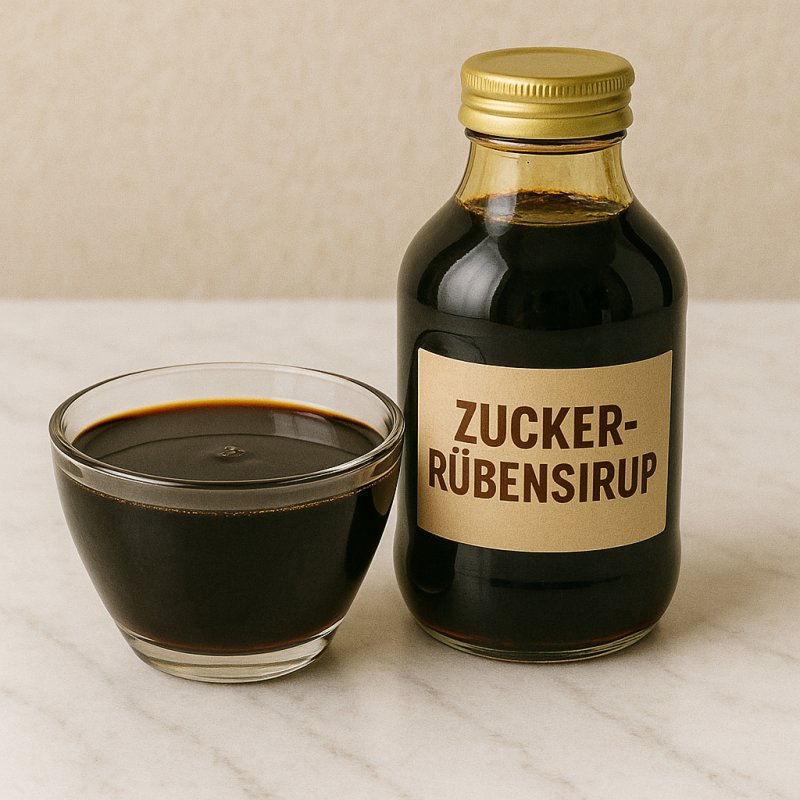
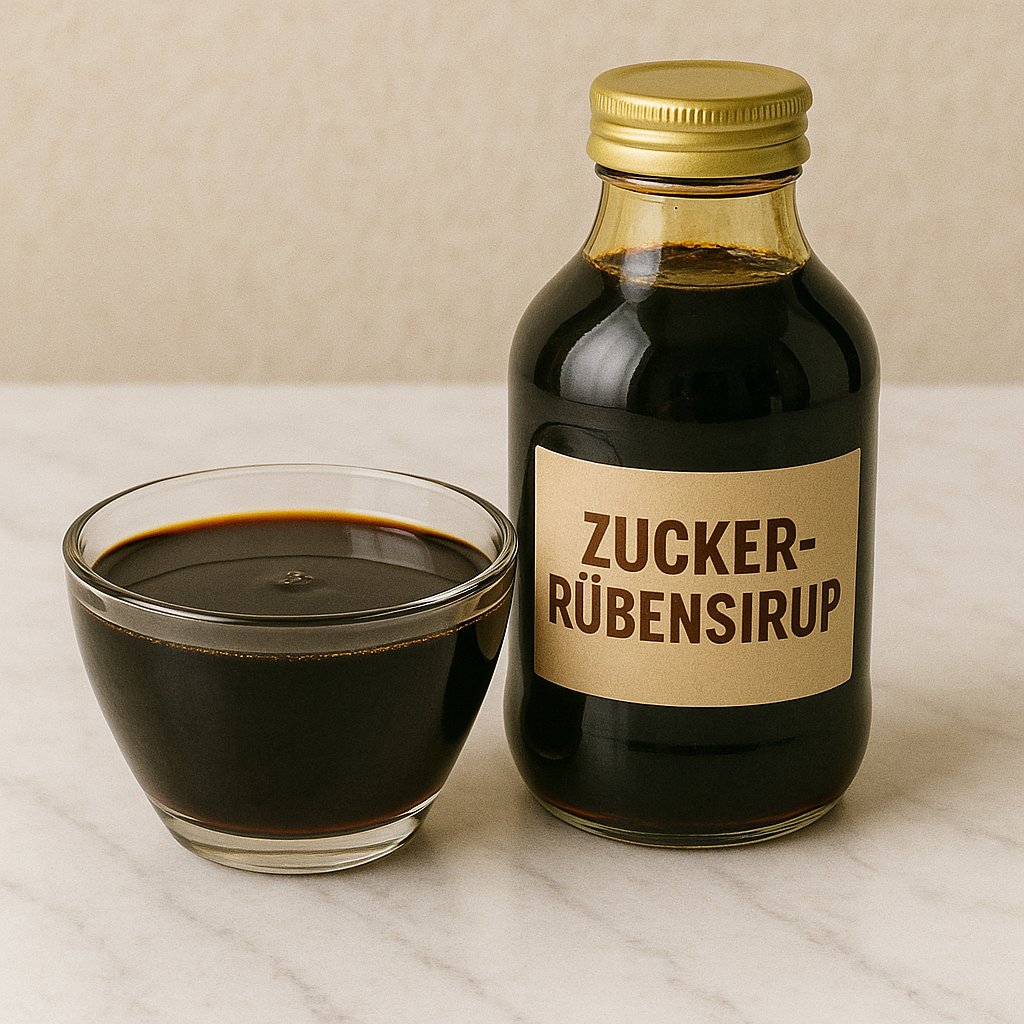
Sugar beet syrup in a glass with dark, viscous syrup

I have a secret weakness for ingredients that start off unassuming and then suddenly take over the whole kitchen. Beet syrup is such a candidate: dark, syrupy, with an earthy, malty undertone that evokes caramel and slightly bitter notes. I still remember a rainy afternoon when a friend brought me a jar – handwritten, without a label, and yet so intense in flavor that I forgot the bread I had with me and instead scraped the rest out with a spoon.

The syrup is made by concentrating the juice of the sugar beet. Unlike cane molasses it often has a fuller, rounder body and carries different nuances depending on the region. In some areas it's called beet spread, in others simply beet syrup, but the idea is the same: a sweet, aromatic concentrate comes from the local beet.

I like that it's so versatile. A colleague of mine swears by using a quarter teaspoon in his mustard spice mix; personally I like to add a spoonful to marinades for root vegetables or to a robust vinaigrette to balance acidity and sweetness. Its depth pairs wonderfully with dark pastries, lemon pancakes and even smoky barbecue sauces.

  • Baking: As a substitute for sugar it provides moisture and flavor, especially in gingerbread or wholemeal bread.
  • Seasoning: A spoonful in the pan juices or in BBQ sauces rounds off the flavors.
  • Breakfast: On rye bread with butter it is a small, honest joy.
  • Substitution: It can replace molasses, but is milder; dose sparingly and taste as you go.
Practical matters shouldn't be missing: beet syrup keeps for a long time when refrigerated, rarely crystallizes and is often produced regionally – a plus for sustainability and short transport distances. I remember a market stall where an older farmer explained that her syrup had to rest after the first boil so that the aromas could "arrive"; since then I sometimes let it simmer an extra minute on purpose when cooking, simply because it tastes better.

For me beet syrup remains a surprisingly down-to-earth delicacy that can start small in the kitchen and make a big impact. Whoever gives it a chance often discovers a new favorite flavor that gives everyday dishes a warm, spicy depth.

Availability & types

Beet syrup comes from the sugar beet, a large, thick root that grows in fields. Farmers harvest the beets, cut them into small pieces and boil them to extract the sweet juice. From this juice, a thick syrup is made by evaporation. You can think of it like apple juice cooked down until it becomes thick and very sweet.

Origin and growing regions
Sugar beets grow best in cooler, temperate areas. In Europe many fields are found in countries such as Germany, France, Poland and the United Kingdom. Sugar beets are also grown in North America. Because the plant does not need much heat, these regions are particularly suitable. Many farmers work in communal operations or cooperatives that collect the beets and bring them to the sugar factory where the syrup is produced.

How easy is beet syrup to find?
Beet syrup is usually widely available. You can find it in supermarkets, health food stores, at weekly markets and often online. In regions with many sugar factories or beet fields the supply is particularly large. Because the syrup has a long shelf life, it is available year-round — unlike fresh fruit, which only has one season.

Different types and variants
There is not just one kind of beet syrup. Here are the main variants, simply explained:

  • Beet spread: This is very thick and spreadable, almost like peanut butter, and is often spread on bread. It has a robust, malty flavor.
  • Liquid beet syrup: This is thinner and pours well over pancakes or into muesli. It is easier to dose than the thick beet spread.
  • Beet molasses (or by-product): In the sugar production process a darker, very concentrated liquid can sometimes be produced – molasses. It has an intense flavor and is often used in animal feed or for further processing. For household use there are also dark syrups that taste similar.
  • Organic variants: Syrups made from organically grown sugar beets carry the organic label. These products come from fields without chemical pesticides.
  • Flavor specialties: Some producers add cinnamon, vanilla or other flavors, so there are syrups with slightly altered tastes for special recipes.
What are the variants used for?
The thick beet spread is well suited as a bread spread or in baked goods because it doesn't run away during baking. The liquid syrup is often used as a sweetener for drinks, pancakes or for cooking. Molasses is more intended for special recipes or industry. Organic and flavored variants are for people who prefer particular production methods or want to try new flavors.

Overall beet syrup is a versatile ingredient that can be found in many supermarkets and local stores. Depending on whether you are looking for something spreadable or pourable, you can choose between beet spread, liquid syrup or special variants — similar to honey, which also has solid and liquid types.
Details & nutrition

Property Value
Unit g
Calories per 100 290
Protein per 100 1.2
Carbohydrates per 100 72.0
Sugar per 100 70.0
Fat per 100 0.2
Saturated fat per 100 0.0
Monounsaturated fat 0.0
Polyunsaturated fat 0.0
Fiber per 100 0.0
Vitamin C (mg) per 100 0
Vitamin D (IU) per 100 0
Calcium (mg) per 100 80
Iron (mg) per 100 2.0
Nutri-Score D
CO₂ footprint 0.7 kg CO2e/kg
Origin Europe (commonly Germany)
Gluten-free Yes
Lactose-free Yes
Nut-free Yes
Vegan Yes
Note Very high in sugars; use in moderation. Mineral content may vary slightly depending on the manufacturer.

Technical & scientific information


Beet syrup is a thick, sweet product produced by evaporating and concentrating the released juice of the sugar beet (Beta vulgaris). It is characterized by a caramel-like aroma, a dark to amber appearance and a high content of utilizable carbohydrates. Beet syrup is made both artisanally and industrially and differs sensorially and chemically from other syrups such as maple syrup or molasses derived from sugarcane by-products.

Chemical composition: The main components are sucrose and, to a lesser extent, the monosaccharides glucose and fructose, which partially form by inversion during processing. Other constituents include organic acids, amino acids and a range of secondary plant compounds. Thermal processing produces Maillard products and caramelization products (e.g. melanoidins) that shape color and flavor. The mineral fraction (ash) contains mainly potassium, calcium, magnesium and traces of iron and phosphorus.

Nutritional values (typical per 100 g):
  • Energy: approx. 300–350 kcal (≈ 1250–1460 kJ)
  • Carbohydrates: 70–85 g, predominantly sugars
  • Protein: < 1 g
  • Fat: < 0.5 g
  • Minerals (ash): variable, typically 1–8 g
These values vary significantly depending on the manufacturing process and the degree of concentration of the syrup.
Processing methods: In principle the sugar beets are washed, shredded and treated in a diffusion plant with hot water to extract the sugary juice. This is followed by purification of the raw juice by de-calcification (e.g. lime milk) and decarbonation (carbonation) or alternative treatment steps to remove non-sugar substances. For syrup the purified juice is concentrated, usually by multistage evaporation under vacuum, to avoid high temperatures and preserve sensory quality. For deliberately darker, more aromatic products, stronger heating and longer evaporation are used, producing more Maillard and caramelization products.

Technological and industrial significance:

  • Food: as a sweetener in baked goods, pastry fillings and desserts
  • Fermentation: substrate for yeast and ethanol production
  • Animal feed: energy-dense additive
  • Carrier: basis for the production of molasses-based products
Health aspects: Beet syrup is an energy-rich source of rapidly available carbohydrates, therefore it contributes, like other sugar products, to caloric intake and affects blood glucose levels. Due to the high sugar content it is cariogenic when consumed frequently and in unhygienic amounts. A positive aspect is the slightly higher content of minerals and secondary compounds compared to pure table sugar; however these amounts are moderate nutritionally and do not justify excessive consumption. For people with diabetes beet syrup is suitable only in limited amounts and under medical advice due to its high glycemic potential.

Storage and microbiological safety: Because of the high sugar content beet syrup has low water activity and is therefore relatively microbiologically stable. Improper storage (contamination, too much dilution) can, however, promote fermentation or spoilage. Products should be stored dry, cool and protected from light.

Overall beet syrup is a versatile, technologically interesting product with a characteristic flavor profile. Its use in food processing and biotechnological applications is based on the high energy density and the additional trace elements, while health considerations suggest moderate consumption.

Wiki entry for: beet syrup
Active now: 14 visitors of which 2 logged-in members in the last 5 minutes