Menu & categories

Béchamel sauce

Classic white base sauce made from butter, flour and milk

Wiki about béchamel sauce Nutri-Score D Vegan No Gluten-free No Lactose-free No Nut-free Yes
NUTRITION / 100 g
120 kcal 4.0 g Protein 8.0 g Kohlenhydrate 7.5 g Fett

Introduction

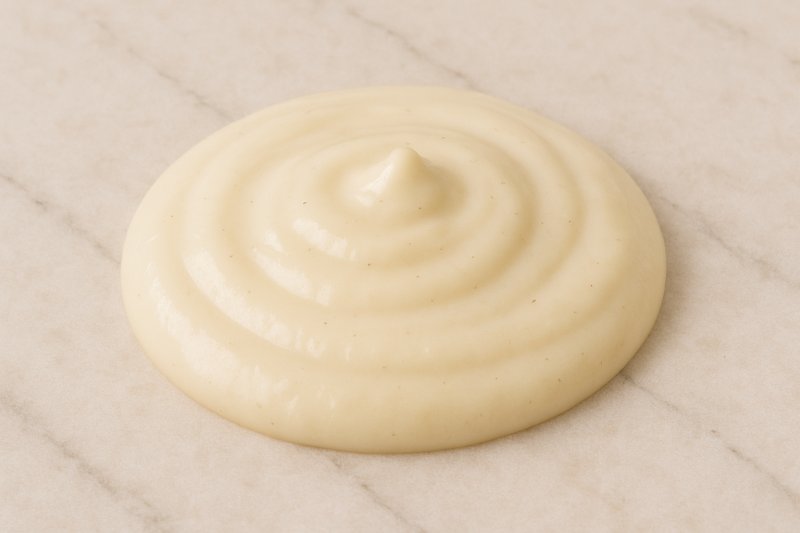
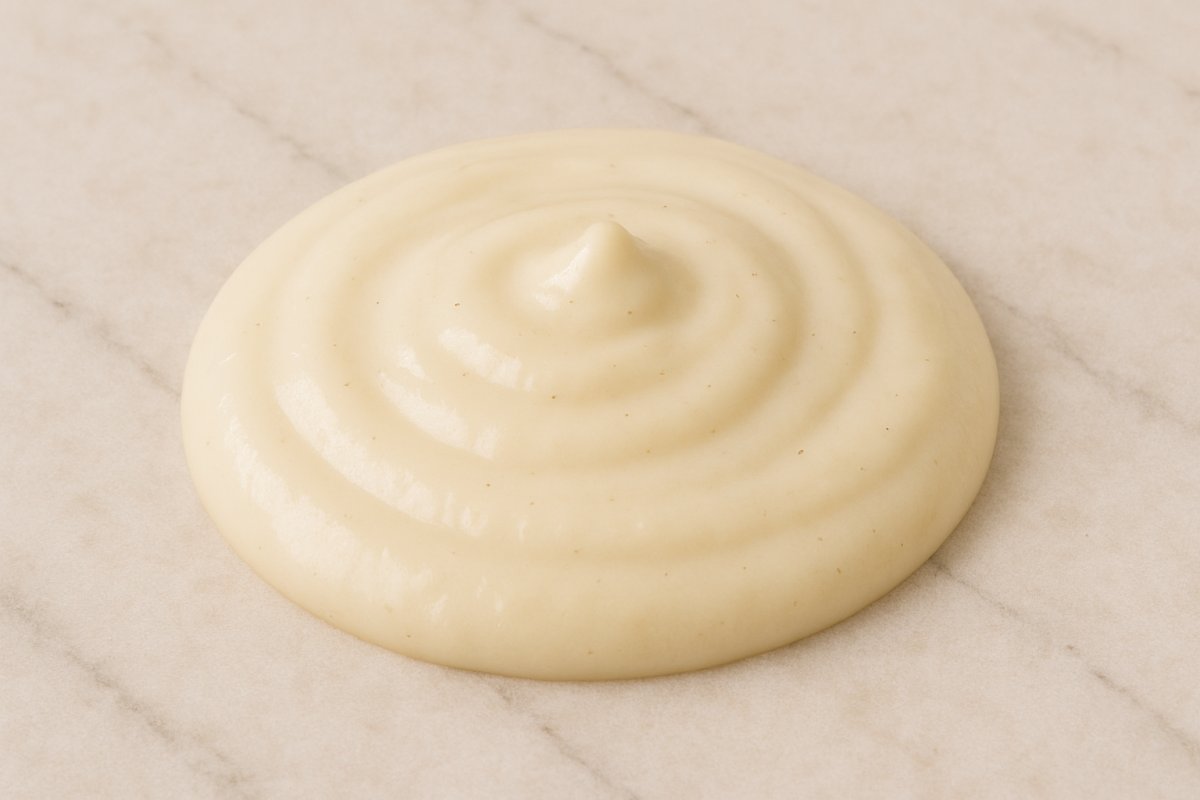
Bowl with creamy béchamel sauce
I have a secret relationship with béchamel sauce, and no, that sounds more dramatic than it is. The first time I poured a thick, velvety layer of this classic white sauce over a lasagna fresh from the oven, I was for a moment convinced that from then on all family gatherings should consist only of that dish. I still remember exactly the smell of butter and lightly toasted flour spreading through the kitchen while the rain drummed against the windows outside.

Béchamel is for me more than an ingredient; it is a basic knowledge that tenderly holds every kitchen together. The blend of butter, flour and milk seems unspectacular, but the result is incredibly versatile. I have loved the sauce in its classic form, but have also varied it by adding nutmeg, mustard or a touch of grated cheese to give dishes like gratin or moussaka a personal note. A colleague of mine once swore by drizzling a little white wine into the warm milk; it sounded bold, and surprisingly it worked great.

Simplicity is its greatest virtue, and yet it demands attention: the roux should be golden, not burnt, and the milk should be stirred in slowly so that no lumps form. I have learned that patience and constant stirring are better here than hurried pouring. And if something goes wrong, it can almost always be rescued by straining the sauce through a sieve or smoothing it with a splash of cold milk.

Some of my favorite uses include:

  • Baked vegetable dishes that benefit from the creamy layer
  • Lasagna, where it harmonizes with tomato sauce and cheese
  • As a base for cheese sauces, when I want to be generous with the Parmesan
Béchamel is a small kitchen philosophy: unassuming, but fundamental. It teaches patience, reward and the joy of texture. When I recently explained the technique to a friend, I did so with the matter-of-factness of an old acquaintance – and yet I felt again that little sparkle that comes with the first perfect pour over a warm dish.

Availability & types

Availability and types

The béchamel sauce is a white basic sauce used in many cuisines around the world. It is easy to find and very versatile. Unlike vegetables or fruit, béchamel has no specific growing regions because it does not grow. Béchamel is prepared at home or in factories from simple ingredients like milk, butter and flour. These ingredients come from agriculture: milk from cows, butter made from it and flour from cereals such as wheat. Therefore the availability of the sauce depends on the availability of these basic ingredients.

Where to get béchamel

  • At home: Many people cook béchamel themselves because it is quick and the flavor can be easily adjusted. A homemade béchamel takes only a few minutes on the stove.
  • In supermarkets: There are ready-made béchamel sauces in jars or Tetra Paks. These are convenient when you have no time or receive unexpected guests. They often keep longer because they are preserved or sterilized.
  • In restaurants: Especially in Italian or French dishes like lasagna or gratin, béchamel is frequently used. There it is often prepared fresh because it gives a better flavor.
Available varieties and variants

Béchamel comes in different variants, which you can imagine like different garments: all are similarly cut, but some have special details.

  • Classic béchamel: This is the basic mix of butter, flour and milk. It is creamy and has a mild flavor. It is used as a foundation for many dishes.
  • Spiced béchamel: Here herbs or spices like nutmeg, pepper or garlic are added. This changes the taste, similar to a T‑shirt with a print.
  • Cheese béchamel (Mornay): When cheese, for example grated Emmental or Parmesan, is stirred into the béchamel, it becomes even richer. This variant is particularly good with casseroles and pasta.
  • Lighter variants: For people who want less fat or calories, there are versions made with low‑fat milk or with more flour and less butter. Some ready products are also lighter.
  • Plant-based alternatives: For those who do not eat dairy, there are béchamels based on plant milks (e.g. soy, oat or almond) and plant margarine. These variants look and taste similar to the classic sauce, but are without cow's milk.
Practical tips

If you want to buy béchamel, check the label: some ready sauces contain additives to extend shelf life. Homemade sauce is fresh and you can easily control the flavor. In cooking the rule is: always stir well so that no lumps form – like avoiding clumps in cocoa. For a special flavor you can always add a bit of nutmeg or cheese.

Overall béchamel sauce is a very accessible and adaptable ingredient. Whether homemade or from the supermarket, classic or with cheese, there is a suitable variant for every taste and diet. This makes every dish, from lasagna to vegetable casserole, nicely creamy and tasty.
Details & nutrition

Property Value
Unit g
Calories per 100 120
Protein per 100 4.0
Carbohydrates per 100 8.0
Sugar per 100 3.5
Fat per 100 7.5
Saturated fat per 100 4.8
Monounsaturated fat 1.8
Polyunsaturated fat 0.4
Fiber per 100 0.3
Vitamin C (mg) per 100 0.0
Vitamin D (IU) per 100 10
Calcium (mg) per 100 110
Iron (mg) per 100 0.3
Nutri-Score D
CO₂ footprint 1.4
Origin Europe
Gluten-free No
Lactose-free No
Nut-free Yes
Vegan No
Note Classic béchamel sauce is prepared from butter, wheat flour and milk and serves as a base for many casseroles, gratins and pasta dishes.

Technical & scientific information

Béchamel sauce is a classic white base sauce of French cuisine, made from few ingredients and used as a base for numerous dishes such as lasagna, gratins or moussaka. Chemically speaking, béchamel is a stable emulsion and thickening whose structure depends primarily on starch‑based gel formation and the protein and fat components of milk. The traditional preparation combines a roux (Mehlschwitze) of equal parts fat and wheat flour with milk; upon heating the starch in the flour swells, binds water and forms a network that makes the liquid phase viscous.

Composition and ingredients
Typical ingredients are wheat flour, butter (or another fat), cow's milk, salt and possibly spices like pepper, nutmeg or onion. Nutritionally, béchamel consists mainly of water and milk components: proteins (mainly casein and whey proteins), milk fat (saturated and unsaturated fatty acids), milk sugar (lactose) and carbohydrates from the flour (starch). A commercial portion typically contains per 100 g about 100–150 kcal, 5–10 g fat, 4–6 g protein and 6–10 g carbohydrates, with exact values strongly depending on milk fat content and added quantities.

Physical and chemical fundamentals
The thickening relies primarily on the swelling of starch granules. On heating, starch granules take up water, rupture and release amylose, which forms viscous solutions and intermolecular networks. The roux process (fat and flour) prevents lump formation because fat coats the flour particles and allows an even incorporation into the hot liquid. Milk proteins contribute to stability: casein micelles surround fat droplets and help create a homogeneous suspension. Temperature and stirring speed influence texture; too high heat can cause starch degradation (dextrin formation) and alter the flavor.

Processing methods and variations

  • Preparation steps: melt the butter, briefly cook the flour (do not brown), then gradually whisk in cold or warm milk and bring to a simmer until the desired thickness is reached.
  • Variants: using milk alternatives (soy, oat or almond) changes protein composition, flavor and binding behavior; starch sources such as cornstarch can replace flour, allowing gluten‑free sauces.
  • Binding degrees: from “sahneleicht” to “schnurrfest” can be achieved by adjusting the ratio of roux to liquid; more roux increases viscosity.
Sensory properties and stability
The viscous, creamy texture and mild taste are characteristic. Long‑term storage can lead to water separation (syneresis), especially after cooling and reheating, because the starch gel partially releases water. Emulsifiers or additional binders (e.g. modified starch) are used in industrial products to improve stability and reheating performance.

Health aspects
From a nutritional point of view béchamel provides energy, protein and calcium, but often contains considerable amounts of saturated fatty acids when whole milk and butter are used. For people with lactose intolerance the sauce is problematic without lactose‑free milk alternatives. Those allergic to cow's milk protein or gluten must resort to alternatives such as lactose‑free or plant‑based milks and gluten‑free flours. By consciously altering recipes (low‑fat milk, reduced fat content, plant‑based alternatives) the nutritional profile can be improved, although texture and flavor will change.

Overall béchamel sauce is technically simple yet chemically interesting, and its properties can be precisely controlled by fine‑tuning ingredient ratios, temperature and mechanical treatment. Its role as a base sauce makes it versatile in the kitchen and at the same time an instructive example of starch gelation, emulsion stability and protein‑based food structuring.

Wiki entry for: béchamel sauce
Active now: 24 visitors of which 2 logged-in members in the last 5 minutes