Menu & categories

Banana milk

Creamy milk beverage with banana flavor.

Wiki about banana milk Nutri-Score C Vegan No Gluten-free Yes Lactose-free No Nut-free Yes
NUTRITION / 100 ml
70 kcal 2.8 g Protein 11.0 g Kohlenhydrate 1.5 g Fett

Introduction

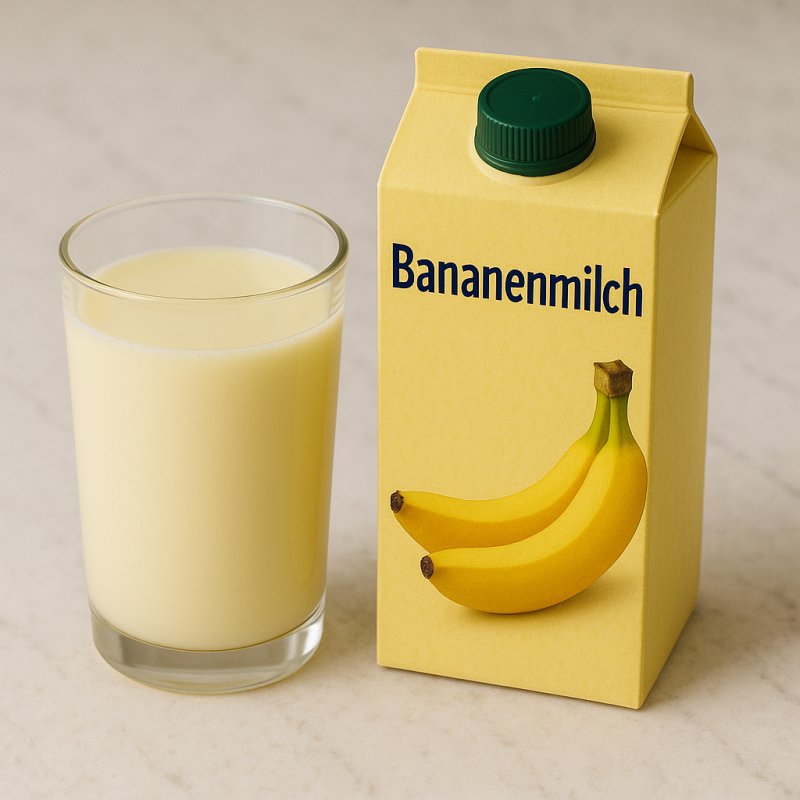
Glass of banana milk with light yellow color
I have a quiet weakness for simple things that carry a lot of memory, and banana milk definitely belongs to that list. When I see the first ripe fruits at the market, my mind immediately wanders to a small kitchen where a glass of that creamy, sweet mixture waits for me. A colleague once called it "liquid nostalgia concentrate," and since then I find that description irresistible.

At its core banana milk is very plain: ripe bananas, a liquid of choice and, depending on mood, spices or sweetening ingredients. The result is surprisingly versatile. You can drink it for breakfast, enjoy it as a snack after sports or use it as a base for desserts and shakes. I still remember a summer when I was experimenting on a small terrace and suddenly friends sat with bright eyes because a simple banana milk had saved their afternoon.

The classic ingredients include:

  • Ripe bananas
  • Milk or plant-based milk
  • Optional: honey, maple syrup or dates
  • Optional: vanilla, cinnamon or cocoa
My testing methods are unspectacular and honest: I puree the banana with the liquid, adjust to the desired consistency and add ice cubes if needed. A small trick I learned is to use a frozen banana when I want a thicker, creamier texture. That makes the mixture almost like soft-serve ice cream and is a real crowd-pleaser with spontaneous guests.

Nutritionally, banana milk is not a miracle cure, but it delivers quick energy, potassium and, depending on the base, also proteins and fats. For creative minds it is an excellent base for:

  • Smoothie bowls
  • Pancake batter
  • Vegan ice creams
In the end, banana milk is for me a small everyday pleasure: uncomplicated, comforting and always ready to conjure something special out of a few ingredients. I can't think of a better way to start the day or brighten up an improvised break.

Availability & types

Banana milk is a drink that tastes like banana and is made from real bananas or banana flavoring with milk or plant-based liquids. You can buy it ready-made in the store or easily mix it at home. In this section I explain in simple terms where the bananas for such drinks come from, where to find banana milk and which types and variants exist.

Origin of the ingredients
The most important ingredient is the banana. Bananas grow in large bunches in warm, tropical regions. Countries like Ecuador, Costa Rica, Colombia, the Philippines and parts of Africa are major producers. The most common variety for export is called Cavendish — it's the banana you usually see at the supermarket. There are also plantains (cooking bananas), which are higher in starch and less sweet; they are often cooked rather than eaten raw. Because ships can transport food easily, bananas are available in many countries almost all year — so banana milk can be made almost anytime.

Where to find banana milk
Banana milk can be found in several places:

  • In the supermarket: as a ready-made drink in bottles or cartons.
  • In Asian stores: you often find special varieties and brands there, for example from South Korea, where banana milk is very popular.
  • In health food or organic stores: there are often organic versions or products with plant-based alternatives.
  • Cafés and snack bars: many make fresh shakes or smoothies with banana.
  • Online: brands or small producers deliver banana milk to your home.
Some products are stocked chilled on the shelf, others are shelf-stable (UHT) and can be stored unrefrigerated for a long time. Ready drinks indicate on the packaging whether they need to be kept chilled.
Available types and variants
Banana milk is not always the same – there are many variants. Here are some simple descriptions:
  • Dairy (with cow's milk): The classic version – banana and regular milk. Often slightly sweet and creamy, like a mild milkshake.
  • Plant-based: Instead of cow's milk, soy, oat, almond or coconut milk are used. Good for people who do not want to drink cow's milk. Sometimes this is also called a banana drink or banana milk.
  • Sweetened or unsweetened: Some products have added sugar, others contain only the banana's natural sweetness. Unsweetened versions are less sweet and healthier.
  • Flavored: With extra flavors, e.g. chocolate, vanilla or strawberry — like a mix of cocoa and banana.
  • Protein or vitamin-enriched: For athletes or children there are varieties with added protein or vitamins. These are simply extra nutrients that are added.
  • Homemade: Fresh bananas, milk (or water and nut drink) and a blender – quick to make and you can decide how sweet it should be.
A simple comparison: ready-made banana milk from a bottle is like a ready lemonade, while homemade banana milk is like a freshly prepared smoothie.
In summary: banana milk is versatile and available almost everywhere because bananas are grown in warm countries and shipped worldwide. Whether you choose a chilled milk version, a plant-based alternative or a self-mixed shake depends on your taste and needs. Try different varieties — you may discover a new favorite version!
Details & nutrition

Property Value
Unit ml
Calories per 100 70
Protein per 100 2.8
Carbohydrates per 100 11.0
Sugar per 100 10.0
Fat per 100 1.5
Saturated fat per 100 1.0
Monounsaturated fat 0.4
Polyunsaturated fat 0.1
Fiber per 100 0.2
Vitamin C (mg) per 100 0.5
Vitamin D (IU) per 100 8
Calcium (mg) per 100 120
Iron (mg) per 100 0.1
Nutri-Score C
CO₂ footprint 0.11 kg CO2e/100 ml
Origin Manufactured in Germany; milk from the EU
Gluten-free Yes
Lactose-free No
Nut-free Yes
Vegan No
Note Nutritional values may vary depending on the recipe (sugar content, fat level, possible vitamin fortification).

Technical & scientific information

Banana milk denotes a liquid preparation or product based on banana and additional liquid components (typically cow's milk, plant-based milk alternatives or water). As an ingredient in food production and in homemade beverages it combines the specific chemical properties of the banana with the physico‑chemical properties of the carrier fluid. The result is a more viscous, taste‑sweet‑acid emulsion or suspension with characteristic color and aroma profile.

Chemical composition and main constituents:

  • Carbohydrates: Mainly mono‑ and disaccharides (glucose, fructose, sucrose) as well as soluble and insoluble fiber such as pectin and resistant starch; the sugar content provides the majority of the energy density.
  • Proteins and lipids: In homemade banana milk made with cow's milk, milk proteins (casein, whey proteins) and milk fats are added; the banana itself contributes only small amounts of protein and fat.
  • Minerals and vitamins: Notable are potassium, magnesium and traces of calcium, as well as fat‑soluble and water‑soluble vitamins especially vitamin B6 and vitamin C, although vitamin C is partially degraded by processing and storage.
  • Enzymes and secondary plant compounds: Bananas contain enzymes such as polyphenol oxidase, which lead to browning, as well as phenolics and aromatic compounds (e.g. esters and terpenes) that shape the aroma.
Nutritional values (typical reference per 100 g of homemade banana milk, varying by recipe): Energy about 50–80 kcal, carbohydrates 8–12 g (of which sugars 6–10 g), protein 1–3 g, fat 0.5–3 g, potassium 150–300 mg. Industrial variants with added sugar or whole milk show higher calorie and fat values.

Processing methods: On an industrial level banana milk is often produced by mixing fruit puree, a milk base and emulsifiers or stabilizers. Key process steps are:

  • Comminution of flesh to puree or concentrates;
  • Homogenization to stabilize fat and solid particles;
  • Pasteurization or UHT treatment for microbial safety and extended shelf life;
  • Addition of acidity regulators, stabilizers (e.g. pectins, carrageenans) and sweeteners depending on the formulation.
Technical and microbial aspects: pH and water activity determine microbiological stability; fresh mixes often have a slightly acidic pH around 5–6 and must be refrigerated. Polyphenol oxidase crosslinking can cause enzymatic browning, which is why antioxidants or thermal inactivation are used. Pectins and starch influence viscosity and mouthfeel; gelation or retrogradation may occur during storage.

Health aspects: Banana milk provides quick energy through readily available sugars as well as potassium and vitamin B6. Concerning aspects are the high sugar content in recipes with added sugars and the calorie balance with regular consumption. People with cow's milk allergy or lactose intolerance must pay attention to the milk component; in cases of sensitivity to latex cross‑reactions there can be rare intolerances to banana components. For infants and young children it is not a substitute for breastfeeding or age‑appropriate infant formula.

Applications: Banana milk is used as a drink, ingredient in smoothies, shakes, desserts and baked goods. Technologically it serves as a flavor and texture provider in dairy products and as a base for functionalized beverages with added vitamins or probiotics.

Overall banana milk is a versatile food with characteristic physico‑chemical properties and nutritional effects, whose quality depends on raw material ripeness, processing stages and formulation.

Wiki entry for: banana milk
Active now: 24 visitors of which 2 logged-in members in the last 5 minutes