Availability and types of bacon
Bacon is an ingredient popular in many kitchens around the world. It usually comes from the pig and is made from the meat of the belly or the back. You can think of bacon as salted, dried and sometimes smoked strips of meat that are very flavorful. Because bacon is versatile, you can find it in supermarkets, butcher shops and farmers' markets — often year-round. In some regions it is more common and available in many varieties because the tradition of preserving and smoking meat is very old there.
Origin and production regions
Bacon is not grown like vegetables; it comes from animals raised on farms. Famous regions for good bacon include, for example:
- Germany: In many regions, particularly in the south and west, butchers have long traditions of curing and smoking. Regional typical varieties are often available there.
- Italy: This includes well-known specialties such as pancetta or guanciale (from the pig's cheek). Italian bacon often has a mild, aromatic flavor.
- USA: American bacon is usually thinly sliced and frequently smoked. It is easy to obtain in many supermarkets.
- Scandinavia and Eastern Europe: In these areas there are also many traditions around curing and smoking, often with robust flavors.
The exact quality and taste of bacon can depend on how the animals were fed and kept. The processing method also plays a role — for example, how long the bacon was cured or smoked.
Available types and variants
Bacon comes in many variants so it fits different dishes. Here are some simple explanations of the most common types:
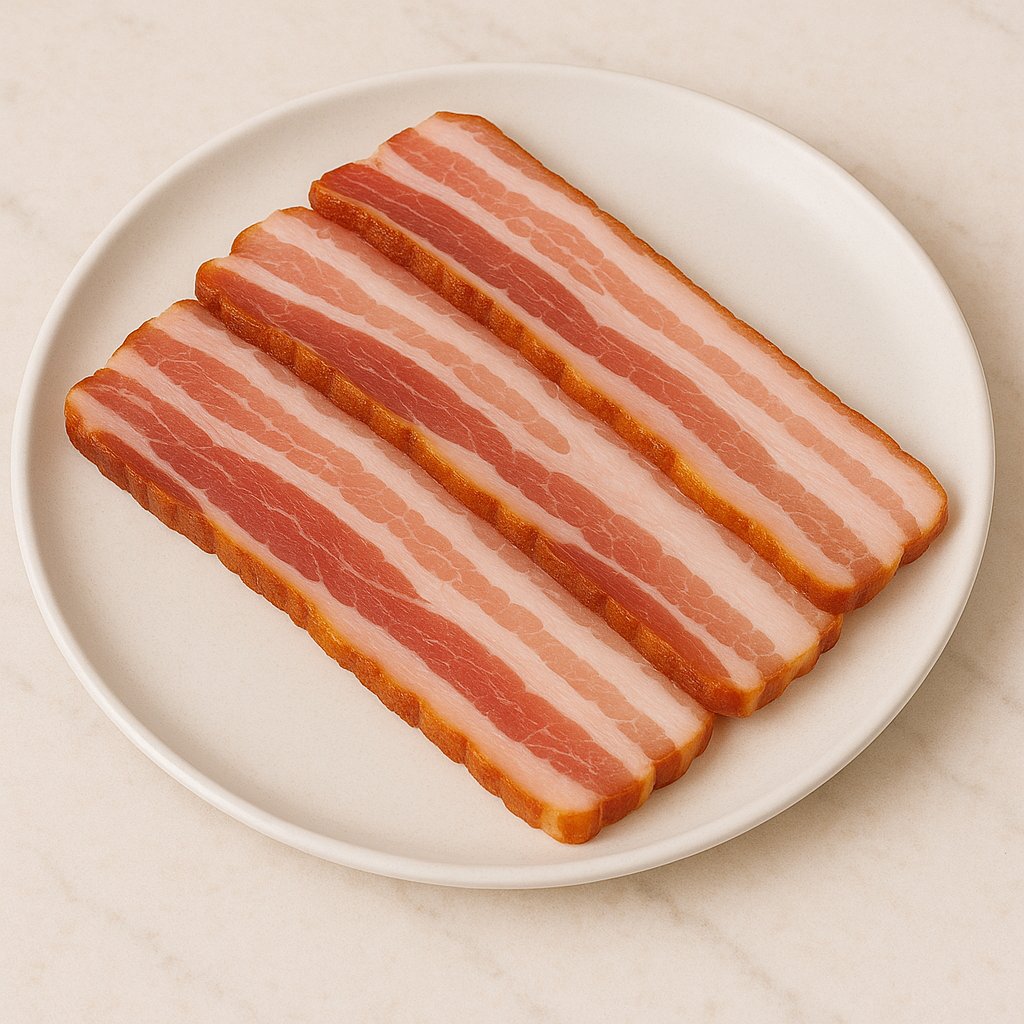
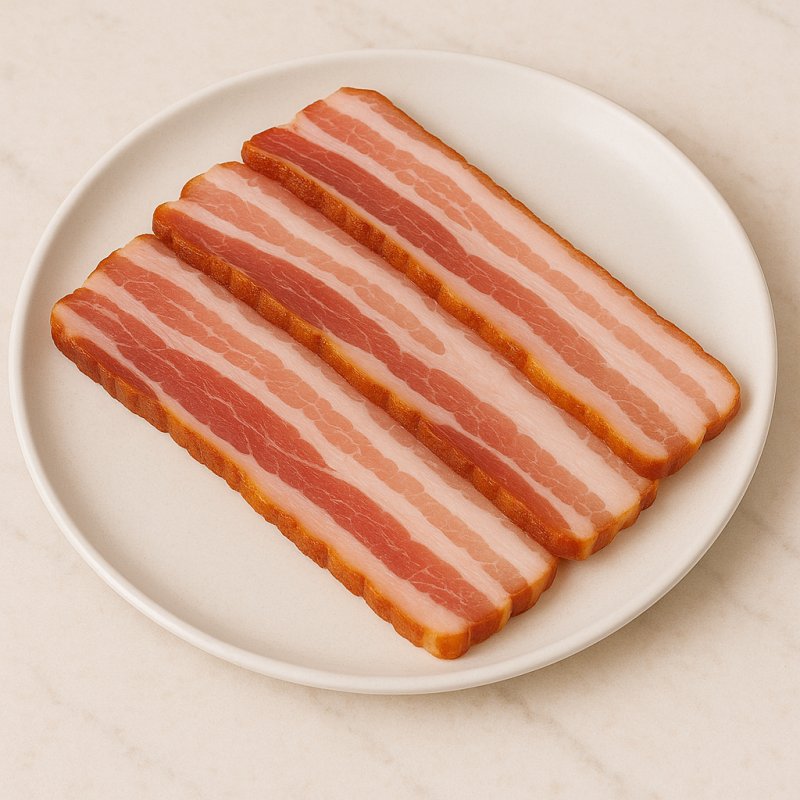
- Belly bacon (Bauchspeck): This is the classic type with a lot of fat and soft streaks of meat. It is juicy and releases a lot of flavor when fried. It is often known as breakfast bacon.
- Back bacon (Rückenspeck/Schinkenspeck): Slightly leaner than belly bacon, with more meat. It tastes a bit finer and can also be served thin on bread.
- Pancetta: Italian belly bacon, often not smoked but cured with spices. It has a mild, savory taste and works well in pasta.
- Smoked bacon: This bacon has been smoked over wood and therefore smells and tastes somewhat smoky — similar to grilling over a campfire.
- Salted or cured bacon: The meat is preserved with salt or a salt mixture (curing salt). This is important so bacon can be stored longer.
- Vegetarian/vegan alternatives: For people who don't eat meat there are now imitations made from soy, seitan or plant oils intended to look and taste like bacon.
How to recognize good bacon?
Good bacon has a nice balance of fat and meat, smells fresh and not unpleasant, and feels firm. The packaging should show a best-before date. When buying, it helps to look for regional products: butchers often provide information about where the meat comes from and how it was processed.
In summary, bacon is an easy-to-find ingredient with many variants — from fatty belly bacon to leaner back bacon and regional specialties like pancetta or heavily smoked bacon. That way there is a suitable type of bacon for every preference and every dish.