Menu & categories

Bacon

Savory, cured and often smoked pork belly

Wiki about bacon Nutri-Score E Vegan No Gluten-free Yes Lactose-free Yes Nut-free Yes
NUTRITION / 100 g
541 kcal 37 g Protein 1 g Kohlenhydrate 42 g Fett

Introduction

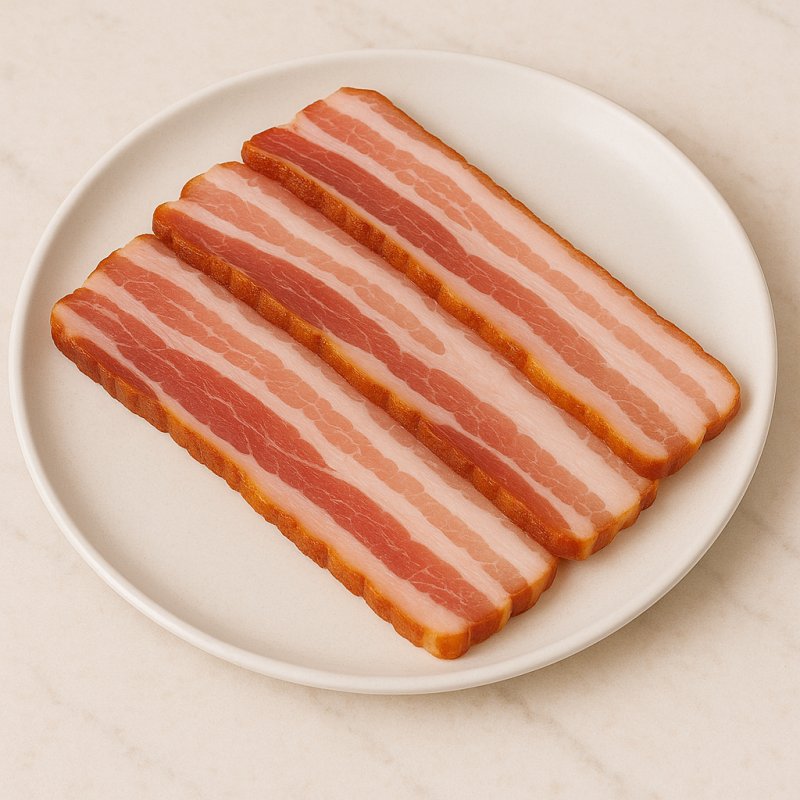
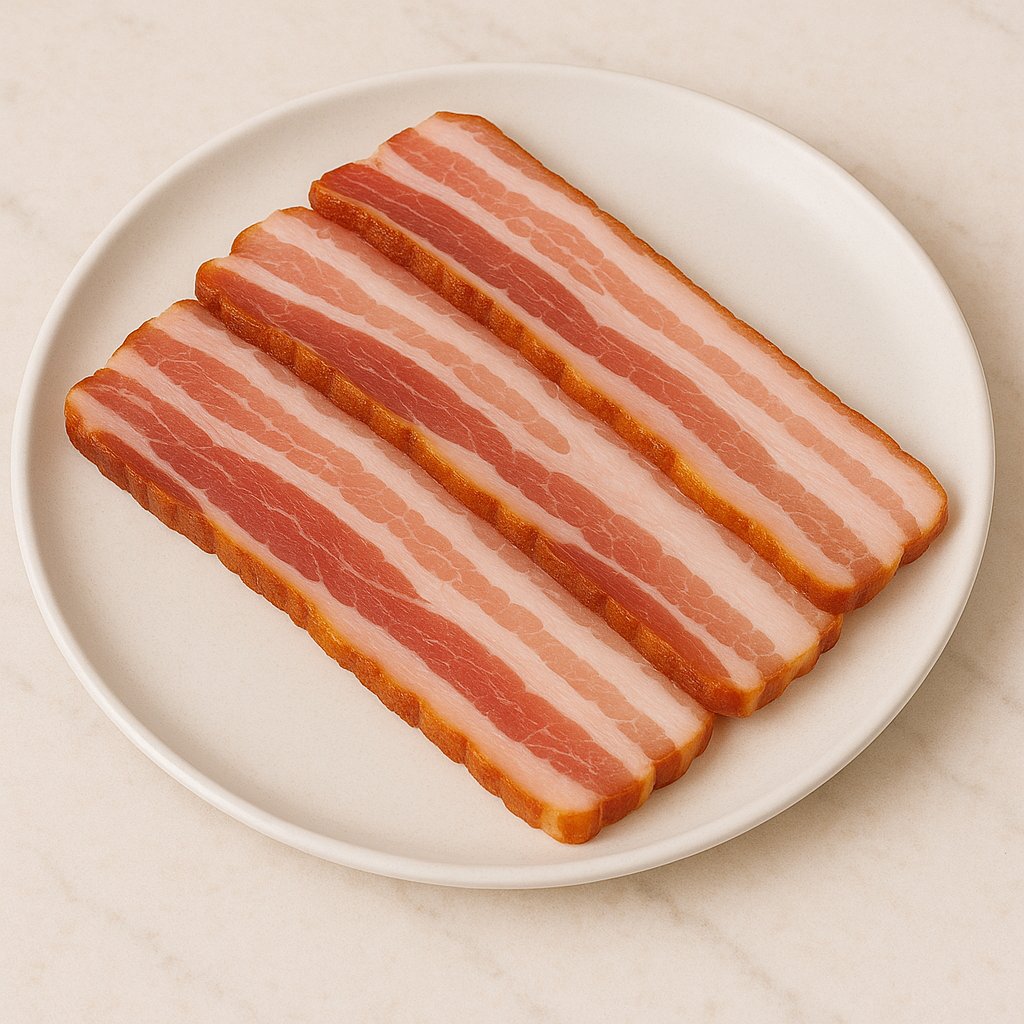
Raw slices of bacon on a wooden board
Bacon is, for me, one of those ingredients that immediately awakens memories and conjures smells that make any kitchen come alive. I still remember exactly the first morning when the scent of crispy bacon spread through the apartment: a neighbor had grilled something a bit too early on a Sunday morning, and suddenly we were all sitting in the stairwell sharing slices as if it were bread. Since then bacon has had a permanent place in my culinary rituals.

What I love about bacon is its versatility. It's not just a breakfast side, it can elevate a dish in surprising ways. Sometimes I fry a few strips until they are particularly crispy and crumble them over a salad to add texture and umami. Other days I slowly braise bacon with onions for a hearty pasta sauce. The combination of fat, salt and lightly smoky notes makes it a small flavor enhancer that complements rather than overwhelms.

When choosing it I like to pay attention to quality. There are big differences between industrially produced and artisanally smoked bacon. A good, slightly thicker-cut strip with nice marbling can release refined flavors when fried that I just don't find in cheap products. A colleague of mine swears by regional bacon because he says you can taste the landscape — and sometimes I think he's right.

Bacon not only brings flavor but also stories. While camping I learned how universally useful it is: for breakfast, as an addition to stews, or as a crispy crust on grilled cheese. I also tried to incorporate it into sweets — a praline with bacon and maple is unusual, but the salty component can harmonize surprisingly well.

Finally, bacon is pragmatic: it's shelf-friendly enough to keep on hand, but sophisticated enough to impress guests. Whether thinly sliced, diced or served as whole slices, I think it always tells a little about craftsmanship, coziness and the small luxury of good ingredients.

Availability & types

Availability and types of bacon

Bacon is an ingredient popular in many kitchens around the world. It usually comes from the pig and is made from the meat of the belly or the back. You can think of bacon as salted, dried and sometimes smoked strips of meat that are very flavorful. Because bacon is versatile, you can find it in supermarkets, butcher shops and farmers' markets — often year-round. In some regions it is more common and available in many varieties because the tradition of preserving and smoking meat is very old there.

Origin and production regions

Bacon is not grown like vegetables; it comes from animals raised on farms. Famous regions for good bacon include, for example:

  • Germany: In many regions, particularly in the south and west, butchers have long traditions of curing and smoking. Regional typical varieties are often available there.
  • Italy: This includes well-known specialties such as pancetta or guanciale (from the pig's cheek). Italian bacon often has a mild, aromatic flavor.
  • USA: American bacon is usually thinly sliced and frequently smoked. It is easy to obtain in many supermarkets.
  • Scandinavia and Eastern Europe: In these areas there are also many traditions around curing and smoking, often with robust flavors.
The exact quality and taste of bacon can depend on how the animals were fed and kept. The processing method also plays a role — for example, how long the bacon was cured or smoked.

Available types and variants

Bacon comes in many variants so it fits different dishes. Here are some simple explanations of the most common types:

  • Belly bacon (Bauchspeck): This is the classic type with a lot of fat and soft streaks of meat. It is juicy and releases a lot of flavor when fried. It is often known as breakfast bacon.
  • Back bacon (Rückenspeck/Schinkenspeck): Slightly leaner than belly bacon, with more meat. It tastes a bit finer and can also be served thin on bread.
  • Pancetta: Italian belly bacon, often not smoked but cured with spices. It has a mild, savory taste and works well in pasta.
  • Smoked bacon: This bacon has been smoked over wood and therefore smells and tastes somewhat smoky — similar to grilling over a campfire.
  • Salted or cured bacon: The meat is preserved with salt or a salt mixture (curing salt). This is important so bacon can be stored longer.
  • Vegetarian/vegan alternatives: For people who don't eat meat there are now imitations made from soy, seitan or plant oils intended to look and taste like bacon.
How to recognize good bacon?

Good bacon has a nice balance of fat and meat, smells fresh and not unpleasant, and feels firm. The packaging should show a best-before date. When buying, it helps to look for regional products: butchers often provide information about where the meat comes from and how it was processed.

In summary, bacon is an easy-to-find ingredient with many variants — from fatty belly bacon to leaner back bacon and regional specialties like pancetta or heavily smoked bacon. That way there is a suitable type of bacon for every preference and every dish.
Details & nutrition

Property Value
Unit g
Calories per 100 541
Protein per 100 37
Carbohydrates per 100 1
Sugar per 100 0.5
Fat per 100 42
Saturated fat per 100 14
Monounsaturated fat 19
Polyunsaturated fat 4
Fiber per 100 0
Vitamin C (mg) per 100 0
Vitamin D (IU) per 100 40
Calcium (mg) per 100 11
Iron (mg) per 100 1.4
Nutri-Score E
CO₂ footprint 5.5
Origin Pork, mostly from Europe
Gluten-free Yes
Lactose-free Yes
Nut-free Yes
Vegan No
Note Very high salt content; nutritional values may vary depending on fat content, curing, and smoking.

Technical & scientific information

Bacon refers in food science primarily to fatty cuts of meat that are preserved by salting, curing, smoking or fermentation. The term and production methods vary regionally: in many Central European countries bacon usually means the pork belly parts, while in other regions back bacon, streaky ham or air-dried products may also be called bacon. Typical characteristics are a high fat content, a firm to sliceable texture and a pronounced aroma resulting from the combination of salt, curing salt containing nitrite and, if applicable, smoke.

Composition and nutritional values
The main component of bacon is fat, which depending on the cut and production method can make up 40 to over 70 percent of the dry matter. In addition, bacon contains water, proteins and to a lesser extent minerals and vitamins. The energy density is correspondingly high: 100 grams of bacon typically provide between 300 and 600 kilocalories, depending on fat content and the amount of pore-bound water. The fat fraction mainly consists of triglycerides, whose fatty acid composition depends strongly on the feed and breed of the pig as well as on the tissue. Saturated fatty acids (e.g. palmitic acid, stearic acid), monounsaturated fatty acids (primarily oleic acid) and to a lesser extent polyunsaturated fatty acids such as linoleic acid are present. Proteins supply essential amino acids, while collagen fractions from connective tissue influence texture.

Production and processing methods
Traditional processing methods can be divided into several steps:

  • Trimming and cutting: Removal of hairs, rind or unwanted parts, cutting into portions.
  • Salting and curing: Dry curing with table salt and often curing salt containing nitrite or wet curing by immersing in a brine. Nitrite serves microbial safety and color fixation.
  • Ripening and drying: Controlled storage, in some products for weeks to months, to reduce moisture and develop flavors.
  • Smoking: Cold or hot smoking processes deposit volatile aromatic compounds and preserving phenols that influence flavor and shelf life.
  • Thermal treatment: In some cases a cooking or scalding process is applied, particularly for belly or collar bacon, to change texture and durability.
Chemical and microbiological aspects
During ripening and processing multiple biochemical processes occur. Proteolysis and lipolysis by endogenous enzymes as well as microbial metabolism generate peptides, free amino acids, free fatty acids and secondary degradation products that largely shape the aroma. During smoking phenolic compounds are deposited, which can exhibit antioxidant and antimicrobial properties. The use of nitrite reduces the risk of Clostridium botulinum and contributes to the formation of nitrosylmyoglobin, responsible for the typical pink to red color. At the same time, the formation of nitrosamines under improper storage or high temperatures is a health-relevant issue.

Health considerations
Bacon provides concentrated energy; fat-soluble vitamins such as A and D may occur in trace amounts, while calcium or iron contents remain low. Because of the high proportion of saturated fatty acids, large amounts should be limited within a balanced diet. The sodium content from curing salts must be considered, especially for hypertension and cardiovascular diseases. There are also discussions about the health evaluation of cured and smoked meat products: epidemiological studies link regular consumption of processed meats with increased risks for certain cancers and other diseases, where factors such as nitrite/nitrosamines, polycyclic aromatic hydrocarbons from smoke and high amounts of saturated fats may play a role.

Storage and food hygiene
Refrigerated storage extends shelf life; for air-dried or heavily smoked bacon lower water activity and salt contents are decisive for microbiological stability. Hygienic production, proper curing and maintenance of the cold chain minimize risks. Before consumption check smell, color and visible mold growth; certain noble molds on air-dried bacon can be harmless, while other colonizations should be removed or the product discarded.

Overall, bacon is a food rich in culture and tradition with a complex composition and varied production methods. Its intense aroma and preserving properties make it popular in many cuisines, while nutritional and safety aspects should be considered when consumed regularly or frequently.

Wiki entry for: bacon
Active now: 11 visitors of which 2 logged-in members in the last 5 minutes