Menu & categories

Arugula

Piquant, spicy leafy vegetable high in vitamins and secondary plant compounds

Wiki about arugula Nutri-Score A Vegan Yes Gluten-free Yes Lactose-free Yes Nut-free Yes
NUTRITION / 100 g
25 kcal 2.6 g Protein 3.7 g Kohlenhydrate 0.7 g Fett

Introduction

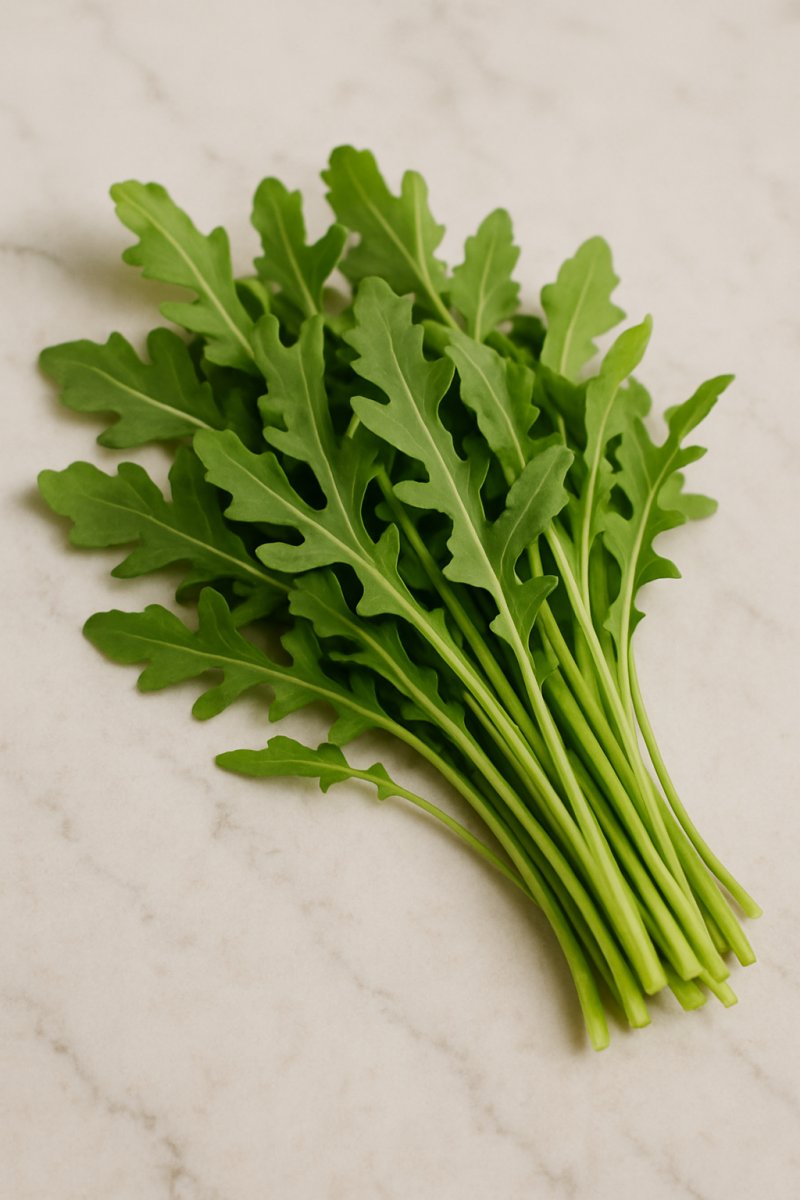
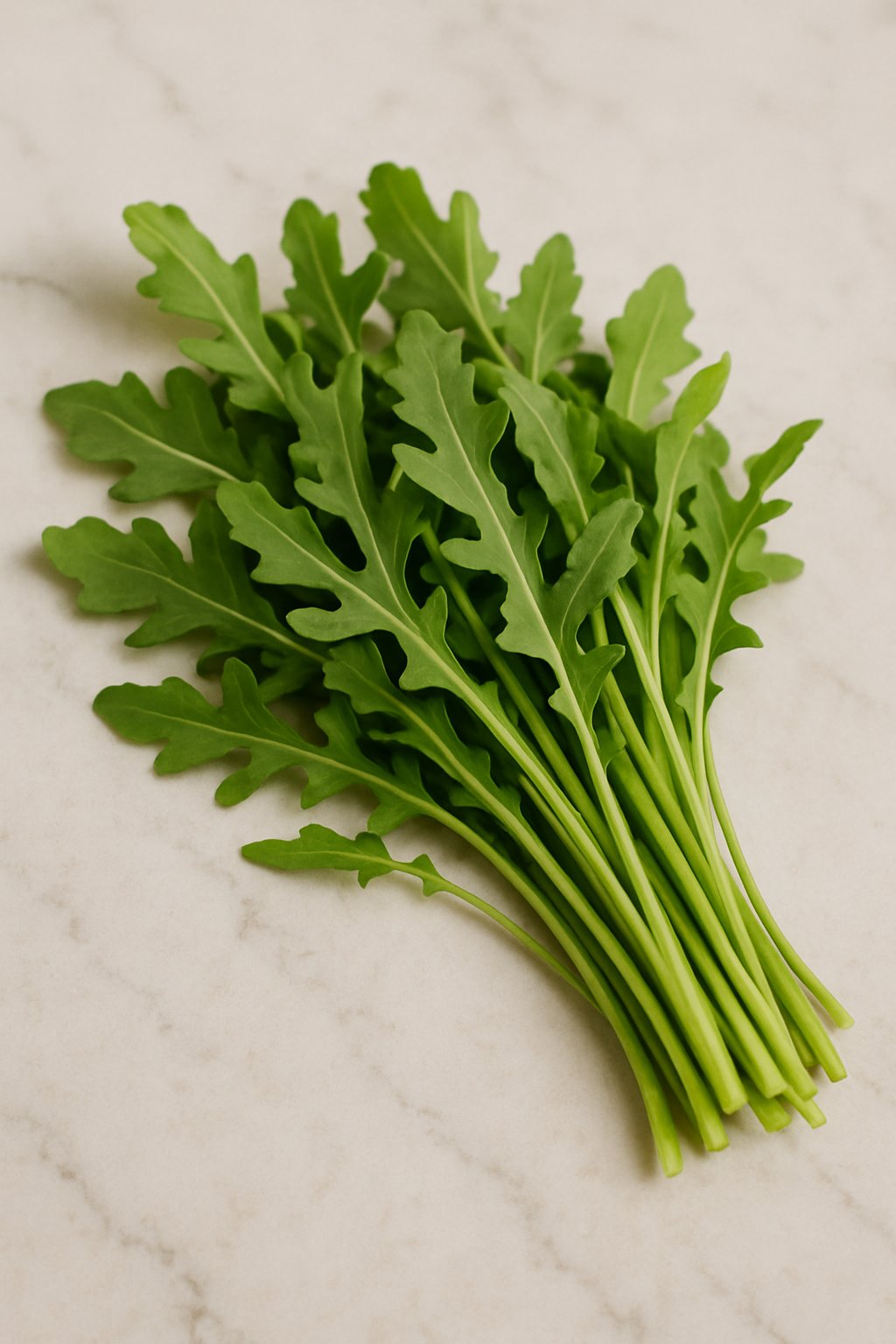
Fresh green arugula leaves on a wooden table
Arugula, or as I like to call it, the cheeky relative in the salad bed, has often surprised me. I still remember how, as a newcomer at the market stall, I was handed a handful of this curly green and thought, 'What on earth is this?' The first bite was a little slap in the face – peppery, nutty, with a slight bitterness that immediately woke me up. Since then arugula has not been a mere garnish for me, but an ingredient that gives dishes character.

I like arugula raw in salads because it contributes texture and boldness, but I just as happily toss it briefly in a pan until it wilts and its aroma transforms. A colleague of mine swears by sprinkling it over warm, still-steaming pasta; the heat mellows the sharpness and combines with olive oil and lemon zest into something you'd want to recreate right away. The interplay between raw and cooked makes arugula so versatile.

What characterizes arugula:

  • Taste: peppery, slightly nutty, occasionally bitter – depending on the age of the leaves.
  • Culinary uses: salads, pesto, sandwiches, pizza, pasta, soups and as a seasoning on grilled meat or fish.
  • Freshness tip: young, tender leaves are milder; older leaves develop more bite.
I've also tried arugula in sweeter combinations – with pear and goat cheese, for example – and was surprised at how well the peppery note pairs with honey. One dinner with friends once ended in a heated debate about whether arugula belongs on pizza. We agreed that it's simply great on a thin, crispy base with a light layer of mozzarella.

When it comes to growing, arugula is uncomplicated; it grows quickly, can be harvested multiple times and tolerates cool temperatures. I like to plant it in pots on the windowsill, because then I always have some greenery on hand when cooking inspiration strikes. For me arugula is the ingredient that makes dishes come alive – a small, spicy kick that often makes the difference between 'good' and 'unforgettable'.

Availability & types

Availability and types

Arugula, which many also call rucola, is a leafy vegetable with a slightly sharp, nutty flavor. It grows in many countries and is available year-round – sometimes fresh, sometimes as seeds or even as a ready salad mix. You can think of arugula as a little green friend that adapts to different places: sometimes it loves the sun, sometimes it can also tolerate a bit of cold.

Origin
Arugula originally comes from the Mediterranean region, from countries such as Italy and Greece. It was already enjoyed there in ancient times. Today, however, it is no longer grown only in those areas. Like a popular footballer who plays for many teams, arugula travels to many other countries and grows well there too.

Growing regions
Arugula is cultivated in many parts of the world. Important growing regions include:

  • Europe: especially southern Europe (Italy, Spain) and increasingly in greenhouses in northern Europe.
  • North America: in the USA and Canada many fields and greenhouses produce arugula.
  • Australia and New Zealand: it is also grown there and often exported.
  • Local gardens: many people grow arugula in their own gardens or on balconies because it grows quickly.
Arugula prefers looser soils and adequate water, but it is not very picky. That means: even if the soil is not perfect, it will often still grow. This makes it particularly practical for hobby gardeners.

Available varieties and types
There are several varieties of arugula that differ in leaf shape, flavor and size. Here are some of the most common and easily understandable descriptions:

  • Smooth arugula (also 'common arugula'): the leaves are rather smooth and somewhat larger. It has a mild, nutty taste – good for salads and sandwiches.
  • Penny arugula (or 'cut-leaf arugula'): this variety has fine, serrated leaves and is often more aromatic. It tastes a bit spicier and pairs well with pizza or pasta.
  • Wild arugula: it has a stronger flavor, almost like a small peppercorn on the plate. It is often not cultivated on large fields but grows wild or in small quantities.
  • Baby arugula: young, tender leaves that are milder than mature ones. Children often prefer this type because it is not as sharp.
  • Cut mixes: arugula is often also available pre-packaged in mixes with other salad leaves. That's practical when you want to make a salad quickly.
Some arugula varieties grow faster and taste milder, others become larger and spicier. It's a bit like apple varieties: an apple can be sweet or sweet-tart – both are tasty, just slightly different.

How to get it
You can find arugula at the supermarket (prepackaged), at the weekly market or directly from the farmer. You can also easily sow it yourself: the seeds are inexpensive, need little space and grow quickly. When you buy arugula, look for fresh, green leaves without much yellowing or wilting – then it tastes best.

Overall, arugula is a versatile and readily available ingredient used in many kitchens around the world. Whether as a spicy note on pizza, as a fresh topping in a salad or freshly picked from your own garden – there are many ways to enjoy arugula.
Details & nutrition

Property Value
Unit g
Average weight per piece 5
Calories per 100 25
Protein per 100 2.6
Carbohydrates per 100 3.7
Sugar per 100 2.1
Fat per 100 0.7
Saturated fat per 100 0.1
Monounsaturated fat 0.1
Polyunsaturated fat 0.3
Fiber per 100 1.6
Vitamin C (mg) per 100 15
Vitamin D (IU) per 100 0
Calcium (mg) per 100 160
Iron (mg) per 100 1.5
Nutri-Score A
CO₂ footprint 0.2
Origin Europe, especially the Mediterranean region and Central Europe
Gluten-free Yes
Lactose-free Yes
Nut-free Yes
Vegan Yes
Note Arugula (rucola) is a low-calorie leafy vegetable with a sharp, peppery flavor, rich in calcium, vitamin K and secondary plant compounds such as glucosinolates.

Technical & scientific information

Arugula (scientific name: Eruca sativa, also known as garden rocket or rucola) is an annual to biennial plant in the mustard family (Brassicaceae). It is characterized by distinctly serrated, dark green leaves and a pungent, peppery flavor that is due to sulfur-containing secondary plant compounds related to mustard oils. Botanically, arugula is classified as a leafy vegetable; its young leaves are eaten fresh in salads, while older leaves and flowers can be cooked or used for flavoring.

Chemical composition and constituents: Arugula contains a variety of primary and secondary plant compounds. The most important include:

  • Glucosinolates: precursors of isothiocyanates that, when cells are damaged by cutting or crushing, are enzymatically converted (Myrosinase) into sharp, sulfur-containing compounds. These compounds are responsible for the characteristic flavor and contribute to potential health-promoting effects.
  • Flavonoids and carotenoids: antioxidant polyphenols such as quercetin and kaempferol, as well as carotenoids like beta-carotene and lutein, which contribute to free radical defense.
  • Vitamins: particularly vitamin C, vitamin K and certain B vitamins in moderate amounts.
  • Minerals: potassium, calcium, magnesium and small amounts of iron and phosphorus.
  • Fats and proteins: typical of leafy vegetables, very low fat content; protein levels are low but provide some essential amino acids in small amounts.
Nutritional values: Fresh arugula is low in calories: in 100 g there are typically about 25–35 kcal, combined with a high water content (approx. 90%). The fiber content supports digestion, while the micronutrient density – particularly vitamin K and C – contributes to a positive nutritional assessment. Exact nutritional values vary depending on variety, cultivation and harvest time.

Processing and culinary use: Arugula is mostly consumed raw in salads but is also suitable as an ingredient in pesto, on pizza, in sandwiches or briefly sautéed with pasta and vegetable dishes. Exposure to heat can partially reduce the pungent isothiocyanates, thereby changing flavor and the profile of health-relevant compounds. Technically, heat treatment denatures the plant's own myrosinase enzyme; in the absence of this enzymatic activity, conversion of glucosinolates to active isothiocyanates is reduced, although a subsequent conversion can occur via the gut microbiota.

Health aspects: The glucosinolates present in arugula and their hydrolysis products have been associated in experimental studies with antioxidant, inflammation-modulating and potentially chemopreventive properties. Epidemiological data on direct protective effects attributable to arugula as a single component are limited; health effects are more likely to be seen in the context of an overall vegetable- and fiber-rich diet. Because of its high vitamin K content, people taking vitamin K antagonists (e.g. warfarin) should coordinate their intake with healthcare professionals.

Safety and quality aspects: As a leafy vegetable, arugula is susceptible to microbiological contamination, especially when consumed raw. Hygienic harvesting and processing conditions as well as thorough washing reduce the risk. Excessive consumption can cause gastrointestinal irritation from pungent isothiocyanates in sensitive individuals. Industry and gastronomy often use chilled supply chains and short transport routes to preserve freshness and nutrient content.

Cultivation and variety diversity: Arugula is relatively undemanding and is grown both outdoors and in protected systems (greenhouses, polytunnels). Selective breeding and variety choice influence leaf shape, pungency and yield. Harvest timing and fertilization strongly affect glucosinolate profiles and thus flavor and potential health effects.

In summary, arugula is a nutrient-rich, aromatic leafy vegetable with characteristic sulfur-containing compounds that shape its flavor and may convey bioactive effects. Health benefits are most evident within a varied, plant-focused diet, while hygiene and individual intolerances should be taken into account when using it.

Wiki entry for: arugula
Active now: 17 visitors of which 2 logged-in members in the last 5 minutes