Menu & categories

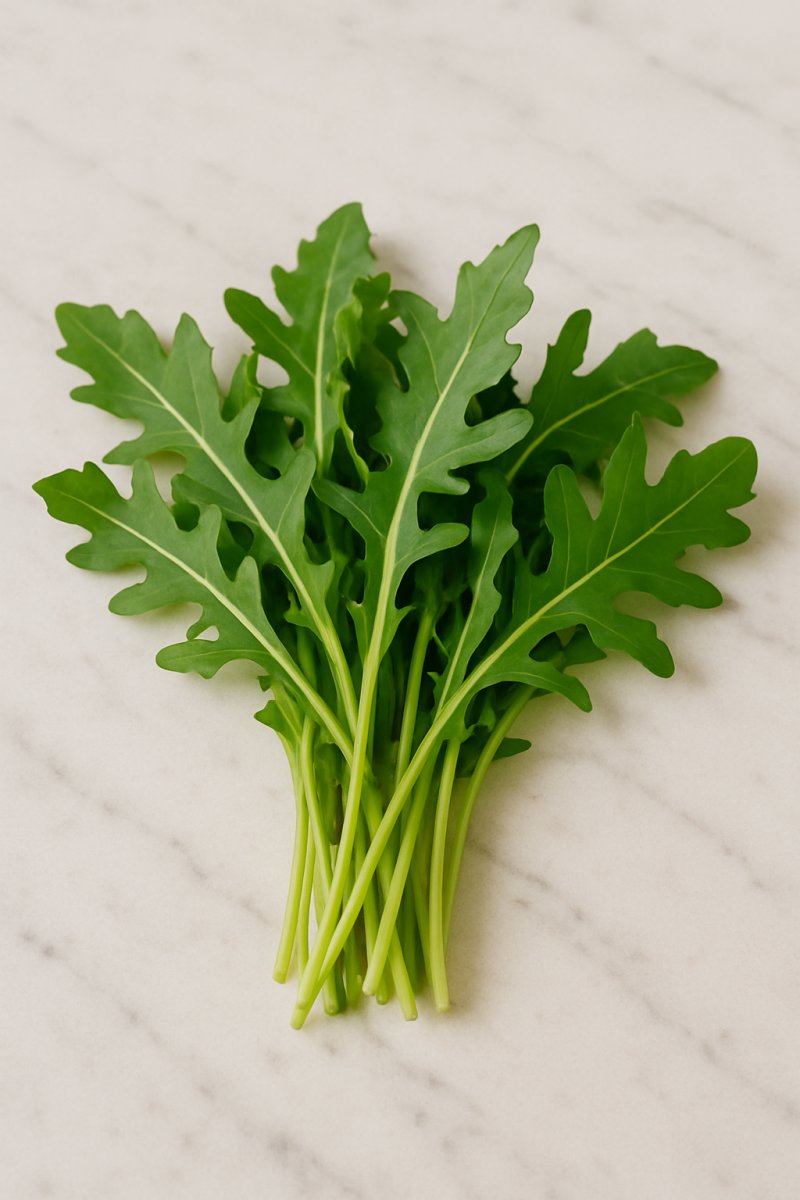
Arugula

Delicious and peppery salad treat

Wiki about arugula Nutri-Score A Vegan Yes Gluten-free Yes Lactose-free Yes Nut-free Yes
NUTRITION / 100 g
25 kcal 2.6 g Protein 3.7 g Kohlenhydrate 0.7 g Fett

Introduction

Fresh arugula salad
I still clearly remember the first day I discovered arugula in a small Italian restaurant in my neighborhood. The waitress brought a colorful salad with fresh tomatoes, tender mozzarella and a generous drizzle of olive oil. But what immediately caught my eye was the bright green arugula. With its slightly peppery note and crunchy texture I fell in love with this small leaf right away.

Arugula, also known as rocket, is not only a flavor highlight but also brings plenty of health benefits. It contains numerous vitamins and minerals, including vitamin K, which is important for bone health, as well as folate, which contributes to cell division. I have learned that arugula not only shines in salads, but also works wonderfully in pasta dishes, on pizzas or even as a side for grilled vegetables.

A colleague of mine, who is a passionate cook, once gave me a recipe for an arugula pesto that I now make regularly. It's so simple and quick to prepare! You only need fresh arugula, garlic, Parmesan, pine nuts and good olive oil. Pureed together it makes a wonderfully flavorful sauce that is perfect for pasta or as a dip for fresh bread.

  • Arugula in salads: Combine it with pears and walnuts for a delicious mix.
  • Arugula pesto: Ideal for pasta or as a spread for bread.
  • Arugula on pizza: Add it after baking to preserve its freshness.
When I think of arugula, I also recall a wonderful summer night when I sat on the terrace with friends and we had prepared a large buffet of various dishes. The arugula salad was the star of the evening. Everyone wanted the recipe and I couldn't help but be delighted by my friends' enthusiasm. It's amazing how a simple leafy vegetable can bring so much joy and flavor into our lives.

In summary, arugula is not only an excellent ingredient for many dishes but also a symbol of enjoyment and sociability. I can't wait to try new recipes and experience more culinary adventures with this wonderful leaf. Arugula, you really are a little green wonder!

Availability & types

Arugula, also known as rocket, is a popular plant often used in salads and on pizzas. It has a spicy, slightly sharp taste and is not only tasty but also healthy! In this section we will talk about the origin, growing regions and the different varieties and types of arugula.

Origin: Arugula originally comes from the Mediterranean region. It can be found in countries such as Italy and Greece. People there have used arugula for centuries as an ingredient in their cuisine. They have valued the plant not only for eating but also as a medicinal herb. Arugula was therefore part of the food culture in these regions long before we know it today.

Growing regions: Today arugula is cultivated in many countries. The main producing countries are:


  • Italy
  • Spain
  • France
  • Germany
  • United States
Arugula grows best in a warm climate, but it can also thrive in cooler regions. The plant loves the sun and needs good soil to grow vigorously. In the garden you can quite easily grow arugula yourself. Sow the seeds in the soil, and after a few weeks you can harvest the first leaves.

Varieties and types: There are different kinds of arugula that differ in taste and appearance. Here are some popular varieties:


  • Wild arugula: This variety has an intense, spicy flavor and is often a bit smaller. It is popular in gourmet cuisine.
  • Garden arugula: This variant is the one usually found in supermarkets. It has larger leaves and a somewhat milder taste.
  • Asian arugula: This variety has a sharper taste and is often used in Asian dishes. It is known for its darker leaves and intense flavor.
The selection of arugula varieties can vary by region. In some countries there are special local varieties grown only there. If you look for arugula in a garden center or supermarket, you can often find and try different varieties.

Arugula is not only tasty but also very healthy. It contains many vitamins and minerals that are good for our bodies. If you add arugula to your salad or on your pizza, you not only get great flavor but also do something good for your health.

In summary, arugula is an interesting ingredient originating from the Mediterranean and now cultivated in many countries. With different varieties and flavors it offers a great way to enhance dishes while eating healthily. The next time you see arugula, remember how much history and variety is packed into this small plant!

Details & nutrition

Property Value
Unit g
Calories per 100 25
Protein per 100 2.6
Carbohydrates per 100 3.7
Sugar per 100 0.5
Fat per 100 0.7
Saturated fat per 100 0.1
Monounsaturated fat 0.2
Polyunsaturated fat 0.1
Fiber per 100 1.6
Vitamin C (mg) per 100 15
Vitamin D (IU) per 100 0
Calcium (mg) per 100 160
Iron (mg) per 100 1.5
Nutri-Score A
CO₂ footprint 0.5
Origin Italy
Gluten-free Yes
Lactose-free Yes
Nut-free Yes
Vegan Yes
Note Arugula is a healthy and flavorful ingredient for salads and dishes.

Technical & scientific information

Arugula (Eruca sativa), also known as rocket or garden arugula, is a leafy vegetable from the mustard family (Brassicaceae). Originally native to the Mediterranean region, arugula has spread worldwide and is particularly popular in Mediterranean cuisine. This plant is characterized by its distinctive, sharp flavor, which is reminiscent of mustard, and is used in salads, sauces and as a pizza topping.

Chemical composition and constituents
The chemical composition of arugula is diverse and contributes to its health benefits. The leaves contain a range of bioactive compounds, including glucosinolates, which are responsible for the pungent taste and potentially possess anti-cancer properties. In addition, arugula leaves are rich in vitamins, particularly vitamin K, vitamin C and various B vitamins. The nutrient composition of arugula can be summarized as follows:

  • Calories: About 25 kcal per 100 g
  • Protein: 2.6 g
  • Carbohydrates: 3.65 g
  • Fat: 0.7 g
  • Fiber: 1.6 g
  • Vitamins: High levels of vitamin K, vitamin C, as well as folate and beta-carotene
  • Minerals: Calcium, magnesium, iron and potassium
Health aspects
Arugula offers numerous health benefits. The vitamins and minerals it contains support the immune system, promote bone health and contribute to cell regeneration. In particular, vitamin K plays a crucial role in blood clotting and bone health. The antioxidant properties of vitamin C protect cells from oxidative stress. In addition, the glucosinolates in arugula can support detoxification in the body and may reduce the risk of certain cancers.

The fiber in arugula supports digestion and can help regulate blood sugar levels. Another advantage is the low calorie content, which makes arugula an excellent choice for a calorie-conscious diet.

Processing methods
Arugula can be prepared and consumed in various ways. The leaves are tastiest when fresh and are often served raw in salads or as a side to various dishes. They are also excellent for smoothies or as a garnish for soups. When preparing them, care should be taken not to cook the leaves for too long, as they quickly lose their characteristic flavor when heated.

A common method of preparation is seasoning with olive oil, balsamic vinegar, salt and pepper to highlight the natural flavor of arugula. In Italian cuisine arugula is often used on pizza or in pasta dishes.

Wiki entry for: arugula
Active now: 17 visitors of which 2 logged-in members in the last 5 minutes