Menu & categories

Apple compote

Mildly sweet applesauce made from cooked apples

Wiki about apple compote Nutri-Score B Vegan Yes Gluten-free Yes Lactose-free Yes Nut-free Yes
NUTRITION / 100 g
80 kcal 0.3 g Protein 20 g Kohlenhydrate 0.2 g Fett

Introduction

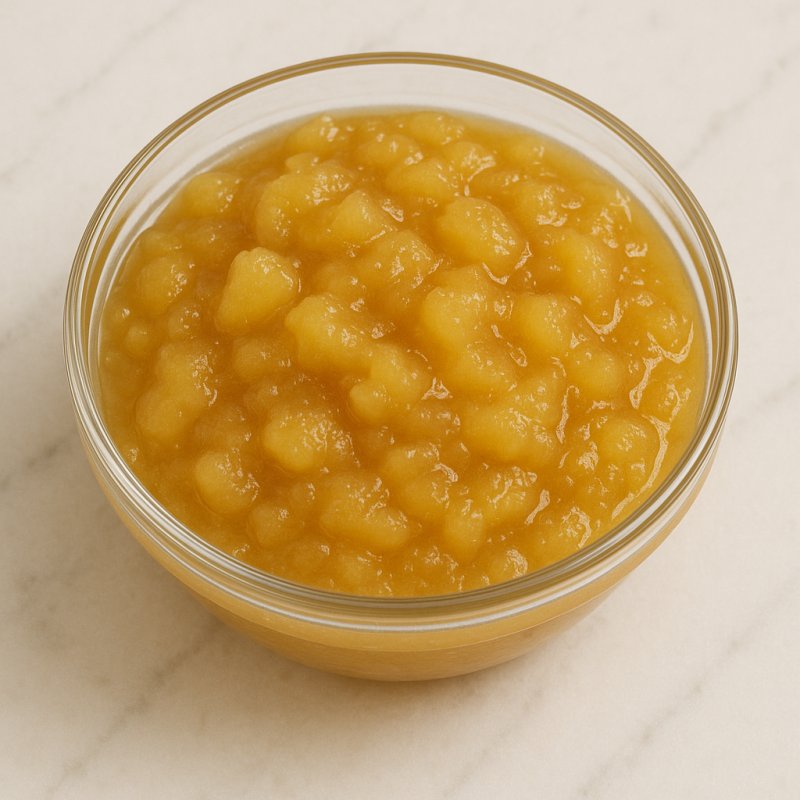
Bowl of apple compote made from cooked apples
I still remember the first winter when I really fell in love with apple compote: a rainy afternoon, the kitchen smelled of cinnamon and vanilla, and a colleague brought me a jar he had canned himself. Already on the first spoonful I felt like home, even though that home that day was only his warm kitchen. Apple compote has this strange ability to evoke familiar childhood memories and adult moments of pleasure at the same time.

Apple compote is simple and yet layered. Basically it consists of apples, some sugar and spices, often cinnamon, sometimes cloves or a pinch of nutmeg. Some add lemon juice to emphasize freshness, others a splash of Calvados for elegance. I have served it as a sweet side to pancakes, as a topping for yogurt or ice cream and even as a surprising component in savory cooking, for example with braised pork.

What defines apple compote are its possibilities for variation:

  • Spice: cinnamon, vanilla, cloves or tonka bean change the character.
  • Sweetness: brown sugar, honey or maple syrup give different nuances.
  • Texture: coarsely chopped it remains rustic; finely puréed it becomes velvety.
I have learned that the choice of apple variety makes a big difference. Firm apples give more bite, while softer varieties break down faster and yield a creamier compote. Once I experimented with a mix of tart Boskoop and sweet Gala apples; the result was so balanced that a friend demanded not to share the jar.

Preserving is a lovely routine that accompanies me through autumn and winter days. It is almost meditative: peeling apples, cutting them into even pieces, measuring sugar and spices and then simmering slowly until everything smells like home. I like to store compote in jars because they give little moments of happiness when opened and because even the plainest yogurt turns into something special.

Apple compote is more than just a side; it is a chapter in the culinary world that links memories, experimentation and pleasure. Each jar tells a small story, and I am always happy to try new variants and surprise friends with them.

Availability & types

Availability and types

Apple compote is an ingredient that is easy to find almost everywhere. It usually consists of cooked apples, sometimes with a little sugar or spices like cinnamon. Because apples are grown in many countries, you can find apple compote in supermarkets, at farmers' markets or you can easily make it at home. In some regions it is also available pre-canned in jars, which are long-lasting and convenient to store in the pantry.

Origin
The idea of cooking and preserving apples has existed for a very long time. In former times people preserved fruit by boiling it so that it would be available in winter as well. Therefore apple compote has a long tradition in many countries of Europe, North America and parts of Asia. Often the compote comes from regions where many apples grow, because fresh fruit is abundant there.

Growing regions
Apples grow in temperate climates, that is in areas that are neither too hot nor too cold. Well-known growing regions include:

  • Europe: Countries such as Germany, France, Poland and Italy have many apple orchards.
  • North America: Especially the USA and Canada grow many apples.
  • Asia: China is one of the largest apple-growing regions in the world.
You can imagine it like a large garden: each region has fields full of apple trees that provide ripe fruit in autumn. Farmers harvest them and often process part of the crop into compote or juice.

Available varieties and versions
Apple compote exists in many different variants. These differences arise from the apple varieties used, the method of preparation and additional ingredients. Here are the most common types, simply explained:

  • Basic compote (simple): Only apples and sometimes a little sugar. It tastes mild and is very versatile.
  • With cinnamon or spices: Cinnamon, vanilla or cloves are often added. It is reminiscent of warm winter dishes or Christmas pastries.
  • Chunky compote: The apples are not cooked completely, you can still find small pieces in the compote. It is like an apple purée with bite.
  • Finely puréed compote: Here the apples are cooked very soft and puréed, creating a smooth, creamy mass – similar to applesauce.
  • With other fruits: Some compotes mix apples with pears, plums or berries. This changes the flavor – sweeter, tarter or fruitier.
  • Sweetened or unsweetened: Some jars contain sugar, others omit it and use only the natural fruit flavor. Unsweetened compote is often better if you prefer less sweetness.
  • Organic version: In organic apple compote the apples are grown without synthetic pesticides. It is like produce from a garden where special attention is paid to nature.
In summary, apple compote is available in many flavors and qualities. Whether with a pinch of cinnamon, as a chunky compote, or as a fine purée – there is a suitable variant for almost every taste and occasion. Because apples are grown worldwide, apple compote is easy to find all year round, either freshly made by farmers or as a packaged product in supermarkets.
Details & nutrition

Property Value
Unit g
Calories per 100 80
Protein per 100 0.3
Carbohydrates per 100 20
Sugar per 100 18
Fat per 100 0.2
Saturated fat per 100 0.03
Monounsaturated fat 0.01
Polyunsaturated fat 0.06
Fiber per 100 1.5
Vitamin C (mg) per 100 3
Vitamin D (IU) per 100 0
Calcium (mg) per 100 6
Iron (mg) per 100 0.2
Nutri-Score B
CO₂ footprint 0.25
Origin Depending on the manufacturer and apple variety, often produced regionally
Gluten-free Yes
Lactose-free Yes
Nut-free Yes
Vegan Yes
Note Nutritional values for commercial, lightly sweetened apple compote; exact values may vary depending on recipe and sugar content

Technical & scientific information

Apple compote is a processed fruit preparation made from cooked, usually peeled and diced or sliced apples that are cooked with water and often sugar or other sweeteners. The texture ranges from chunky to jam-like, depending on variety, cooking time and preparation method. Culinary uses for apple compote include side dishes, dessert bases or a preservation method; technically it is a simple fruit concentrate whose properties are determined by physical and chemical processes during cooking.

Chemical composition and constituents
Fresh apples consist mainly of water (about 80–85 %), carbohydrates (mainly fructose, glucose and sucrose), fiber (cellulose, hemicellulose, pectin), organic acids (primarily malic acid), vitamins (especially vitamin C and small amounts of B vitamins) and minerals (potassium, magnesium, calcium, trace elements). During cooking these components change: water is reduced by evaporation, sugars become more concentrated, pectin partly solubilizes and gelatinizes at suitable temperature and pH, and volatile aromatic compounds can decrease or new ones form. The amount of free ascorbic acid (vitamin C) decreases with heat, while non‑enzymatic browning reactions (Maillard reaction in the presence of sugars and amino acids) and caramelization effects at higher temperatures expand the flavor spectrum.

Nutritional profile
The nutritional value of apple compote depends strongly on the amount of added sugar and concentration. Unsweetened compote provides mainly carbohydrates in the form of simple sugars and contains fiber depending on the degree of fineness of the breakdown. Typical nutritional values per 100 g of unsweetened apple compote are in the range of 60–70 kcal, 15–18 g carbohydrates, 1–2 g fiber, virtually no fat and small amounts of protein. Sweetened variants can have significantly higher calories and an increased content of rapidly available sugars. Micronutrients such as potassium remain present in relevant amounts, while heat-sensitive vitamins may be reduced.

Processing methods
Industrial and domestic production follow similar basic steps: selection and cleaning of the fruit, peeling and coring, chopping, cooking with water or juice and possibly adding sweeteners, acidity regulators (e.g. citric acid) and spices. For texture control, temperature, cooking time and stirring are decisive. Pectin degradation by heat-induced depolymerization leads to a softer consistency, while the addition of industrial pectin or sugar and adjustment of pH can promote gel formation. Pasteurization or canning in jars creates shelf life by inactivating microorganisms and enzymes; here, time‑temperature combinations and airtight seals are relevant for shelf life and safety aspects.

Microbiology and shelf life
Apple compote is, due to its low pH range (typical pH 3–4, depending on acidity regulators) and reduced water activity value (with high sugar content), relatively resistant to many pathogenic bacteria. Nevertheless yeasts and molds can grow if preservation is inadequate. Industrial sterilization or pasteurization processes in combination with hygienic filling methods are standard to control spore-formers and spoilage organisms.

Health aspects
Apple compote can be part of a balanced diet, especially if produced without added sugar. It provides fiber and micronutrients that support digestion and contribute to potassium intake. With added sugar the glycemic effect is higher and energy content increases, which should be considered in diabetes or weight management. For infants and young children finely puréed, unsweetened variants are advisable, while people with fructose intolerance or allergies should check the ingredients.

Sensory and food-technology optimization
Aroma profiles are determined by the ratio of fructose to organic acids, the presence of volatile aromatic compounds (e.g. esters, aldehydes) and thermally formed components. Technological measures to optimize quality include choosing less or more acidic varieties, adjusting cooking time to control texture, targeted addition of pectin or acid, and packaging techniques that minimize oxidation and aroma loss.

In summary, apple compote is a versatile fruit preparation whose physical and chemical properties can be controlled by raw material choice and processing conditions. Nutritional benefits depend on sugar addition and processing level, while microbiological and technological measures determine shelf life and sensory characteristics.

Wiki entry for: apple compote
Active now: 17 visitors of which 2 logged-in members in the last 5 minutes