Availability and types of anchovies in oil
Anchovies in oil are small fish often offered in jars or tins. You can find them in many supermarkets, delicatessens or at weekly markets. They are popular because they are long-lasting and full of flavor. Think of them as tiny spice ambassadors: a little often goes a long way in giving a dish more character.
Origin
Anchovies mostly come from the sea, especially from warm or temperate marine areas. Well-known fishing grounds include the Mediterranean and the Atlantic coast off Spain, Portugal or Morocco. Sometimes they also come from the Black Sea or regions near South Africa. The fish are caught, then salted or packed directly in oil to keep them fresh longer. The oil acts like a protective cloak that shields the anchovies from air and preserves the flavor.
Anchovies mostly come from the sea, especially from warm or temperate marine areas. Well-known fishing grounds include the Mediterranean and the Atlantic coast off Spain, Portugal or Morocco. Sometimes they also come from the Black Sea or regions near South Africa. The fish are caught, then salted or packed directly in oil to keep them fresh longer. The oil acts like a protective cloak that shields the anchovies from air and preserves the flavor.
Growing areas and fishing regions
- Mediterranean: Many anchovies in oil come from countries like Italy, Spain or Greece. These regions are known for long-standing traditions in fishing and processing.
- Atlantic coast: Spain and Portugal in particular supply large quantities. There are often smaller companies specialized in filleting and preserving.
- Morocco and West Africa: Anchovies also come from these areas, often at lower prices.
- Other regions: Sometimes anchovies also originate from the Black Sea or more southern countries. The origin is usually stated on the label of the tin or jar.
Available types and variants
Anchovies in oil are available in different variants. This is practical because you can choose the type that best suits your dish.
Anchovies in oil are available in different variants. This is practical because you can choose the type that best suits your dish.
- Whole anchovies: These are intact, so head and tail may still be attached. They are suitable for frying or grilling if you like an intense fish flavor.
- Anchovy fillets: Head, bones and often the skin have been removed. They are ready to eat and are frequently placed on bread, in salads or on pizza.
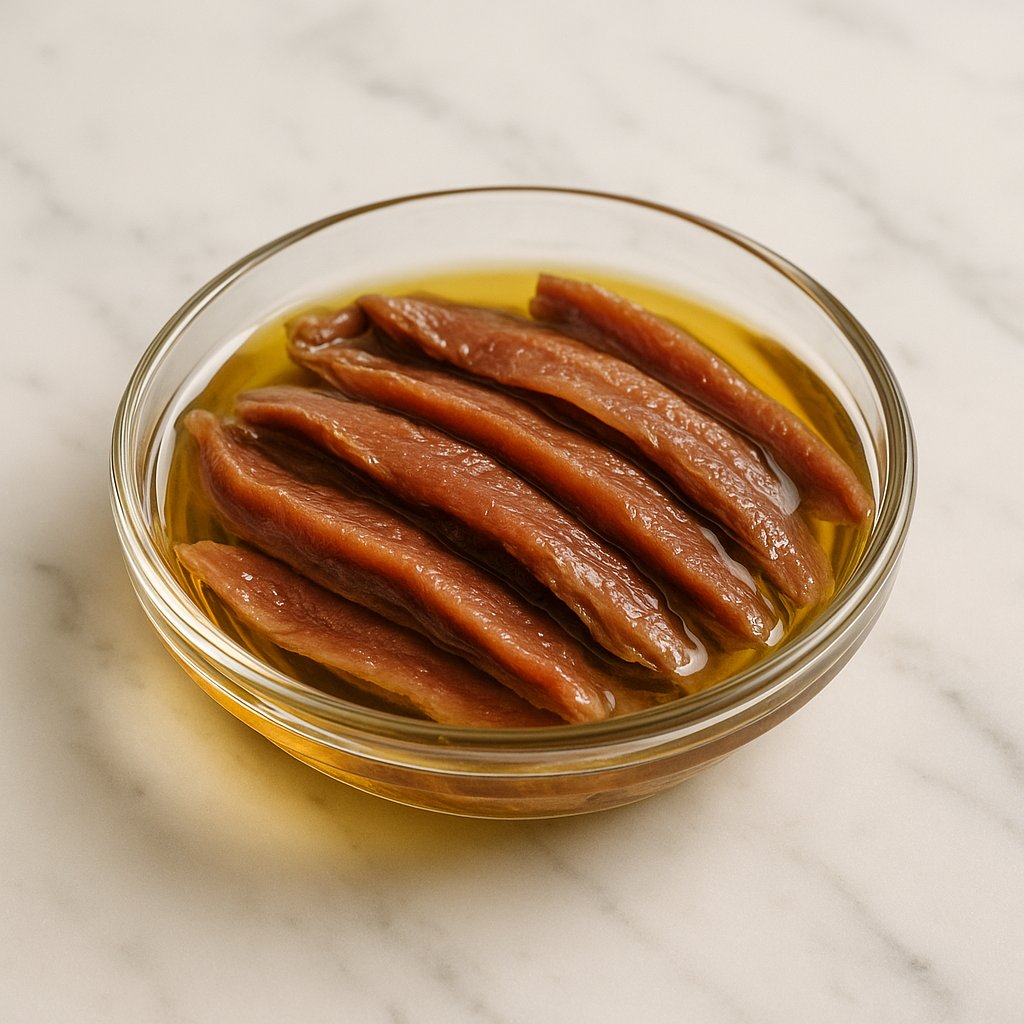
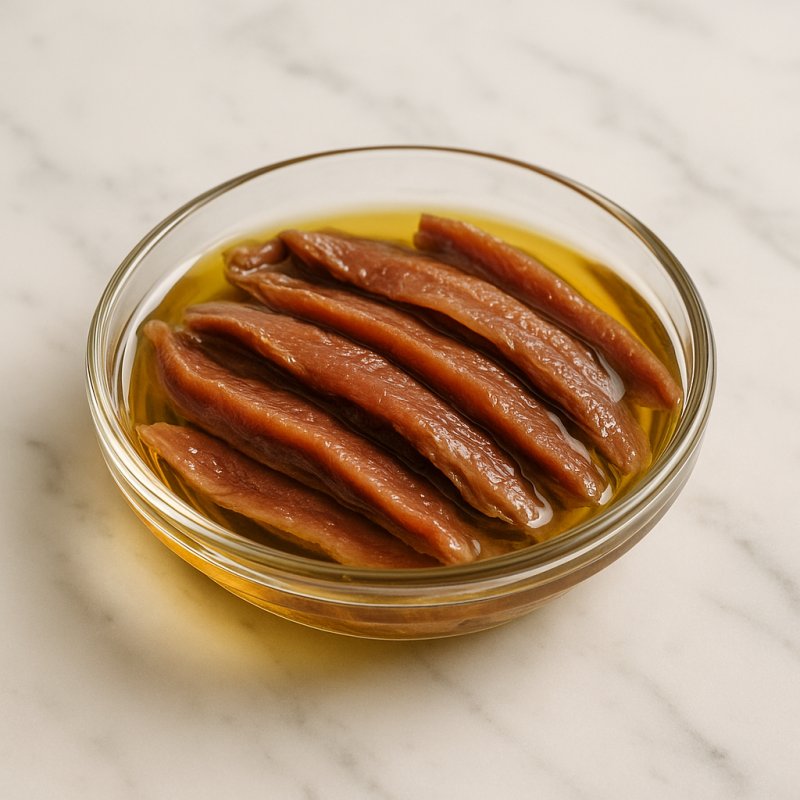
- Whole pieces in oil: Some jars display clear, whole fish in a golden oil. It looks attractive and the oil can be used afterwards as a flavorful dressing.
- Sliced or chopped: For recipes that need the fish distributed finely, there are also broken or chopped variants – handy for pasta sauces or spreads for bread.
- With different oils: Anchovies are offered in various oils: often in olive oil, which gives a mild, fruity flavor, or in sunflower oil, which is more neutral. Sometimes they are preserved in a mixture of oil and a little vinegar or spices.
- Salted or marinated: Some anchovies are heavily salted (i.e. preserved with salt) and should be rinsed briefly before eating. Others are already more mildly marinated and ready to enjoy.
Shopping tips
Check the label: it states where the anchovies were caught and whether they are in olive oil or another oil. If you want a milder taste, choose fillets in olive oil; if you prefer a stronger flavor, try salted or marinated variants. This way you find exactly the anchovies that fit your dish.
Check the label: it states where the anchovies were caught and whether they are in olive oil or another oil. If you want a milder taste, choose fillets in olive oil; if you prefer a stronger flavor, try salted or marinated variants. This way you find exactly the anchovies that fit your dish.