Menu & categories

Anchovies in oil

Aromatic anchovy fillets preserved in oil as a savory protein source

Wiki about anchovy in oil Nutri-Score D Vegan No Gluten-free Yes Lactose-free Yes Nut-free Yes
NUTRITION / 100 g
210 kcal 25 g Protein 0 g Kohlenhydrate 12 g Fett

Introduction

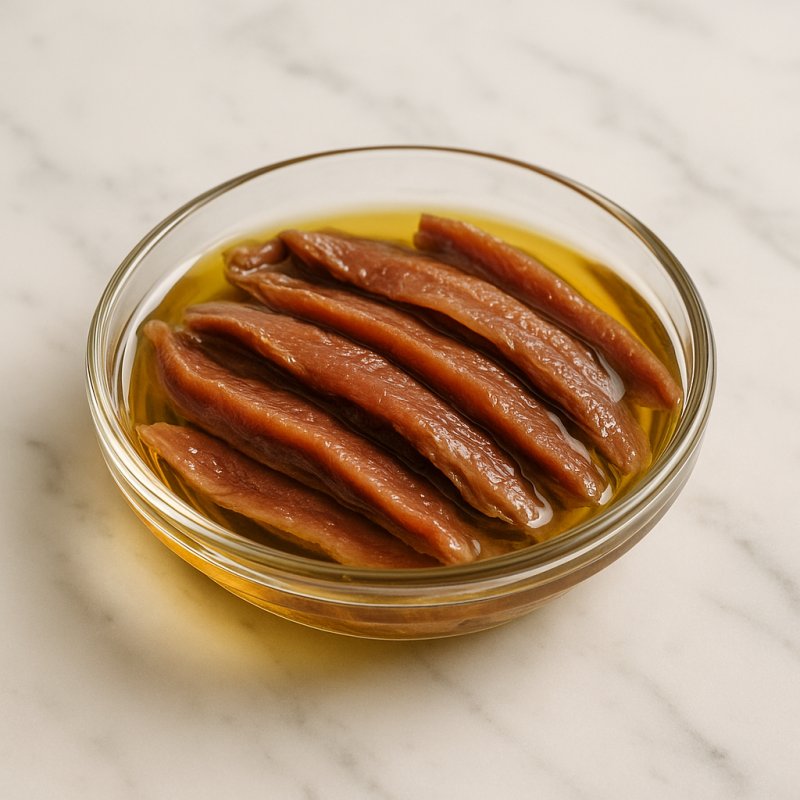
Anchovy fillets in oil on a plate
I still remember the first smell of anchovies in oil that met me when I unscrewed a small glass jar: an intense, salty aroma that immediately conjured images of sunlit markets and long evenings by the coast. Since then these tiny fish have had a permanent place in my pantry and in my cooking routine. They are not a hidden tip for me, but a reliable carrier of flavor that gives depth and character to even simple dishes.

What fascinates me about anchovies in oil is their versatility. A few chopped fillets, and a simple tomato sauce turns into a spicy, umami-rich base. On toasted bread with a little lemon zest and fresh parsley they become a quick but elegant snack. Sometimes I mix them with butter and garlic for a warming pasta dish that’s on the table in less than 15 minutes and always impresses.

When I shop I pay attention to two things: the quality of the oil and the origin of the fish. High-quality olive oil emphasizes the flavors, while a neutral vegetable oil sometimes mutes the stronger fish note. I have learned that sustainable catch and transparently labeled products are not only more ecologically responsible, but often offer more flavor as well. A colleague of mine swears by a particular Mediterranean brand because their fillets are especially tender.

Storage is straightforward: an opened jar in the refrigerator, covered sufficiently with oil, and it keeps for several weeks. I’m a fan of small kitchen hacks, so sometimes I add a splash of lemon juice or a few peppercorns to refresh the aroma. In cooking my rule is: less is often more. One fillet can carry an entire dish without dominating.

  • Taste: salty, umami, intense
  • Uses: pasta, sauces, spreads for bread, salads
  • Storage: in the oil, in the refrigerator
To me anchovies in oil are a small culinary wonder: practical, flavorful and always ready to elevate cooking ideas. They remind me that sometimes the simplest ingredients provide the greatest pleasure.

Availability & types

Availability and types of anchovies in oil

Anchovies in oil are small fish often offered in jars or tins. You can find them in many supermarkets, delicatessens or at weekly markets. They are popular because they are long-lasting and full of flavor. Think of them as tiny spice ambassadors: a little often goes a long way in giving a dish more character.

Origin
Anchovies mostly come from the sea, especially from warm or temperate marine areas. Well-known fishing grounds include the Mediterranean and the Atlantic coast off Spain, Portugal or Morocco. Sometimes they also come from the Black Sea or regions near South Africa. The fish are caught, then salted or packed directly in oil to keep them fresh longer. The oil acts like a protective cloak that shields the anchovies from air and preserves the flavor.

Growing areas and fishing regions

  • Mediterranean: Many anchovies in oil come from countries like Italy, Spain or Greece. These regions are known for long-standing traditions in fishing and processing.
  • Atlantic coast: Spain and Portugal in particular supply large quantities. There are often smaller companies specialized in filleting and preserving.
  • Morocco and West Africa: Anchovies also come from these areas, often at lower prices.
  • Other regions: Sometimes anchovies also originate from the Black Sea or more southern countries. The origin is usually stated on the label of the tin or jar.
Available types and variants
Anchovies in oil are available in different variants. This is practical because you can choose the type that best suits your dish.

  • Whole anchovies: These are intact, so head and tail may still be attached. They are suitable for frying or grilling if you like an intense fish flavor.
  • Anchovy fillets: Head, bones and often the skin have been removed. They are ready to eat and are frequently placed on bread, in salads or on pizza.
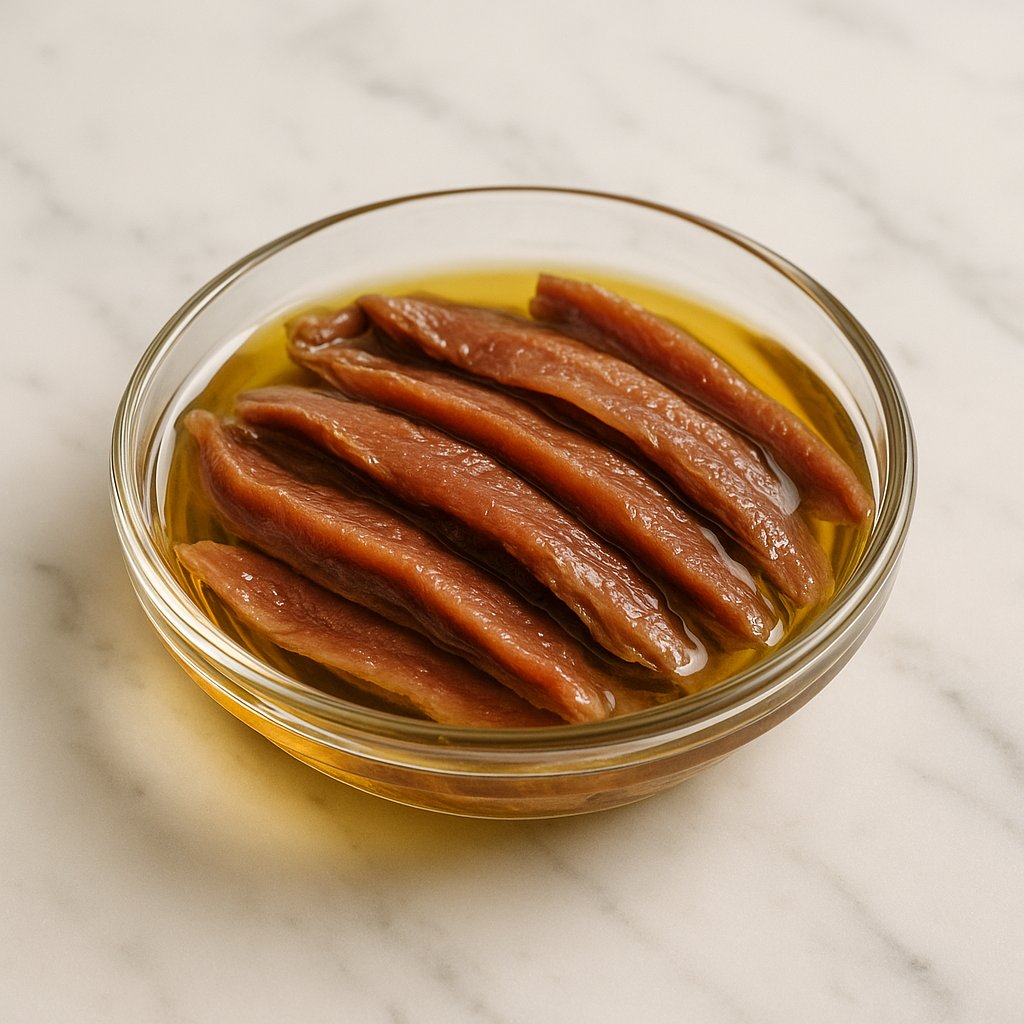
  • Whole pieces in oil: Some jars display clear, whole fish in a golden oil. It looks attractive and the oil can be used afterwards as a flavorful dressing.
  • Sliced or chopped: For recipes that need the fish distributed finely, there are also broken or chopped variants – handy for pasta sauces or spreads for bread.
  • With different oils: Anchovies are offered in various oils: often in olive oil, which gives a mild, fruity flavor, or in sunflower oil, which is more neutral. Sometimes they are preserved in a mixture of oil and a little vinegar or spices.
  • Salted or marinated: Some anchovies are heavily salted (i.e. preserved with salt) and should be rinsed briefly before eating. Others are already more mildly marinated and ready to enjoy.
Shopping tips
Check the label: it states where the anchovies were caught and whether they are in olive oil or another oil. If you want a milder taste, choose fillets in olive oil; if you prefer a stronger flavor, try salted or marinated variants. This way you find exactly the anchovies that fit your dish.
Details & nutrition

Property Value
Unit g
Average weight per piece 5
Calories per 100 210
Protein per 100 25
Carbohydrates per 100 0
Sugar per 100 0
Fat per 100 12
Saturated fat per 100 3
Monounsaturated fat 5
Polyunsaturated fat 3
Fiber per 100 0
Vitamin C (mg) per 100 0
Vitamin D (IU) per 100 320
Calcium (mg) per 100 60
Iron (mg) per 100 2.5
Nutri-Score D
CO₂ footprint 3.0
Origin Sea fish, mainly Mediterranean or Atlantic; processing and preserving in oil in Southern Europe
Gluten-free Yes
Lactose-free Yes
Nut-free Yes
Vegan No
Note Nutritional values may vary slightly depending on the type of oil used and the salt content. Often highly salted; suitable only in moderation for people on a reduced-sodium diet.

Technical & scientific information

Anchovies in oil are a processed fish ingredient made from small marine fish of the family Engraulidae. Typically these are anchovies of the genus Engraulis, which after capture are cleaned, salted and packed in oil. The final product is widely used in gastronomy and home cooking for its intense umami note, salty flavor and long shelf life.

Raw material and processing
The raw material are fresh anchovies, which should be processed chilled shortly after catch to reduce microbial spoilage. Common processing steps include:

  • Cleaning and removal of head and entrails or, alternatively, filleting.
  • Salting (dry or brine) for preservation and for developing typical aroma precursors through enzymatic activity.
  • Fermentation or controlled enzymatic maturation during the salting period, which breaks proteins down into smaller peptides and free amino acids, especially glutamate.
  • Rinsing, possible re-salting and subsequent packing in a carrier oil such as olive oil, sunflower oil or rapeseed oil; the oil acts as an oxygen barrier and flavor carrier.
Chemical composition and constituents
Anchovies in oil consist of several components: the fish portion (proteins, lipids, water), the added salt and the carrier oil. Characteristic constituents are:

  • Proteins and peptides: A high proportion of high-quality proteins and smaller peptides formed by fermentation, which contribute to the perception of umami.
  • Free amino acids: In particular glutamic acid and glycine, which influence flavor and preservation.
  • Fatty acids: Omega-3 fatty acids (EPA, DHA) are present in the fish portion; additionally the packing oil supplies mono- and polyunsaturated fatty acids.
  • Minerals: Sodium (from added salt), calcium, phosphorus and trace elements such as iron and iodine.
  • Vitamins: Fat-soluble vitamins like vitamin D and, in smaller amounts, B vitamins.
Nutritional values
Exact nutritional values vary with recipe and oil; typical values per 100 g are approximately 200–300 kcal, with a significant share of energy from fat. Protein content is moderate to high (approx. 20–30 g/100 g), and sodium content is markedly increased due to salt absorption and can reach several grams per 100 g. The omega-3 content is nutritionally relevant, but its absolute amount depends on the amount of fish used and the fish-to-oil ratio.

Sensory and culinary properties
Anchovies in oil are characterized by an intense, salty-umami profile that gives dishes seasoning and depth. The oil-bound texture preserves aromas and allows versatile use: as a seasoning component (e.g. in sauces, dressings, pasta dishes), as a bread topping or as a flavor enhancer in braised dishes. The odor is fish-typical; the taste perception is strongly dominated by salty and umami components.

Food safety and shelf life
The combination of salt, oil and a low water activity reduces microbial growth and increases shelf life. Nevertheless storage conditions are important: cool, protected from light and sealed storage prevents oxidation of the oil (rancidity) and flavor changes. Open containers should be kept in the refrigerator and consumed within a few weeks. Industrially produced products are subject to microbiological and chemical controls to minimize histamine formation and spoilage.

Health aspects
Anchovies in oil provide valuable nutrients such as high-quality protein and omega-3 fatty acids, which can be beneficial for cardiovascular health. This is counterbalanced by the typically high sodium content, which when consumed excessively can adversely affect blood pressure. People on salt-restricted diets should limit consumption. Fish allergies and possible biogenic amines (e.g. histamine) in case of improper storage are other relevant safety aspects.

Overall, anchovies in oil are a concentrated seasoning ingredient with a specific nutrient profile and established industrial preservation methods. Their nutritional benefits in terms of omega-3 fatty acids and proteins are balanced by the increased sodium content, so moderate use within a balanced diet is recommended.

Wiki entry for: anchovy in oil
Active now: 20 visitors of which 2 logged-in members in the last 5 minutes