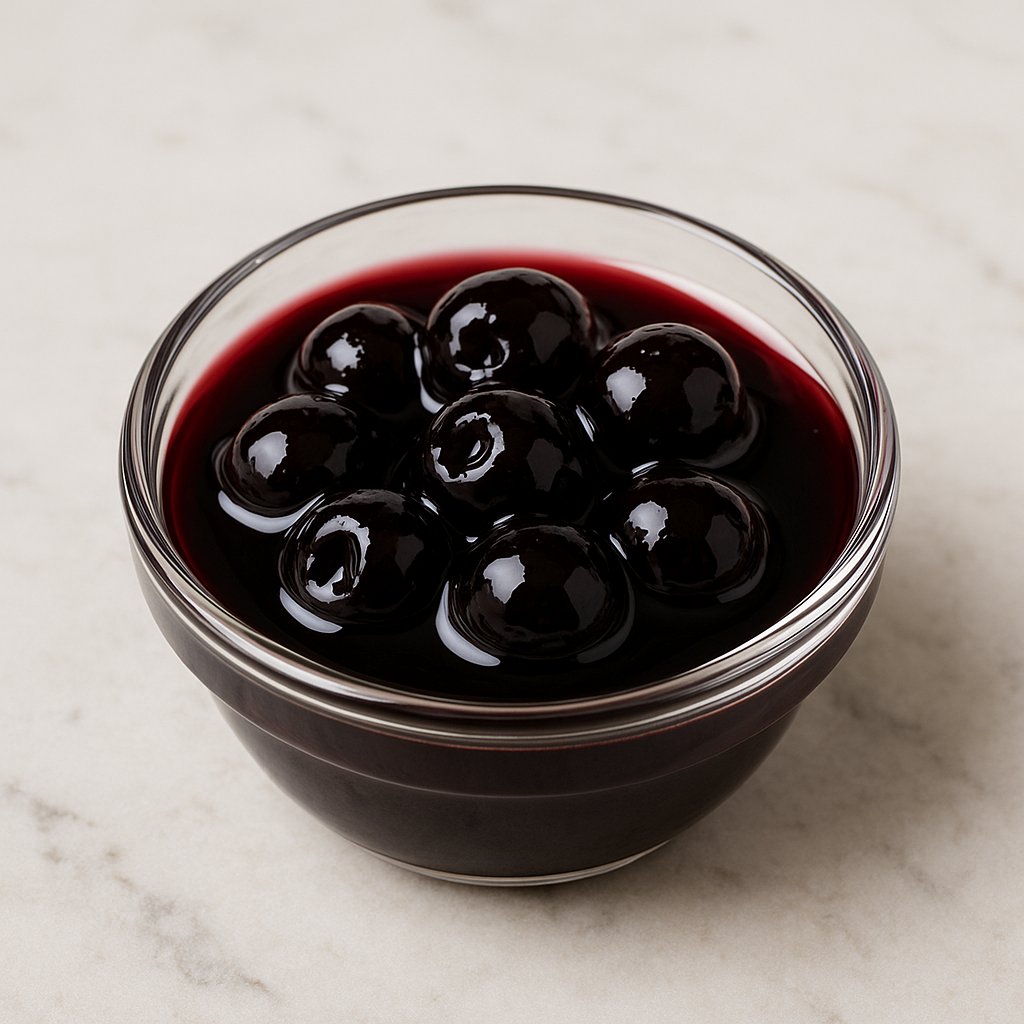
Availability and types of the amarena cherry
The amarena is a special cherry often found in jars with syrup or preserved. If you've ever had a piece of cake topped with glossy red cherries, that might have been an amarena. Here I explain where it comes from, where it's grown and which variants exist — as simply as possible so that everyone understands.
Origin
The amarena cherry originates in Italy. The area around Bologna and the Emilia-Romagna region are particularly well known. People there have cultivated the cherry for a long time and learned how best to process it. "Amarena" is an Italian word and sounds almost like the name of a character from a fairy tale — that's why many people associate the cherry with something special and sweet.
The amarena cherry originates in Italy. The area around Bologna and the Emilia-Romagna region are particularly well known. People there have cultivated the cherry for a long time and learned how best to process it. "Amarena" is an Italian word and sounds almost like the name of a character from a fairy tale — that's why many people associate the cherry with something special and sweet.
Growing regions
Amarena cherries do not grow equally well everywhere. They prefer places with warm summers and winters that are not too cold. Important growing regions include:
Amarena cherries do not grow equally well everywhere. They prefer places with warm summers and winters that are not too cold. Important growing regions include:
- Italy – especially the regions around Bologna and in the north.
- Germany – here they are grown in some orchards and on smaller farms, mainly in the south.
- France and Spain – they are also cultivated there, mostly in warmer regions.
- Other countries such as the USA or some countries in South America also grow cherries, but the Italian amarenas are considered particularly well known.
You can think of it a bit like a favorite plant that has its "home", but that also grows in other gardens if the climate is right.
Available varieties and forms
Amarena cherries are not available in just one form. Some important variants are:
Amarena cherries are not available in just one form. Some important variants are:
- Fresh cherries: These are the raw fruits as you might pick from the tree. They are juicy but often somewhat tarter than other sweet cherry varieties.
- Preserved amarena: Very common are cherries preserved in sugar or syrup. These are glossy and very sweet — perfect for cakes or ice cream.
- Amarena jam: This is like a jam made from these cherries. It is thick and fruity and works well on bread.
- Amarena liqueur or syrup: Sometimes cherries are used to flavor syrups or drinks. The taste remains very intense.
- Dried or frozen variants: When fresh cherries are not in season, you can find them frozen or dried — this makes them last longer.
Imagine the amarena like a favorite toy: you can have it new and intact (fresh), keep it in a pretty box (preserved), or spread it into small portions (jam). Each variant has a different role in the kitchen.
Everyday availability
In supermarkets you usually find amarena cherries as jarred goods (preserved) or as an ingredient in confectionery. Fresh amarenas are seasonal — that means they are available only certain months of the year. Frozen or preserved versions are available year-round and are practical when you want the intense flavor at any time.
In supermarkets you usually find amarena cherries as jarred goods (preserved) or as an ingredient in confectionery. Fresh amarenas are seasonal — that means they are available only certain months of the year. Frozen or preserved versions are available year-round and are practical when you want the intense flavor at any time.
Overall, the amarena cherry is a versatile ingredient with a home in Italy, growing regions in several countries and many forms that allow you to enjoy it all year round.