Menu & categories

Amarena Cherry

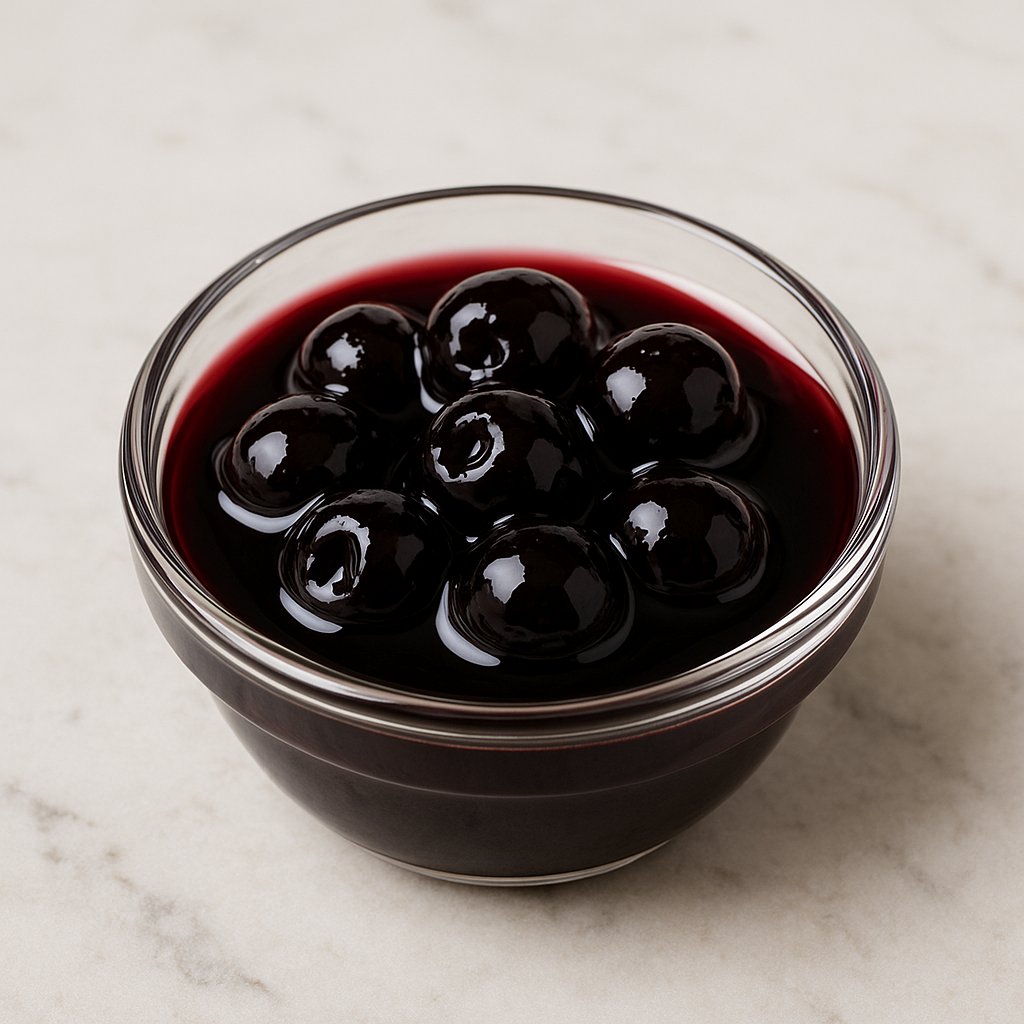
Sweet preserved cherry in aromatic amarena syrup

Wiki about amarena cherry Nutri-Score D Vegan Yes Gluten-free Yes Lactose-free Yes Nut-free Yes
NUTRITION / 100 g
250 kcal 0.5 g Protein 62 g Kohlenhydrate 0.2 g Fett

Introduction

Amarena cherries in syrup in a small bowl
I still remember how the first jar of amarena cherries in a small Italian delicatessen suddenly left me speechless. It wasn't just the deep red color or the syrupy shine, but that unmistakable taste: sweet, yet with a cheeky, almost tart edge that immediately made me want more. Since then these little cherries preserved in liqueur have accompanied me in numerous desserts, drinks and those spontaneous cravings you share only with a spoon and a particularly good jar.

Amarena cherries originate in Italy and are usually made from sour cherries before being preserved in a thick, aromatic syrup. I find it fascinating how such a simple ingredient can transform an entire dish. A friend once turned a rather average chocolate soufflé into a gourmet experience with a single half amarena; the contrast of warm chocolate aroma and the cool, fruity acidity was simply heavenly.

In my kitchen I use amarena cherries in a variety of ways:

  • For baking: As an intense contrast in cakes, tortes and sponge.
  • In desserts: On vanilla ice cream, panna cotta or as an eye-catcher on creams.
  • In cocktails: As a garnish in a sour or as a liqueur base for creative drinks.
  • As a finish: On cheese platters or with dark chocolate.
A small ritual I've adopted: when I expect guests, I always put out a little bowl of amarena cherries. It takes up hardly any space, yet it feels like a secret wink to all pleasure-lovers. A colleague once called them "the little vials of pure happiness" — and I had to laugh, because he was so right.

They're also practical when time is short. A dash of amarena syrup lifts the flavor of dressings or sauces, and the cherries themselves can be used in no time as a topping. Pay attention to quality when buying: good jars contain whole fruits and a syrup that doesn't taste too artificial. I've learned that a high-quality jar stays on the shelf longer because I always find an excuse to open it.

For me amarena cherries are more than just an ingredient. They are a small luxury, a carrier of flavor and a conversation starter at once. Whether as the secret star of a dessert or as a surprising detail on a savory plate — they bring color, depth and a cheeky elegance that I no longer want to miss in any kitchen.

Availability & types

Availability and types of the amarena cherry

The amarena is a special cherry often found in jars with syrup or preserved. If you've ever had a piece of cake topped with glossy red cherries, that might have been an amarena. Here I explain where it comes from, where it's grown and which variants exist — as simply as possible so that everyone understands.

Origin
The amarena cherry originates in Italy. The area around Bologna and the Emilia-Romagna region are particularly well known. People there have cultivated the cherry for a long time and learned how best to process it. "Amarena" is an Italian word and sounds almost like the name of a character from a fairy tale — that's why many people associate the cherry with something special and sweet.

Growing regions
Amarena cherries do not grow equally well everywhere. They prefer places with warm summers and winters that are not too cold. Important growing regions include:

  • Italy – especially the regions around Bologna and in the north.
  • Germany – here they are grown in some orchards and on smaller farms, mainly in the south.
  • France and Spain – they are also cultivated there, mostly in warmer regions.
  • Other countries such as the USA or some countries in South America also grow cherries, but the Italian amarenas are considered particularly well known.
You can think of it a bit like a favorite plant that has its "home", but that also grows in other gardens if the climate is right.

Available varieties and forms
Amarena cherries are not available in just one form. Some important variants are:

  • Fresh cherries: These are the raw fruits as you might pick from the tree. They are juicy but often somewhat tarter than other sweet cherry varieties.
  • Preserved amarena: Very common are cherries preserved in sugar or syrup. These are glossy and very sweet — perfect for cakes or ice cream.
  • Amarena jam: This is like a jam made from these cherries. It is thick and fruity and works well on bread.
  • Amarena liqueur or syrup: Sometimes cherries are used to flavor syrups or drinks. The taste remains very intense.
  • Dried or frozen variants: When fresh cherries are not in season, you can find them frozen or dried — this makes them last longer.
Imagine the amarena like a favorite toy: you can have it new and intact (fresh), keep it in a pretty box (preserved), or spread it into small portions (jam). Each variant has a different role in the kitchen.

Everyday availability
In supermarkets you usually find amarena cherries as jarred goods (preserved) or as an ingredient in confectionery. Fresh amarenas are seasonal — that means they are available only certain months of the year. Frozen or preserved versions are available year-round and are practical when you want the intense flavor at any time.

Overall, the amarena cherry is a versatile ingredient with a home in Italy, growing regions in several countries and many forms that allow you to enjoy it all year round.
Details & nutrition

Property Value
Unit g
Average weight per piece 8
Calories per 100 250
Protein per 100 0.5
Carbohydrates per 100 62
Sugar per 100 60
Fat per 100 0.2
Saturated fat per 100 0.02
Monounsaturated fat 0.05
Polyunsaturated fat 0.08
Fiber per 100 1.0
Vitamin C (mg) per 100 2
Vitamin D (IU) per 100 0
Calcium (mg) per 100 15
Iron (mg) per 100 0.3
Nutri-Score D
CO₂ footprint 1.8
Origin Italy
Gluten-free Yes
Lactose-free Yes
Nut-free Yes
Vegan Yes
Note Values for sugared cherries preserved in syrup (amarena cherries) in a sugar solution; exact nutritional values may vary by manufacturer.

Technical & scientific information

Amarena cherry refers in food practice to cherries of the sour cherry (Prunus cerasus) preserved in syrup, typically of the Amarena variety, which originates in the Emilia-Romagna and Lombardy regions of Italy. The fruits are preserved after harvest in a thick, sugar-rich syrup that gives them their characteristic dark colour, sweet-and-sour taste and long shelf life. In trade, amarena cherries are often found under variants such as “Amarena” (smaller, more intense fruit) and “Marasca” (similar, often used as a basis for syrups and liqueurs).

Botanical and physical properties: The underlying sour cherries are smaller and more aromatic than most sweet cherry varieties. They have a high content of organic acids, particularly malic and citric acid, as well as an intense aroma profile with phenolic compounds. Physically the fruits are firm, with a thin skin and juicy flesh; when cooked they typically retain their shape while releasing liquid and aroma into the syrup.

Chemical composition and nutritional values: Fresh sour cherries consist mainly of water (approx. 80–85%). Typical nutritional values per 100 g of fresh fruit are about 50 kcal, 1–1.5 g protein, 0.2–0.5 g fat and 10–12 g carbohydrates, of which a significant portion are natural sugars. Sour cherries are rich in vitamin C, provitamin A (carotenoids) and various B vitamins in smaller amounts. Notable is the content of secondary plant compounds, including anthocyanins (responsible for the red to dark-blue colour), flavonoids and phenolic acids. In cooked forms such as amarena cherries the total sugar content increases markedly due to the syrup; industrial products can contain 30–50 g of sugar or more per 100 g of finished product, which raises the energy content.

Processing: The production of amarena cherries includes several steps: harvest, selection, destoning (depending on the product), cooking or preserving in sugar syrup and often a post-treatment such as pasteurisation for preservation. Traditional methods use concentrated sugar syrup made by multiple boilings of sugar and water; aromatic components of the fruit partly dissolve into the syrup, which is why the final product offers both the fruit body and an intense fruity aroma in the syrup. Depending on the recipe, additives such as citric acid or vanilla are used, less commonly preservatives, if adequate sterilisation or pasteurisation steps are carried out.

Sensory and culinary use: Amarena cherries are characterized by a balanced ratio of acidity and sweetness, a dense, syrupy texture and a pronounced cherry aroma with bitter, liquorice-like and floral notes. They are frequently used as a dessert ingredient (e.g. on ice cream, in cakes and pastries), to refine beverages, as an ingredient in liqueur production (e.g. amarena liqueur) and in fine dining.

Health aspects: Sour cherries contain antioxidant anthocyanins and other polyphenols, which in studies have been attributed anti-inflammatory properties, a potential reduction of muscle damage after intense exercise and positive effects on sleep (via melatonin-like mechanisms). These effects refer mainly to fresh fruit or concentrated cherry juices with little added sugar; for amarena cherries the very high sugar content must be considered, which mitigates the health benefits and restricts consumption for people with diabetes or on calorie-restricted diets. Allergic reactions to Rosaceae are rare but possible.

Storage and quality assurance: Sound amarena cherries are long-lasting in sealed jars if thermally treated and free from microbial contaminants. Quality characteristics include a deep red to dark purple colour, a clear syrupy juice without fermentation odour, uniform fruit sizes and recipes low in preservatives with a traceable ingredient list. Labelling obligations require the declaration of sugar content and ingredients.

In summary, the amarena cherry is a preserved sour cherry product with characteristic aroma, high sugar content in the finished product and nutritional properties that include both beneficial secondary plant compounds and nutritionally relevant sugars. The choice between fresh sour cherries, juices or jarred amarenas depends on the intended use and the desired balance of flavour, shelf life and nutritional profile.

Wiki entry for: amarena cherry
Active now: 17 visitors of which 2 logged-in members in the last 5 minutes