Menu & categories

Almond syrup

Sweet syrup with almond flavor for drinks and desserts.

Wiki about almond syrup Nutri-Score E Vegan Yes Gluten-free Yes Lactose-free Yes Nut-free No
NUTRITION / 100 ml
320 kcal 0.3 g Protein 80.0 g Kohlenhydrate 0.3 g Fett

Introduction

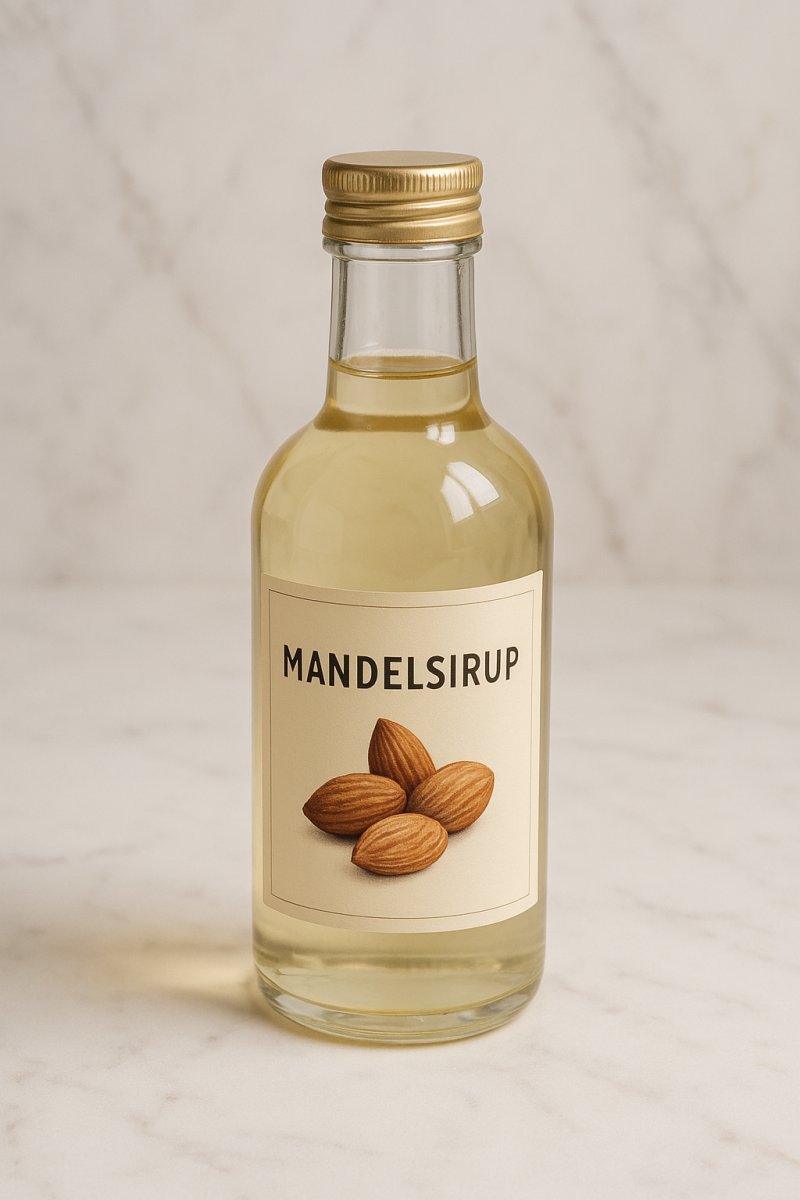
Bottle of almond syrup
I still clearly remember the first spoonful of almond syrup I tried in a small sunlit kitchen: a sweet, nutty scent that immediately evoked marzipan and warm bakeries. Since then almond syrup has repeatedly appeared in my pantry, not as an exotic luxury but as a little wonder that enriches drinks, desserts and even savory dishes with its own, almost secret note.
Almond syrup is more than just sugar and flavor; it carries the subtle bitterness and the floral‑nutty depth of almonds, sometimes with a hint of vanilla or bitter almond, depending on the production.

I've encountered it in many variations: from the simple homemade recipe with ground almonds, water and sugar to the refined orgeat interpretation with rose water. A colleague of mine swears by adding it to espresso instead of regular sugar – the combination of the coffee's sharp bitterness and the almond sweetness is surprisingly fitting. I used to think almond syrup belonged only in cocktails; now I find it equally indispensable in yogurt bowls, cake slices and salad dressings.

What I've learned in handling it:

  • Dosage: Less is often more, because almond syrup is intense and can overpower other flavors.
  • Combinations: Citrus, berries, dark chocolate and spices like cinnamon or cardamom harmonize particularly well.
  • Substitutes: If no almonds are available, amaretto or a drop of bitter almond extract in small amounts will work.
  • Storage: Homemade syrup keeps in the refrigerator for a few weeks; commercially bottled products remain stable longer if filled cleanly.
I tell you all this because almond syrup is for me a small culinary secret: it combines nostalgic sweetness with surprising versatility. For the next Sunday café I like to bring a bottle and watch how simple crepes, an iced milk coffee or even a glass of red wine take on a new identity with it. If you haven't tried it yet, give it a place on the shelf – you'll be surprised how often you reach for it.

Availability & types


Availability and types of almond syrup

Almond syrup is a sweet syrup flavored with almonds that can be found in many countries. The main ingredient is almonds or almond flavors. Almonds grow primarily in warm regions. Major growing areas include California in the USA, the Mediterranean (e.g. Spain, Italy) and parts of Turkey and North Africa. These countries often supply the real almonds that are then processed into syrup. Some manufacturers make almond syrup directly where the almonds grow, others blend it in factories around the world.

You can buy almond syrup in various stores:

  • At the supermarket among sweet beverages or in the coffee section.
  • In delicatessens or organic shops if you are looking for natural or particularly high‑quality varieties.
  • In beverage and cocktail shops, because bartenders like to use almond syrup for cocktails.
  • Online from many retailers – convenient if you want a specific variety.
There are different kinds of almond syrup. Here are the main ones, simply explained:

  • Orgeat (French almond syrup): This is a traditional syrup made from real ground almonds, sugar and often some rose or orange blossom water. It is slightly cloudy (not completely clear) and has a nutty‑creamy taste. It is often used in cocktails, e.g. the famous "Mai Tai".
  • Clear almond syrups with flavoring: These are usually clear syrups in which almond flavoring (sometimes artificial) is used instead of real almonds. They dissolve well in cold drinks and are practical for coffee or lemonade.
  • Raw vs. roasted almond variants: Some syrups are made from raw almonds, others from roasted almonds. Roasted almonds give a stronger, slightly caramelized flavor, similar to roasted nuts.
  • Non‑alcoholic vs. alcoholic almond products: Almond syrup is normally non‑alcoholic. There are related products such as Amaretto (an alcoholic liqueur with almond flavor), which share a similar flavor profile.
  • Organic and natural variants: These use pure almonds and cane sugar without artificial additives. Such varieties are often the better choice for people concerned about ingredients.
  • Low‑calorie and sugar‑free variants: For people who want less sugar, there are syrups with sweeteners. They taste similar but contain few calories.
An important point: real almonds (especially bitter almonds) can contain compounds that are not advisable to eat raw. Therefore almonds for syrup are properly processed or the aroma is produced safely so that the syrup is harmless. When buying, you can look for indications such as made from real almonds, orange blossom or artificial flavor, depending on what you prefer.

In summary: almond syrup is available in many places – from the supermarket to the internet. It exists as genuine, creamy orgeat, as clear flavored syrup, in organic or sugar‑free variants and with different almond flavors (raw or roasted). This way everyone can find the suitable type, whether for juice, coffee, cake or cocktails.

Details & nutrition

Property Value
Unit ml
Calories per 100 320
Protein per 100 0.3
Carbohydrates per 100 80.0
Sugar per 100 78.0
Fat per 100 0.3
Saturated fat per 100 0.0
Monounsaturated fat 0.1
Polyunsaturated fat 0.1
Fiber per 100 0.0
Vitamin C (mg) per 100 0
Vitamin D (IU) per 100 0
Calcium (mg) per 100 5
Iron (mg) per 100 0.1
Nutri-Score E
CO₂ footprint ca. 0,8 kg CO2e pro kg (je nach Herstellung und Transport)
Origin EU (depending on manufacturer)
Gluten-free Yes
Lactose-free Yes
Nut-free No
Vegan Yes
Note High-sugar syrup; nutritional values may vary depending on brand/recipe.

Technical & scientific information

Almond syrup denotes a sweet syrup preparation with a pronounced almond aroma that can be made from real almonds (Prunus dulcis) or by aromatization. Classic variants like the French orgeat are based on ground, defatted or blanched almonds, sugar and, where appropriate, rose or orange blossom water. Industrially produced almond syrups often contain only very small proportions of almond and instead use natural or synthetic benzaldehyde‑containing aromatic compounds that provide the typical almond scent.

Chemical composition and ingredients. Almonds consist predominantly of lipids (mainly triglycerides with a high proportion of oleic and linoleic acid), proteins (e.g. the storage protein amandin), carbohydrates and secondary plant compounds (phenols, flavonoids). In almond syrup, however, the proportion of almond material plays a decisive role for the nutritional and aroma profile. Typical concentration ranges in syrups are:

  • Table sugar (sucrose, glucose/syrup fractions): about 40–70 % of the total mass, depending on the formulation.
  • Water: about 20–50 %, influences density, viscosity and water activity.
  • Almond components (solid particles, oil, proteins): 0–15 %, higher in orgeat, negligible in flavored syrups.
  • Additives: acidulants (e.g. citric acid), emulsifiers or stabilizers (gum arabic, glycerin) and, where applicable, preservative salts (sodium benzoate).
Nutritional value and energy density. Due to the high sugar content, almond syrups mainly provide rapidly available carbohydrates. Energy values typically range around 200–330 kcal/100 g, depending on sugar content and the share of almond fat. Proteins and unsaturated fatty acids are present in significant amounts only if real almond proportions are used.

Manufacturing process. Industrial and artisanal processes differ in details but essentially follow these steps:

  • Pretreatment of the almonds: blanching, peeling, drying and, if necessary, roasting.
  • Crushing/grinding the almonds into a fine paste and thermal treatment to extract oil and aroma compounds.
  • Pressing or centrifugation to separate solids and oils; filtration produces clear liquids.
  • Preparing a sugar solution (syrup) and mixing with almond extract; addition of flavor, acidulant and stabilizers.
  • Pasteurization, filling and, if necessary, microbiological control to ensure shelf life.
Safety and health aspects. Almonds are among the common triggers of food allergies, which is why in many jurisdictions labeling as a tree nut is required. Bitter almonds contain the cyanogenic glycoside amygdalin, the enzymatic cleavage of which can release cyanide‑containing compounds and benzaldehyde; industrial manufacturing processes and legal requirements minimize this risk by predominantly using sweet almonds or limiting bitter almond content. The high sugar content makes almond syrup nutritionally an energy source but not a nutrient‑rich food. For microbiological stability, low water activity, pasteurization and sometimes preservatives are necessary, since osmophilic yeasts can grow despite high sugar content.

Applications. Almond syrup is widely used in beverages (cocktails, coffee specialties), in confectionery, to flavor desserts and as an ingredient in traditional recipes. Sensorially it is characterized by the mix of a sweet base note and the typical slightly marzipan‑like aromatic component, which is often chemically mediated by benzaldehyde.

In practice, almond syrups are therefore a product with clearly definable technological and toxicological aspects: they combine simple sugar‑water chemistry with the specific lipid, protein and aroma profiles of the almond, but require allergen labeling and measures to avoid cyanide risks when bitter raw materials are used.

Wiki entry for: almond syrup
Active now: 14 visitors of which 2 logged-in members in the last 5 minutes