Menu & categories

Almond flavouring

Intense almond flavour for baked goods and desserts

Wiki about almond extract Nutri-Score D Vegan Yes Gluten-free Yes Lactose-free Yes Nut-free Yes
NUTRITION / 100 ml
250 kcal 0 g Protein 0 g Kohlenhydrate 0 g Fett

Introduction

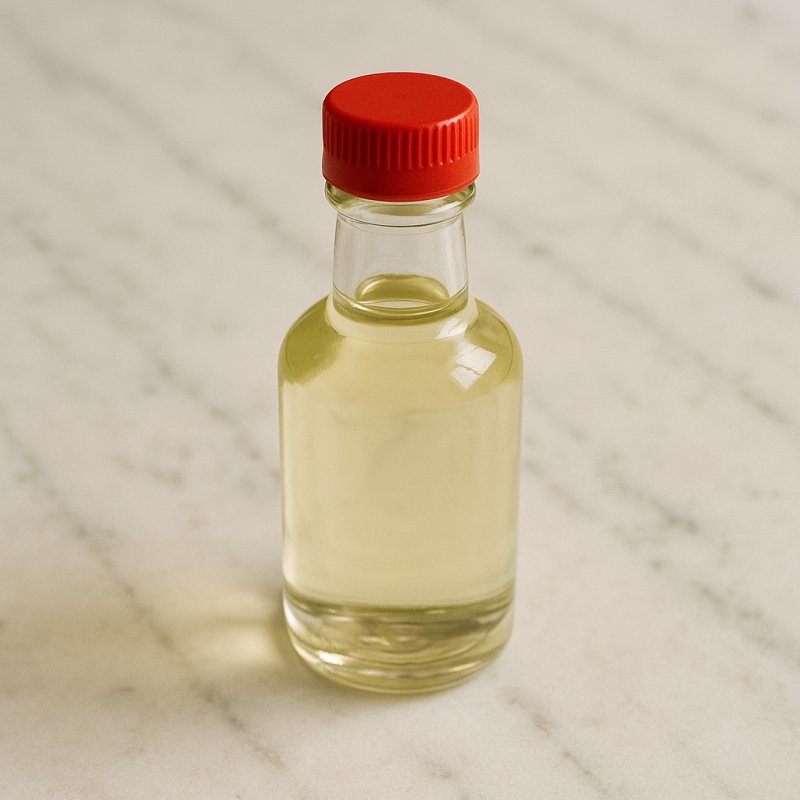
Small bottle of almond flavouring next to almonds
I still clearly remember the first scent of almond flavour that ever reached my nose: a mild, sweet whiff in a small bakery that smelled of freshly baked pastries and memories. There I tried a pastry that tasted so unmistakably of marzipan that I was almost certain it must contain whole almonds. Only later did I learn that a few drops of pure almond flavour often suffice to produce that characteristic taste without changing the texture.

To me almonds, or rather their flavour, are something magical in the kitchen. It has the ability to turn simple recipes into something personal: vanilla sauce gains depth, chocolate cake a nutty note, and even savory dishes can gain complexity with a hint of almond flavour. A colleague of mine swears by adding a few drops to his tomato soup because it softens the acidity and brings the flavours together more harmoniously.

It's worth knowing a few things about the product. Almond aromas can be obtained in different ways — from natural bitter almond extracts, from sweet almond oil, or as synthetic benzaldehyde. It's important:

  • Quality: High-quality flavouring tastes more natural and less artificial.
  • Concentration: One drop can be strong; dose carefully.
  • Range of uses: Baking, desserts, drinks and occasionally savory sauces.
Personally I prefer flavours that are not too dominant. Once I overenthusiastically reached into the bottle while baking — the result was a cake that reminded more of marzipan candies than the intended hazelnut pastry. Since then I proceed slowly and keep tasting. Almond flavour is a good conversation starter: at a small dinner I watched guests guess what their dessert reminded them of until I confessed that only a hint of flavour had been used.

If you want to experiment with almond flavour, start subtly, note the amounts, and be sure to combine it with textures like shaved almonds or a crunchy crust. That way the taste stays lively without taking over. This small ingredient, for me, has the potential to evoke memories, enchant kitchen evenings, and incidentally give a dish that certain something.

Availability & types

Availability and types

Almond flavour is a taste many people know from cookies, cakes and sweets. It is easy to find and available in many shops. You can buy it in supermarkets, well-stocked drugstores or in specialty baking shops. There are also many offers online, so you can conveniently order it to your home. Some packages are small and only enough for a few baking recipes, other bottles are larger and last a long time.

Where does almond flavour come from?
The typical aroma is reminiscent of real almonds, although it is not always made from real almonds. There are two main types: natural almond oil, which is obtained from almonds, and artificial flavours that are produced in a laboratory. Natural almond oil comes from almonds harvested from almond trees. Artificial flavours try to mimic the same taste, but often contain only some of the same flavour compounds.

Growing regions for almond trees
Almond trees grow best in warm areas with winters that are not too cold. Important growing regions are:

  • Mediterranean countries: Spain, Italy and Greece. These countries are famous for their almonds because the climate is warm and sunny.
  • California: A large part of the world's almond harvest comes from California in the USA. There are many vast fields of almond trees there.
  • Other regions: Turkey, Iran and some North African countries also grow almonds. Wherever it is warm and dry enough, almond trees thrive.
Available varieties and versions of almond flavour
Almond flavour comes in various forms. Here are the most common, simply explained:

  • Natural almond oil: This is an oil obtained by pressing real almonds or by other extraction methods. It smells and tastes like real almonds. It is good when you want an authentic almond taste and no artificial additives.
  • Bitter almond oil: This oil often comes from the kernels of other stone fruits such as apricots or peaches. It has a very strong, slightly bitter aroma that is used in small quantities. Because of its strong flavour, often just one drop is enough.
  • Artificial almond flavour: This is produced in a laboratory and is often labeled simply as "flavour" in commerce. It imitates the almond taste and is usually cheaper than real oil. It is practical because it has a longer shelf life and is used in many different products.
  • Liquid flavouring blends: These come in small bottles and are easy to dose. Bakers often use them because they know exactly how much they need.
  • Food-grade oils: Some oils are made specifically for baking and cooking and can be added directly to doughs or creams.
Tips for choosing
When you buy almond flavour, pay attention to whether the packaging says "natural" or "artificial" and how strong the taste is. For delicate baked goods many bakers choose a natural oil or a mild flavour blend. For very intense flavours an artificial flavour is often enough because it is stronger. Whatever variant you choose: a few drops are often sufficient, because almond flavour is strong and a little goes a long way.

This way you can easily find the right type: look where the product is sold, read the information on the package and try small quantities if necessary until you like the taste.
Details & nutrition

Property Value
Unit ml
Calories per 100 250
Protein per 100 0
Carbohydrates per 100 0
Sugar per 100 0
Fat per 100 0
Saturated fat per 100 0
Monounsaturated fat 0
Polyunsaturated fat 0
Fiber per 100 0
Vitamin C (mg) per 100 0
Vitamin D (IU) per 100 0
Calcium (mg) per 100 0
Iron (mg) per 100 0
Nutri-Score D
CO₂ footprint 3.0
Origin Produced industrially; often derived from synthetic benzaldehyde or natural aromatic compounds
Gluten-free Yes
Lactose-free Yes
Nut-free Yes
Vegan Yes
Note Nutritional values refer to a concentrated, usually alcohol-free flavouring product; actual intake is minimal due to the very low quantities used. Depending on the manufacturer, it may contain alcohol or carrier substances - check the ingredient list.

Technical & scientific information

Almond flavour refers to a food flavouring that mimics the characteristic taste and smell of almonds. It is used in the food industry, in baking and in confectionery to create a nutty-sweet impression without necessarily using whole almonds. Almond flavourings can be natural, nature-identical or synthetic. The choice and composition depend on desired intensity, cost and legal requirements.

Chemical composition
The dominant aroma molecule that shapes the typical almond smell is benzaldehyde. Benzaldehyde gives the bitter-almond-like scent and taste. Bitter almonds and some other plants also contain amygdalin, a cyanogenic glycoside that can release hydrocyanic acid (cyanide) upon hydrolysis. Commercial almond flavours typically contain benzaldehyde as the main component, complemented by secondary components such as vanillin, phenylacetaldehyde and various esters that contribute sweetness, roundness and complexity. Exact formulations vary by manufacturer and application.

Manufacturing methods
Almond flavours are produced by different methods:

  • Extraction: Natural almond oils and essences are obtained by solvents, steam distillation or CO2 extraction. Products produced exclusively by such methods may often be labeled as "natural flavour".
  • Synthesis: Benzaldehyde and other aroma compounds can be chemically synthesized. Nature-identical substances are chemically identical to compounds found in nature but are produced industrially.
  • Biotechnological production: Enzymatic conversions or microbial fermentation are increasingly used to produce specific aroma molecules more sustainably and with high purity.
Ingredients and nutritional values
Pure almond flavour is used in very small amounts and provides practically no significant calories, proteins, fats or carbohydrates per serving. Flavourings consist mainly of volatile organic compounds and solvent carriers. If the flavour is dissolved in oils, the carrier oil can supply small amounts of fat. In flavored products nutritional values are determined primarily by the overall composition of the food, not by the flavouring itself.

Food safety and health aspects
Food flavourings, including almond flavour, are subject to regulatory requirements. In the European Union and many other jurisdictions the substances used must comply with permitted maximum levels and be labeled accordingly. An important health aspect is the distinction between almond flavourings and real almonds for allergic people. Many almond flavours are based on benzaldehyde and do not contain almond proteins; nevertheless labeling obligations may apply when natural almond components are used. For bitter almond extracts the possible presence of amygdalin and resulting cyanide is relevant, which is why extracts are usually processed so that cyanogenic glycosides are removed or kept at non-hazardous levels.

Applications
Almond flavour is used in:

  • Bakery products such as pastries, cakes and cookies.
  • Confectionery including chocolate, candies and fillings.
  • Beverages, ice creams and desserts.
  • Cooking products and perfumery, there to round off scent and flavor profiles.
The flavour is often offered as concentrated solutions and is diluted or incorporated into recipes before use.
Labeling and consumer information
Labels must indicate the presence of flavouring; when real almonds or almond components are used this must be stated separately to protect allergic consumers. Terms like "natural flavour" are legally defined and require that the odor and taste substances are obtained from natural source materials by permitted processes. Consumers with nut allergies should check products or contact manufacturers if there is uncertainty. Almond flavour offers an economical and taste alternative to using whole almonds, enables consistent flavour profiles and versatile applications, but requires accurate labeling and controlled production because of chemical particularities and allergy risks.
Wiki entry for: almond extract
Active now: 23 visitors of which 2 logged-in members in the last 5 minutes