Availability and types of Agar‑Agar
Agar‑Agar comes from the sea: it is obtained from certain red seaweeds that grow on rocks. You can imagine it like a plant in the sea that people harvest or cultivate so that food can later be made from it. The main regions where these seaweeds grow or are harvested are Japan, Korea and China, but countries such as Indonesia, the Philippines or Chile also supply seaweeds for agar. Some seaweeds grow wild, others are deliberately cultivated so they grow faster and in larger quantities.
If you want to buy agar‑agar, you can find it in many places:
- Supermarkets or larger grocery stores (usually in the international section).
- Asian grocery stores, where several varieties and brands are often available.
- Health food or organic shops, especially if you are looking for a more ecological option.
- Online shops that sell spices, baking ingredients or products for vegan cooking.
There are different forms and types of agar for different purposes. The main types are:
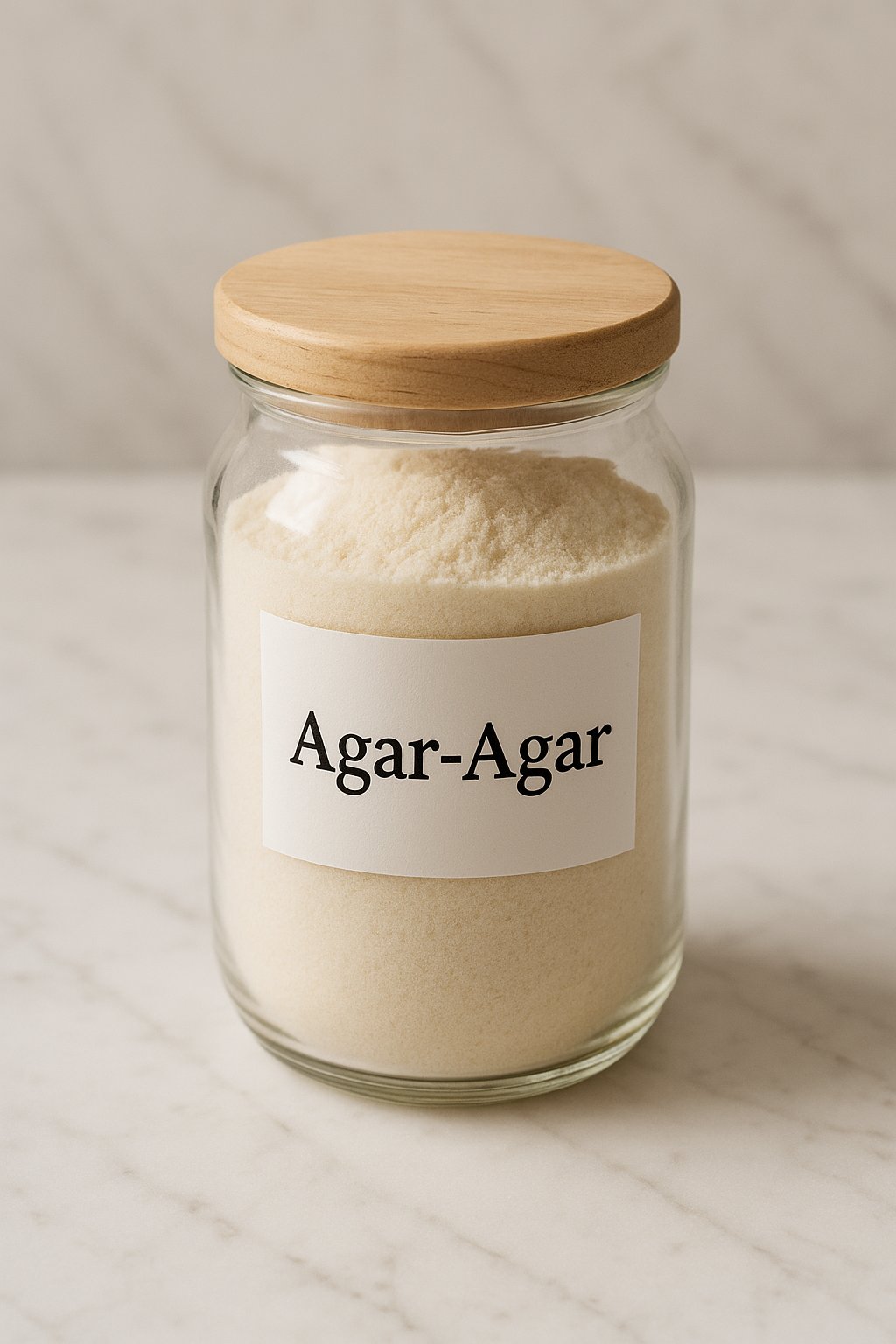
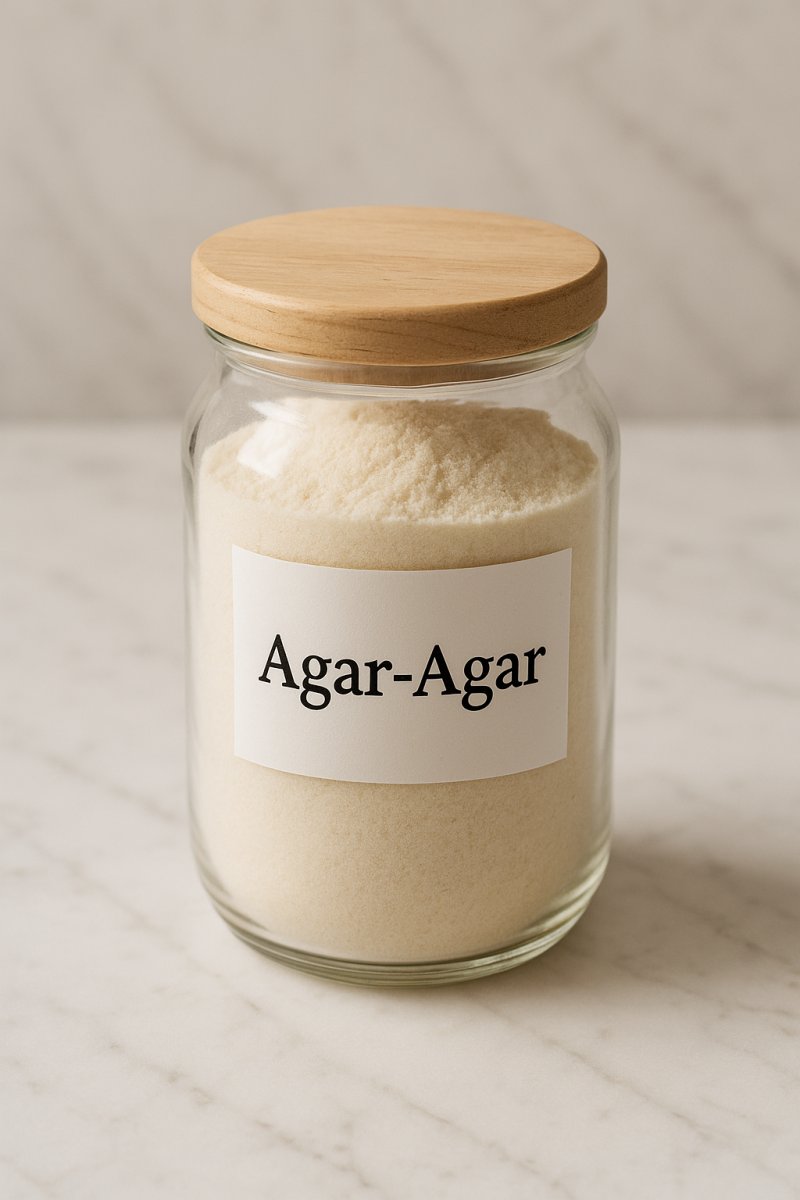
- Agar powder: finely ground and resembling flour. It dissolves faster and is often recommended in recipes. It can be measured with a teaspoon, similar to baking powder.
- Agar flakes or strips: these usually require longer cooking to dissolve. They can be soaked first to speed things up. A comparison: flakes are like rolled oats and powder like flour – both come from the same raw material but are processed differently.
- Kanten (Japanese strips): in Japan, solid strips are often called “kanten”. These are traditionally used and give a very firm gel structure that is easy to cut.
- Instant agar: processed so that it dissolves particularly easily and needs less cooking. It is practical when time is short.
- Laboratory agar (agarose): a very pure form used in scientific laboratories. For culinary use this variant is not necessary; it is more expensive and used for experiments.
There are also differences in gelling strength. Sometimes the package indicates whether the agar gels very strongly or rather weakly. This is important because you need less of a strong variety to get a firm jelly. Some packages are also “decolorized” or very white – this means they have been processed so they have no color or taste residues. Others are more natural and slightly brownish.
Price and packaging vary: small packets or jars for household use are inexpensive and last a long time because only small amounts are needed. In larger quantities there is agar for professional chefs or industry. When you buy agar, look for labels like “food grade”, so you know it is intended for food use.
In summary: Agar‑Agar is available worldwide, especially in Asia and online, and comes as powder, flakes or strips. There are quick (instant) and regular varieties, light and natural variants, as well as very pure lab grades. You can choose the right type depending on whether you want a firm jelly, a light pudding texture or something to slice.