Menu & categories

Wild garlic

Aromatic spring herb with a garlicky aroma.

Wiki about wild garlic Nutri-Score A Vegan Yes Gluten-free Yes Lactose-free Yes Nut-free Yes
NUTRITION / 100 g
34 kcal 2.6 g Protein 6.2 g Kohlenhydrate 0.6 g Fett

Introduction

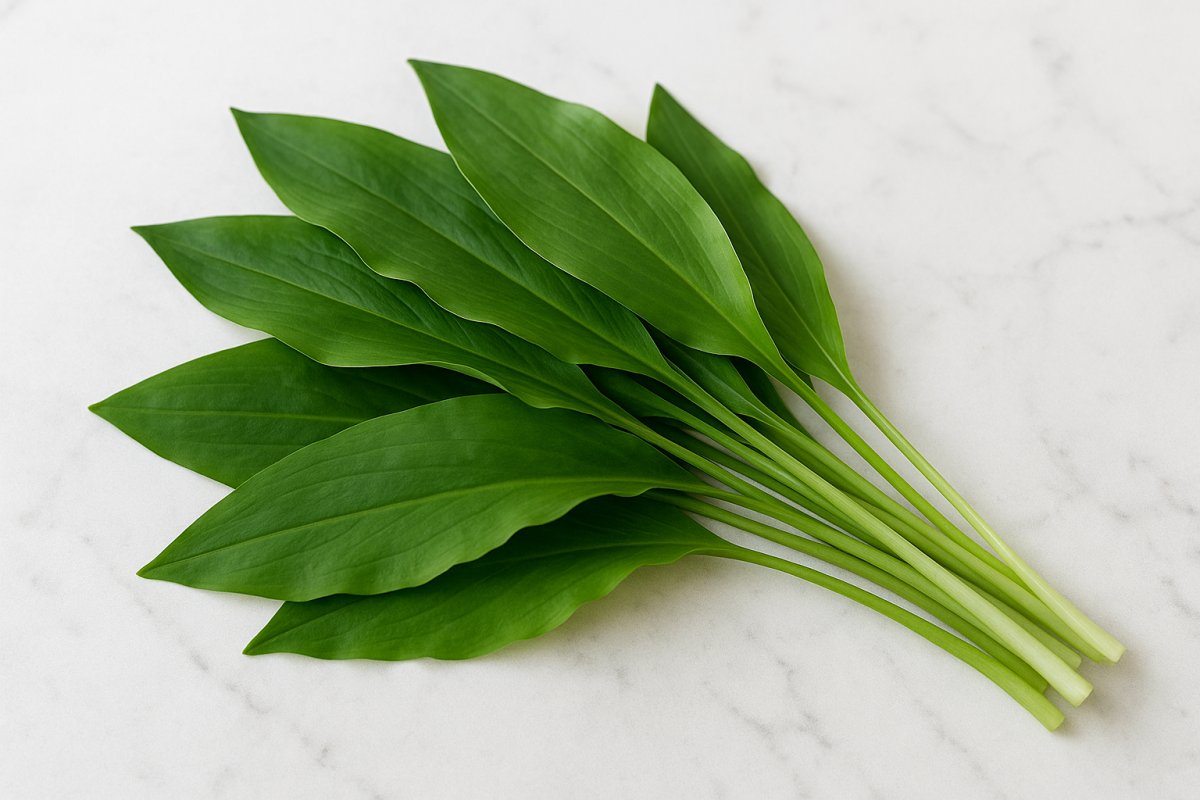
Fresh wild garlic (ramsons) green leaves
I love the scent of fresh wild garlic as soon as the first leaves shoot up from the forest floor in spring. For me this herbaceous green is the secret superstar of seasonal cooking: garlicky, fresh and slightly nutty, yet much more delicate than the kitchen garlic clove. I still remember a walk when a colleague of mine stubbornly squeezed his eyes shut until I held a crushed leaf tip under his nose — after that he wanted wild garlic with every meal.

What makes wild garlic so distinctive can be listed quickly:

  • Aroma: pronounced garlic note, but greener and fresher.
  • Habitat: damp, shady deciduous forests, often in dense carpets.
  • Season: typically March to May, short and intense.
In my kitchen I use wild garlic for all sorts of things: pesto, salted butter, soups, on fresh bread or finely chopped as a finish over potatoes and fish. A simple recipe I almost always have is wild garlic pesto with walnuts and a little lemon zest. That freezes well and often saves an impromptu dinner.

When foraging: caution is required. There are dangerous lookalikes like lily of the valley, whose leaves can look similar. My tip is simple and pragmatic: smell — real wild garlic leaves immediately give off the typical garlic smell when crushed. If you're unsure, leave the plant where it is or ask experienced foragers.

For storage, damp cloths in the fridge work for a few days; wild garlic keeps longer as pesto frozen in small portions. Dried it unfortunately loses a lot of aroma, so I prefer freezing or preserving in oil.

For me wild garlic remains the loveliest anticipation of spring: every walk through the woods can become a treasure hunt, and a small jar of homemade pesto is a memento of sun, earth and community that accompanies me through the rest of the season.

Availability & types

Availability and types of wild garlic

Wild garlic, scientifically Allium ursinum, is a plant found in many woods and gardens in spring. The taste is reminiscent of garlic, but is usually milder and fresher. Many people love wild garlic as a spring seasoning because it quickly adds green flavor to soups, bread or pesto.

Origin and natural habitats
Wild garlic originally grows in Europe and parts of Western Asia. It prefers shady, damp forests, especially where the soil is nutrient-rich and loose. You often find it in large green carpets under trees when the sun is still low through the branches in spring. You could say: wild garlic feels like a green carpet covering the forest floor in spring.

Cultivation areas
Besides wild growth in the forest, wild garlic is also cultivated. In Central Europe — for example in Germany, Austria and Switzerland — gardeners and farmers grow wild garlic for markets and supermarkets. It does well in partly shaded beds or under tall shrubs because it does not like hot, dry spots. In regions with a suitable climate, that is cool springs and moist soil, it thrives best.

Available varieties and forms
Wild garlic is often quite uniform in nature, so there are not as many different “varieties” as with tomatoes or apples. Nevertheless you can discover different variants:

  • Wild garlic (wild) – the one you gather in the forest. It tastes fresh and intense, the leaves are often of varying sizes.
  • Cultivated wild garlic – from farms or horticultural businesses. It is often more uniform in leaf size and harvested cleaner.
  • Young leaves – more tender, milder leaves, ideal for salads and spreads.
  • Flowers – the white flowers are also edible and look pretty as a garnish on plates.
  • Processed forms – wild garlic is also available as pesto, oil, salt, frozen puree or dried powder. Frozen and preserved variants are practical because they retain the aroma longer.
Where you can buy or find wild garlic
- Between March and May fresh wild garlic can be found at weekly markets, in supermarkets and farm shops.
- On the internet there are pestos, oils and dried products available year-round.
- Those who like to forage can pick it in the forest themselves – but pay attention to rules: in some areas you may not be allowed to collect much, and it is important not to confuse protected plants or plants with a similar appearance.

In summary: wild garlic is a spring specialty available both wild and cultivated. Fresh leaves are mainly available in spring, while processed products make the aroma available for longer. This way anyone, whether in the supermarket, at the market or in their own garden, can find a suitable variant and use the tasty green leaves.
Details & nutrition

Property Value
Unit g
Calories per 100 34
Protein per 100 2.6
Carbohydrates per 100 6.2
Sugar per 100 1.3
Fat per 100 0.6
Saturated fat per 100 0.1
Monounsaturated fat 0.1
Polyunsaturated fat 0.3
Fiber per 100 2.3
Vitamin C (mg) per 100 70
Vitamin D (IU) per 100 0
Calcium (mg) per 100 70
Iron (mg) per 100 1.6
Nutri-Score A
CO₂ footprint 0.2 kg CO2e/kg
Origin Europe (often local, season: spring)
Gluten-free Yes
Lactose-free Yes
Nut-free Yes
Vegan Yes
Note Use raw or briefly heated (e.g. pesto, herb butter, soups). When foraging, take care to avoid confusing it with lily of the valley or autumn crocus.

Technical & scientific information

Wild garlic (Allium ursinum) is a wild-growing garlic species widespread in Europe and parts of Asia, valued for its intense, garlic-like aroma. The tender leaves are used widely as a flavoring herb and contain a complex mixture of bioactive substances that are chemically and nutritionally interesting. Botanically the plant belongs to the family Amaryllidaceae; the characteristic odor component arises from sulfur-containing compounds released when the tissue is crushed.

Chemical composition and main constituents:

  • Sulfur-containing compounds are predominant, notably S‑allyl‑L‑cysteine sulfoxide (analogous to alliin) and its enzymatic degradation product allicin, which is formed immediately after cell damage by the alliinase. Allicin further decomposes into various allyl and diallyl sulfides, ajoene analogues and vinyldithiin compounds.
  • Other secondary plant metabolites include flavonoids (especially kaempferol glycosides), phenolic acids and various polyphenols that possess antioxidant properties.
  • From a nutrient perspective the leaves mainly provide water and fiber-rich structural components; they are low in calories and contain notable amounts of vitamin C, carotenoids (provitamin A) as well as minerals such as potassium, calcium, magnesium and trace elements.
Nutrition-related aspects and nutrient values

Wild garlic is a nutritious addition due to its low energy content and its content of vitamins and minerals. The vitamin C content and secondary plant compounds contribute to antioxidant capacity. Exact nutrient values vary with location, harvest time and freshness; typically fresh leaves provide only a few kilocalories per 100 grams and are low in fats, moderate in carbohydrates and protein.

Processing and storage

  • Using it raw intensifies the aroma and preserves heat-sensitive substances such as allicin and vitamin C.
  • Cooking reduces the characteristic pungency because allicin is thermally unstable and is converted into less sharp sulfur compounds.
  • For preservation, rapid freezing, gentle drying (possible aroma loss) or processing into pesto are suitable. Oil infusions are popular for flavor but, if stored improperly, carry a risk of bacterial contamination; oil infusions should be refrigerated and consumed promptly or made safe by acidification or freezing.
Scientific and health aspects

Effects studied in vitro and in vivo for Allium plants – including antibacterial, antioxidant and potentially cardioprotective actions – can be partly attributed to the sulfur-containing compounds and polyphenols. Studies indicate possible blood-pressure-lowering and cholesterol-reducing effects generally for garlic-like plants, while specific clinical data for Allium ursinum in human research are more limited. Because of the blood-thinning properties of sulfur-containing Allium compounds, caution is advised if taken concurrently with anticoagulants.

Safety information

  • Wild foragers should be aware of the risk of confusion: leaves of lily of the valley (Convallaria majalis) or autumn crocus (Colchicum autumnale) can look similar but are poisonous. Careful identification before consumption is essential.
  • Sensitive individuals may experience gastrointestinal discomfort or allergic reactions.
In summary, wild garlic is an aromatic, low-calorie leafy plant with a characteristic composition of sulfur-containing compounds and secondary plant metabolites, appreciated culinarily and of interest from a health perspective. The method of preparation strongly influences aroma and bioactive profiles, and safe plant identification is essential when foraging in the wild.

Wiki entry for: wild garlic
Active now: 20 visitors of which 2 logged-in members in the last 5 minutes