Menu & categories

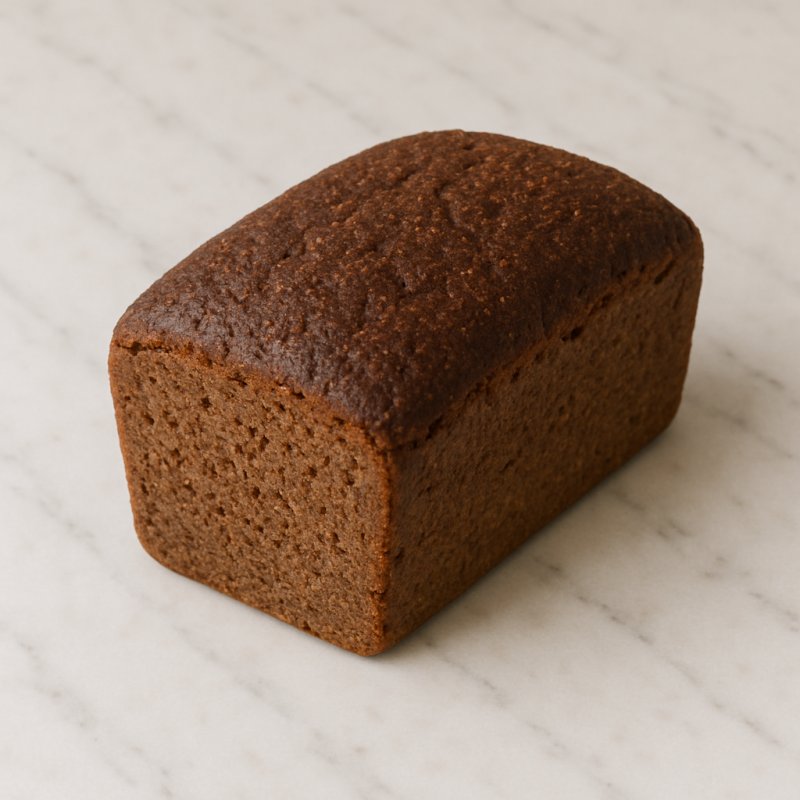
Whole rye bread

Hearty bread made from whole rye flour with high fiber content

Wiki about rye wholemeal bread Nutri-Score A Vegan Yes Gluten-free No Lactose-free Yes Nut-free Yes
NUTRITION / 100 g
210 kcal 6.5 g Protein 42 g Kohlenhydrate 2.0 g Fett

Introduction

Several slices of whole rye bread on a wooden board
I still remember exactly the scent that rose to my nose at the first bite of freshly baked wholegrain rye bread: tart, slightly sweet and earthbound at the same time. This bread feels comforting to me, as if it were a hug in crumbly form. A colleague once brought a slice that he had just picked up warm from the bakery, and I couldn't help but steal a piece immediately. Since then wholegrain rye bread has been a permanent fixture in my pantry and my small breakfast rituals.

Wholegrain rye bread differs from wheat bread by its darker color, the dense crumb ratio and its characteristic slightly sour taste. The full power of the grain is preserved because the wholegrain flour contains all parts of the rye: bran, germ and endosperm. That means not only more fiber, but also a rich nutrient profile with minerals like iron and magnesium. These properties make the bread not only filling but also wonderfully suitable for everyday use.

In my kitchen wholegrain rye bread has proven to be surprisingly versatile. I'm happy to share a few of my favorite combinations:

  • Hearty: Thick with butter and horseradish or with robust lard and cornichons.
  • Delicate: With soft Camembert and a bit of fig mustard.
  • On the go: As a base for a packed sandwich with hummus, arugula and pickled onions.
Baking itself is a small meditation for me: kneading dough, watching it mature and the aroma that spreads when the crust becomes crispy. Sometimes I experiment with sourdough, which gives the bread extra depth and a pleasant acidity. Friends who were initially skeptical are often surprised how much a good slice of wholegrain rye bread can carry a dish.

When I think of the many breads I've tried, wholegrain rye bread remains something special — down-to-earth, nutritious and full of character. It's the bread that tells stories, whether at the bakery around the corner, at a picnic in the park or at an improvised dinner table with friends.

Availability & types

Availability and types of wholegrain rye bread

Wholegrain rye bread is a bread baked from the whole grain of rye. That means that during production all parts of the rye grain are used – the hull, the germ and the endosperm. Because everything is used, this bread contains much more flavor and many important nutrients than bread made only from white flour.

Origin and growing regions
Rye is a cereal plant that prefers cooler and wetter areas. That is why rye often comes from countries in northern and central Europe. Well-known growing regions include Germany, Poland, Russia and the Scandinavian countries. Rye is also found in parts of North America and other regions with a similar climate.

Imagine rye as a farmer's sturdy friend: it does not need as much sun and copes well with cooler temperatures. Therefore it grows well where other cereals like wheat sometimes struggle.

Where to find wholegrain rye bread
Wholegrain rye bread is available in many shops. You can buy it in supermarkets, organic stores, bakeries and farmers' markets. In bakeries you will often find fresh rye bread in different shapes and crusts. In supermarkets you'll usually find packaged loaves that last longer. Organic labels indicate that the rye was grown without chemical agents.

If you live in an area where rye is not widely grown, bakeries or stores may still offer wholegrain rye bread because it is popular. Sometimes rye is imported from other regions so bakers can reliably obtain flour.

Popular varieties and variants

  • Classic wholegrain rye bread: A dark, robust bread made from 100% wholegrain rye flour. It usually has a firm crumb and a strong flavor, sometimes slightly sour.
  • Rye mixed bread: Here wholegrain rye flour is mixed with wheat flour. It is a bit softer and has a milder taste than pure rye bread – a good compromise for people who like rye flavor but prefer a softer bread.
  • Sourdough rye bread: Many rye breads are baked with sourdough. Sourdough is a natural mix of lactic acid bacteria and yeasts that gives the bread a slightly sour taste and good shelf life. It's comparable to yogurt versus milk – somewhat sourer but often more flavorful.
  • Wholegrain loaf with seeds: Some breads also contain seeds and kernels such as sunflower seeds, flaxseed or pumpkin seeds. These make the bread crunchier and add extra texture and nutrients.
  • Round or loaf-shaped: Wholegrain rye bread comes in various shapes: round farmhouse loaves, elongated pan loaves for slices or small rolls. The shape does not greatly change the taste but makes it more practical for different uses (e.g. buttered bread or sandwich slices).
Tasting tips
If you try wholegrain rye bread for the first time, start with a mixed bread or a rye bread with seeds. That way you can gradually get used to the stronger taste. Pay attention to the best-before date and organic or origin labels if that matters to you. And if you have the chance, ask your baker for recommendations — bakers often know which variety is fresh and particularly tasty.

Overall, wholegrain rye bread is a versatile and healthy bread choice that is widely available in many regions and comes in many variations — from robust and sour to mild and seeded — so there is something for almost every taste.
Details & nutrition

Property Value
Unit g
Average weight per piece 40
Calories per 100 210
Protein per 100 6.5
Carbohydrates per 100 42
Sugar per 100 2.0
Fat per 100 2.0
Saturated fat per 100 0.3
Monounsaturated fat 0.3
Polyunsaturated fat 1.0
Fiber per 100 8.0
Vitamin C (mg) per 100 0
Vitamin D (IU) per 100 0
Calcium (mg) per 100 60
Iron (mg) per 100 2.5
Nutri-Score A
CO₂ footprint 0.6
Origin Europe
Gluten-free No
Lactose-free Yes
Nut-free Yes
Vegan Yes
Note Values refer to average whole rye bread made from whole rye flour, water, salt and yeast/sourdough. Nutrient values may vary slightly depending on the recipe (e.g. seeds, kernels, addition of wheat flour).

Technical & scientific information

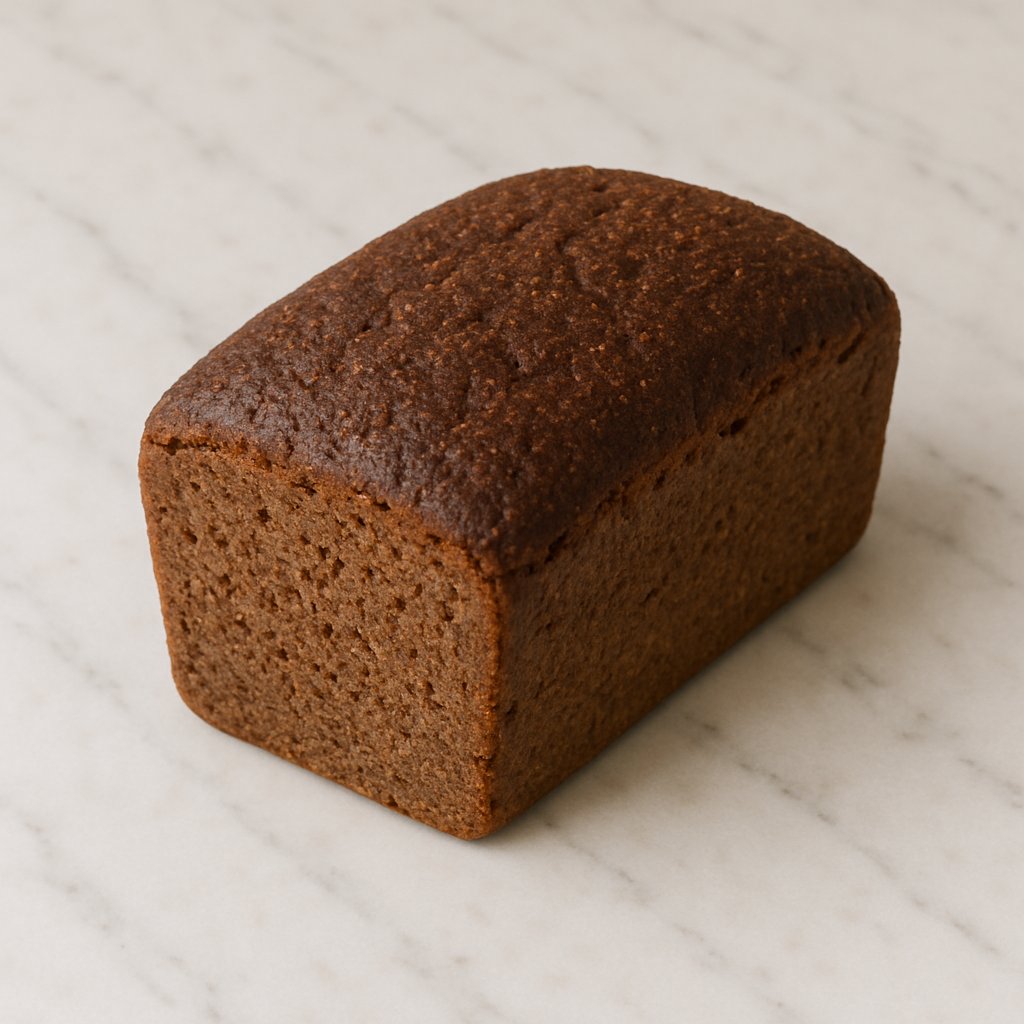
Wholegrain rye bread refers to a bread produced predominantly or exclusively from wholegrain rye flour, where the entire grain — germ, endosperm and hull — is included in the flour. This product group differs from white breads mainly by higher amounts of fiber, minerals and secondary plant compounds as well as by a characteristic slightly sour aroma, often resulting from sourdough fermentation.

Chemical composition and nutritional values
Wholegrain rye contains on average about 11–13% protein, 1.5–2% fat and 60–70% carbohydrates (including a proportion of resistant starch and complex polysaccharides). Fiber content is markedly higher than in refined flours, typically 12–15% in wholegrain rye flour. The hull components provide mainly insoluble fiber (cellulose, hemicelluloses) as well as soluble fibers (arabinoxylans), which influence the dough's water-binding capacity. Minerals such as magnesium, iron, zinc and B vitamins, particularly niacin and thiamine, are present in higher concentrations than in white flours. Rye also contains phenolic compounds and ferulic acid, which can exhibit antioxidant properties.

Processing methods
Wholegrain rye bread is frequently made with sourdough (Lactobacillus and yeast cultures), because rye flours contain fewer gluten-forming proteins (very little gliadin/glutenin network as in wheat) and therefore exhibit lower gluten properties. Sourdough increases dough yield, stabilizes dough structure by acidification (pH reduction) and activates enzymes, notably amylases, which convert starch into fermentable sugars. Important process parameters include dough resting times, dough consistency (moist and sticky), baking time and baking temperature. Additional ingredients such as water, salt and, if applicable, malt or wholemeal rye grits affect texture and aroma. Mechanical kneading is less decisive for rye dough than for wheat dough; instead temperature control and sourdough management are critical.

Enzymatic and biochemical aspects
Rye is enzymatically highly active: endogenous amylases degrade starch during dough rest, providing sugars for fermentation. If this activity is uncontrolled, it can lead to a very soft or "sticky" dough and reduce gas retention capacity. Acidification by lactic acid bacteria inhibits excessive amylase activity, increases dough stability and affects key proteins and polysaccharides, for example through the formation of pentosan gel networks that help bind gas and water.

Health aspects
Wholegrain rye bread is associated with beneficial effects on gut health and blood sugar regulation due to its high fiber content and complex carbohydrates. Fibers promote intestinal motility and serve as substrate for the gut microbiota, resulting in short-chain fatty acids (e.g. butyrate) that can have anti-inflammatory effects. The glycemic index of wholegrain rye bread is generally lower than that of white bread, which can attenuate postprandial blood sugar spikes. On the other hand, rye contains phytic acid, which can reduce the absorption of certain trace elements; traditional processing such as soaking, germination or souring reduces phytic acid content and increases mineral bioavailability.

Sensory properties and storage behavior
Sensory-wise wholegrain rye bread is characterized by a dense crumb, moist texture and a sour, nutty aroma. High water binding slows drying, so rye breads remain moist for longer. Sourdough is a natural preservative factor because pH reduction and lactic acid inhibit the development of certain spoilage organisms. Nevertheless, molds can occur; proper storage (cool, dry, airtight) extends shelf life.

Overall, wholegrain rye bread is a nutritionally valuable ingredient or food, which due to its complex composition, specific processing steps and physiological effects is of interest from both culinary and nutritional-science perspectives.

Wiki entry for: rye wholemeal bread
Active now: 18 visitors of which 2 logged-in members in the last 5 minutes