Menu & categories

White bread

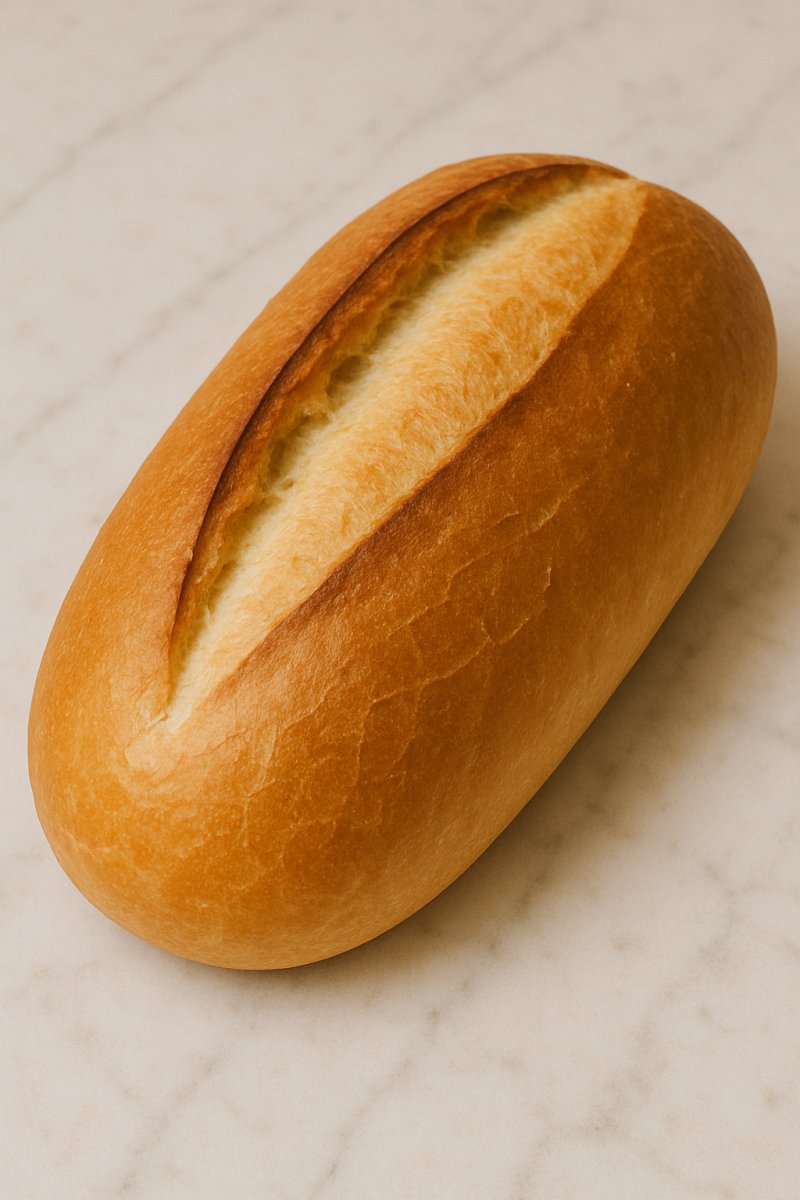
Light bread made from wheat flour with a soft crumb

Wiki about white bread Nutri-Score D Vegan No Gluten-free No Lactose-free No Nut-free Yes
NUTRITION / 100 g
265 kcal 8.5 g Protein 49 g Kohlenhydrate 3.2 g Fett

Introduction

Slices of fresh white bread
I still remember well the first slice of white bread that tasted so good after I moved into my first small flat: crisp at the edges, airy and pleasantly warm inside, a smell that immediately brought a feeling of home. White bread is for me more than just an ingredient; it is a quiet companion at breakfast tables, in improvised picnic baskets and in late kitchen conversations with friends. A colleague of mine always claimed that good white bread is the result of a small baking miracle — time, patience and the art of shaping flour and water into something comforting.

I like how versatile white bread is. It takes on flavors without overpowering them, creating the perfect backdrop for spreads, savory pastes or sweet jams. In my kitchen it often serves as a basis for experiments: once I turned it into spiced croutons that immediately gave a simple salad character. Another time I used older slices to rescue a rustic bread pudding variation — a small kitchen miracle that always surprises guests.

  • Texture: Soft and fine‑textured, often with a slightly shiny crust.
  • Use: As sandwich bread, toast, for coatings or for slow recipes like bread pudding.
  • Storage: Best eaten fresh; older slices are good for toasting or further processing.
The cultural significance of white bread also fascinates me. In many households it is the bread of childhood, symbolizing a simple, readily available food. I think of Sundays at relatives' houses where white bread sat on the table next to butter and honey and everyone reached for it. At the same time it is an ideal starting product for cooking enthusiasts: you can play with yeast, timing and technique to draw surprising nuances out of a simple dough.

Of course some gourmets criticize white bread as too plain or industrial. But I think its plainness is precisely its strength. It invites creativity and offers a neutral canvas for bold flavors. When I invite friends to an impromptu brunch, good white bread is almost always part of the plan — because it brings people together, because it comforts, and because its simplicity simply makes people happy.

Availability & types

Availability and types of white bread

White bread is one of the best‑known types of bread and can be found almost everywhere in the world. This is because it is made from wheat flour, which is easy to process, and many people enjoy its mild, soft taste. Origin here means where the main ingredient — the flour — comes from. Flour for white bread usually comes from wheat. Wheat has been cultivated for thousands of years: first in regions like the Middle East and the Mediterranean, later across Europe, North America, South America, Australia and elsewhere. Therefore white bread has a long history and is a staple food in many countries.

Growing regions
Wheat grows best on large fields, often called farms or plantations. Important countries where a lot of wheat is grown include, for example:

  • USA – large areas and machinery help harvest a lot of wheat.
  • Canada – especially in the west, where the climate is suitable.
  • China and India – wheat is grown here to feed many people.
  • Europe – countries such as France, Germany and Russia are important producers.
  • Australia – also known for large wheat exports.
This means that even if you live in a small town, the flour often comes from another country or distant regions of your own country. Supermarkets and bakeries ensure it is baked and sold as white bread.

Available types and variants
White bread is not always the same – there are many variants. Here are the main ones, simply explained:

  • Sandwich or toast bread – this is the soft, evenly sliced bread often used for sandwiches or toast. It has a thin crust and a soft crumb (the soft interior).
  • Rolls – small, round pieces made from the same dough as white bread. Practical for small sandwiches or as a side to a meal.
  • Challah or milk bread – slightly sweeter and often made with eggs or milk, which makes the bread even softer and shinier.
  • Baguette‑like variants – elongated white breads with a crispier crust but still light and soft inside.
  • Industrial / artisan baked – industrial white bread is often produced mechanically to ensure consistency and longer shelf life. Artisan (bakery‑baked) white bread comes fresh from the oven and often has more flavor, but does not keep as long.
  • Gluten‑free variants – for people who cannot tolerate gluten, there are white‑bread‑like products made from rice, corn or buckwheat flour. They look similar but taste somewhat different.
Why it is so popular
White bread is popular because it is soft, easy to chew and versatile. It can be topped sweet or savory, used for sandwiches or eaten on its own. In supermarkets you can usually find it fresh or packaged. Many countries also have local variants that differ in shape, crust and taste. So white bread is simple yet diverse — almost like a blank sheet of paper that can be painted in many different ways.

In summary: white bread mainly comes from wheat, which is grown worldwide. There are many kinds — from soft toast bread to crusty baguette‑type loaves or special variants for people with particular dietary needs. As a result, white bread is widely available and an important companion in many kitchens around the world.
Details & nutrition

Property Value
Unit g
Average weight per piece 40
Calories per 100 265
Protein per 100 8.5
Carbohydrates per 100 49
Sugar per 100 3.5
Fat per 100 3.2
Saturated fat per 100 0.8
Monounsaturated fat 1.3
Polyunsaturated fat 0.9
Fiber per 100 2.7
Vitamin C (mg) per 100 0
Vitamin D (IU) per 100 0
Calcium (mg) per 100 100
Iron (mg) per 100 3
Nutri-Score D
CO₂ footprint 0.7
Origin Varies depending on the bakery and manufacturer
Gluten-free No
Lactose-free No
Nut-free Yes
Vegan No
Note Nutritional values may vary slightly depending on the recipe, flour type and additives; information refers to commercially available white bread made from wheat flour.

Technical & scientific information

White bread refers to a baked product made from light wheat flour that, due to the removal of bran and germ during milling, has a high proportion of starch and a low content of fiber and micronutrients. Typically white bread consists of wheat flour Type 405–550, water, yeast or sourdough, salt and optionally fat or sugar; industrial variants frequently contain additives such as emulsifiers, enzymes or dough improvers to enhance texture, shelf life and volume.

Chemical composition and ingredients
The main component of white bread is starch (a polysaccharide), which consists of amylose and amylopectin and provides the primary source of energy. White bread also contains proteins (mainly gluten proteins gliadin and glutenin), which form an elastic network during kneading and baking and enable the dough's gas‑holding capacity. Lipids are present in small amounts, mainly as triglycerides from residual endosperm or added fats. Minerals (e.g. potassium, phosphorus, magnesium) and water‑soluble vitamins (especially B vitamins) are reduced compared to wholegrain products, as these components are concentrated in the bran and germ.

Nutritional profile (typical values per 100 g of freshly baked white bread)

  • Calories: approx. 250–280 kcal
  • Carbohydrates: 45–55 g (mostly starch, sugars low)
  • Protein: 7–9 g
  • Fat: 1–4 g (depending on the recipe)
  • Fiber: 2–3 g
  • Minerals and vitamins: reduced; certain micronutrients may be added in fortified flour
Processing methods
Production of white bread includes typical process steps: mixing flour and ingredients, kneading the dough, dough rest (fermentation), shaping, final proof and baking. Fermentation is often carried out by Saccharomyces cerevisiae (baker's yeast) or by sourdough cultures, which additionally produce organic acids and aromatic compounds. During baking proteins denature, starch gelatinizes and the crumb sets; the Maillard reaction between reducing sugars and amino acids contributes to crust browning and the formation of aromatic compounds. Industrial formulations use enzymes such as amylases to lighten the dough and emulsifiers (e.g. lecithin, SSL) to stabilize the crumb.

Physical properties
White bread is characterized by a fine, elastic crumb and a thin to medium‑firm crust. The gas‑holding capacity of the gluten network determines pore size and volume; higher gluten quality typically leads to greater volume and more uniform pores. Water content affects juiciness and texture; starch retrogradation during storage leads to changes in crust and crumb properties (staling), which occurs more quickly in white bread than in wholegrain breads.

Health aspects
White bread is an easily digestible source of carbohydrates that provides rapidly available glucose potential. Due to its low fiber and micronutrient content, it is recommended to combine white bread with nutrient‑rich foods or to prefer wholegrain alternatives to improve daily fiber and micronutrient intake. Classic white bread is unsuitable for people with coeliac disease or gluten intolerance. Excessive consumption of highly processed white breads may be associated with an increased risk of metabolic diseases, primarily due to high glycemic load and lower satiety compared with fiber‑rich products.

Sensory and culinary application
Sensorywise white bread is appreciated for its mild, slightly sweet flavors and its soft texture. It is well suited for sandwiches, toast, coatings and as an accompaniment to soups and spreads. In food technology white bread is used as a model product for studies on dough mechanics, staling, enzyme effects and volume optimization.

In summary, white bread is a technically simple to produce, energy‑rich staple food with a characteristically fine crumb and relatively low amounts of fiber and micronutrients. Its physicochemical properties are largely determined by flour quality, gluten development, water content and fermentation/baking parameters, while health assessments should consider the context of the overall diet.

Wiki entry for: white bread
Active now: 20 visitors of which 2 logged-in members in the last 5 minutes