Menu & categories

White beans

Protein-rich legume with complex carbohydrates and fiber

Wiki about white bean Nutri-Score A Vegan Yes Gluten-free Yes Lactose-free Yes Nut-free Yes
NUTRITION / 100 g
333 kcal 21.0 g Protein 60.0 g Kohlenhydrate 0.8 g Fett

Introduction

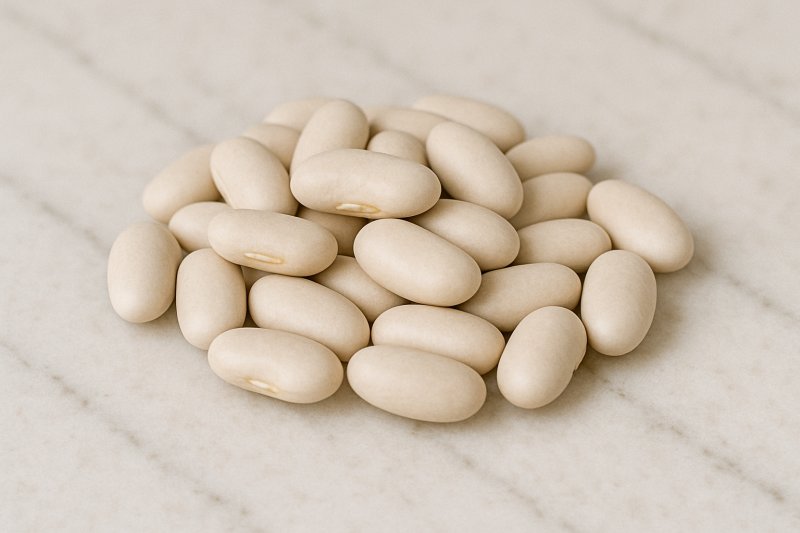
Dried white beans in a bowl
When I think of white beans, the scent of tomato sauce, herbs and a hint of roasted garlic immediately springs to mind. To me white beans are something like the cozy all-rounders of the kitchen: unassuming, reliable and always ready to make a dish a little better. I still remember a rainy Sunday when a friend dropped by unexpectedly and with a can of white beans, some bread and a squeeze of lemon we made a dinner that was at least as comforting as an old favorite blanket.

What I especially love about white beans is their versatility. They have a velvety texture and a mild, nutty flavor that pairs easily with bolder flavors. Whether as a base for creamy purées, a protein-rich addition to salads or a hearty component in stews – they work almost always. A colleague of mine, for example, swears by his quick white bean purée with lemon zest and rosemary, which is surprisingly popular at every dinner.

Apart from the taste I also appreciate the nutritional side: white beans are rich in plant protein, fiber and important minerals like iron and magnesium. For many occasions they are a simple and sustainable source of protein that fills you up without weighing you down. For someone who often cooks spontaneously, that's a huge advantage.

In my kitchen experiments I like to combine white beans with unusual partners. Chili and chocolate? Yes, tried and found exciting. Fennel and orange zest? A surprisingly elegant pair. Sometimes I serve them very simply: warmed with olive oil, coarse sea salt and freshly ground pepper – and dipping bread into that is pure bliss.

  • Taste: mild, nutty, creamy
  • Texture: velvety to firm, depending on preparation
  • Use: stews, salads, purées, spreads
  • Nutrients: protein, fiber, iron, magnesium
White beans are for me a little kitchen wonder: down-to-earth, dependable and open to culinary adventures. They invite experimentation without the pressure to get everything perfect. And maybe that's the best thing about them.

Availability & types

Availability and types of white beans

White beans are a well-known and popular ingredient in many cuisines. They are easy to find in supermarkets, health food stores and farmers' markets. You can find them fresh (rare), dried or canned. Dried beans are usually cheaper and have a long shelf life, but require soaking and cooking time. Canned beans are convenient because they are already soft and ready to use – just drain and rinse and you can add them to soups, salads or stews.

Origin

White beans originally come from various parts of the world. Many of the varieties common today were first cultivated in Central and South America, but there are also long traditions of bean cultivation in Europe and North Africa. Today white beans are grown in many countries with warm or temperate climates. Countries like Spain, Italy, France, Greece, the USA, Canada and some South American countries cultivate large amounts. You can imagine it like apple varieties: some originate in a certain country but are grown everywhere if the climate is suitable.

Growing regions

  • Europe: Especially in Southern Europe (e.g. Spain, Italy, Greece) white beans thrive. There they often belong to traditional dishes like bean soups or stews.
  • North America: In the USA and Canada there are large bean fields. Especially in states like Michigan, North Dakota or Idaho many beans are grown.
  • South America: Countries like Peru or Argentina also cultivate beans; some varieties originate from this region.
  • Other regions: White beans are also grown in parts of Africa and Asia, depending on climate and soil conditions.
Available varieties and variants

There are different types of white beans. Each variety has its own shape, size and flavor. Here are the best known:

  • Cannellini beans: These beans are elongated and somewhat larger. They come from Italy and have a delicate flavor. They are often found in soups and salads.
  • Large white beans (e.g. Gigantes): These are very large and meaty. In Greece they are known as "Gigantes"; they are often baked in the oven with tomato sauce.
  • Haricots blancs / Navy beans: Small to medium white beans that are particularly popular in American cuisine — for example for baked beans.
  • White giant bean: As the name suggests, these are very large beans with a firm bite, often used in Mediterranean dishes.
  • Preserved/canned variants: Many of the varieties mentioned are also available ready in cans. These are convenient because they are already cooked. Pay attention to the ingredients: sometimes salt or sugar is added.
  • Organic and regional variants: You can also buy white beans from organic farming (bio) or from regional harvests, which often feel fresher and mean shorter transport distances.
In summary: You can get white beans wherever food is sold. They are available dried or canned and in different varieties like Cannellini, Gigantes or Navy beans. Each variety has a slightly different taste and size, so you can choose the right bean for the dish. They are versatile and suitable for many simple recipes, from a quick salad to a hearty stew.
Details & nutrition

Property Value
Unit g
Average weight per piece 1.2
Calories per 100 333
Protein per 100 21.0
Carbohydrates per 100 60.0
Sugar per 100 2.0
Fat per 100 0.8
Saturated fat per 100 0.1
Monounsaturated fat 0.1
Polyunsaturated fat 0.4
Fiber per 100 15.0
Vitamin C (mg) per 100 4.0
Vitamin D (IU) per 100 0
Calcium (mg) per 100 150
Iron (mg) per 100 5.0
Nutri-Score A
CO₂ footprint 0.8
Origin Worldwide, commonly Europe, North and South America
Gluten-free Yes
Lactose-free Yes
Nut-free Yes
Vegan Yes
Note Nutritional values for dried white beans; during cooking weight and nutrient density change due to water absorption.

Technical & scientific information

White beans denotes a group of legumes with light-colored seed coats, which include various types such as white beans (Phaseolus vulgaris), cannellini, navy beans and lima beans. Botanically these seeds belong to the legume family and are plant products that store proteins and carbohydrates in concentrated form. White beans are used worldwide as food and industrial raw material because they are long-lasting in storage, versatile and nutrient-dense.

Chemical composition and macronutrients: Fresh dried white beans consist mainly of carbohydrates (approx. 50–65% dry matter), with a high proportion of complex polysaccharides and resistant starch. Protein content is about 20–25% and is composed predominantly of storage proteins of the vicilin and legumin types. Fat content is low (1–3%) and comprises unsaturated fatty acids. Dietary fiber (soluble and insoluble) makes up a significant portion and contributes to a low glycemic index.

Micronutrients and bioactive compounds: White beans are rich in minerals such as iron, magnesium, potassium and phosphorus as well as B vitamins, particularly folate. They contain polyphenolic compounds and phytates; the latter bind minerals and can reduce mineral absorption, but also have antioxidant properties. Other bioactive components include protease and α‑amylase inhibitors, which have antinutritional effects in the raw state but can be reduced by appropriate processing.

Nutritional values (average values, per 100 g dried beans):

  • Calories: approx. 300–350 kcal
  • Protein: 20–25 g
  • Carbohydrates: 50–65 g (of which fiber 15–30 g)
  • Fat: 1–3 g
  • Folate: 200–400 µg
  • Iron: 5–7 mg
Processing methods: Before consumption dried white beans are usually soaked and cooked. Soaking reduces cooking time and decreases soluble oligosaccharides such as raffinose and stachyose, which can cause bloating in some people. Heat inactivation (boiling, pressure cooking) reduces antinutritional factors such as trypsin inhibitors and phytohaemagglutinins. Fermentation and sprouting further alter the nutrient profile, increase amino acid availability and reduce phytic acid.

Physical and technological properties: The kernels have a firm cell structure with a starchy endosperm. During cooking the cells swell by water uptake, the starch gelatinizes and the proteins denature, causing texture changes. In food technology white beans are used as flour, protein extract or texturizer; their high starch and protein content makes them suitable for sauce thickening, meat substitute products and gluten-free baked goods.

Health aspects: Regular consumption of white beans is associated with positive effects on cardiovascular health, blood sugar regulation and weight management. The high fiber content supports gut health and can lower LDL cholesterol. Due to their protein content, white beans are a significant plant protein source. Individuals with specific sensitivities should be cautious with undercooked beans, as heat-labile toxins (e.g. certain lectins) can cause gastrointestinal discomfort. Furthermore, phytates can reduce absorption of iron and zinc; combining with vitamin C–rich foods improves iron bioavailability.

Storage and quality: Dried white beans are long-lasting when kept at low moisture and cool temperature. Quality assurance includes checking moisture content, pests and microbiological contamination. Industrial processes may include coatings or enzymatic treatments to optimize cooking and digestibility.

In summary, white beans are a nutritionally valuable ingredient high in complex carbohydrates, fiber and plant protein. Their chemical composition and processing properties make them versatile in traditional cuisine and modern food applications, while appropriate processing minimizes antinutritional factors and improves nutrient availability.

Wiki entry for: white bean
Active now: 17 visitors of which 2 logged-in members in the last 5 minutes