Menu & categories

Whisky and cream liqueur

Creamy liqueur made from whisky and cream – sweet, full-bodied and aromatic.

Wiki about whisky cream liqueur Nutri-Score E Vegan No Gluten-free Yes Lactose-free No Nut-free Yes
NUTRITION / 100 ml
327 kcal 3.0 g Protein 25.0 g Kohlenhydrate 13.0 g Fett

Introduction

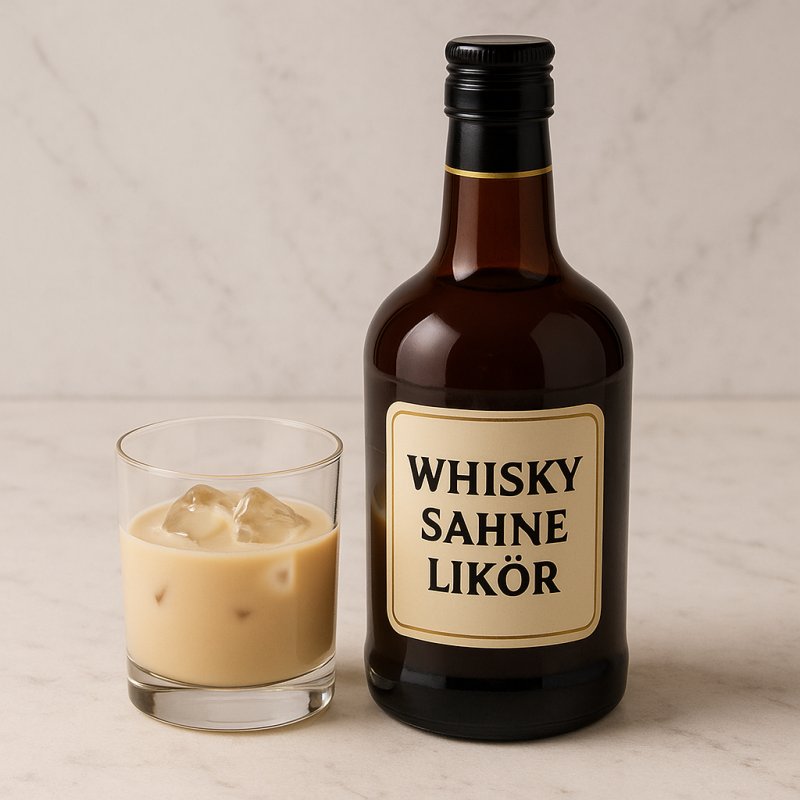
Glass with creamy whisky and cream liqueur in a beige, creamy appearance
Whisky cream liqueur, to me, is one of those ingredients that feel both homely and a little clever. I love the moment when a glass of it sits on the table: the velvety texture, the sweet warmth and that subtle, smoky shimmer of the whisky that is never loud but always present. It feels like a small, liquid finish to a successful evening — or like a surprisingly good breakfast upgrade when you've just learned to break the rules.

I still remember a rainy Sunday afternoon when a friend brought a bottle of whisky cream liqueur. We stood in the kitchen, peeling oranges, and discovered that chocolate and this liqueur make an incredibly comforting combination. Since then I use it not only as a digestif but also as an ingredient in sweet sauces, over ice cream and in mousses when I want to impress guests without much effort.

What makes this liqueur so versatile? In short:

  • Aroma profile: creamy, sweet, with notes of vanilla, cocoa and the characteristic whisky core.
  • Texture: dense and velvety, the cream acts as a carrier for the flavours.
  • Uses: neat, in coffee, in desserts and as a flavour bridge in sauces.
A colleague of mine swears by adding a few tablespoons to his chocolate cake, which gives the result a surprising depth. You can buy the liqueur ready-made or make it yourself; homemade versions often use fresh cream and a milder whisky to keep the balance. Note the shelf life: opened bottles should be stored cool and consumed within a few weeks to preserve the freshness of the cream.

To me whisky cream liqueur is more than just a drink; it's a little kitchen secret that rounds dishes, makes conversations cosier and occasionally turns an otherwise ordinary dessert into a memorable moment.

Availability & types

Availability and types of whisky‑cream liqueur

Whisky‑cream liqueur is a drink made from two simple parts: whisky (an alcoholic beverage from cereals) and cream (i.e. milk that has thickened). Sugar and flavours like chocolate or coffee are often added. Imagine it as a creamy dessert in a glass that tastes of whisky – which is why many adults enjoy it.

Origin
The origin of this liqueur lies mainly in countries with a strong whisky or cream tradition. Famous examples include:

  • Ireland – Irish cream liqueurs are very well known; there the combination often pairs mild Irish whiskey with fresh cream.
  • Scotland – Scotland, where much whisky is produced, also has its own variants, sometimes using smokier whiskies.
  • Other countries – Today distilleries in Europe, North America and elsewhere also produce such liqueurs. Some producers are small craft operations, others large brands.
Production regions (simply explained)
A liqueur doesn't grow like a plant, but its ingredients come from certain regions:

  • Cereals for the whisky: Mostly barley or wheat. These crops are grown in fields, for example in Ireland, Scotland, Canada or the USA.
  • Cream: Comes from cows. Good cream often comes from regions with many dairy farmers, so rural areas in Europe or America.
Available styles and variants
Whisky‑cream liqueur comes in many flavours and forms. Here are the main types, simply explained:

  • Classic cream liqueur: The original taste: whisky + cream + a bit of sugar. Mild and rounded.
  • Whisky‑type differences: Depending on whether an Irish (softer) or a Scotch (sometimes smoky) is used, the flavour changes.
  • Flavour variants: Many versions are flavored, e.g. with chocolate, coffee, vanilla, caramel or hazelnut. It's like giving the liqueur a new topping.
  • Lighter or reduced‑sugar versions: For people who want less sweetness there are light versions with fewer calories or less sugar.
  • Non‑alcoholic alternatives: Some producers offer alcohol‑free “cream drinks” that taste like cream liqueur but contain no alcohol – aimed at children, though not always suitable for them because they often contain a lot of sugar.
  • Limited and local editions: Small distilleries often offer special releases, e.g. using regional milk or particular whiskies – these are sometimes available only for a short time.
Where to buy whisky‑cream liqueur?
You can find it in supermarkets with an alcohol section, in specialist liquor shops, from wine and deli retailers or online. Some cafés and bars use it as an ingredient in desserts or hot drinks. Check the label when buying: it will state which type of whisky and which flavours were used.

Overall whisky‑cream liqueur is a very versatile ingredient: there are simple classics and many creative variants. Whether as a gift, for tasting or in sweet recipes – it's worth trying different bottles to find your favourite flavour.
Details & nutrition

Property Value
Unit ml
Calories per 100 327
Protein per 100 3.0
Carbohydrates per 100 25.0
Sugar per 100 22.0
Fat per 100 13.0
Saturated fat per 100 8.0
Monounsaturated fat 3.5
Polyunsaturated fat 0.6
Fiber per 100 0.0
Vitamin C (mg) per 100 0
Vitamin D (IU) per 100 0
Calcium (mg) per 100 100
Iron (mg) per 100 0.1
Nutri-Score E
CO₂ footprint mittel
Origin Europe (often Ireland)
Gluten-free Yes
Lactose-free No
Nut-free Yes
Vegan No
Note Alcoholic product; nutritional values may vary depending on brand/recipe.

Technical & scientific information


Whisky‑cream liqueur denotes a category of alcoholic products made from a mixture of cream, whisky, sugar and typical additives. As a semi‑solid emulsion system the liqueur combines lipid components of milk with an aqueous alcohol matrix and incorporates flavour compounds from the distillate as well as optional flavours and spices. Commercial products commonly range around 15–20 % vol. ethanol and are classified as liqueurs.

Composition and ingredients: The main components are

  • Cream: Contains milk fat (triglycerides, predominantly saturated and monounsaturated fatty acids), milk proteins (caseins, whey proteins), lactose and fat‑soluble vitamins.
  • Whisky: Provides ethanol and a complex aroma profile of esters, aldehydes, phenols (e.g. guaiacol, vanillin) and other secondary compounds formed during distillation and barrel ageing.
  • Sugar: Sucrose or invert sugars as sweeteners and for texture.
  • Stabilizers/emulsifiers: Typically lecithin, guar or locust bean gum, carrageenans or modified starches, which keep fat droplets in a fine dispersed state.
  • Additives: Natural or artificial flavours, thickeners, and possibly preservatives.
Physico‑chemical properties: Whisky‑cream liqueurs are oil‑in‑water emulsions stabilized by proteins and emulsifiers. The particle size of the fat droplets, measured in micrometres, influences viscosity, creaminess and optical turbidity. Ethanol increases the solubility of many aroma and lipid components, but at higher concentrations can affect protein structure and thus promote phase separation. pH typically lies in the neutral to slightly acidic range; strong acid addition can inactivate proteins and induce coagulation.

Processing methods: Industrial production includes the following core steps:

  • Mixing and heating the cream with sugar and additives.
  • Homogenisation to reduce fat droplet size and form a stable emulsion.
  • Thermal treatment (pasteurisation) to reduce microbial contamination.
  • Incorporation of the whisky and final filtration followed by filling into sterile containers.
Nutrition and health aspects: Whisky‑cream liqueurs are energy‑dense; typical nutritional values per 100 ml are approximately 250–350 kcal, with 20–30 g of sugar and 10–20 g of fat, though exact values depend on the recipe and alcohol content. Important health points include:

  • Alcohol consumption carries risks for the liver, cardiovascular system and central nervous system; pregnant women and children should not consume alcoholic products.
  • As a dairy product the liqueur contains lactose and milk proteins, so individuals with lactose intolerance or milk protein allergy may react.
  • The proportion of saturated fatty acids and the high sugar content make regular or large consumption nutritionally disadvantageous.
Sensory properties and storage: Organoleptically an intense mouthfeel is perceived from fat and sugars, combined with the whisky's dominant aromatic substances (vanillin, wood notes, smoky phenols). Refrigeration after opening prolongs quality; due to alcohol and pasteurisation the product is relatively stable as long as the packaging remains closed and protected from light.

Overall whisky‑cream liqueur is a technically challenging emulsion product whose stability depends on careful selection of emulsifiers, controlled homogenisation and thermal treatment. Nutritional and health implications arise primarily from alcohol content, sugar and fat levels and possible allergenic milk components.

Wiki entry for: whisky cream liqueur
Active now: 21 visitors of which 2 logged-in members in the last 5 minutes