Menu & categories

Whipping cream stabilizer

Stabilizer for firming whipped cream and creams

Wiki about cream stabilizer Nutri-Score D Vegan Yes Gluten-free Yes Lactose-free Yes Nut-free Yes
NUTRITION / 100 g
380 kcal 0 g Protein 95 g Kohlenhydrate 0 g Fett

Introduction

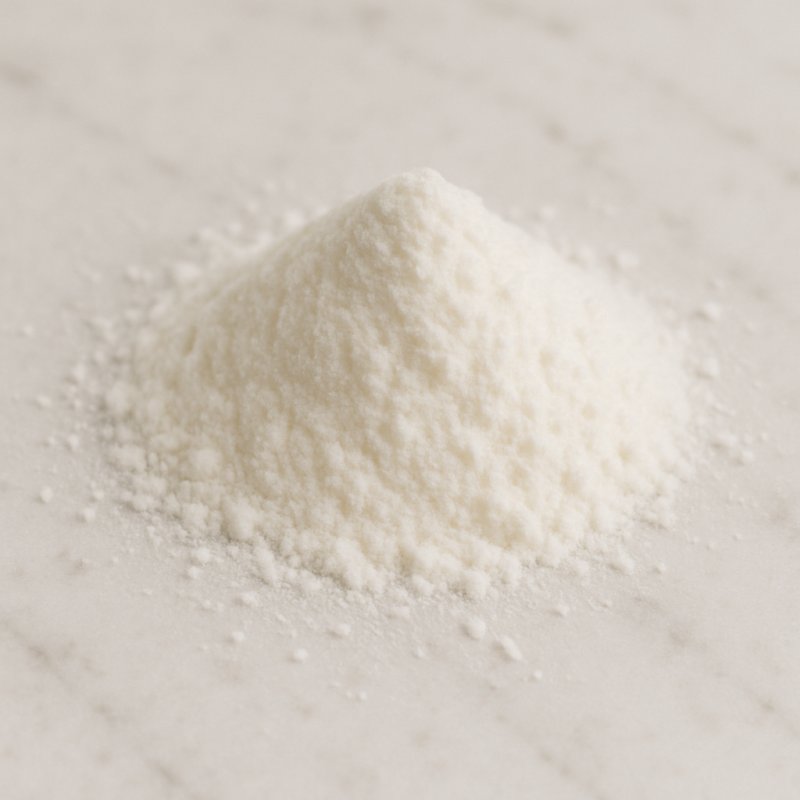
Powdered whipping cream stabilizer in a small bowl
I still remember my first kiss with Sahnesteif: not romantic, more of a pragmatic encounter in a tiny rented kitchen, when I tried to cobble together a cake for a spontaneous birthday party. The cream absolutely refused to set and after a few frustrated attempts I reached for the small packet with its unassuming contents. Like a little kitchen miracle, the floppy cream became firm, glossy and at the same time airy within minutes. Since then Sahnesteif has been a loyal ally for me when stability is required, without the cream becoming heavy or rubbery.

What exactly is Sahnesteif? In short, it is a thickening agent usually made from starch and often containing emulsifiers or modified starch to stabilize whipped cream. In practice that means longer‑lasting peaks, clean cake decorations and fewer worries when transporting a cake. I learned that dosing is important. Too little and the cream liquefies again, too much and the texture becomes unpleasant. My reliable mantra therefore is: cold cream first, then Sahnesteif, then sugar and a short but vigorous whipping.

A colleague of mine swears by using Sahnesteif in fruit creams too, so berry layers don't collapse. Personally I like the cream to retain some airiness despite the stability. For that reason I sometimes fold in part mascarpone or quark to add depth and flavor without over‑stabilizing. There are now suitable fixers for vegan or lactose‑free alternatives as well, which pleases me a lot because it made flavor experiments in my kitchen more varied.

Sahnesteif is practical for festive baking, for cakes, desserts in jars or elegant cream puffs. However, you should be sparing and follow the package instructions. Another tip from my experience: add Sahnesteif only at the very end and whip the cream only until the desired consistency is reached. That saves me sour faces and I always have a firm but delicate cream on hand.

In short:
  • Sahnesteif stabilizes whipped cream without significantly affecting flavor.
  • Correct dosing and cold ingredients are crucial.
  • Versatile in use, also in combination with mascarpone or vegan alternatives.

Availability & types

Availability and types of Sahnesteif

Sahnesteif is a small helper from the supermarket that helps make whipped cream nicely firm and stable. It is often used when cream needs to hold its shape longer, for example on cakes, pastries or desserts. Although Sahnesteif does not grow from a plant like fruit or vegetables, it has a provenance story and different variants that are useful to know.

What is Sahnesteif made of and where does it come from?
Sahnesteif usually consists of plant‑based or synthetic binding agents. The best‑known main ingredient is modified starch, that is starch (for example from corn or potatoes) that has been altered so it works better in cold cream. You can imagine starch as tiny granules that absorb water and thereby thicken the cream. This starch is produced in factories — meaning it is not harvested directly as Sahnesteif, but processed from plants like corn, wheat or potatoes. Production mostly takes place where large quantities of these crops are grown, for example in Europe, North America and other agricultural regions.

Growing regions of the raw materials
The plants used to obtain the starch grow in many countries. Corn is widely cultivated in the USA, Brazil and Europe. Potatoes are common in Europe, for example in Germany, Poland or the Netherlands. Wheat is also found in many parts of the world. The exact origin can differ by brand, but packaging usually states whether ingredients come from specific regions or are organically grown.

What varieties and options are there?
Sahnesteif is not always the same. Here are the most common variants, explained simply:

  • Regular Sahnesteif: This is the standard powder you find in supermarkets. It is stirred directly into whipped cream and makes it firm. It is like a little helper that prevents the cream from collapsing quickly.
  • Vegetarian/vegan Sahnesteif: Some varieties are made without animal ingredients. This is important for people who do not want to eat gelatin. Instead of gelatin, these products usually use plant starch or another plant‑based thickener.
  • Sahnesteif containing gelatin: Some products contain gelatin derived from animal sources. Gelatin makes cream very stable but is not suitable for vegetarians or vegans.
  • Organic Sahnesteif: These brands use ingredients from organic farming. That means the corn or potato starch comes from fields grown without synthetic pesticides or fertilizers. It is often a bit more expensive but important for many people.
  • Ready mixes: There are also products that already contain flavorings or sugar so the cream is slightly sweetened or flavored straight away. That is convenient for certain recipes.
How easy is it to get Sahnesteif?
Sahnesteif is easy to find in most supermarkets, discount stores and online. It is usually located on the baking shelf or with dairy products. Some countries have different brands, but the principle is the same everywhere: a small packet of powder with a big effect. For special requests like organic or vegan, check health food stores or online.

In summary: Sahnesteif is made from plant starch or similar substances whose raw materials are grown in many regions of the world. There are different variants — from regular to vegan or organic — and it is widely available. That way anyone, whether a baking beginner or an experienced pastry chef, can find the right type to keep their cream perfectly in shape.
Details & nutrition

Property Value
Unit g
Calories per 100 380
Protein per 100 0
Carbohydrates per 100 95
Sugar per 100 0
Fat per 100 0
Saturated fat per 100 0
Monounsaturated fat 0
Polyunsaturated fat 0
Fiber per 100 0
Vitamin C (mg) per 100 0
Vitamin D (IU) per 100 0
Calcium (mg) per 100 10
Iron (mg) per 100 0.1
Nutri-Score D
CO₂ footprint 1.0
Origin Industrially produced product, ingredients mostly from EU and non-EU countries
Gluten-free Yes
Lactose-free Yes
Nut-free Yes
Vegan Yes
Note Typical composition: modified starch, grape sugar or dextrose, vegetable emulsifiers and stabilizers. Nutritional values may vary slightly between manufacturers. Used in very small amounts, so the contribution to calories and nutrient intake per serving is minor.

Technical & scientific information

Sahnesteif is a commercially available food aid used in the kitchen to stabilize and thicken cream, cream fillings and other liquid to semi‑liquid preparations. It is usually a powdered product made mainly from plant‑based starches or thickeners and may contain small amounts of additional additives such as acidity regulators and emulsifiers. Typical usage rates are in the range of a few grams per 200–500 milliliters of cream, depending on the desired firmness.

Composition and chemical fundamentals
The core component of Sahnesteif is often modified starch, for example from corn or potatoes. Modified starches are physically or chemically treated polysaccharides whose properties have been changed compared to native starches to provide better heat and acid resistance and altered swelling and gelling behavior. Other common components are cellulose derivatives (e.g. microcrystalline cellulose) for bulk or texture improvement and anti‑caking agents (e.g. silicon dioxide). Some products also contain small amounts of protein or gelling agents such as pectin or carrageenan to further increase stability.

Mode of action
When folded in or whipped into cream‑containing mixtures, the starch swells by absorbing water and networks the liquid phase, causing the preparation to increase its consistency quickly. In combination with fat and air in whipped cream, the particles form a finely dispersed scaffold that mechanically stabilizes air bubbles and prevents whey separation or the cream from "weeping." Modified starches gel better under certain temperature and pH conditions than native starches, improving long‑term stability.

Processing and application
For use, Sahnesteif is typically stirred directly into chilled cream before whipping, or added shortly before the end of whipping. A steady sprinkling and immediate further whipping prevents lumping. Since many starches are affected by heat, Sahnesteif is intended mainly for cold applications; other gelling agents may be preferable in warm preparations. Storage should be dry and protected from light, as moisture impairs flow properties.

Nutritional values and labeling
Sahnesteif itself provides only small amounts of energy because it is used in small doses. The main constituents are carbohydrates in the form of starch, while fat and protein contents are usually negligible. Ingredients must be declared on the packaging; in industrial mixes additional E‑numbers or names for emulsifiers, acidity regulators and preservatives are listed if present. Consumers with specific dietary needs should check the ingredient list for possible allergens, although Sahnesteif is usually free from milk or nut components unless otherwise stated.

Health aspects
At typical consumption levels Sahnesteif is considered safe. Modified starches and common food additives have been evaluated and approved by food authorities. People with specific intolerances to certain additives or on very low‑carbohydrate diets should consider the starch content. Because Sahnesteif has no preservative effect, it does not protect cream from microbial spoilage, so hygienic handling and refrigeration remain necessary.

Alternatives and tips for use
Alternatives to industrial Sahnesteif include gelatin, agar‑agar, pectin or native starch, each giving different temperature behaviors and texture profiles. For vegan applications plant gelling agents such as agar or carrageenan are suitable. For especially firm applications combinations of starches and proteins are used to optimize both mouthfeel and stability.

Overall, Sahnesteif is a technically simple but effective aid to stabilize cream and creamy masses; its effectiveness is based on water binding and the mechanical construction of a finely dispersed particle network. Appropriate dosing, correct processing and attention to storage conditions ensure reproducible results and long shelf life of the decorative or culinary application.

Wiki entry for: cream stabilizer
Active now: 20 visitors of which 2 logged-in members in the last 5 minutes