Menu & categories

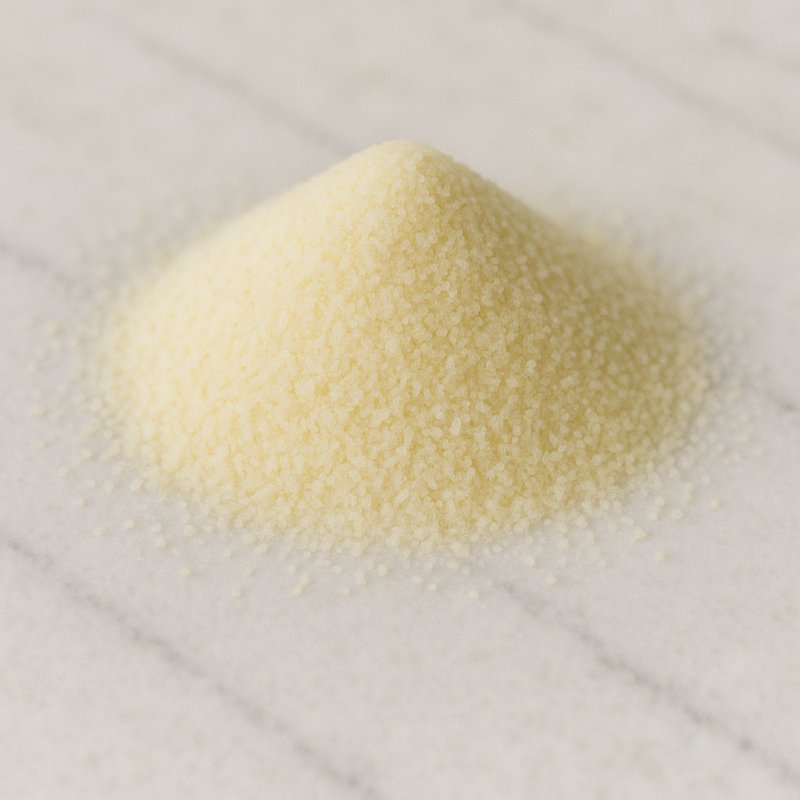
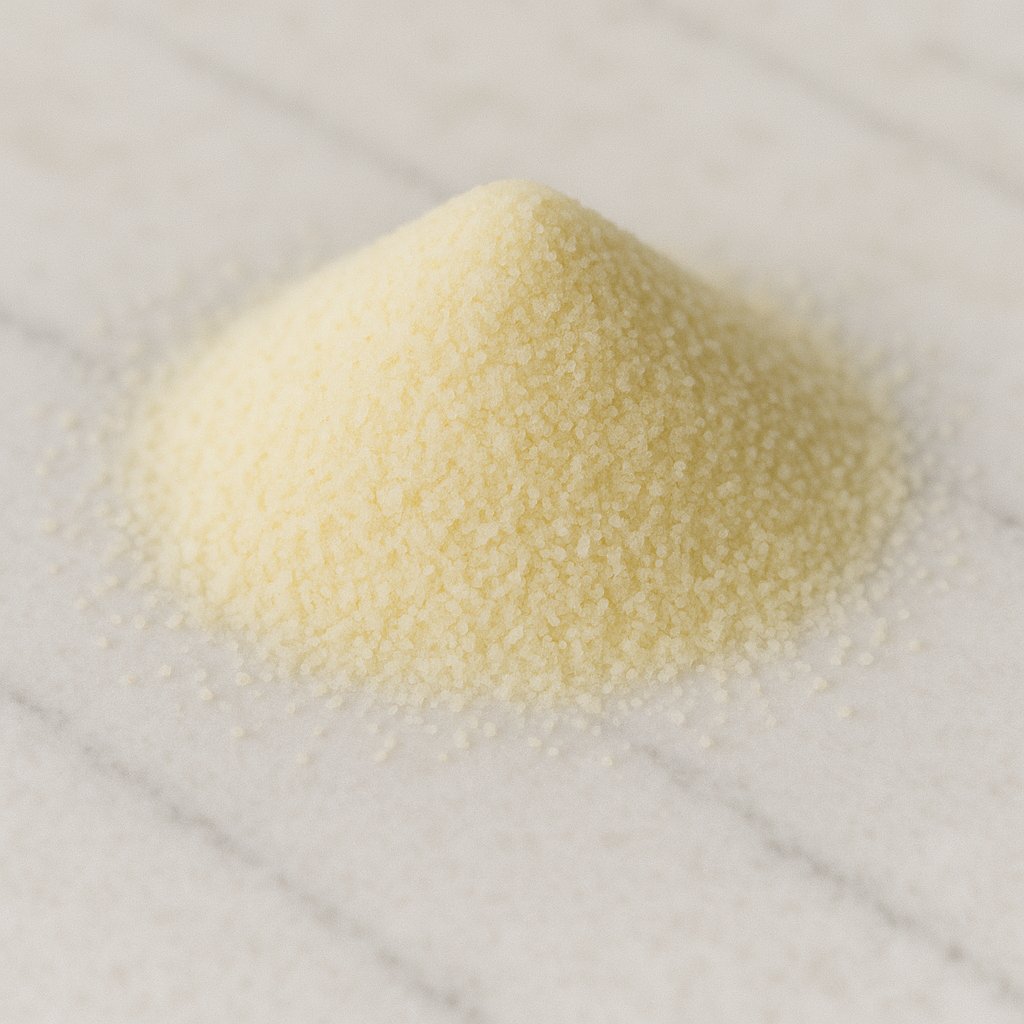
Wheat semolina

Finely milled durum wheat for porridges, pasta and desserts

Wiki about semolina Nutri-Score C Vegan Yes Gluten-free No Lactose-free Yes Nut-free Yes
NUTRITION / 100 g
360 kcal 11.5 g Protein 73.0 g Kohlenhydrate 1.3 g Fett

Introduction

Wheat semolina in a bowl with a wooden spoon
I still remember my first real moment with wheat semolina: it was on a rainy Sunday afternoon when I decided to make a semolina casserole from an old family recipe card. The scent of warm, slightly nutty semolina immediately reached my nose and I thought: Why haven't I done this more often before?

Wheat semolina is for me one of those ingredients that is both humble and versatile. It is produced by coarsely milling the endosperm of the wheat grain and differs from flour by its coarser texture. In the kitchen I like it because it cooks quickly, develops a pleasant creaminess and suits both sweet and savory preparations. A colleague of mine swears by his semolina dumplings in soup, while another friend prefers semolina for her puddings and cakes.

Practically, semolina is especially appreciated for its simplicity: it binds liquids, provides structure and is tender to the bite. I like to use it for:

  • classic semolina pudding with milk and cinnamon;
  • savory polenta-like side dishes;
  • semolina dumplings in clear soups;
  • bases and fillings for sweet casseroles and cakes.
Apart from the taste, I also value the ingredient's stability: a jar of semolina keeps for a long time and often saves meals when fresh ingredients are missing. Once I improvised when guests arrived unannounced — a quick semolina casserole with lemon and berries turned the situation into a relaxed evening. The guests were impressed, and I was relieved that such a simple ingredient could appear so refined.

Another plus is the textural variety: coarse semolina gives more bite, fine semolina yields velvety creaminess. When cooking I pay attention to the liquid-to-semolina ratio and sometimes let it swell briefly before further processing. The result is almost always comforting and uncomplicated.

Wheat semolina has something familiar yet surprising for me — a basic building block of the kitchen that with a few gestures creates something special. When I walk through the market today, I always look out for a good pack of semolina: it reminds me of simple Sundays, spontaneous guests and the many small culinary happy moments this unassuming ingredient makes possible.

Availability & types

Availability and types of wheat semolina

Wheat semolina is a food made from wheat. You can buy it in many supermarkets, organic stores and farmers' markets. There are different kinds of wheat semolina that differ in fineness, color and the part of the grain they are made from. These differences are like sand: there is coarse sand (coarse semolina) and fine sand (fine semolina). All semolina types have one thing in common: they come from the wheat grain.

Origin and growing regions

Wheat grows in fields. It is cultivated in many countries, especially where the climate is not too hot and not too cold. Important producing countries in Europe include Germany, France and Poland. Much wheat is also grown in North America (especially the USA and Canada), in Russia and in parts of Asia. If you look at a package of semolina, it often states the country of origin of the wheat. Sometimes it also says “European” or “regional” when it comes from nearby.

Available varieties and options

  • Fine wheat semolina: It is very small and soft, almost like flour with a bit more structure. Children often like it in milk porridge or pudding because it cooks soft.
  • Coarse-grained wheat semolina: This is coarser and has larger grains. It is frequently used for pasta dough or as a side dish because it retains a firm texture when cooked – a bit like small pearls.
  • Durum semolina (hard wheat): This variety comes from a special wheat species called “durum wheat.” It is more yellow and is often used for pasta because it stays nicely firm when cooked. A simple comparison: durum semolina is like a sturdy building block that holds its shape.
  • Soft wheat semolina: Made from soft wheat, it is lighter and finer. It is well suited for sweet dishes and porridges because it softens quickly.
  • Whole grain semolina: In this variant more of the whole grain is retained, including the bran and germ. Therefore it is darker and contains more fiber. It is healthier, but tastes a bit nuttier and sometimes takes longer to cook.
  • Organic semolina: Here the wheat was grown without chemical pesticides. For people who prefer more environmentally friendly products, organic semolina is a good choice.
How do you recognize the right type?

The package will show indications like “fine”, “coarse”, “durum” or “whole grain”. Sometimes it also says “semolina” — that is the English name for durum semolina. If you want to know whether the semolina comes from your region, check the country of origin on the packaging. Organic labels indicate that farming was done without certain chemicals.

Why are there so many types?

Each type has different properties that are important in cooking. Some soften quickly and are suitable for puddings, others remain firm and are ideal for pasta or dumplings. Whole grain variants are healthier because they contain more nutrients, similar to how whole apples have more fiber than apple juice.

In summary: wheat semolina is easy to find and comes from many countries. There are fine and coarse semolinas, durum and soft wheat semolinas, whole grain and organic variants. Which type is best depends on what you want to cook — and that is what makes the choice both interesting and practical.
Details & nutrition

Property Value
Unit g
Calories per 100 360
Protein per 100 11.5
Carbohydrates per 100 73.0
Sugar per 100 0.6
Fat per 100 1.3
Saturated fat per 100 0.3
Monounsaturated fat 0.2
Polyunsaturated fat 0.6
Fiber per 100 3.9
Vitamin C (mg) per 100 0
Vitamin D (IU) per 100 0
Calcium (mg) per 100 17
Iron (mg) per 100 1.3
Nutri-Score C
CO₂ footprint 0.7
Origin Europe
Gluten-free No
Lactose-free Yes
Nut-free Yes
Vegan Yes
Note Nutritional values for dry wheat semolina, average composition. May contain traces of other allergens depending on the manufacturer.

Technical & scientific information

Wheat semolina is a grain product made from durum or soft wheat, produced by milling the inner endosperm. Unlike flour, semolina particles are left coarser, resulting in a granular structure. Technically, semolina is the outcome of milling and sieving the starch-rich endosperm, with bran and germ largely removed. The milling fineness varies according to intended use and affects cooking behavior and texture.

Chemical composition and nutritional values
Wheat semolina consists mainly of starch (approx. 60–70 %), much of which is composed of amylopectin and amylose. It also contains proteins (primarily gluten proteins: gliadin and glutenin) in amounts around 10–15 %, lipids in small quantities (approx. 1–2 %) and soluble and insoluble fiber if the peripheral layers are not completely removed. Micronutrients such as B vitamins (particularly thiamine, niacin and folate), iron, magnesium and phosphorus are present in varying amounts depending on the degree of refinement; whole-grain semolina retains higher levels of these compounds than highly refined products.

Manufacturing process
The production of wheat semolina involves several steps: cleaning the grain, conditioning by adding controlled moisture, rolling or crushing the conditioned endosperm and subsequent sieving to separate by particle size. Industrially, multi-stage roller mills and plan sifters are used to obtain defined fractions (coarse semolina, fine semolina, semolina/semolina proper). Tempering influences processability: moderate moistening facilitates detachment of the endosperm from the bran and optimizes fracture surfaces for uniform particle sizes.

Sensorial and functional properties
Wheat semolina is characterized by a granular, slightly mealy mouthfeel. During cooking the starch swells, gelatinization occurs and this gives the product volume and firmness. The high gluten content of durum semolina promotes formation of a stable protein network, which especially in pasta and semolina products provides bite (al dente) and shape stability. Different particle sizes influence water uptake, cooking time and the ability to bind sauces.

Use in food technology
Wheat semolina is used in many ways: as a base for pasta (especially durum semolina/semolina), for semolina porridge, puddings, pastry bases, as a breading or as a thickening agent. In industrial pasta production the grain size is precisely matched to extrusion and drying processes. Whole-grain semolina is used in fiber-rich products, while fine semolina is employed in baked goods and fine pastry.

Health aspects
From a nutritional perspective wheat semolina primarily provides energy in the form of complex carbohydrates. Whole-grain semolina products are richer in fiber and micronutrients and support gut health and satiety. In refined semolina some vitamins and minerals are reduced, which is why industrial products are often fortified. People with celiac disease or gluten intolerance must avoid wheat semolina because the gluten proteins it contains can trigger immune reactions. Allergies to wheat proteins are also possible. With moderate consumption as part of a balanced diet, wheat semolina is safe for most people.

Shelf life and storage
The shelf life of wheat semolina depends on moisture content, fat content and storage conditions. At low moisture and with cool, dry storage, it can last months to years; higher fat contents (e.g., in products with germ content) increase the risk of oxidation and rancid odors. Protection from pests, moisture and light extends quality and sensory properties.

Summary
Wheat semolina is a technically produced, starch- and protein-rich product of the wheat grain with a characteristic granulation obtained through targeted milling and sieving processes. Its functional properties — water uptake, gelatinization and gluten formation — make it a central ingredient in pasta, semolina dishes and baked goods. Nutritionally it provides readily available energy, and whole-grain variants offer additional fiber and micronutrients. Wheat semolina is unsuitable for people with gluten intolerance, while proper storage ensures quality stability.

Wiki entry for: semolina
Active now: 20 visitors of which 2 logged-in members in the last 5 minutes