Menu & categories

Water

Calorie-free, essential beverage for hydration

Wiki about water Nutri-Score A Vegan Yes Gluten-free Yes Lactose-free Yes Nut-free Yes
NUTRITION / 100 ml
0 kcal 0 g Protein 0 g Kohlenhydrate 0 g Fett

Introduction

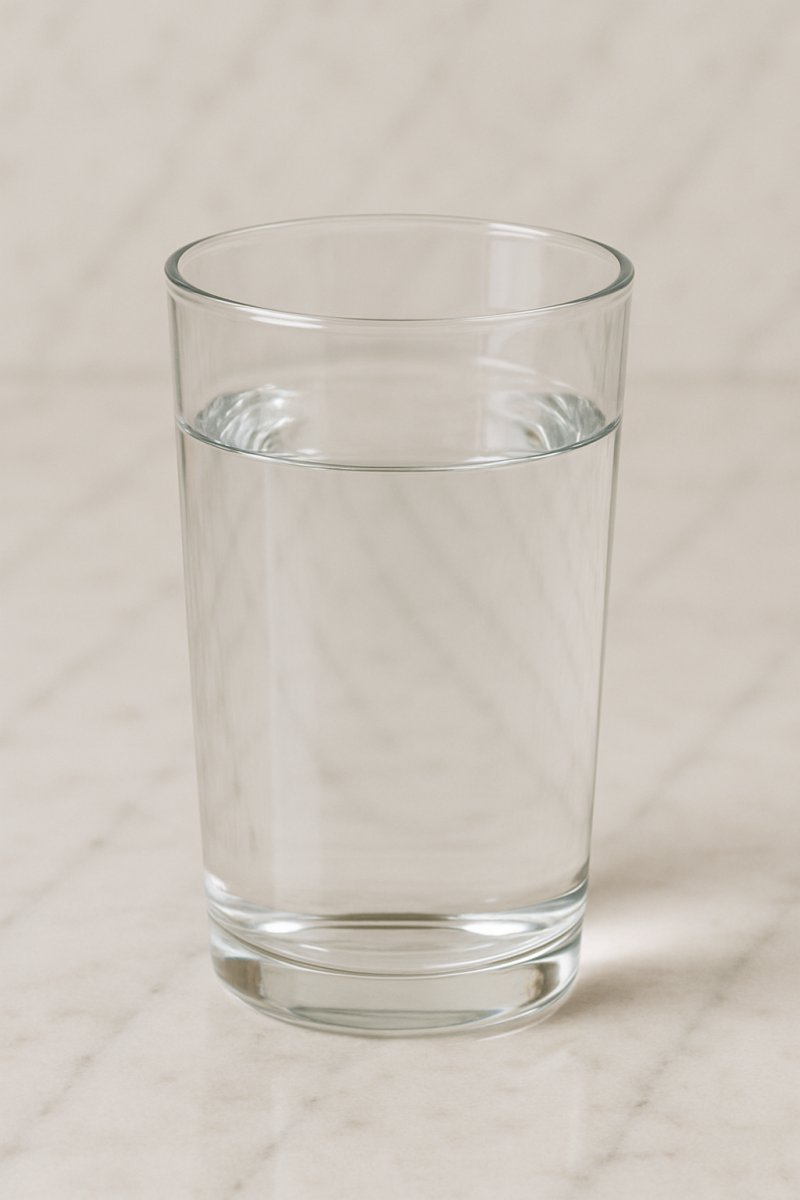
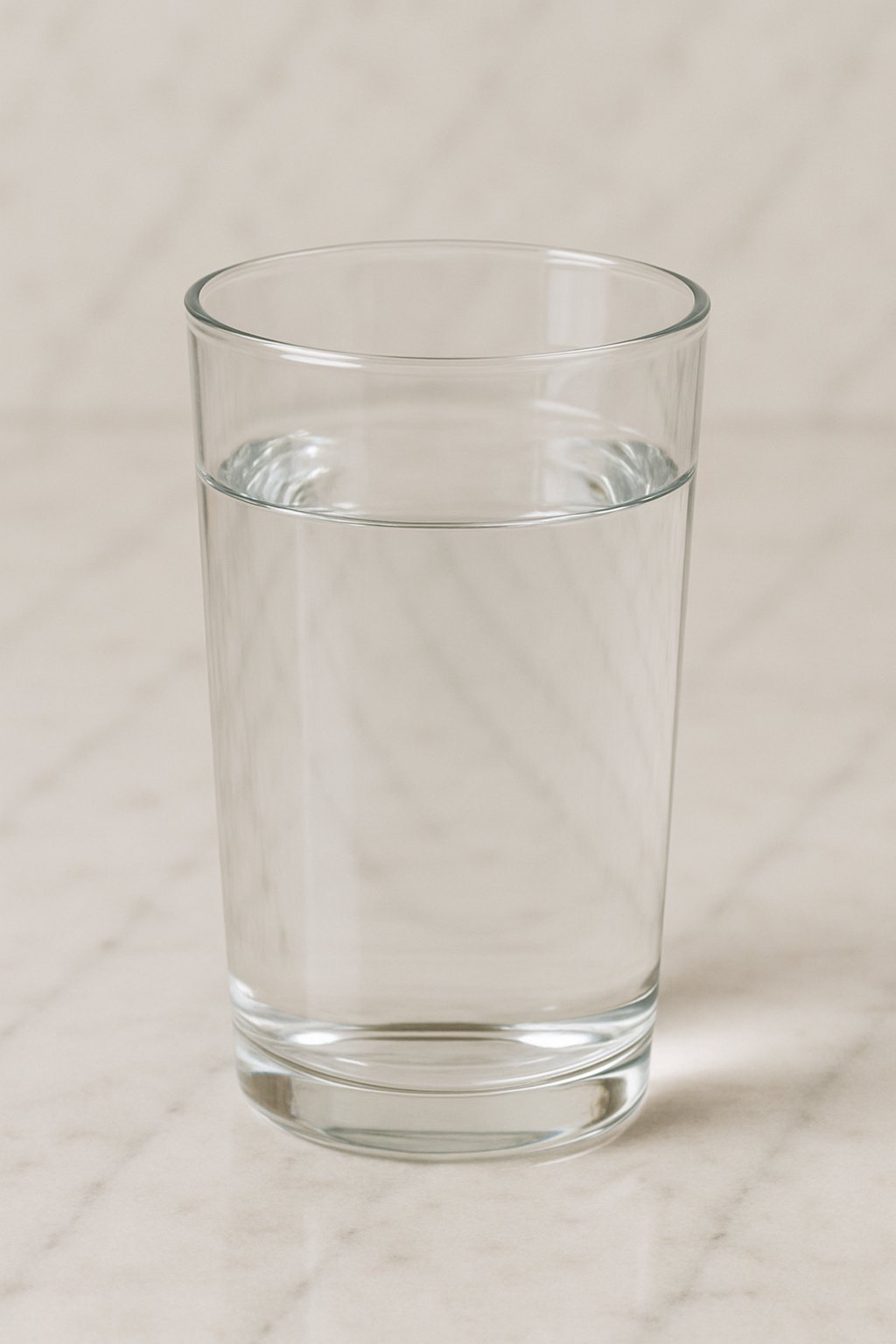
A glass of clear water with water droplets
Water is, for me, the secret main ingredient in the kitchen and in life. I still remember how, as a beginner making a plum compote, I thought it was only about sugar and fruit – until an older acquaintance explained that the quality of the water makes the difference between pale and brilliant. Since then I observe the clear liquid with a mixture of respect and curiosity.

Water has many faces: it is the basis for broths, a provider of steam and a diluent. I have often experienced that a risotto in hard water becomes creamy more slowly, while softer water gives an almost lavish smoothness. A colleague of mine swears by boiled water for his soups because he thinks some tap waters bring too much "flavour." Whether that is always true I gladly leave to discussion, but the observation shows: Water influences taste, texture and cooking times.

Practical tips I have collected over the years:

  • Salt generously when cooking pasta – the water is the first seasoning of the noodles.
  • For clearer broths I often use cold, filtered water and let the ingredients come to a boil slowly.
  • When baking I pay attention to the temperature of the water; too warm can activate yeast too quickly.
Water is not only functional, it also has stories. I remember a summer at friends' when we fetched spring water directly from a mountain and made a simple iced tea – the taste was so fresh that all anecdotes about complicated ingredients suddenly seemed ridiculous. Moments like that remind me how elemental and yet underrated water can be.

In the end water is for me more than an ingredient: it is a partner in the kitchen that rewards both patience and a spirit of experimentation. When I have a new recipe idea, I first ask: Which water fits? This simple question often opens the way to surprisingly better dishes.

Availability & types

Availability and types of water

Water is one of the simplest and yet most important ingredients. Almost everywhere in the world there is water, but it appears in different forms and qualities. When we talk about availability we mean how easy it is for people to access water. In wealthy countries clean water often comes straight from the tap. In some regions people must collect water from wells, rivers or even from rain. Imagine: water is like a playing field that is not equally large or equally well maintained everywhere — sometimes there is a lot of water, sometimes only a little, and sometimes the water is very clean, sometimes less so.

Origin
Water can come from different places:

  • Tap water: This is water that comes into houses through pipes. It is usually cleaned and tested so that it is safe to drink.
  • Spring water: This water emerges at the ground surface, usually at a place where it has been filtered through rock. Many people like spring water because it seems fresh and clean.
  • Well or groundwater: The water lies deep under the ground in rock layers. Wells pump it up. Groundwater is often clear because the soil has filtered it.
  • Surface water: This includes lakes, rivers and reservoirs. This water is easy to reach, but sometimes needs more treatment.
  • Rainwater: Some collect rain in barrels or tanks. It is handy for the garden and in some areas also for drinking if it is kept properly clean.
Production areas — where water “comes from”
Water does not grow, but there are places where water is particularly abundant or particularly clean. Mountainous areas often have springs and rivers because snow and rain collect there. Coastal regions have access to seawater, which is salty. Tropical areas get a lot of rain, while deserts have little water. One can say: climate zones and landscapes determine how easy or hard it is to obtain water.

Available types and variants
Even though water is always H2O, it is often distinguished by two characteristics: purity and taste. Here are the common types you find in shops or can use at home:

  • Tap water: Cheap and available at any time. In many countries it is drinkable; in others you should boil or filter it first.
  • Mineral water: Usually comes from a spring and contains minerals like calcium or magnesium. These minerals often give the water a slightly different taste.
  • Spring water: Very similar to mineral water, but not always with as many minerals. It is often bottled directly from a natural source.
  • Still water: Has no carbonation. It is calm to drink, like water from a lake.
  • Sparkling (carbonated) water: Contains carbon dioxide, which is why it tingles. Some like the sensation, others prefer still water.
  • Filtered water: Tap water that has passed through a filter to improve taste or remove contaminants.
  • Distilled or demineralised water: Very pure because all minerals and dirt have been removed. It is often used for machines or in laboratories, less for daily drinking.
  • Seawater: Salty and not drinkable without special treatment (desalination). It is still important for shipping, fishing and the environment.
Simple comparisons to understand
Think of water like different juices: apple juice and orange juice are both juice, but they taste different. Likewise still water and sparkling water are both water, but they feel different. And just as different apples grow in different places, water “comes” from different sources — a mountain, a well or the rain.

So water is everywhere, but how easy we get it and how good or clean it tastes can vary a lot. These differences determine which variant we choose for drinking, cooking or other purposes — just like you choose lemonade or water depending on the occasion.
Details & nutrition

Property Value
Unit ml
Calories per 100 0
Protein per 100 0
Carbohydrates per 100 0
Sugar per 100 0
Fat per 100 0
Saturated fat per 100 0
Monounsaturated fat 0
Polyunsaturated fat 0
Fiber per 100 0
Vitamin C (mg) per 100 0
Vitamin D (IU) per 100 0
Calcium (mg) per 100 5
Iron (mg) per 100 0
Nutri-Score A
CO₂ footprint 0.02
Origin Tap water or mineral water, depending on the source
Gluten-free Yes
Lactose-free Yes
Nut-free Yes
Vegan Yes
Note Pure drinking water contains no significant amounts of macro- or micronutrients and is practically calorie-free. Mineral water may have slightly different mineral contents depending on the source.

Technical & scientific information

Water (chemical formula H₂O) is a colourless and odourless compound that is liquid under standard conditions and composed of two hydrogen atoms and one oxygen atom. As a polar molecule, water has a pronounced dipole moment that determines its exceptional physical and chemical properties. The bent structure (bond angle approx. 104,5°) and the formation of hydrogen bonds between molecules lead to high surface tension, a comparatively high boiling point and a dense liquid arrangement that in the solid state (ice) results in a lower density than in the liquid state.


Chemical composition and properties

  • Empirical formula: H₂O; Molecular weight ≈ 18,015 g·mol⁻¹.
  • Polarity: Dipole character promotes dissolution of polar substances and ions.
  • Hydrogen bonding: Responsible for high heat capacity and enthalpy of vaporization as well as for the structure of liquid water.
  • Solvent function: Universal solvent in biological, chemical and industrial processes.

Nutritional value and constituents

Water supplies no calories, proteins, fats, carbohydrates or vitamins. As a nutrient carrier it is however essential for transport of substances, electrolyte balance and biochemical reactions. Drinking water contains, depending on the source, dissolved minerals and trace elements, for example calcium, magnesium, sodium, potassium, bicarbonate, sulfate and chloride. The exact composition varies regionally and influences taste, hardness and health-related aspects.

Treatment methods and purification

Treatment of water for drinking and industrial use comprises several consecutive steps:

  • Mechanical filtration: Removal of suspended matter and coarse particles.
  • Coagulation/Flocculation: Aggregation of fine particles for subsequent separation.
  • Disinfection: Use of chlorine, ozone or UV light to inactivate microorganisms.
  • Softening and ion exchange: Removal of calcium and magnesium ions to reduce water hardness.
  • Reverse osmosis and distillation: Technologies to remove dissolved salts, organic contaminants and micropollutants.
Additional steps can include activated carbon filtration to remove organic molecules and adsorbable compounds as well as specialised processes for trace contaminant removal (e.g. advanced oxidation, membrane techniques).


Health aspects

Adequate water intake is vital for Homo sapiens: water regulates body temperature, enables transport of nutrients and waste products, is a component of blood and tissue fluids and participates in enzymatic reactions. Dehydration can occur already with a loss of 1–2 % of body weight, causing decreased performance, headaches and concentration problems; severe dehydration is life-threatening. Conversely, excessive water intake without electrolyte balance can lead to hyponatraemia. The quality of drinking water affects infection risks, exposure to chemicals and long-term health effects.

Ecological and physical connections

Water plays a central role in global cycles: as part of the water cycle it evaporates, forms clouds, falls as precipitation and feeds freshwater reserves. Its high heat capacity stabilises climate and local temperature fluctuations. In ecosystems water serves as habitat, acts as a transport medium for nutrients and pollutants and influences soil physics and plant growth.

Special forms and analytical methods

Scientifically relevant aspects include isotope ratios (e.g. ¹⁸O/¹⁶O) for climate reconstruction, measurement of conductivity and pH to assess chemical properties and chromatographic and spectroscopic methods to analyse dissolved organic trace compounds. In materials and engineering science hydrogen bonding is a central topic for studying polymer behaviour and corrosion processes.
Overall, water as a chemical substance and ecological element is of fundamental importance for biology, health, industry and climate. Its physical properties and its role as a solvent make it a key substance in numerous scientific disciplines and everyday applications.

Wiki entry for: water
Active now: 20 visitors of which 2 logged-in members in the last 5 minutes