Menu & categories

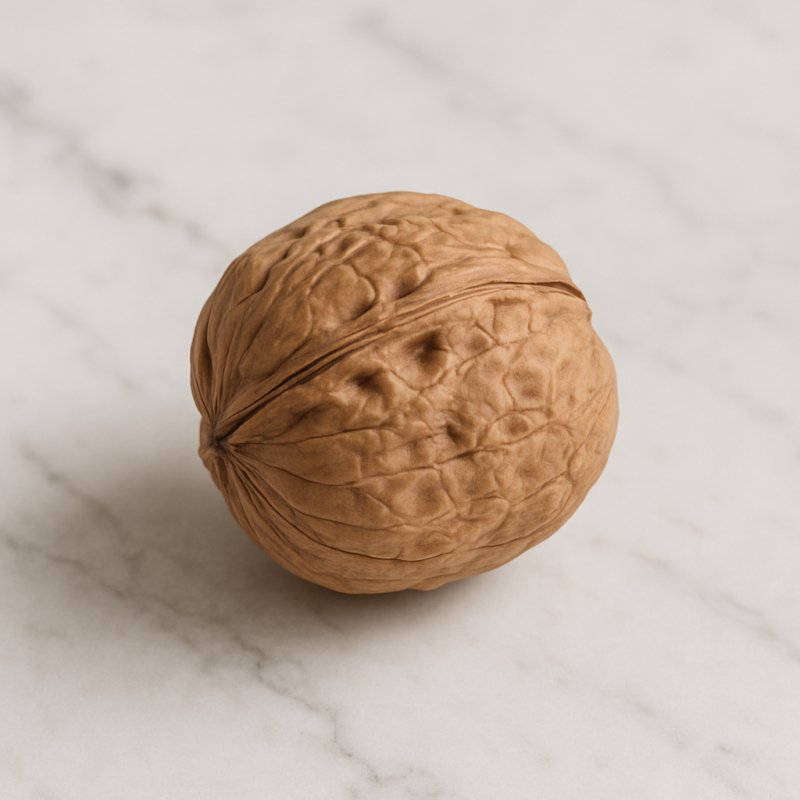
Walnut

Nutrient-rich tree nut with a high content of omega-3 fatty acids

Wiki about walnut Nutri-Score C Vegan Yes Gluten-free Yes Lactose-free Yes Nut-free No
NUTRITION / 100 g
654 kcal 15.2 g Protein 13.7 g Kohlenhydrate 65.2 g Fett

Introduction

Several walnuts, with and without shells, on a light background
Walnuts are for me more than just crunchy kernels in a shell; they are small packets of flavor full of memories, textures and surprising versatility. I still remember a rainy afternoon when a colleague put a bag of freshly roasted walnuts on the table and the room immediately smelled of warmth and caramel. That first bite changed my perception: walnuts can be savory, sweet, bitter and buttery at the same time.

What I especially love about walnuts is their ability to shine in both simple and complex dishes. A plain salad dressing with roasted walnuts, honey and lemon instantly gives leaf salads depth. In savory pasta dishes they bring a nutty richness that recalls pine nuts, but is more robust. As an ingredient in baked goods — from walnut banana bread to chocolatey brownies — they provide structure and bite.

Interesting facts about the walnut that I like to share:

  • Walnuts are rich in unsaturated fatty acids and provide plant-based protein.
  • They oxidize relatively quickly; freshly roasted they taste noticeably better.
  • The bitter skin around the kernel can be mellowed by briefly roasting or soaking.
A small anecdote: at a weekly market I once bought a bag of walnuts from an older vendor who explained to me how best to crack them open without breaking the inside. I tried his tip and immediately felt like the keeper of a culinary magic secret. This practical side of the walnut fascinates me — it requires a bit of handiwork but rewards with intensity and freshness.

For storage I recommend keeping walnuts cool and airtight, preferably in the refrigerator, to avoid them turning rancid. In cooking I like to experiment with combinations of goat cheese, beetroot or honey because the nut flavors stand out particularly well here. Overall, the walnut is for me a reliable, versatile ingredient that enhances both simple everyday dishes and festive menus.

Availability & types

Availability and types of the walnut

Walnuts are nuts that can be found year-round in many supermarkets, health-food stores and markets. Fresh walnuts in the shell are mainly available in autumn, because walnut trees ripen then and the green husks split open — similar to ripe cherries falling from the tree. If you buy shelled and packaged walnuts, they are usually available all year because they keep well if stored dry and cool.

Origin and growing regions

Walnut trees grow particularly well in regions with warm summers and winters that are not too cold. Well-known producing countries include:

  • China: Today one of the largest producing countries — large production for the world market.
  • USA (California): California is famous for its walnuts and supplies many around the world.
  • Turkey, Iran and Georgia: Traditional growing regions where walnuts have long been cultivated.
  • Europe (e.g. France, formerly Yugoslavia, Italy, Spain): In some parts of Europe there are also many walnut trees.
An image to imagine: picture walnut orchards like fruit orchards, only with large trees that in autumn drop many "eggs" in green husks. Harvesting can be mechanical or by hand.

Varieties and variants

There are different varieties of walnuts that differ in size, taste and shell. Here are some typical variants, simply explained:

  • Open shell / easy to crack: Some varieties have thinner shells that are easier to crack. These are good if children want to open the nuts themselves.
  • Thick, hard shell: Other varieties have very hard shells that are more difficult to crack; however, the kernel is often well protected and stays fresh longer.
  • Kernel size: There are walnuts with large kernels (more "edible part") and smaller kernels. Large kernels are popular because you can eat more nut.
  • Taste: Some walnuts taste milder, others somewhat more bitter or nuttier — similar to how different apple varieties can be sweeter or tarter.
  • Green walnuts: These are young walnuts still in their green husks. They are sometimes pickled or used to make liqueur.
  • Chopped, shelled or whole kernels: In the store you can find whole half kernels for cakes, chopped pieces for muesli or ground walnuts as an ingredient for baking.
Fresh, dried and processed

Walnuts are harvested fresh and then often dried so they do not mold. Dried walnuts can be stored for a long time. They are also available roasted, salted or caramelized with honey — these are just different ways of eating them, similar to boiling, baking or frying potatoes. In some regions walnuts are also pressed into oil that is used for cooking or as a salad oil.

In summary: walnuts come from many countries with warm climates, are available year-round, but fresh in the shell mainly in autumn. There are many varieties with different shells, sizes and flavors as well as processed variants like shelled, chopped, roasted or as oil. That way you can find the right walnut for every purpose — from snacking to baking to cooking.
Details & nutrition

Property Value
Unit g
Average weight per piece 5
Calories per 100 654
Protein per 100 15.2
Carbohydrates per 100 13.7
Sugar per 100 2.6
Fat per 100 65.2
Saturated fat per 100 6.1
Monounsaturated fat 8.9
Polyunsaturated fat 47.2
Fiber per 100 6.7
Vitamin C (mg) per 100 1.3
Vitamin D (IU) per 100 0
Calcium (mg) per 100 98
Iron (mg) per 100 2.9
Nutri-Score C
CO₂ footprint 0.7
Origin Mainly Europe, North America and Asia
Gluten-free Yes
Lactose-free Yes
Nut-free No
Vegan Yes
Note Nutritional values refer to 100 g of walnut kernels, natural, without shell. Walnuts are rich in omega-3 fatty acids (especially alpha-linolenic acid) and contribute to the intake of unsaturated fatty acids.

Technical & scientific information

Walnut (Juglans regia)

The walnut is the edible seed-fruit of the walnut tree Juglans regia and is botanically classified among the aggregate nuts. The product used in trade and cuisine consists mainly of the two-lobed kernel, surrounded by a hard shell and a glandular green fruit wall that falls away during ripening. Walnuts are valued for their high fat content, characteristic flavor and versatile use in cooking, in bakery production and in oil extraction.

Macro- and micronutrients

  • Fat: Walnuts contain about 60–70% fat, predominantly polyunsaturated fatty acids. The proportion of alpha-linolenic acid (ALA), a plant-based omega-3 fatty acid, is relatively high compared with other nuts (typically 8–14 g ALA per 100 g of walnut). Linoleic acid (omega-6) and oleic acid (a monounsaturated fatty acid) are also present.
  • Protein: Protein content is around 15% and includes a range of amino acids, although walnut protein does not provide a complete amino acid profile like animal proteins.
  • Carbohydrates and fiber: The carbohydrate content is relatively low (approx. 10–15 g/100 g), a substantial part of which is fiber (total 6–7 g/100 g) that contributes to gut health.
  • Vitamins and minerals: Walnuts supply micronutrients such as magnesium, phosphorus, copper, manganese and iron as well as B vitamins (especially B6) and vitamin E in the form of tocopherols.
Phytochemistry and secondary plant compounds

Walnuts contain various bioactive secondary plant compounds, including polyphenols (e.g. ellagic acid derivatives, flavonoids and phenolic acids), tannins and quinones in the shell. These compounds contribute to antioxidant properties and are the subject of numerous studies on health effects. In fresh or cut walnuts enzymatic browning can occur because polyphenol oxidase reacts with phenols.

Health aspects

  • Cardiovascular: Epidemiological and intervention studies show that regular moderate walnut consumption is associated with improved lipid profiles (e.g. reduction of LDL cholesterol) and reduced inflammation. Omega-3 fatty acids and polyphenols are considered central active components.
  • Metabolism: Walnuts may positively affect insulin sensitivity and body composition; however, the high fat and fiber content also results in a high energy density (approx. 650–700 kcal/100 g).
  • Antioxidant effects: The polyphenols and tocopherols in walnuts contribute to reduction of oxidative stress, as shown in experimental models. Clinical relevance and dose–response relationships are still under investigation.
  • Allergies: Walnut is a common food allergen. IgE-mediated reactions can range from mild oral allergy to anaphylactic reactions. Affected individuals must strictly avoid it.
Processing and storage

Processing steps include harvest, drying, shelling and, if required, roasting. Drying reduces water activity and prevents microbial spoilage. During storage and processing oxidative processes are relevant: unsaturated fatty acids can oxidize due to air oxygen and heat and become rancid. Walnuts stored cool, dry and protected from light retain quality longer. For oil production walnuts are mechanically pressed or extracted with solvents; cold-pressed oils retain more volatile aromas and secondary plant compounds.

Safety and quality characteristics

Microbiological and chemical safety must be observed. Moist storage conditions favor mold growth and thus the formation of mycotoxins such as aflatoxins, which are relevant to health. Quality control includes moisture content, residues of salts or additives, sensory assessment (smell, taste) and chemical analyses (fatty acid profile, peroxide value as an indicator of oxidation).

Summary

Walnuts are nutrient-dense seeds high in polyunsaturated fatty acids, plant proteins, fiber and a variety of bioactive secondary plant compounds. Their composition makes them an interesting ingredient from a nutritional perspective, particularly because of the high content of alpha-linolenic acid and antioxidant phenols. At the same time, their high energy density and allergen potential require attention. Technical aspects such as drying, storage and gentle oil extraction are decisive for quality and shelf life.

Wiki entry for: walnut
Active now: 24 visitors of which 2 logged-in members in the last 5 minutes