Menu & categories

Vinegar

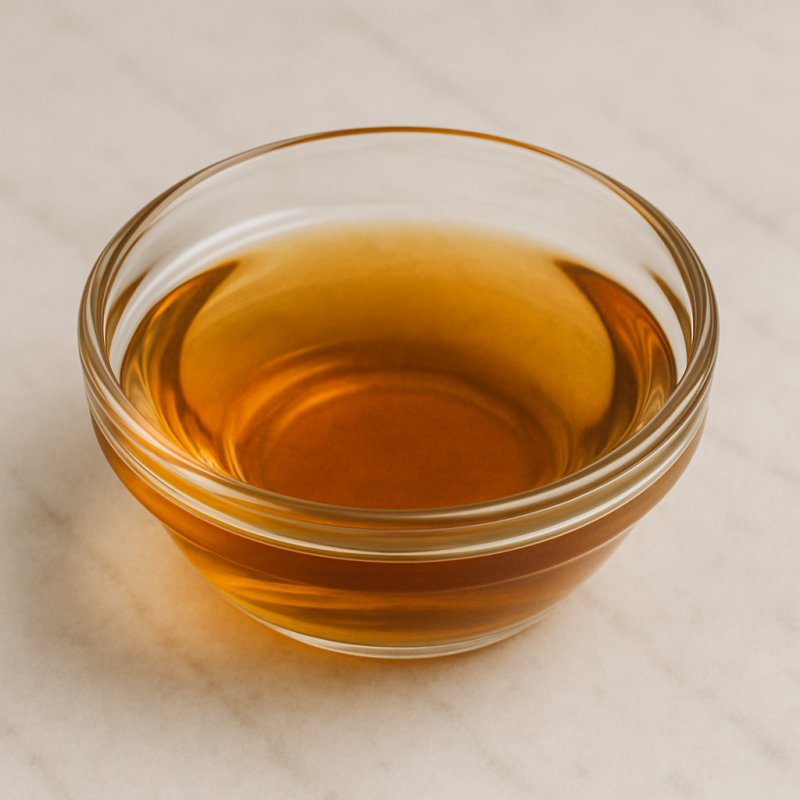
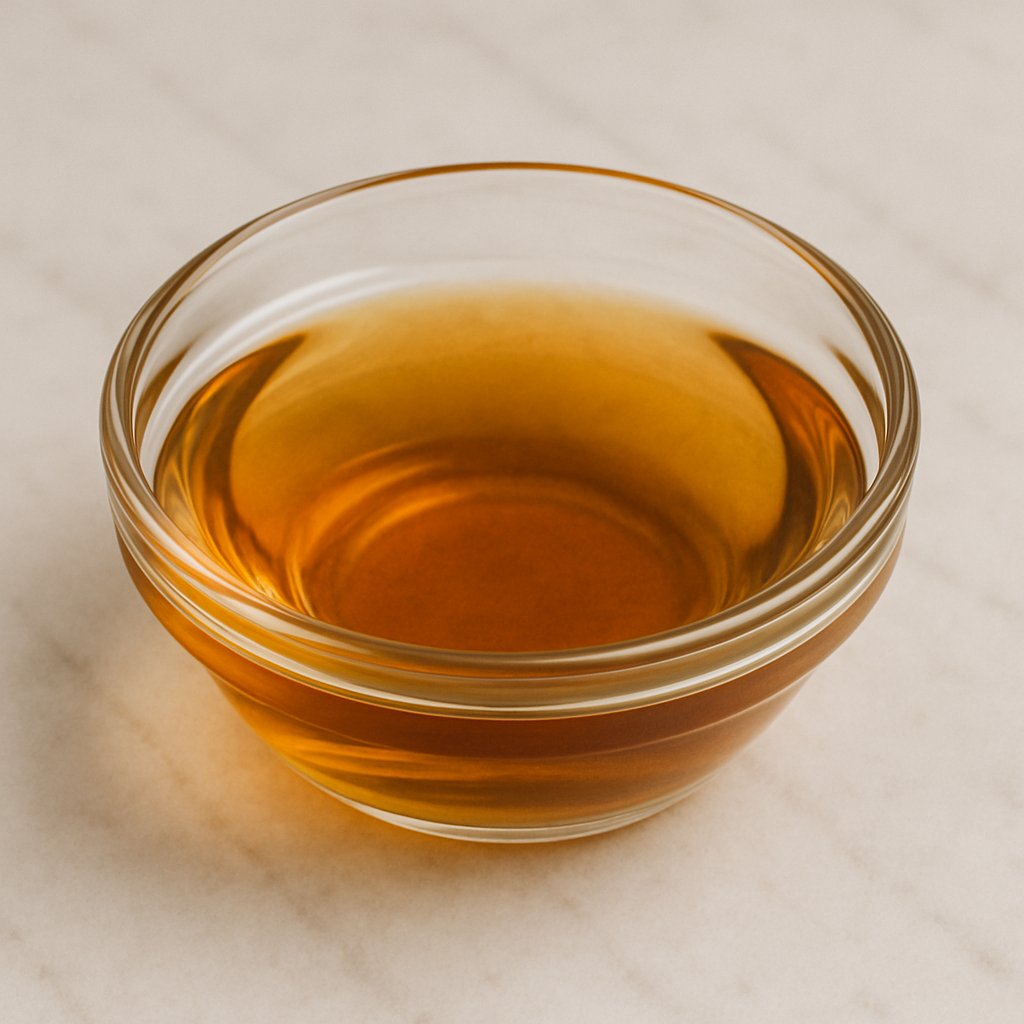
Tart seasoning vinegar for enhancing dishes and salads

Wiki about vinegar Nutri-Score A Vegan Yes Gluten-free Yes Lactose-free Yes Nut-free Yes
NUTRITION / 100 ml
21 kcal 0.0 g Protein 0.0 g Kohlenhydrate 0.0 g Fett

Introduction

A small glass bottle with clear vinegar on a wooden table
I still remember exactly the first intense taste of a really good vinegar: a spoonful over a simple fennel salad, and suddenly the whole was more than the sum of its parts. Vinegar, for me, is not just an ingredient but a small alchemical means that brings acidity, balance and surprise to a dish. I have known it in many forms — from plain white wine vinegar to velvety balsamic — and each time I'm surprised how much a drop can change the character of a food.

What fascinates me about vinegar is its versatility. It can preserve, lift flavors, enliven marinades and sharpen sauces. I like to think of an afternoon when I pickled cucumbers with a friend: just water, salt, sugar and a generous portion of apple cider vinegar. Two weeks later the jars were not enough. Such small experiments are for me cooking at its most beautiful — practical, but also sensual.

Important properties and uses:

  • Preservation: Vinegar prevents bacterial growth and is excellent for pickling vegetables.
  • Flavoring: A splash of vinegar brightens dressings and adds body to braised dishes.
  • Degreasing: Vinegar cuts through fat and balances heavy sauces.
  • Texture: Acidity can slightly alter proteins in fish and meat, thus affecting texture.
I also have a small fondness for experimental mixes: a splash of sherry vinegar in tomato sauce, rice vinegar in Asian salads or date balsamic with roasted vegetables. A colleague of mine swore for years by his grandfather's balsamic, which he kept secret, until he finally gave me a little bottle. The taste was so dense and complex that I described it long after the last drop.

Vinegar is also a quiet helper around the house: streak-free window cleaning, removing limescale and even neutralizing small odors — a true multitool. To me vinegar remains an unassuming but indispensable element of every kitchen: it requires little space but delivers huge effect. I am pleased every time a new jar is opened and the familiar, clear scent of acidity fills the kitchen.

Availability & types

Availability and types of vinegar

Vinegar is a very common ingredient found in almost every part of the world. It is made from different starting materials, for example wine, apple juice, rice or malt (cereal). The basic idea is always the same: the sugars or alcohol from these plants are converted by tiny organisms, so-called bacteria, into an acidic liquid. This acidity makes vinegar sharp and helps foods keep longer or taste good.

Origin and growing regions
Vinegar itself does not grow like a vegetable, but the plants or beverages from which it is made have regions of origin. Here are a few examples:

  • Wine vinegar: Is made from wine. Grapes are grown in many countries such as France, Spain, Italy and Germany. Therefore wine vinegar often comes from these regions.
  • Apple cider vinegar: Comes from apple juice. Large apple-growing regions include Germany, the USA and England. Apple cider vinegar is therefore easy to find there.
  • Rice vinegar: Is typical of Asian countries like Japan, China or Korea, because rice is widely cultivated there.
  • Malt vinegar: Comes from barley or other cereals; regions with large cereal cultivation include the United Kingdom and parts of Europe.
Available varieties and variants
Vinegar is available in many different varieties. Some are mild and slightly sweet, others are sharp and robust. Here are the main types, simply explained:

  • White vinegar (table vinegar): Very sharp and clear. It is often used for cleaning, pickling or when a neutral taste is needed.
  • Wine and red wine vinegar: Have a fruity taste because they are made from wine. Red wine vinegar goes well with dark sauces and salads, white wine vinegar is milder.
  • Apple cider vinegar: Smells and tastes a little like apples. Many people use it in salads or as a home remedy.
  • Rice vinegar: Is milder and slightly sweet. It suits Asian dishes like sushi or salads.
  • Balsamic: A dark, sweet-and-sour vinegar from Italy. It is often thicker and tastes complex, almost like a blend of sweet and sour. Very popular for special salads or desserts.
  • Malt vinegar: Has a malty, strong flavor. In the UK it is often served with chips.
  • Fruit-flavored vinegars: There are vinegars to which extra fruits or herbs have been added, for example raspberry or herb vinegar. They give salads a special taste.
How easy is vinegar to find?
Vinegar is very easy to get: every supermarket carries several varieties, from inexpensive bottles to more expensive specialty vinegars like traditional balsamic. In well stocked shops or markets you will also find regional or artisanal vinegars. You can also make vinegar yourself if you fancy a small home project — it takes longer, but with a bit of patience it is possible.

In summary: vinegar exists in many variants because it can be made from different plants or beverages. Depending on where these raw materials are grown, one speaks of different origins. For every taste and use there is a suitable vinegar — from sharp white vinegar for cleaning to sweet balsamic for special dishes.
Details & nutrition

Property Value
Unit ml
Calories per 100 21
Protein per 100 0.0
Carbohydrates per 100 0.0
Sugar per 100 0.0
Fat per 100 0.0
Saturated fat per 100 0.0
Monounsaturated fat 0.0
Polyunsaturated fat 0.0
Fiber per 100 0.0
Vitamin C (mg) per 100 0.0
Vitamin D (IU) per 100 0.0
Calcium (mg) per 100 7
Iron (mg) per 100 0.2
Nutri-Score A
CO₂ footprint 0.2
Origin Varies depending on the country of production; often Europe
Gluten-free Yes
Lactose-free Yes
Nut-free Yes
Vegan Yes
Note Nutritional values refer to plain table vinegar (approx. 5% acidity). Specialty vinegars such as balsamic may have slightly different values.

Technical & scientific information

Vinegar is an aqueous solution whose characteristic acidity is mainly acetic acid (Acetic acid, CH3COOH). In commercial table vinegars the acetic acid content typically ranges between 4 and 7 percent by weight; special varieties such as wine vinegars or flavored balsamics may have higher or variable concentrations. Chemically, acetic acid is a carboxylic acid with a pKa of about 4.76, which in aqueous solution is partially deprotonated as the acetate ion (CH3COO−). The pH of commercial vinegars generally lies between pH 2 and pH 3, depending on the acid content and the buffer capacity of the solution.

Composition and constituents
Pure table vinegar contains, besides water and acetic acid, only small amounts of other volatile and non-volatile accompanying substances. Traditional vinegars, particularly wine or apple vinegars, also contain organic acids (e.g. citric or tartaric acid), traces of sugars, polyphenols, minerals and aroma compounds that originate from the starting material. Balsamic and other aged vinegars develop complex accompanying compounds during storage such as esters, aldehydes and ketones that broaden the flavor profile.

Production and technologies
Vinegar is produced by the microbial oxidation of ethanol to acetic acid, carried out by acetic acid bacteria of the family Acetobacteraceae. There are two main production methods:

  • Traditional (slow) method: The so-called "Orleans" method uses vinegar casks in which ethanol is slowly oxidized with an air supply through natural colonization by acetic acid bacteria. The process is time-consuming and promotes the development of complex aromas.
  • Industrial rapid processes: Modern vinegar production processes use accelerated fermentation in open or pulsed reactors with controlled aeration and inoculation with starter cultures. Subtypes include the Frings (or granular) process and surface or submerged processes; these achieve high throughput and reproducible acidity levels.
Nutritional values and calories
Vinegar is very low in calories, since it mainly consists of water and a few percent acid. One tablespoon (approx. 15 ml) of table vinegar provides roughly 2–4 kcal. The amount of usable macronutrients is negligible. Vinegar contains no significant amounts of fat or protein, and carbohydrates are minimal unless sugar-rich starting materials were used.

Function in foods and technical properties
Vinegar acts as a preservative by lowering pH, thereby inhibiting the growth of many microorganisms. In food technology vinegar is used for acidification, as a flavor enhancer, for making marinades, dressings and pickled products and for regulating enzyme activities. Chemically, acetic acid can serve as a solvent for certain organic compounds and reacts with alcohols to form esters under neutral to acidic conditions.

Health aspects
In moderate amounts vinegar is considered a safe dietary component. Short-term oral intake of vinegar can delay gastric emptying and lead to increased satiety. Studies indicate possible effects on blood sugar regulation after carbohydrate-rich meals, although results are heterogeneous and clinical relevance is still debated. Undrinkable concentrations or undiluted concentrated vinegar can cause mucosal irritation; high-strength vinegar essences (≥25% acetic acid) are corrosive and should not be consumed neat. Allergies or intolerance reactions may occur in sensitive individuals, though these are rare.

Shelf life and storage
Vinegar is very long-lasting due to its low pH and antimicrobial effect. Dark, cool storage in tightly closed containers preserves aroma and prevents excessive oxidation or evaporation of volatile constituents. Some vinegars may develop cloudiness or surface microbial growth over time (e.g. the "mother of vinegar"); these are usually harmless and can be removed by filtration or separation.

Environment and sustainability
Vinegar production can be resource-efficient, especially when by-products of alcoholic fermentations (e.g. wine residues or cider) are used as starting materials. Industrial processes, however, require energy for aeration and temperature control. Traditional, smaller-scale production methods contribute to regional food culture value chains and promote flavor diversity.

In summary, vinegar is a versatile, chemically defined solution based on acetic acid, whose properties depend on concentration, starting materials and production method. Its functions range from flavor nuance and preservation to potential physiological effects when consumed in moderation.

Wiki entry for: vinegar
Active now: 20 visitors of which 2 logged-in members in the last 5 minutes