Menu & categories

Vienna sausages

Finely minced cooked sausage made from pork and beef

Wiki about Vienna sausage Nutri-Score D Vegan No Gluten-free Yes Lactose-free Yes Nut-free Yes
NUTRITION / 100 g
280 kcal 12 g Protein 2 g Kohlenhydrate 25 g Fett

Introduction

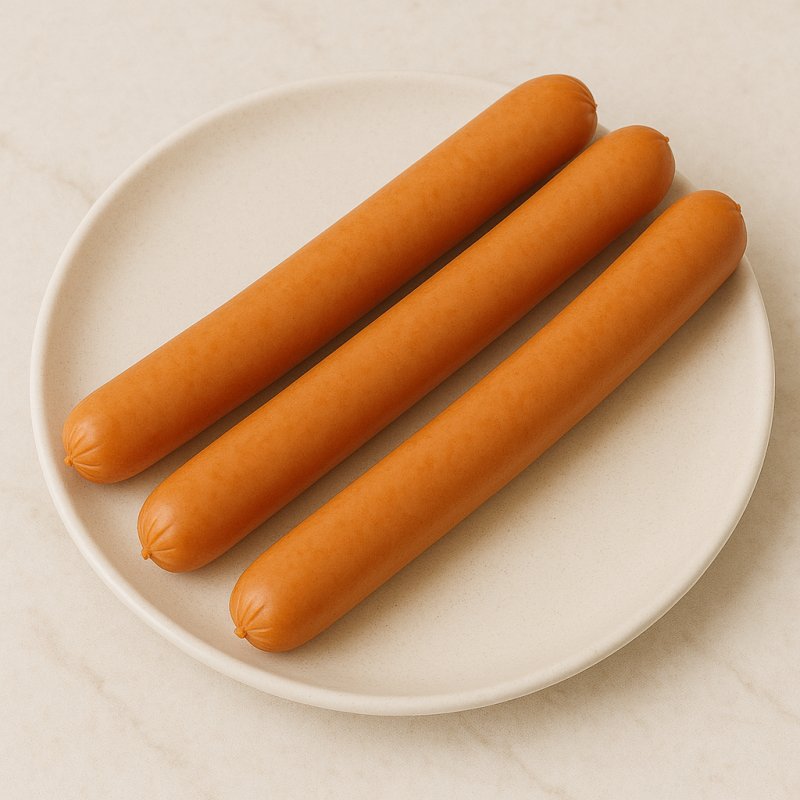
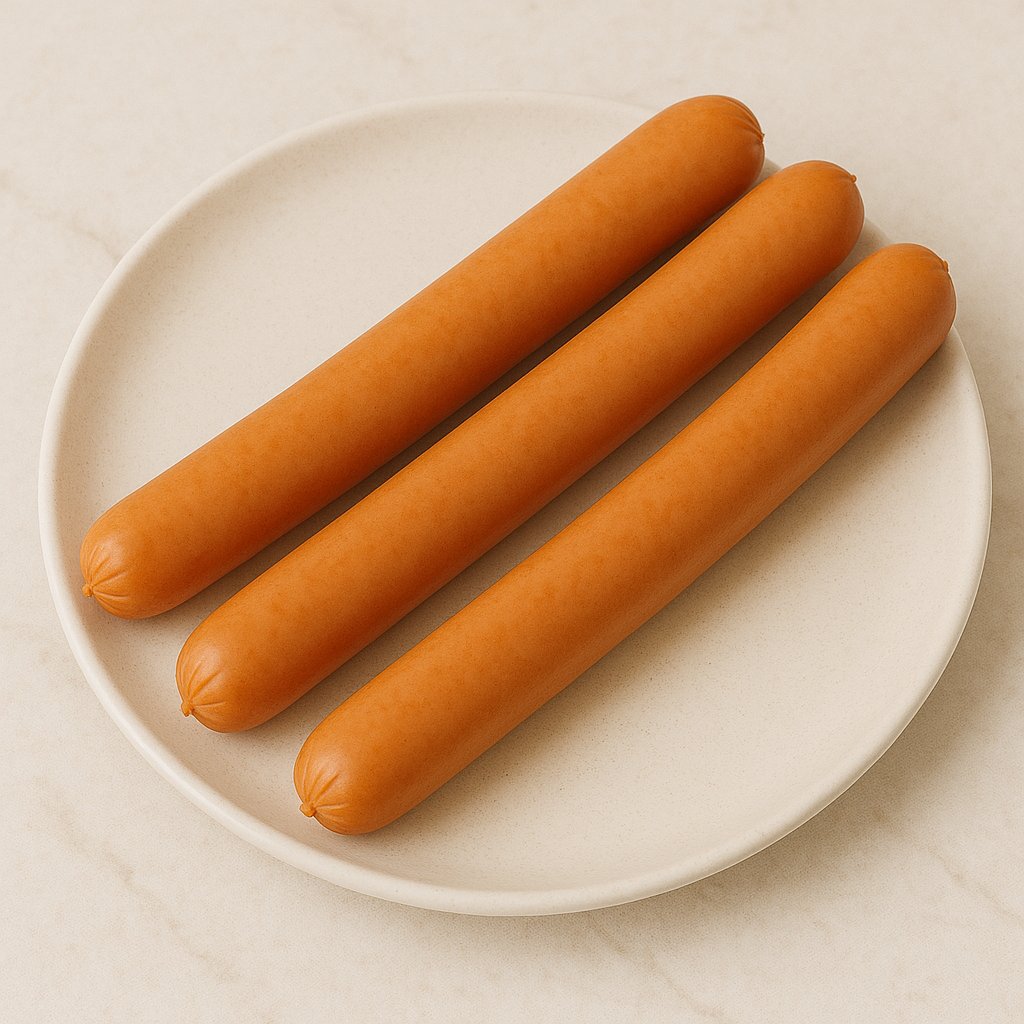
Several Vienna sausages on a plate
When I first queued at a snack stand in Vienna, I was convinced that Vienna sausages were simply convenient fast food. Today I smile about that, because these plain, slender sausages took me on a small culinary journey that became surprisingly personal. A friend once gave me a package from his homeland, and the smell when I opened it brought back memories of sunny street festivals and warm evenings.

Vienna sausages are more than just scalded sausages made from finely seasoned, usually pork and beef. I have learned that their tender texture and mild-spicy flavor come from the special preparation and fine grinding. Sometimes I eat them plain with a piece of crusty bread, sometimes I briefly cook them and serve them with mustard and pickles. A colleague of mine swears by gently poaching them in beer beforehand — a small trick that produces a surprisingly rounded flavor.

I still remember a rain break during a street festival when an older couple next to me were feeding their children Vienna sausages and laughing, as if these sausages were a unifying ritual. These scenes show me that Vienna sausages are often more than food: they are a piece of everyday culture that brings families, friends and strangers together.

  • Ingredients: mostly pork and beef, salt, pepper, nutmeg and curing salt.
  • Preparation: fine sausage-making, gentle scalding or brief heating without splitting.
  • Serving suggestions: classic with mustard, in a hot roll, as part of a salad or in a stew.
To me Vienna sausages are a nice example of how simple ingredients can become small everyday pleasures. I have experimented in my kitchen, from combining them with caramelized onions to a delicate mustard sauce, and they repeatedly surprise me with their versatility. When I have guests, I like to hear their stories about such simple foods; they often tell of holidays, childhood days, or very mundane but lovable moments.

In the end I appreciate Vienna sausages because they can evoke memories and at the same time provide uncomplicated pleasure. They are a small, down-to-earth dish that I treat with respect and a wink — and, to be frank, they never taste bad when served with a good mustard.

Availability & types

Availability and types of Vienna sausages

Vienna sausages are small, thin sausages enjoyed in many countries. Although they are often associated with Vienna (the capital of Austria), they are now widespread worldwide. The recipes for such sausages originally come from the German-speaking area, and cooks in Austria and Germany have developed them over time. It is important to know: Vienna sausages are not vegetables; they are meat products, usually made from beef and pork or from poultry.

Where do Vienna sausages come from and where are they produced?
Vienna sausages are produced in many countries. In Europe, Germany, Austria and Switzerland are major producers. But similar sausages are also made in North America, Latin America and parts of Asia. Production usually takes place in butcher shops (specialty meat stores) or in large sausage factories. In supermarkets they are often found in the chilled section or as ready-cooked products that only need brief heating.

Available varieties and variants

  • Classic Vienna sausages: These usually consist of a mixture of pork and beef. They have a smooth, thin casing and are already cooked. You warm them briefly in hot water or lightly fry them.
  • Poultry Vienna sausages: For people who want less fat or do not want pork, there are variants made from chicken or turkey. They taste somewhat milder and are often lighter.
  • Vegetarian and vegan “Vienna”: Today there are also plant-based imitations that look like Vienna sausages and have a similar feel. They are made from soy, pea protein or other plant ingredients. These are suitable for people who do not want to eat meat.
  • Spiced variants: Some Vienna sausages are a bit spicier or refined with herbs and spices. It's like chips, which also come in different flavors.
  • Organic and regional products: There are Vienna sausages made from organic meat, where the animals were raised more humanely. Regionally produced sausages often come from nearby farms and sometimes have a slightly different taste.
How to find the right type in the store?
In the supermarket Vienna sausages are usually in cans, vacuum packs or the fresh section. The label states which meat they are made from (e.g. beef, pork, poultry) and whether they are already cooked. Some packages have a picture or a symbol for “organic” or “vegetarian”. If you are unsure, you can look for the words “cooked”, “smoked” or “fresh”: “cooked” means they are already done and only need to be reheated; “smoked” means they have a smoky aroma; “fresh” means they are raw and must be thoroughly cooked.

Practical tips for use
Vienna sausages are very versatile: you can put them in a soup, on hot rolls, with potato salad or simply with mustard. They are quick to prepare, which is why they are popular with families and children. By reading the ingredient list you can decide whether you want a classic or a plant-based variant.

In summary: Vienna sausages come in many variants — from the traditional meat sausage to poultry versions and vegetarian imitations. They are produced in many countries, easy to find and suitable for different tastes and diets. Check the label to choose the variety you like best.
Details & nutrition

Property Value
Unit g
Average weight per piece 40
Calories per 100 280
Protein per 100 12
Carbohydrates per 100 2
Sugar per 100 1
Fat per 100 25
Saturated fat per 100 9
Monounsaturated fat 11
Polyunsaturated fat 3
Fiber per 100 0
Vitamin C (mg) per 100 0
Vitamin D (IU) per 100 0
Calcium (mg) per 100 10
Iron (mg) per 100 1.5
Nutri-Score D
CO₂ footprint 4.5
Origin Europe
Gluten-free Yes
Lactose-free Yes
Nut-free Yes
Vegan No
Note Nutritional values for classic Vienna sausages made from pork and beef, without cheese or filling additives; formulations may vary by manufacturer.

Technical & scientific information

Vienna sausages are a processed meat ingredient that originally comes from the German‑Austrian region and is spread worldwide in various versions. Typical features are their fine, homogeneous texture, smooth surface and short cylindrical shape. Traditionally Vienna sausages are made from a mixture of finely minced pork and beef, with the exact composition varying by product and manufacturer specifications.

Chemical composition and ingredients
The primary components of Vienna sausages are water, proteins, lipids, small amounts of carbohydrates, as well as salt and additives. Proteins consist mainly of myofibrillar proteins (actin, myosin) and sarcoplasmic proteins. The lipid fraction comprises saturated, monounsaturated and polyunsaturated fatty acids; its proportion influences texture, flavor and caloric content. Salts provide taste and water binding; phosphates or similar salt binders increase protein yield in the meat batter. Typical additives include nitrite curing salt (for color and preservation), ascorbic acid or ascorbate (as reducing agents that accelerate curing reactions), stabilizers and thickeners, as well as spices.

Nutritional values
Nutritional composition varies with recipe and fat content. On average, Vienna sausages provide about 250–300 kcal per 100 g. Protein content is usually between 10 and 15 g per 100 g, fat content between 20 and 25 g, with a significant share of saturated fatty acids. Carbohydrates are generally minimal unless fillers or sugary ingredients are used. Sodium levels are increased by the addition of table salt and curing salt, which should be considered with regular consumption from a nutritional perspective.

Processing methods
Production includes several defined steps: grinding (mincing) of the raw meat, fine milling and cooling, mixing with salt, spices, water/ice and additives to form the so‑called batter, emulsifying or whipping to create a stable protein matrix, filling into casings (natural or collagen/cellulose-based) and finally scalding or hot smoking to cook. Curing with nitrite salts leads during heating to the formation of nitrosylmyoglobin, which stabilizes the characteristic reddish color. Controlled temperature management is important to counteract protein denaturation, fat migration and microbiological risks.

Food safety and microbiological aspects
The processing steps, particularly curing, heating and smoking, increase microbiological stability. Nitrite reduces the risk of certain pathogens such as Clostridium botulinum. Nevertheless, improper handling or storage can pose microbiological risks. Cooked and pre‑cooked sausages are more perishable than dried products and should be stored refrigerated. Modern quality controls include HACCP monitoring, microbiological testing and residue analysis for nitrites/nitrosamines as well as documentation of the cold chain.

Health aspects
Vienna sausages are a concentrated source of protein and fat, but also contain relatively high amounts of sodium and, depending on curing, nitrites. Regular consumption of highly processed meat products has been associated in epidemiological studies with an increased risk of certain diseases, including cardiovascular disease and some cancers. Part of these risks is attributed to high salt and saturated fat content as well as nitrite and possible nitrosamine formation with improper storage or overheating. From a nutritional medicine perspective, moderate consumption and choosing lower‑fat or nitrite‑reduced options is advisable, complemented by a predominantly plant‑based diet.

Sensory properties and applications
Sensory-wise, Vienna sausages are characterized by a mild, savory aroma, juicy texture and uniform structure. They are cooked, warmed, fried or used in dishes such as stews and filled rolls. Technologically, ingredients like phosphates improve cutting and shear strength as well as water retention, which affects juiciness and shelf life.

In summary, Vienna sausages are a technically refined, processable meat product with a clearly defined composition and manufacturing logic. Their nutritional properties require conscious selection and portioning when consumed regularly, while industrial production is designed through targeted processing and preservation measures to ensure food safety, sensory quality and long shelf life.

Wiki entry for: Vienna sausage
Active now: 18 visitors of which 2 logged-in members in the last 5 minutes