Menu & categories

Vegetable broth

Clear, savory broth made from various vegetables and herbs

Wiki about vegetable broth Nutri-Score A Vegan Yes Gluten-free No Lactose-free Yes Nut-free Yes
NUTRITION / 100 ml
5 kcal 0.3 g Protein 0.7 g Kohlenhydrate 0.1 g Fett

Introduction

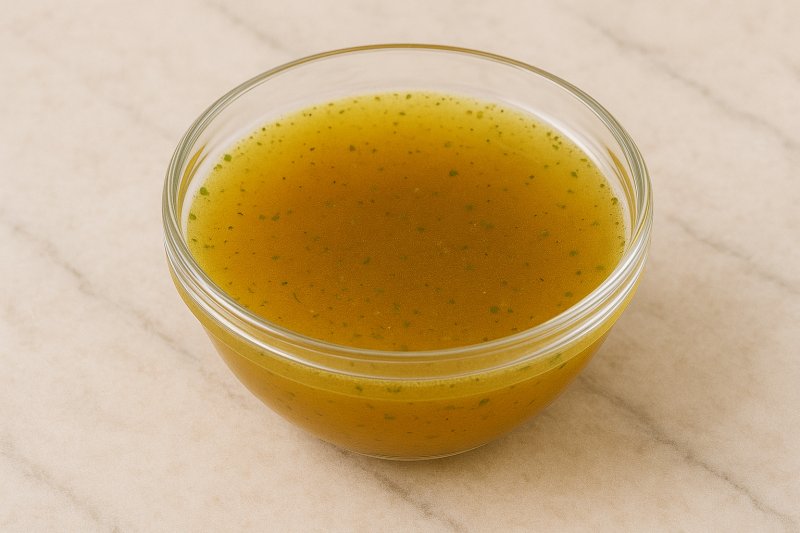
A bowl of clear vegetable broth with pieces of vegetables and herbs
I still clearly remember the first scent that introduced me to vegetable broth: a quiet, warmly spiced hint in my grandmother's kitchen that immediately conveyed a sense of comfort. This base, however unassuming it may seem, is for me one of the most reliable secret weapons in the kitchen. It rounds out soups, elevates sauces and gives grain- or vegetable-based dishes depth, without ever overpowering the main ingredient. Often I have added a pinch of broth when a dish's finale needed a little "more", and the effect was always astonishing.

When I make vegetable broth, I think in terms of layers of flavor: onions for sweetness, celery for earthiness, carrots for freshness and a touch of leek or parsley stems for herbaceousness. I like to experiment with small extras like dried mushrooms for umami or a piece of kombu for a mineral depth. Sometimes a colleague suggested cooking in leftover roast vegetables — the idea was as simple as it was brilliant and taught me how sustainable and flavorful a homemade broth can be.

For quick everyday solutions I always keep a good instant or bouillon alternative on hand, but I tell anyone who listens that even a simple homemade broth requires little effort and often makes a noticeable difference compared with store-bought products. The secret lies less in exotic ingredients and more in time and patience: a slow simmer, occasional skimming and seasoning toward the end. I've learned that a well-made vegetable broth does not just serve as a liquid but acts as the flavor engine of an entire dish.

  • Tips for preparation: Use fresh, preferably seasonal vegetable scraps and cook the broth 45–90 minutes.
  • Variations: Mushrooms, sun-dried tomatoes or a piece of ginger provide special nuances.
  • Storage: Broth can be frozen and used in portions.
In the end, vegetable broth for me is more than just an ingredient; it is a flexible, sustainable element in the kitchen that achieves great effect with small gestures. When I host guests, I often hear that something tastes "cozy" — most of the time it is the broth that holds the dish together and conveys warmth.

Availability & types

Availability and types

What is vegetable broth and where does it come from?
Vegetable broth is a liquid or a powder produced by cooking vegetables, or a seasoning product used to add flavor. It is used to give soups, rice or sauces more taste. The basic ingredients for vegetable broth are often carrots, onions, celery, leek and herbs. These vegetables are grown in many countries — for example in Germany, the Netherlands, Spain and other parts of Europe and the world. This means vegetable broth is easy to obtain because the vegetables it’s made from are cultivated almost everywhere.

Where are the vegetables grown?
The vegetables for broth are grown in fields or greenhouses. In cooler regions like Central Europe carrots, onions and celery are often grown outdoors. In warmer countries like Spain there are many leeks and tomatoes that are also used for broths. Many companies buy vegetables from fields in different countries so there is always enough supply — similar to a supermarket that sources fruit from multiple countries to have it available year-round.

Which kinds of vegetable broth exist?
There are several types of vegetable broth so everyone can find something suitable. Here are some typical variants explained simply:

  • Liquid vegetable broth (ready in a bottle): This is like a juice you pour directly into the soup. It is quick to use and usually mild in taste.
  • Bouillon cubes and powders: Small cubes or powders that you add to hot water. They are convenient and store well in the pantry — like instant cocoa mixed with hot milk.
  • Vegetable stock: This is a stronger, often longer-cooked broth that tastes more intense. Chefs use it when a dish should be particularly flavorful.
  • Organic and eco-friendly variants: These broths come from vegetables grown without synthetic pesticides. Many people prefer them because they are more environmentally friendly.
  • Reduced-salt varieties: Some broths contain less salt. This is good for people who need to watch their sodium intake — the food still tastes good but is healthier.
  • Vegan and vegetarian: Vegetable broth is usually vegan by nature, unlike meat broths. Still, be careful: some mixed products can contain animal-derived flavors, so packages often indicate "vegan" or "vegetarian."
  • Regional specialties: Sometimes there are broths with particular herbs or vegetables from a region, for example Mediterranean herbs from Southern Europe. This gives a distinctive flavor, similar to regional dishes.
How to find the right broth?
The choice depends on what you want to cook and how much time you have. If you want to make a soup quickly, cubes or ready-made liquid broths are practical. If you want to cook something special, use a stock or make a fresh vegetable broth from carrots, onions and herbs — it takes longer but often tastes more intense. Check the packaging: it will state whether the broth is low-salt, organic or vegan.

In summary: vegetable broth comes in many forms and from many places. Whether powder, cubes, ready liquid or homemade stock — there is a suitable variant for every situation. That way you can always choose the right broth for your dish and pay attention to what matters to you, such as taste, salt content or ecological production.
Details & nutrition

Property Value
Unit ml
Calories per 100 5
Protein per 100 0.3
Carbohydrates per 100 0.7
Sugar per 100 0.3
Fat per 100 0.1
Saturated fat per 100 0.02
Monounsaturated fat 0.03
Polyunsaturated fat 0.05
Fiber per 100 0.1
Vitamin C (mg) per 100 1
Vitamin D (IU) per 100 0
Calcium (mg) per 100 5
Iron (mg) per 100 0.1
Nutri-Score A
CO₂ footprint 0.05
Origin Prepared from various vegetables, depending on the manufacturer and region
Gluten-free No
Lactose-free Yes
Nut-free Yes
Vegan Yes
Note Nutritional values refer to the prepared, ready-to-eat vegetable broth (clear, without solid additions) per 100 ml. Composition and allergens may vary by manufacturer.

Technical & scientific information

Vegetable broth is a versatile food ingredient composed of water and dissolved components from vegetables, spices and possibly salt. In the kitchen it serves as a base for soups, sauces, stews and as a flavor contributor in numerous recipes. Technically speaking, vegetable broth is an aqueous extract: during cooking water-soluble compounds such as amino acids, sugars, organic acids, mineral salts and secondary plant compounds are transferred from the plant material into the solution.

Chemical composition and constituents
The main components of broth are water and dissolved solids. Typical dissolved substances include:

  • Minerals such as sodium, potassium, calcium and magnesium, which mainly occur as dissolved ions.
  • Organic acids such as citric acid and malic acid, which influence taste and stability.
  • Water-soluble vitamins of the B group and vitamin C, which are heat-sensitive and partly degraded during cooking.
  • Amino acids and small peptides, including free glutamic acid, which is responsible for the umami taste.
  • Dissolved sugars (monosaccharides and disaccharides) as well as low-molecular phenols and other secondary plant compounds that contribute to aroma.
  • Fat in small amounts if fatty vegetables or oil were used; otherwise vegetable broth is generally low in fat.
Nutritional values
Fresh homemade vegetable broth is typically low in calories and provides mainly minerals and small amounts of carbohydrates and proteins. Industrially produced bouillon cubes or powders vary widely: they may have high sodium content as well as additives like flavor enhancers (e.g. monosodium glutamate), yeast extract, stabilizers, sugar or fats. Nutritional information depends on the product, but the sodium balance is often the most notable value.

Processing methods
Two basic procedures can be distinguished: home preparation and industrial production. In home cooking vegetable trimmings are simmered for a long time in water or extracted at low temperature and then strained. Industrial methods often use extraction under defined temperature and time profiles, filtration, mechanical pressing and concentration by evaporation or freeze-drying. For dry products spray drying or freeze-drying is used, the latter providing better aroma preservation and re-solubility. Bouillon cubes are produced by evaporation and addition of binders and flavorings; their texture is influenced by fats and starches.

Sensorics and chemical bases of taste
Key carriers of taste are free amino acids (especially glutamate for umami), short-chain organic acids (sourness perception), reduced sugars (sweetness) and volatile compounds such as aldehydes, ketones and terpenes that determine aroma. Maillard reactions during prolonged heating can produce additional roasted and browned notes. The perception of broth is also affected by sodium content, since salt modulates the perception of other flavors.

Health aspects
Homemade vegetable broth can be a nutrient-preserving base for a balanced diet and is suitable for hydration and mineral intake. Potential risks mainly concern industrial products with high salt content, which can raise blood pressure, and additives that sensitive individuals may react to (e.g. flavor enhancers). For long-stored homemade broth, microbiological safety must be considered: inadequate cooling can lead to spoilage or growth of pathogens. For people with kidney problems the overall mineral and electrolyte content is relevant and should be considered with medical advice.

Environmental and nutritional science aspects
Vegetable broth offers the possibility of resource conservation when vegetable scraps and peels are utilized. Nutrient yield depends on starting material, cut size, cooking time, temperature and pH. In industrial production energy use, packaging and transport are important environmental factors, while in homemade broth seasonality and regional raw materials can improve the ecological footprint.

In summary, vegetable broth is a chemically complex but predominantly water-based extract whose nutritional and sensory properties strongly depend on raw materials and processing methods. It can be used in ways that benefit health and resources, but attention is required regarding salt and additive content in processed products and microbiological safety in fresh preparations.

Wiki entry for: vegetable broth
Active now: 11 visitors of which 2 logged-in members in the last 5 minutes