Menu & categories

Vanillin sugar

Flavored sugar with vanillin for desserts and baked goods

Wiki about vanilla sugar Nutri-Score E Vegan Yes Gluten-free Yes Lactose-free Yes Nut-free Yes
NUTRITION / 100 g
400 kcal 0.0 g Protein 99.5 g Kohlenhydrate 0.0 g Fett

Introduction

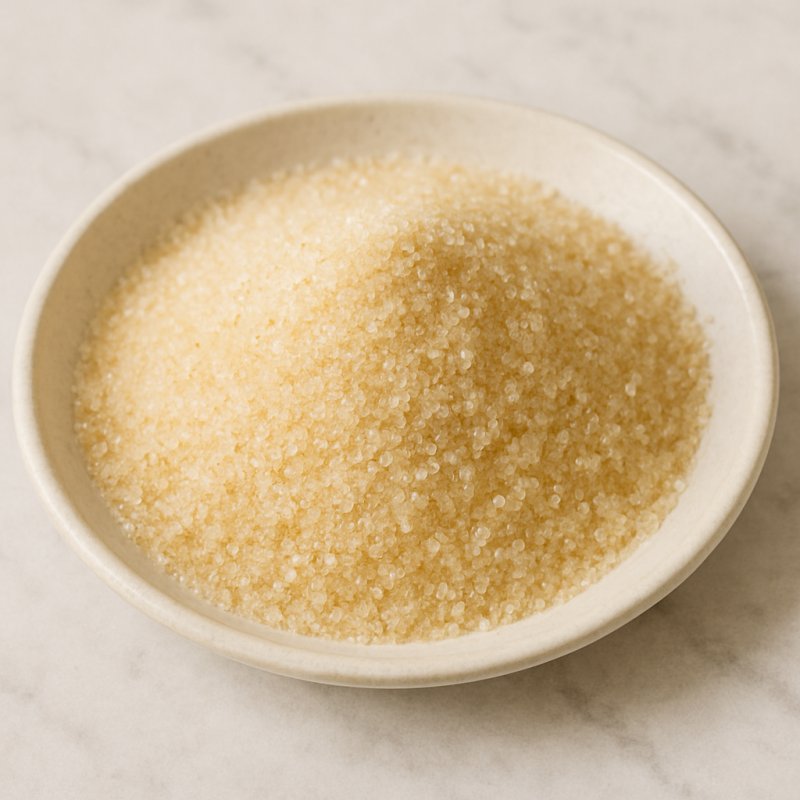
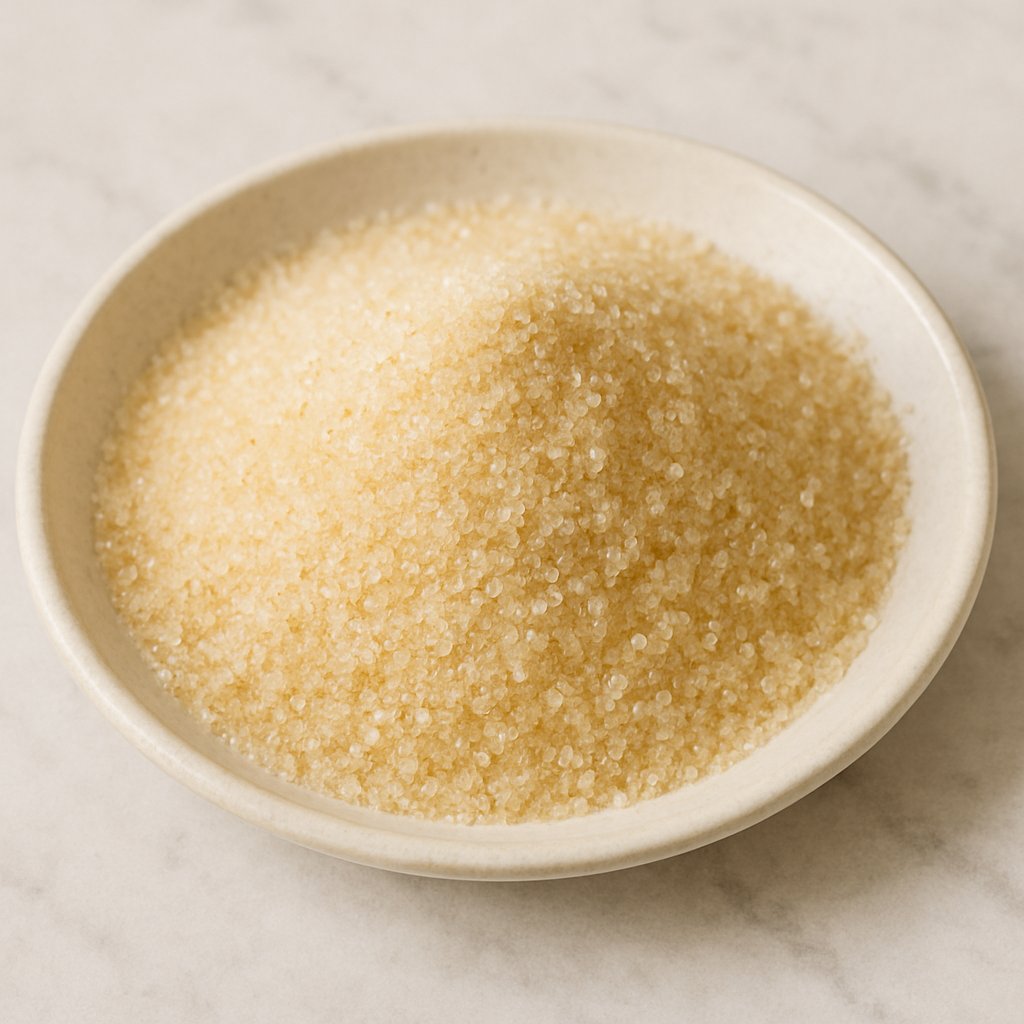
White crystals of vanillin sugar in a bowl
Vanillin sugar is, for me, something like the little miracle ingredient in the pantry: unassuming, but with the power to evoke memories and to turn simple recipes into cozy classics. I still remember Sunday baking afternoons when the scent of freshly baked cookies drifted through the house and someone would heroically open the packet of vanillin sugar as if it were a secret ingredient. Since then it has been a reliable companion when it comes to adding flavor to batters, creams, or simple yogurt ideas.

What makes vanillin sugar so popular is its simplicity: most often it is ordinary table sugar to which vanillin has been added — the synthetically produced flavor compound that resembles the complex aroma of real vanilla pods. For many recipes it is the pragmatic alternative to an expensive vanilla pod. I like to add it to:

  • Baking batters – cakes, sponge batters and cookies immediately gain depth;
  • Milk and dessert preparations – puddings, semolina porridge or quark-based dishes become warm and rounded in flavor;
  • Hot drinks – a hint in cocoa or coffee provides a subtle sweetness and aroma.
Of course there are debates: purists swear by real vanilla pods, and rightly so — their aroma is more complex. I have also experienced the other side: in busy kitchens, for spontaneous visitors, or when the vanilla pod is simply missing, vanillin sugar rescues many recipes. A colleague once baked an improvised birthday cake with vanillin sugar when no pods were available in the shop; the guests loved it.

When I use it I make sure to choose the right amount and not to overdo it so the vanillin doesn't taste artificial. For special occasions I like to mix in a pinch of real vanilla seeds to get the best of both worlds. Overall, vanillin sugar is for me a practical, comforting product: not a replacement for the gourmet option, but a reliable everyday partner that makes baking and cooking quicker and more flavorful.

Availability & types

Availability and types

Vanillin sugar is a sweet spice used in many kitchens. If you go to a supermarket you will usually find it in the baking aisle next to regular sugar or vanilla products. It is very widespread because it is inexpensive and has a long shelf life. Many people buy it in small sachets for single recipes or in larger jars or tins if they bake often.

Where does vanillin sugar come from?
Vanillin sugar is not real vanilla itself, but sugar into which the flavor compound vanillin has been mixed. Vanillin is the molecule that resembles the smell of vanilla. In the past vanillin was mainly obtained from real vanilla pods, which come from the vanilla plant. This plant grows in warm countries such as Madagascar, Indonesia or the Comoros. Today vanillin is often produced synthetically in the laboratory because it is cheaper and available in large quantities.

Growing regions of real vanilla (for comparison)
Even though vanillin sugar usually uses synthetic vanillin, it helps to know where real vanilla comes from. The main regions are:

  • Madagascar: Known for very aromatic vanilla pods. Many people describe it as the “premium” brand of vanilla.
  • Indonesia: Produces a lot of vanilla and is often somewhat cheaper.
  • Mexico: The country of origin of the vanilla plant; it is grown there traditionally.
  • Comoros and Tahiti: Supply special varieties with slightly different flavors.
What varieties and versions of vanillin sugar are there?
Vanillin sugar comes in several variants so everyone can find the right one for their recipe. Here are some typical types, explained with simple examples:

  • Standard packs (sachets): Small portions of sugar with vanillin, ideal for individual cake recipes. Think of it like a single sugar cube, but powdered and flavored with vanilla.
  • Jar or tin: Larger quantities for home use. If your family bakes often, it’s like a storage can of flour — practical and economical.
  • With natural vanilla aroma: This blend uses real vanilla aroma or extracts from vanilla pods in addition to the sugar. It often smells rounder and more “real” than the purely artificial variant.
  • Pure vanillin sugar (synthetic vanillin): Very common in stores, inexpensive and with a strong vanilla taste. For simple cakes or puddings this is usually perfectly fine.
  • Vanilla sugar with pod pieces: Some products contain small pieces of real vanilla pod. It looks nice and tastes more intense — like seeing little black specks in a vanilla pudding.
  • Organic variants: Often made with natural vanilla extract and organic sugar. For people who value ecological production.
How to choose?
If you only bake occasionally, the inexpensive sachet of vanillin sugar is usually sufficient. If you want a particularly fine flavor or are baking for a celebration, a product with natural vanilla aroma or real pod pieces is worth considering. Organic products are a good choice if you care about environmentally friendly production.

In summary: vanillin sugar is easy to find and comes in many forms — from convenient small sachets to larger storage jars, with synthetic or natural vanilla flavor. Which variant is best depends on how often you bake and how important real vanilla flavor is to you.
Details & nutrition

Property Value
Unit g
Calories per 100 400
Protein per 100 0.0
Carbohydrates per 100 99.5
Sugar per 100 99.5
Fat per 100 0.0
Saturated fat per 100 0.0
Monounsaturated fat 0.0
Polyunsaturated fat 0.0
Fiber per 100 0.0
Vitamin C (mg) per 100 0.0
Vitamin D (IU) per 100 0.0
Calcium (mg) per 100 1.0
Iron (mg) per 100 0.1
Nutri-Score E
CO₂ footprint 0.5
Origin Industrially produced household sugar with synthetic vanillin, typically from EU and non-EU countries
Gluten-free Yes
Lactose-free Yes
Nut-free Yes
Vegan Yes
Note Nutritional values refer to commercial vanillin sugar based on crystal sugar with added vanillin; may vary slightly depending on the manufacturer.

Technical & scientific information

Vanillin sugar is a commercial baking and flavoring product that primarily consists of fine crystalline sugar with added vanillin. Vanillin (chemically 4-hydroxy-3-methoxybenzaldehyde) is the main flavor compound of vanilla and gives the product its characteristic smell and taste. Industrially produced vanillin sugar is often offered in powdered form and serves as an inexpensive substitute for real vanilla pods or vanilla extract in confectionery, baked goods and beverages.

Chemical composition and ingredients
The typical composition of vanillin sugar is simple: sugar (sucrose) makes up the largest portion, usually with a granulation similar to powdered or granulated sugar, complemented by small amounts of synthetic vanillin. Vanillin sugar may additionally contain carrier substances or anti-caking agents such as corn starch, silicon dioxide or calcium phosphates to improve flowability and storage stability. In some recipes natural vanilla aromas or vanilla extract are also added, but commercial products are predominantly flavored with synthetic vanillin.

Manufacturing
The production of vanillin is carried out industrially via several routes: biotechnologically through fermentation, chemically from lignin or from petrochemical precursors such as guaiacol. The obtained vanillin is added to the sugar in very low concentrations. Typical dosages range from 0.1–1% vanillin based on total weight, depending on the desired intensity. The mixture is homogenized, dried and, if necessary, sieved to prevent lump formation.

Nutritional values and technological properties
The nutritional value of vanillin sugar corresponds largely to that of the sugar used: high energy content from carbohydrates (approx. 400 kcal/100 g), virtually no fat or protein and no significant amounts of vitamins or minerals. Vanillin sugar is used in recipes both as a sweetener and as a flavoring agent. Because of its fine grain it dissolves well in batters, creams and liquids and distributes the aroma evenly.

Sensorics and usage
Sensorially, vanillin sugar conveys the typical warm, sweet-woody vanilla aroma with slight balsamic notes. It is suitable for cakes, cookies, puddings, dairy products and hot beverages. Since synthetic vanillin has a somewhat clearer, less complex taste than real vanilla seed, it can serve as a cost-effective alternative in recipes, but it lacks the many secondary aroma compounds that come from vanilla pods.

Health aspects
Vanillin sugar is safe as a food when consumed in moderation. Health risks arise primarily from the high sugar content: excessive consumption contributes to caloric excess, tooth decay and metabolic diseases. Vanillin itself is considered safe for consumption at usual amounts and is classified as an approved flavoring by food authorities. However, some individuals may be sensitive to additives such as anti-caking agents. At very high doses vanillin and related phenols have been studied in animal tests; the concentrations relevant for humans are well below those levels.

Sustainability and alternatives
Real vanilla extract comes from the pods of the vanilla plant (Vanilla planifolia) and is significantly more expensive but aromatically more complex. Sustainability aspects matter: vanilla cultivation is labor-intensive and involves social and ecological challenges. Biotechnologically produced vanillin from fermentation can be a more sustainable alternative as it can use renewable feedstocks. For consumers there are also products with real vanilla seeds, vanilla sugar made from pods, or pure vanilla aromas.

Summary
Vanillin sugar is a widespread flavor product that combines sugar with added vanillin. Chemically, the aroma is based on the molecule vanillin, which can be produced synthetically or biotechnologically. The product provides mainly energy in the form of carbohydrates, offers easy handling in the kitchen and is cost-effective. Health concerns primarily relate to the sugar content, while vanillin itself is regarded as safe at normal usage levels. Alternatives include real vanilla pods, vanilla extract and bio-based vanillins, which differ in aroma quality, price and environmental footprint.

Wiki entry for: vanilla sugar
Active now: 20 visitors of which 2 logged-in members in the last 5 minutes