Menu & categories

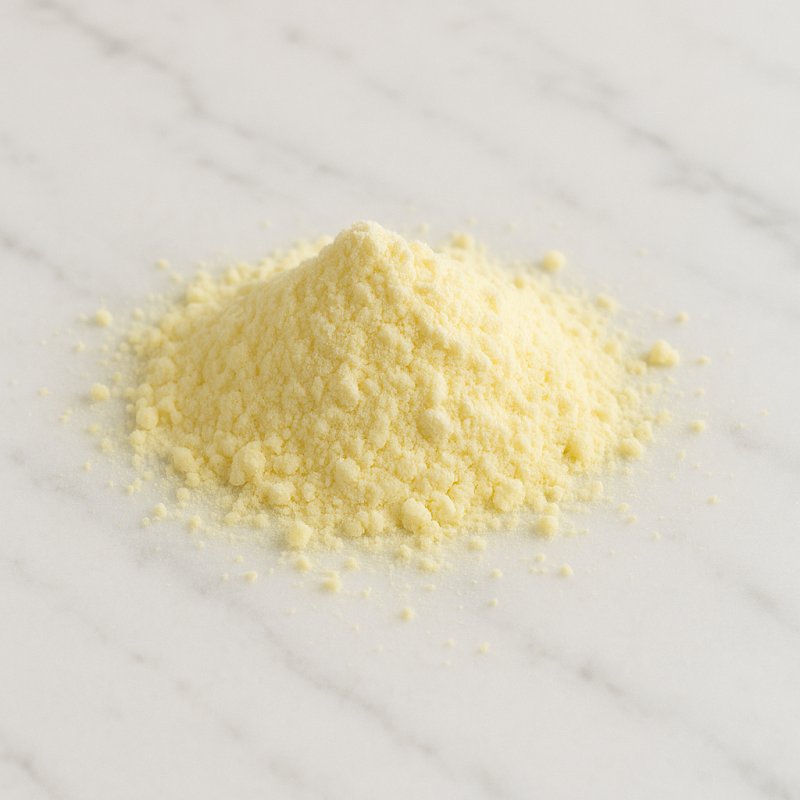
Vanilla pudding powder

Sweet dessert powder for preparing vanilla pudding

Wiki about vanilla pudding powder Nutri-Score D Vegan Yes Gluten-free No Lactose-free Yes Nut-free Yes
NUTRITION / 100 g
370 kcal 0.2 g Protein 92 g Kohlenhydrate 0.2 g Fett

Introduction

Vanilla pudding powder in a bowl with a vanilla pod
I love vanilla pudding powder, and that may sound banal, but this unassuming little sachet holds a bit of secret magic for me. When I still lived at home it was the quick solution for spontaneous dessert cravings; today I conjure with it as routinely as with a fresh vanilla pod, especially when things need to be quick or when I want to put a smile on children's faces. A colleague of mine was once surprised how creamy and silky a pudding from powder can become — he expected something artificial but got a warm, uncomplicated comfort food.

What I particularly value about vanilla pudding powder is its versatility. It usually consists of starch, sugar and vanilla flavor and is cooked with milk into a thick, smooth cream. It sets reliably, stores well and saves time without a big loss in quality. In my kitchen it is not used only as a dessert: I use it as a filling for cakes, as a base for quick creams, or to give fruit salad a silky texture. When guests arrive unexpectedly, the powder is my secret ally.

Of course there are differences: sometimes the aroma is more delicate, sometimes more artificial; in some products the vanilla is more intense, in others more sweetish. I still remember a family celebration where the homemade vanilla cream made from a real pod tasted great, but during the rush the vanilla pudding from powder won because of its robustness and speed. Such practical advantages should not be underestimated.

Here is a short overview of typical characteristics and uses:

  • Quick preparation: Usually ready in a few minutes.
  • Versatility: Desserts, cake fillings, creams, casseroles.
  • Storage life: Long shelf life in the cupboard.
  • Consistent results: Uniform setting and texture.
In the end, vanilla pudding powder for me is not a substitute but a practical partner. It has its own strengths and is ideal for days when time is short but you crave something comforting. If I want to surprise guests, I sometimes combine it with a few drops of real vanilla or a pinch of cinnamon — small tricks that make the quick pudding feel personal. That way the wonder remains, and that's half the joy of cooking.

Availability & types

Availability and types

Vanilla pudding powder is a ready-made mix you can buy in many supermarkets. It is practical because you can make pudding quickly from it: you stir the powder into milk and sugar, heat it briefly and it thickens and becomes creamy. Availability is high in most countries – you can find it in large supermarkets, small grocery stores and often in online shops as well. In rural areas or very small shops the selection may be smaller, but there is usually at least one brand.

Where does the vanilla come from? Vanilla pudding powder gets its flavor either from real vanilla extract or from artificial flavors that taste like vanilla. The real vanilla bean grows on a climbing plant that thrives particularly well in warm, humid regions. Important cultivation areas include:

  • Madagascar: This is the best-known place for high-quality vanilla. Many people say vanilla from there has a particularly good, rounded taste.
  • Indonesia: Also a large producer. Indonesian vanilla can be somewhat stronger in flavor.
  • Mexico: Vanilla originally comes from here. Mexican vanilla often has a floral aroma.
  • Other regions: Small amounts also come from countries like Tahiti, Papua New Guinea or Réunion. Each region can give vanilla a slightly different flavor, similar to tea or coffee.
What types of vanilla pudding powder are there? There are several variants in stores. Here are the main ones, simply explained:

  • With real vanilla extract or vanilla bean: These products contain real vanilla flavor from the bean. They often taste finer and more natural. The packaging will often say 'with real vanilla' or 'vanilla from Madagascar'.
  • With vanillin (artificial vanilla flavor): Vanillin is a chemical that tastes like vanilla. It is cheaper than real vanilla, so such powders are often less expensive. For everyday use the difference is not dramatic, but vanilla lovers may sometimes notice it.
  • Sugar-free or reduced-calorie variants: For people who want to eat less sugar there are pudding powders without sugar or with substitute sweeteners that provide fewer calories.
  • Lactose-free or vegan variants: Some powders are formulated so they can also be prepared with plant-based drinks (e.g. almond or oat milk). The package will then say 'vegan' or 'lactose-free'.
  • Organic products: Certified organic vanilla pudding powder uses ingredients from ecological farming. This means fewer synthetic substances are used in growing and processing.
How to choose the right product? When you buy the powder, it helps to check a few things: does it say 'real vanilla'? Or 'vanillin'? Do you need a sugar-free or vegan variant? For special occasions or if you care about a particular flavor, a brand with real vanilla is worth it. For everyday use the cheaper vanillin-based variant often suffices. Whatever the type: pudding powder is a simple and practical ingredient with which you can quickly make a tasty dessert.
Details & nutrition

Property Value
Unit g
Calories per 100 370
Protein per 100 0.2
Carbohydrates per 100 92
Sugar per 100 0.5
Fat per 100 0.2
Saturated fat per 100 0.1
Monounsaturated fat 0.05
Polyunsaturated fat 0.05
Fiber per 100 0.5
Vitamin C (mg) per 100 0
Vitamin D (IU) per 100 0
Calcium (mg) per 100 10
Iron (mg) per 100 0.2
Nutri-Score D
CO₂ footprint 1.2
Origin Europe
Gluten-free No
Lactose-free Yes
Nut-free Yes
Vegan Yes
Note Values refer to dry vanilla pudding powder without added sugar and not prepared with milk.

Technical & scientific information

Vanilla pudding powder is a ready-to-use dry mix for making a thick dessert that swells and gels when heated with milk or water. Industrially produced pudding powder is based mainly on starch-containing binders, sweeteners, flavorings and colorants, as well as stabilizers and acidity regulators. The typical composition includes a carrier substance such as corn starch or wheat starch, sugar or sweetener, vanillin or natural vanilla extracts as flavoring agents, plus thickeners and emulsifiers that influence solubility and texture.

From a chemical point of view, gel formation is primarily based on the physical property of starch: when heated in water or milk, starch granules swell, amylose and amylopectin partially solubilize and form a network that immobilizes the liquid. The gelling and thickening effect is determined by the starch content and its processing (e.g. modified or 'pregelatinized' starch). Pregelatinized or modified starches are more thermally stable and prevent lumping when stirred without prior cooking.

Typical additives and their functions:

  • Sweeteners: sucrose or alternative sweeteners for flavoring.
  • Flavoring agents: synthetic vanillin compounds or real vanilla extract that provide the characteristic aroma.
  • Stabilizers: gelling agents such as carrageenan, pectin or modified starch that maintain texture after cooling.
  • Emulsifiers: lecithins or mono- and diglycerides that stabilize fat and water phases and promote a smooth consistency.
  • Acidity regulators and antioxidants: citric acid or ascorbic acid for pH regulation and shelf-life improvement.
  • Fillers and carriers: calcium carbonate or maltodextrin to improve flowability and dosing.
The nutritional profile of vanilla pudding powder depends greatly on the formulation and method of preparation. Dry mixes contain per 100 g mainly carbohydrates (mostly starch and sugar), small amounts of protein and fat and negligible amounts of fiber. A pudding prepared with milk significantly increases the protein and fat content; the calorie balance is largely influenced by the milk used (whole milk vs. low-fat milk).

Manufacturing and processing methods include drying, mixing and agglomeration. First, the individual components are dosed and homogenized in batches. Technological steps such as spray drying (for certain modified starches or milk powders) and agglomeration improve solubility. For flavors, liquid or microencapsulated vanilla extracts are incorporated to minimize aroma losses during storage.

From a health perspective, vanilla pudding powder is harmless when consumed normally, but there are some points to consider. High sugar content can contribute to increased calorie intake when consumed regularly and raise the risk of metabolic diseases. If wheat starch is used, people with celiac disease or gluten intolerance face a contamination risk unless the product is explicitly labeled gluten-free. In addition, synthetic flavors and certain additives can cause intolerance reactions in sensitive individuals.

Sensory and functional properties such as binding ability, clarity, cold-set stability and mouthfeel can be controlled by the targeted choice of starch type, the amylose-to-amylopectin ratio, the use of stabilizers and pH adjustment. Industrial formulations aim to provide consistent texture, short cooking times and easy usability in the household.

In summary, vanilla pudding powder is a technologically optimized product that combines natural and synthetic components to deliver a quickly prepared dessert with characteristic flavor and stable consistency. The exact recipe determines both the nutritional properties and the functional and sensory characteristics of the final product.

Wiki entry for: vanilla pudding powder
Active now: 18 visitors of which 2 logged-in members in the last 5 minutes