Menu & categories

Vanilla cream ice cream

Creamy vanilla ice cream on a cream base – classic, sweet and full-bodied.

Wiki about vanilla ice cream Nutri-Score D Vegan No Gluten-free Yes Lactose-free No Nut-free Yes
NUTRITION / 100 g
205 kcal 3.6 g Protein 22.5 g Kohlenhydrate 11 g Fett

Introduction

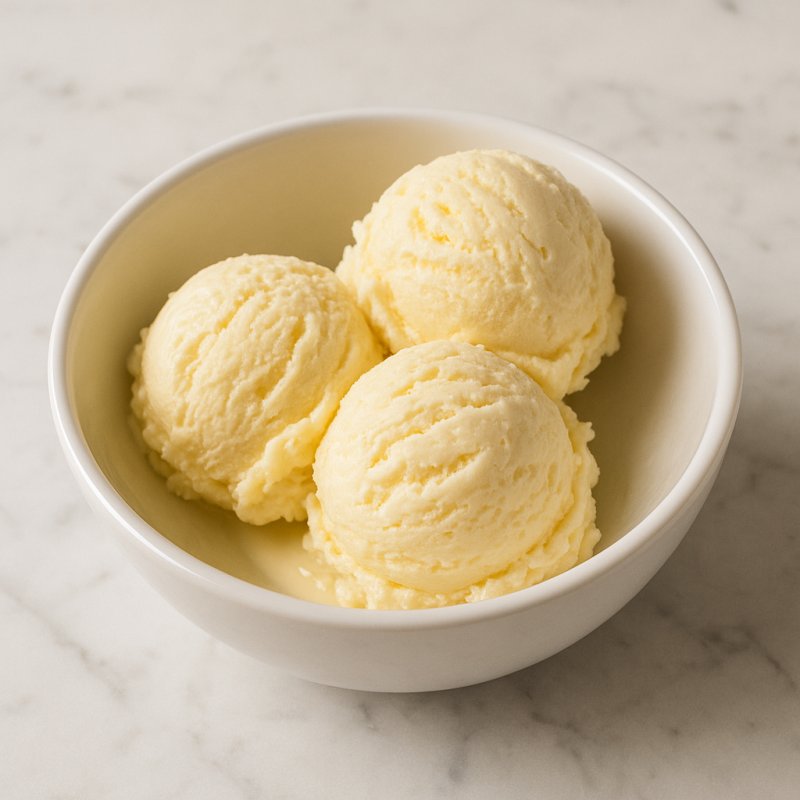
Scoop of vanilla cream ice cream in a bowl
I still remember the first spoonful of Vanille Glace Rahm I tasted on a rainy Sunday afternoon: a creamy hit of cream that immediately conveyed warmth and a small dose of luxury. A colleague of mine claimed at the time that vanilla was boring — after a portion from his ice-cream bowl he fell silent and only asked if I had the recipe. Vanille Glace Rahm is far from simple vanilla flavor; here a real vanilla pod meets a rich cream base, and the result is velvety, rounded and unobtrusively elegant.

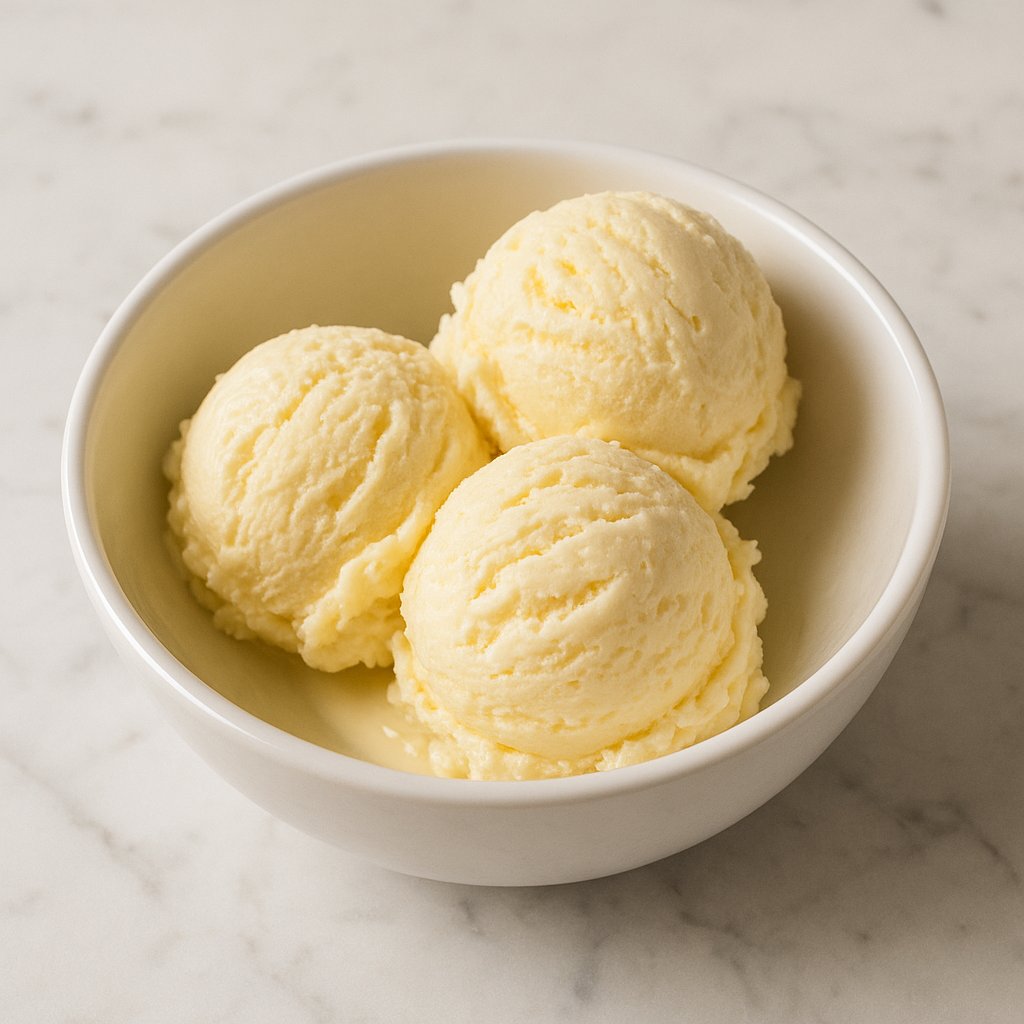
What I especially appreciate about this ingredient is its versatility. It is perfect as the crowning touch to a hearty dinner, but is just as gladly stirred into warm breadcrumb compote in the morning. The typical texture comes from a high fat content of the cream, which gives the ice cream a luxurious texture and melts slowly on the tongue. You often find fine black specks of vanilla pod, which in themselves are a pleasure.

Practical tips I've collected over the years:

  • Serving temperature: let it soften briefly, then shape with a hot spoon — this yields perfect scoops.
  • Combinations: pairs wonderfully with warm berries, caramel sauces, or a strong espresso for an affogato.
  • Storage: tightly sealed the texture is preserved; avoid refreezing after thawing.
In my kitchen Vanille Glace Rahm has already witnessed small celebrations and spontaneous cravings. Once I stirred it with a dash of orange liqueur into a quick dessert for guests; the praise was so effusive that I've since kept the recipe in regular rotation. I also like that vanilla doesn't have to be loud to make an impression — it supports and lifts flavors without claiming the spotlight.

Anyone looking for a dessert that offers both comfort and class will find Vanille Glace Rahm a good choice. For me it remains one of those ingredients you always want in the freezer, because it can turn a simple dessert into something special in no time.

Availability & types

Availability and types of “Vanille Glace Rahm”

What is Vanille Glace Rahm?
“Vanille Glace Rahm” is simply vanilla ice cream made with a lot of cream. It tastes creamy and intensely of vanilla. Depending on which vanilla is used and how the ice cream is made, there are different kinds and quality levels.

Where does the vanilla come from?
Vanilla comes from a particular orchid plant. It originally comes from Mexico, but today vanilla is grown in several parts of the world. The best-known growing regions are:

  • Madagascar (Bourbon vanilla) – the most common and very aromatic vanilla. Many high-quality ice creams use this.
  • Indonesia – also produces a lot of vanilla, often with a strong flavor.
  • Tahiti – Tahitian vanilla grows here and smells more floral and fruity than the others.
  • Mexico – the historical home of vanilla, with a spicy, warm aroma.
  • Other places like Uganda or Papua New Guinea also supply vanilla.
Why is vanilla sometimes expensive?
Vanilla is often hand-pollinated and carefully dried. That takes a lot of work. That's why real vanilla is more expensive than artificial vanilla flavor. You can think of it like strawberries: picked by hand they are often better, but they also require more work.

What variants of Vanille Glace Rahm exist?
There are many varieties so there is something for every taste:

  • Ice cream with real vanilla pods – you can see small black specks (seeds) in the ice cream. It usually has the richest flavor.
  • Ice cream with vanilla extract – this is the liquid taken from vanilla pods, which gives a strong aroma. Good and often a bit cheaper.
  • Ice cream with vanillin – vanillin is the main aromatic compound of vanilla and can be produced synthetically. Such ice cream tastes of vanilla but is simpler to make and cheaper.
  • Organic or Fair-Trade ice cream – these focus on environmentally friendly cultivation and fair pay for farmers. For people who care about that.
  • Low-fat or light variants – with less cream for people watching their fat intake.
  • Vegan – instead of cream, plant milks like soy, oat or coconut milk are used. Taste and texture are often a bit different but very tasty.
  • Unsweetened or with sugar substitutes – for people who want less sugar.
Where can you get Vanille Glace Rahm?
You can find vanilla ice cream almost everywhere: in supermarkets, ice-cream parlors, health-food stores or online. Scoops from an ice-cream shop often taste fresher, while supermarket ice cream is convenient for home. If you are looking for real vanilla, look for words like “with real vanilla pods” or “Bourbon vanilla” on the packaging.

In summary: “Vanille Glace Rahm” can be made from different types of vanilla and in many variants. Real vanilla pods from places like Madagascar or Tahiti give the finest flavor, artificial vanillin is cheaper, and there are also organic, low-fat or vegan versions. That way you can easily find the vanilla ice cream you like best.
Details & nutrition

Property Value
Unit g
Calories per 100 205
Protein per 100 3.6
Carbohydrates per 100 22.5
Sugar per 100 20.5
Fat per 100 11
Saturated fat per 100 7.1
Monounsaturated fat 3.1
Polyunsaturated fat 0.4
Fiber per 100 0.5
Vitamin C (mg) per 100 0
Vitamin D (IU) per 100 8
Calcium (mg) per 100 120
Iron (mg) per 100 0.2
Nutri-Score D
CO₂ footprint 0.17 kg CO2e/100 g
Origin Switzerland / EU (depending on manufacturer)
Gluten-free Yes
Lactose-free No
Nut-free Yes
Vegan No
Note Nutritional values may vary by brand/recipe; may contain traces of other allergens.

Technical & scientific information


Vanille Glace Rahm refers to a classic, cream-containing vanilla ice cream typically made from milk, cream, sugar and vanilla flavor. As an ingredient in food production it represents a high-fat, emulsified ice cream mix whose technological properties are determined by composition, processing and additives. The name highlights the high proportion of cream, which provides a creamy texture and full-bodied taste.

Chemical composition and ingredients: The base consists of water, milk fat, milk proteins (particularly casein and whey proteins), lactose (milk sugar) as well as sucrose and/or glucose–fructose syrup. Typical additives are emulsifiers (e.g. mono- and diglycerides of fatty acids, lecithins) and stabilizers (e.g. guar gum, locust bean gum, carrageenans) that stabilize the structure and inhibit ice crystal growth. Vanilla flavor can be added in the form of real vanilla extract (Vanilla planifolia) or as the synthetic main component vanillin.

Nutritional values (typical ranges per 100 g):

  • Energy value: about 180–260 kcal (750–1100 kJ)
  • Fat: 8–16 g, with saturated fatty acids predominant
  • Carbohydrates: 18–28 g, mostly sugars
  • Protein: 2–5 g
  • Salt: 0.1–0.3 g
Physical and technological aspects: Ice cream is a complex three-phase system consisting of a frozen crystalline phase (ice crystals), a fat phase (globular fat/butterfat) and a liquid sugar solution with dissolved proteins and salts. The rheological properties are determined by fat content, ice-specific volume (overrun, air content) and emulsion stability. The freezing-point-depression effect of the sugar solution typically lowers the freezing point of the mix to about −6 to −12 °C, depending on sugar and solids content.

Manufacturing process (brief):

  • Formulation and mixing of raw materials (milk, cream, sugar, powders, emulsifiers, stabilizers, vanilla).
  • Pasteurization of the ice cream mix to kill pathogenic microorganisms and inactivate unwanted enzymes.
  • Homogenization to reduce fat globule size and improve the emulsion.
  • Aging of the mix at low temperatures to develop fat crystals and stabilize proteins.
  • Shock freezing and whipping (freezer-churning) to generate overrun and control ice crystal size.
  • Hardening in the freezer to permanently set the structure.
Sensory attributes and stability: The cream content increases viscosity, melting behavior and mouthfeel. Small ice crystals and a stable fat-protein-air structure lead to a creamy, smooth experience. Long-term storage or temperature fluctuations promote ice crystal growth and texture degradation (graininess).

Health aspects and labeling: Vanille Glace Rahm contains milk components and is therefore not suitable for people with milk allergy or lactose intolerance, unless a specially treated form is used. The high content of saturated fatty acids and the sugar content make moderate consumption advisable. Microbiological safety is ensured by pasteurization and hygienic production; however, improper handling can pose a risk of contamination with Listeria or other foodborne microorganisms.

Overall, Vanille Glace Rahm is a technically demanding dairy product whose quality depends on raw material selection, emulsion stability, freezing management and additives. For consumers, nutritional information, allergens and ingredient lists are relevant criteria, while manufacturers must control physical and microbiological parameters to ensure texture and shelf life.

Wiki entry for: vanilla ice cream
Active now: 18 visitors of which 2 logged-in members in the last 5 minutes