Menu & categories

Vanilla custard

Sweet, creamy dessert custard with vanilla flavor

Wiki about vanilla custard Nutri-Score D Vegan No Gluten-free Yes Lactose-free No Nut-free Yes
NUTRITION / 100 g
180 kcal 4.0 g Protein 22.0 g Kohlenhydrate 8.0 g Fett

Introduction

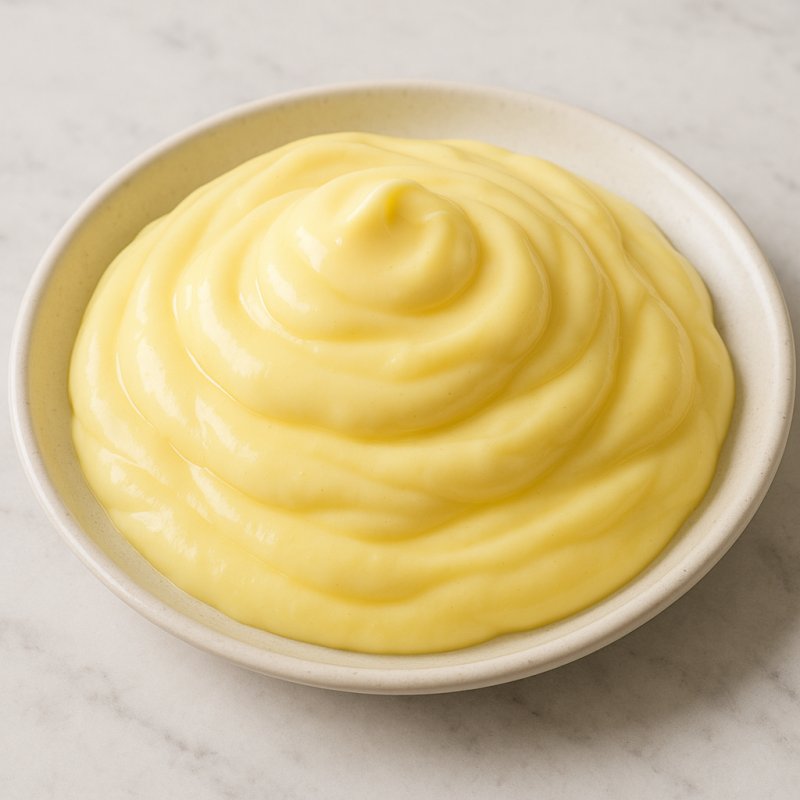
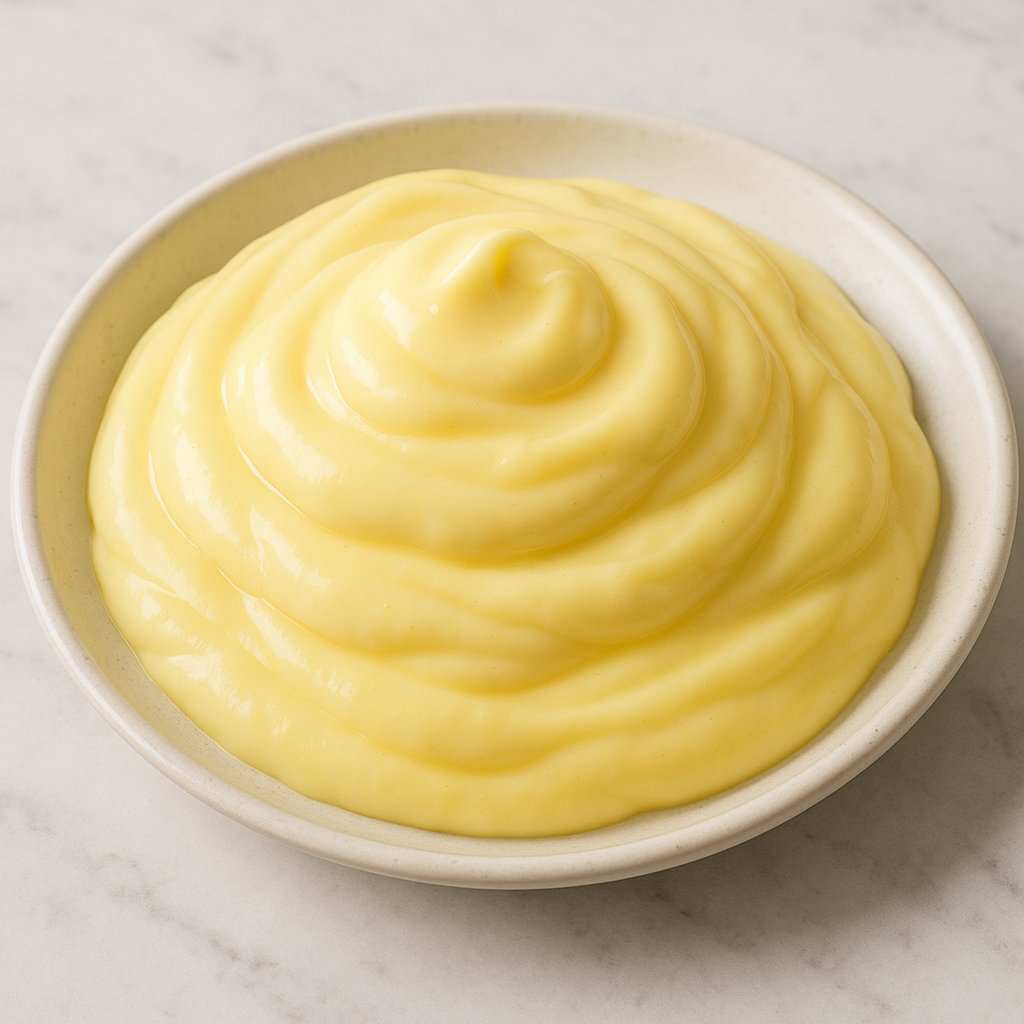
Bowl with creamy vanilla custard
I have a secret weakness for vanilla cream, that velvety mixture of milk, egg yolk, sugar and vanilla that in its simplicity offers so much comfort and seduction at once. When I think of my first attempts to make vanilla cream myself, I picture a friend's kitchen counter, two pots boiling, a thermometer that refused to stay still, and the triumphant sound when the cream finally reached the right consistency. Since then vanilla cream for me is not just a dessert component but a reliable comforter of the soul and a little piece of kitchen magic.

The base is simple, but the art is in the details: choosing a real vanilla pod instead of vanilla extract, slowly pouring the hot milk into the eggs, patiently stirring until the cream thickens without curdling. I remember one Sunday morning when I baked a multi-layer cake for friends and spread vanilla cream on each layer. Someone later whispered: 'This cream makes the cake taste like something from a French café.' Such moments show how much quality and care can elevate the flavor.

Vanilla cream is surprisingly versatile and suits many occasions. It is suitable:

  • as a filling for cakes and éclairs,
  • as an accompaniment to fresh fruits such as berries or pan-fried peaches,
  • as a base for trifles or warm dessert variations with a pinch of nutmeg.
The cream also has a nostalgic side. A colleague of mine once brought a small bowl of vanilla cream to a break, and within five minutes the bowl was empty – without cutlery, just one spoon shared among colleagues. This shared enjoyment makes vanilla cream so lovely: it is uncomplicated, comforting and creates closeness. I make sure to use good ingredients, because the cream mercilessly reveals any mistake, but rewards every care with a velvety, vanilla aroma.

When I have guests I often opt for small variations: some grated lemon zest for freshness or a splash of rum for warm depth. The principle remains the same: few ingredients, careful technique and the courage to split the vanilla pod instead of settling for simple extract. In the end I believe vanilla cream is one of the loveliest culinary compliments — unassuming but unforgettable, and it speaks of care, patience and the joy of sharing something good.

Availability & types

Availability and types

The vanilla cream is a popular ingredient and ready-made preparation that is easy to find in many countries. You can get it in supermarkets, at bakeries or as an ingredient in convenience products like puddings and cake fillings. It is available in jars, packets or as a ready fresh cream — depending on how convenient or fresh you want it.

Where does vanilla cream come from? The main ingredient is often vanilla, and real vanilla originally comes from tropical regions. The main countries where vanilla is grown are:

  • Madagascar – the best-known country for vanilla. Many vanilla pods found in supermarkets come from there. The pods often have a strong, sweet aroma that can be compared to chocolate, only less bitter.
  • Indonesia – a lot of vanilla is also grown here. The flavor is sometimes a bit spicier.
  • Mexico – where vanilla was first discovered. Mexican vanilla can taste slightly floral or smoky.
  • Other tropical countries – such as Réunion or Papua New Guinea also produce vanilla, but usually less than the larger producers.
When it comes to vanilla cream, several types and variants are distinguished so you can find the version that suits your recipe or taste:

  • Vanilla cream made with real vanilla extract: this contains real vanilla extract or vanilla bean specks (the small black dots from the pod). It tastes particularly aromatic and natural. You can compare it to freshly made vanilla — it is like a homemade vanilla pudding.
  • Vanilla cream with vanilla flavoring: artificial flavoring is used here. The taste is clearly vanilla-like but not as complex as real vanilla. This variant is often cheaper and has a longer shelf life.
  • Ready creams in jars or cups: these are ready to eat, like a jar of pudding. They are practical when you want something sweet quickly.
  • Powder or pudding mixes: these are packets of dry powder that you mix with milk or water and cook briefly. This lets you control freshness because the cream is made right before serving.
  • Vegan or lactose-free variants: for people who cannot tolerate milk or who live vegan, there are versions based on plant milks (e.g. soy or oat). They taste similar but can differ slightly in texture.
  • Color- and reduced-sugar variants: some creams have less sugar or no artificial colorants. It's like a 'lighter' version, intended to suit specific dietary preferences.
If you want to buy a vanilla cream, it's worth checking the ingredient list: if it says 'real vanilla seeds' or 'vanilla extract' you will usually get a more natural flavor. If it says 'vanilla flavoring' it is most likely artificial. Freshness and quality also depend on packaging and the manufacturer. One small tip: products from countries with large vanilla cultivation often have a more intense flavor because the raw material is processed closer to the source.

In summary: vanilla cream comes in many forms — fresh, ready in a jar, as powder or as special variants for different dietary needs. The main sources of vanilla aroma are tropical countries like Madagascar, Indonesia and Mexico. Those who prefer a fully natural taste choose products with real vanilla seeds; those who want convenience or lower cost opt for creams with vanilla flavoring.
Details & nutrition

Property Value
Unit g
Calories per 100 180
Protein per 100 4.0
Carbohydrates per 100 22.0
Sugar per 100 18.0
Fat per 100 8.0
Saturated fat per 100 5.0
Monounsaturated fat 2.0
Polyunsaturated fat 0.5
Fiber per 100 0.0
Vitamin C (mg) per 100 0.0
Vitamin D (IU) per 100 40
Calcium (mg) per 100 120
Iron (mg) per 100 0.1
Nutri-Score D
CO₂ footprint 1.2
Origin Europe
Gluten-free Yes
Lactose-free No
Nut-free Yes
Vegan No
Note Nutritional values refer to a classic milk- and egg-yolk-based vanilla custard with sugar. May vary depending on the recipe; in gluten-free variants, gluten-free starches are used.

Technical & scientific information

Vanilla cream refers to a common sweet dish or ingredient in pastry and food service that is characterized by a creamy, vanilla-flavored mass. Classically vanilla cream consists of a base of milk and/or cream, egg yolks for binding, sugar as a sweetener and thickening agents such as flour, starch or pudding powder. Complementary ingredients include real vanilla pods or vanilla extract, which give the product its typical aroma profile.

Chemical composition and ingredients
The chemical composition of a vanilla cream reflects its main components: water from milk and cream, proteins (mainly casein and whey proteins from milk as well as albumins from egg yolk), lipids (milk fat and possibly added cream), carbohydrates (lactose and added sugar) as well as thickening and stabilizing molecules such as starch or modified cellulose. Vanillin, the primary aroma molecule of vanilla, occurs either as a natural component from vanilla pods or synthetically produced. Vanillin (4‑hydroxy‑3‑methoxybenzaldehyde) is chemically an aromatic aldehyde with a strong scent profile; at low concentrations it determines the typical aroma.

Nutritional values
Vanilla cream is energy- and nutrient-rich, with the exact nutritional composition depending strongly on the recipe and fat content. Typical nutritional values per 100 g are about 120–240 kcal (500–1000 kJ), 3–6 g protein, 5–12 g fat and 10–25 g carbohydrates, most of which come from added sugar. Industrially produced ready products may additionally contain fiber, emulsifiers or flavorings and are often supplemented with preservatives and colorants.

Processing methods
Traditional production is carried out by heating a mixture of milk, sugar and egg yolk while stirring continuously until thickening occurs through protein denaturation and aggregation as well as swelling of the starch used. When starch is used, gelation occurs by hydration and temperature-dependent starch gelatinization; with a pure egg‑and‑sugar base the technique is similar to a crème anglaise, which yields a velvety texture with gentle heating. Industrial processes additionally use pasteurization for shelf-life extension, homogenization for emulsion stabilization and often so‑called UHT or spray‑drying processes to produce powder variants.

Sensorics and aroma
The sensory profile is dominated by sweet, milky base notes and the vanillin-based aroma. Fine flavor nuances stem from ester and phenolic compounds of the vanilla pod, which in addition to vanillin can contain secondary aroma compounds such as p‑hydroxybenzaldehyde and eugenol. Texture is determined by fat and protein content as well as by the size of starch granules; a smooth, silky consistency is achieved through careful tempering and filtering.

Health aspects
Vanilla cream provides rapidly available energy and is energy-dense because of its fat and sugar content. Excessive consumption can contribute to increased calorie intake. People with milk allergy or lactose intolerance should avoid classic variants; for them there are lactose-free or plant-based alternatives made from soy, rice or oats. Raw egg yolk poses a microbiological risk if handled improperly (e.g. Salmonella), which is why pasteurization or sufficient heating is recommended. Synthetic vanillin can be relevant in cases of allergy or at very high doses, but is considered safe at the quantities normally used in foods.

Variants and technical modifications
Industrially, stability, melting behavior and binding can be specifically controlled by adding gelling agents (pectin, carrageenan), emulsifiers (lecithin, mono- and diglycerides) and stabilizers. Powder forms enable storage and quick rehydration, while conserved ready products have longer shelf life. Organically produced vanilla creams prefer natural vanilla and avoid synthetic additives, which affects sensory properties and price.

Overall vanilla cream is a technically versatile product whose composition and production combine traditional kitchen practices and modern food technology. Its physicochemical properties can be specifically adjusted by choosing ingredients and processing parameters to achieve desired texture, aroma and stability profiles.

Wiki entry for: vanilla custard
Active now: 20 visitors of which 2 logged-in members in the last 5 minutes