Menu & categories

Turmeric

Aromatic spice with an intense yellow color and antioxidant properties

Wiki about turmeric Nutri-Score A Vegan Yes Gluten-free Yes Lactose-free Yes Nut-free Yes
NUTRITION / 100 g
312 kcal 9.7 g Protein 67.1 g Kohlenhydrate 3.3 g Fett

Introduction

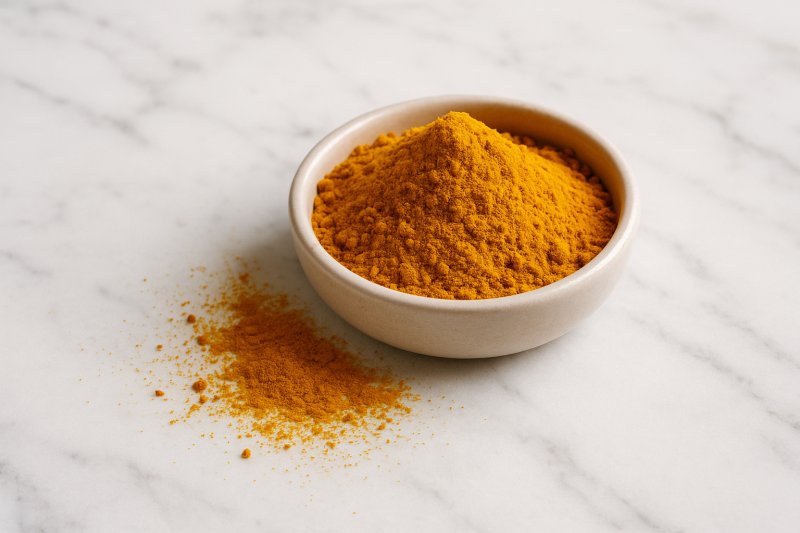
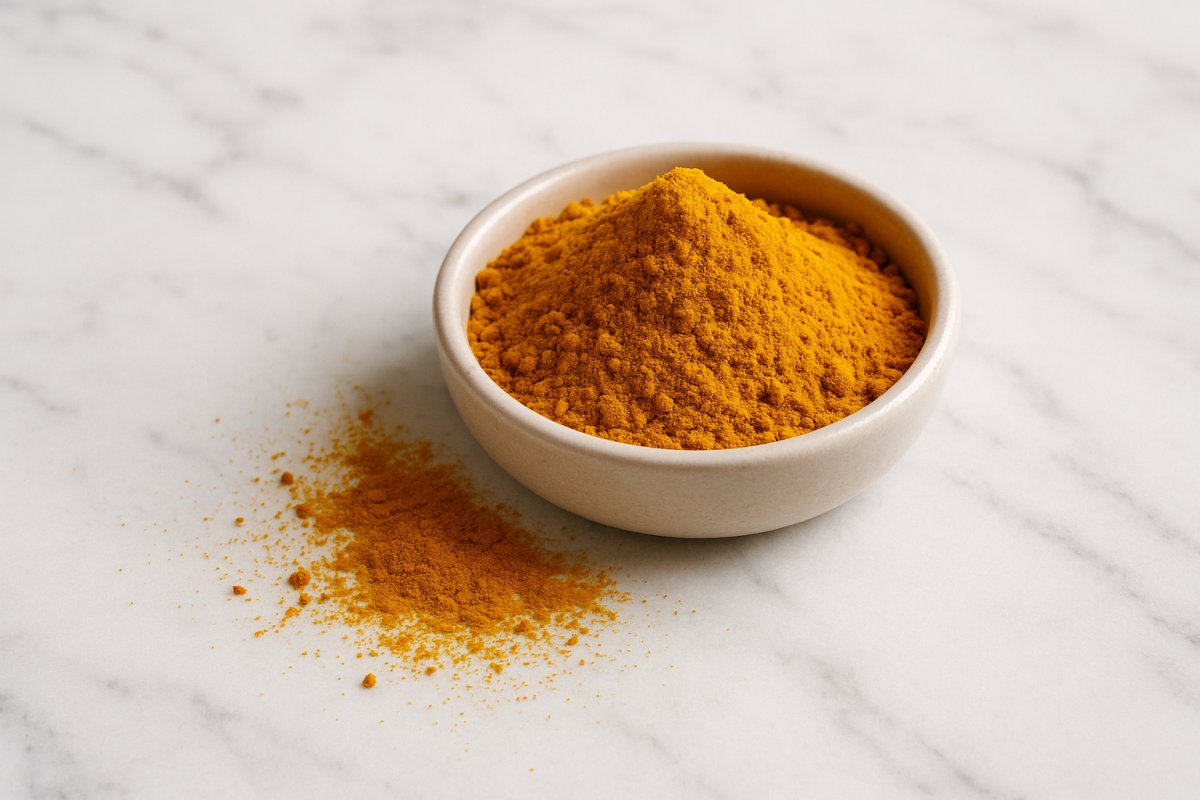
Dried turmeric powder in a bowl with fresh turmeric root
I remember clearly the first moment when turmeric became for me more than just a bright spice on the shelf: it was at a damp autumn market when a stall next to me served a warm turmeric drink. The scent was earthy, slightly bitter and at the same time comforting, and I immediately thought that this golden powder deserved its own chapter in my kitchen.

Turmeric, the spice of a thousand faces, has accompanied me since then in countless variations. It gives curries depth, dyes rice a velvety gold and turns soups into small energy boosters. A colleague of mine was once skeptical and was surprisingly quickly convinced when I served him my simple turmeric-ginger tea; he later jokingly called it "my quick feel-good booster".

What fascinates me about turmeric is its versatility. It suits savory dishes, sweet temptations like golden rice pudding and even baked goods, if you dose the warm, slightly bitter note. In my kitchen I have learned that a touch of turmeric rounds a dish subtly, while a generous pinch immediately dominates. This balancing act makes experimenting exciting.

I also pay attention to quality: the more intense the color, the more likely the aroma is stronger. The fresh turmeric root taste differs noticeably from the dry powder; both have their place, but they require different preparation methods. Once I finely grated fresh root into a dressing – the result was surprisingly lively and reminded me how raw and immediate flavors can be.

Away from the kitchen, turmeric is now encountered everywhere: as tea, in beauty products or as an ingredient in smoothies. Some swear by its health benefits; I view that critically but with curiosity. For me turmeric remains primarily a sensual experience that grounds dishes while adding a little sparkle.

  • Taste: earthy, slightly bitter, warm
  • Use: curries, rice, drinks, dressings, baked goods
  • Tip: combine with black pepper to intensify the aroma
In the end turmeric is for me a small all-rounder that brings a lot of atmosphere to the pot with simple means. On my next market visit I will look out for that stall again – perhaps with a new recipe idea in mind and the desire to get to know this golden powder a little better.

Availability & types

Availability and types of turmeric

Turmeric is a yellow root that often looks like a larger orange-colored rhizome. It belongs to the ginger family and has long been used as a spice and in medicine. Turmeric is found in many kitchens worldwide, especially in Asia. "Availability" here means where you can get turmeric and which types or forms are offered.

Origin and growing regions
Turmeric originally comes from South Asia. The best-known growing regions are:

  • India: The largest cultivation area in the world. India supplies the majority of the turmeric found in supermarkets.
  • Southeast Asia: Countries like Indonesia, Sri Lanka and Thailand also cultivate a lot of turmeric.
  • Africa and the Caribbean: In some regions of Africa and on islands turmeric plants are also cultivated – often for local consumption.
You can imagine the growing regions like different gardens around the world: some gardens are huge and supply a lot of turmeric (like India), others are smaller and mainly serve the neighbourhood.

Available varieties and formats
Turmeric is available in different forms, just as apples come in different varieties. Here are the main variants you find in stores:

  • Fresh turmeric root: It looks like a small, curved rhizome with an orange-yellow interior. Fresh it tastes somewhat sharper and "juicier" than powder. You can grate it or cut it into pieces and use it fresh.
  • Turmeric powder: The most commonly sold form. The root is dried and ground into a fine yellow powder. It is convenient because it keeps well and is easy to dose.
  • Capsules or tablets: Preparations often offered in health food shops or pharmacies. They usually contain turmeric extract and are used by people who want a precise dose.
  • Extracts and liquid forms: Sometimes there are concentrated liquids or extracts that have a stronger effect per drop. These are like juice concentrates, only for spices or supplements.
  • Whole dried pieces: Dried slices of the root that can be used similarly to fresh root when a longer supply is needed.
Special varieties
There are different turmeric varieties that differ slightly in taste, color or active compound content. Some varieties are paler, others more intensely yellow or orange. A well-known variety is the so-called "Alleppey" turmeric from India, valued for its good flavor. These differences are similar to those among bananas: some are a bit sweeter, others firmer.

How easy is it to obtain turmeric?
Today turmeric is very easy to find. You can get powder in almost every supermarket, fresh roots in well-stocked shops or at weekly markets, and special forms like capsules in drugstores or online. In some regions fresh turmeric may be rarer and then powder is the best choice.

In summary: turmeric grows mainly in warm countries like India and Southeast Asia but is available worldwide in many forms – fresh, dried, as powder or as extract. Each form has advantages: fresh for flavor, powder for convenience and extracts for precise dosing. This way almost everyone can find the variant that suits them.
Details & nutrition

Property Value
Unit g
Calories per 100 312
Protein per 100 9.7
Carbohydrates per 100 67.1
Sugar per 100 3.2
Fat per 100 3.3
Saturated fat per 100 1.8
Monounsaturated fat 0.5
Polyunsaturated fat 0.7
Fiber per 100 22.7
Vitamin C (mg) per 100 0.7
Vitamin D (IU) per 100 0
Calcium (mg) per 100 168
Iron (mg) per 100 55
Nutri-Score A
CO₂ footprint 4.5
Origin Tropical and subtropical regions, especially India and Southeast Asia
Gluten-free Yes
Lactose-free Yes
Nut-free Yes
Vegan Yes
Note Nutritional values refer to dried turmeric powder. Fresh turmeric root has significantly lower nutrient and energy densities per 100 g.

Technical & scientific information

Turmeric (Curcuma longa) is a rhizome from the ginger family used as a spice, colorant and traditional remedy. Botanically it belongs to the genus Curcuma; the dried and ground form is known as a yellow-orange powder. Turmeric is valued both for its aromatic flavor and its intense coloring properties and contains various secondary plant compounds responsible for its health-related and technological properties.

Chemical composition and constituents
The chemical composition of turmeric is complex. The most important constituents are the curcuminoids, a group of phenolic compounds that include primarily curcumin, desmethoxycurcumin and bisdesmethoxycurcumin. Curcumin typically makes up 2–5% of the dry mass in commercial turmeric powder but can be much higher concentrated in extracts. Other constituents include essential oils (e.g. turmerone, atlantone, zingiberene), starch, proteins, fiber, minerals such as potassium, iron and magnesium and vitamins in small amounts.

Nutritional values
Turmeric provides about 300–350 kcal per 100 g of powder. The macronutrient portion consists mainly of carbohydrates, in particular starch and fiber; protein and fat are present in smaller amounts. Due to the small amounts consumed, turmeric is nutritionally more of a micronutrient-providing ingredient than a significant calorie source.

Processing methods
Industrial and artisanal processing includes harvesting the rhizomes, cleaning, cooking or steaming, drying and subsequent milling. Cooking or steaming fresh rhizomes before drying reduces enzymatic browning reactions and stabilizes color. Drying is done conventionally in the air, in dehydrators or by hot air drying; however, too high a temperature can destroy volatile oils and reduce curcumin levels through thermal degradation. For standardized extracts, curcuminoids are concentrated by solvent extraction or supercritical CO2 extraction and then dried, often as curcumin standard preparations (e.g. 95% curcuminoids).

Physical and chemical properties
Curcumin is a yellow to orange, poorly water-soluble polyphenol with good solubility in organic solvents and lipids. It shows characteristic absorption spectra in the visible range and is used as a natural colorant (E 100). Curcumin is photolabile and prone to oxidation; stability is influenced by pH, temperature, light and the presence of metals. The bioavailability of curcumin is low because it is rapidly metabolized and conjugated in the intestine and liver. Combinations with piperine (black pepper) or formulation in lipid carriers, nanoparticles or phytosomes increase the absorption rate after oral administration.

Health aspects
In traditional medicine, especially in Ayurveda and Chinese medicine, turmeric is used for anti-inflammatory, antimicrobial and digestive applications. Scientific studies investigate curcumin's potential effects on inflammatory markers, oxidative stress, joint health, metabolic parameters and neuroprotective effects. Clinical data are heterogeneous: preclinical studies often show promising effects, while human studies yield mixed results due to differing dosages, formulations and study designs. Low bioavailability is a central challenge. Curcumin is considered safe in typical culinary amounts; however, at high doses of standardized extracts side effects such as gastrointestinal complaints or interactions with blood-thinning medications can occur.

Safety and quality aspects
Quality characteristics of turmeric powder are color intensity, particle size, moisture content and curcuminoid content. Contamination risks include microbiological load, pesticide residues and adulteration with foreign colorants. Standardized test methods include chromatographic analyses (HPLC) for determination of curcuminoids, gas chromatography for essential oils and microbiological tests.

In summary, turmeric is a multifunctional ingredient with a characteristic chemical composition, technologically relevant properties and a wide range of hypothesized health effects. Its use in food, supplements and as a natural colorant is accompanied by research aimed at improving bioavailability, efficacy and quality assurance.

Wiki entry for: turmeric
Active now: 17 visitors of which 2 logged-in members in the last 5 minutes