Availability and types
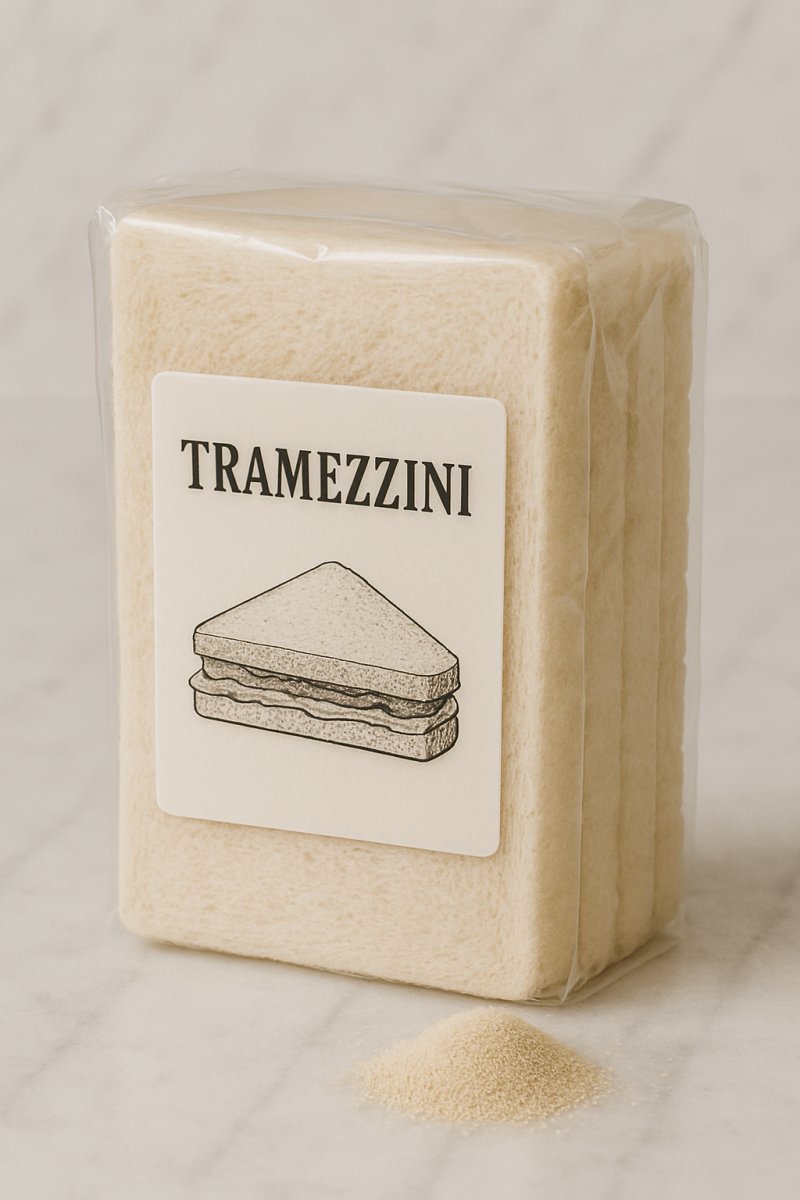
The tramezzini are thin, soft Italian sandwiches often found in cafés, bars or bakeries. They look like small, triangular crustless pieces of bread and are filled with various ingredients. Although the word “tramezzini” originally comes from Italy, similar sandwiches exist in many other countries. You can buy them freshly prepared or, in some shops, already pre-packaged.
Origin
Tramezzini originate from Italy, more precisely from the early 20th century. At the time people wanted an alternative to British toast that was softer and easier to eat. The name “tramezzino” roughly means “little in-between bread” – something eaten quickly between meals or as a snack. A simple image: imagine taking a slice of very soft bread, cutting off the edges and folding it into a small triangle – that is the typical look of a tramezzino.
Tramezzini originate from Italy, more precisely from the early 20th century. At the time people wanted an alternative to British toast that was softer and easier to eat. The name “tramezzino” roughly means “little in-between bread” – something eaten quickly between meals or as a snack. A simple image: imagine taking a slice of very soft bread, cutting off the edges and folding it into a small triangle – that is the typical look of a tramezzino.
Growing regions and production
Tramezzini are not a single plant or animal product, but are made from ordinary white bread. The bread itself is usually made from wheat flour, water, yeast and some fat. This means the “growing regions” are the areas where ingredients like wheat are cultivated. Wheat is grown in many parts of Europe, especially in countries such as Italy, France and Germany. But since tramezzini are a processed food, the bread is often produced in bakeries or factories rather than directly in the fields.
Tramezzini are not a single plant or animal product, but are made from ordinary white bread. The bread itself is usually made from wheat flour, water, yeast and some fat. This means the “growing regions” are the areas where ingredients like wheat are cultivated. Wheat is grown in many parts of Europe, especially in countries such as Italy, France and Germany. But since tramezzini are a processed food, the bread is often produced in bakeries or factories rather than directly in the fields.
Available varieties and variants
There are many different types of tramezzini because the filling can always vary. Here are the most common variants, explained simply:
There are many different types of tramezzini because the filling can always vary. Here are the most common variants, explained simply:
- Classic with ham and cheese – This is like a normal ham-and-cheese sandwich: soft bread, thin ham and melty cheese.
- Tuna and salad – Canned tuna mixed with a little mayonnaise and salad. It is convenient and tastes fresh.
- Egg and mayonnaise – Finely chopped eggs with a creamy sauce. Children often like this because it is mild.
- Vegetable variants – With tomatoes, cucumbers, avocado or peppers for a lighter, fresher version. Good for people who want to eat less meat.
- Vegetarian and vegan – Instead of cheese or cold cuts there are plant-based spreads, vegetables or tofu. Vegan variants avoid animal products.
- Sweet tramezzini – Sometimes they are filled with jam, Nutella or fruit – turning them into a sweet snack or dessert.
- Gourmet variants – In some cafés there are special tramezzini with ingredients like salmon, mozzarella with basil or special sauces. These are often a bit more expensive because the ingredients are more special.
A good comparison: think of tramezzini as small, soft pizza-like pieces that can be topped with different “toppings”. Some prefer them simple and familiar, others try more exotic combinations. In supermarkets you often find ready-packaged tramezzini, while bakeries make them fresh. Thus they are easy to obtain and there is a suitable variant for every taste.
Overall, tramezzini are versatile, simple and available wherever quick snacks are sold. Whether classic with ham, vegetarian with vegetables or sweet with jam – there is a variety for every taste, and they can often be made fresh or bought pre-packaged.
